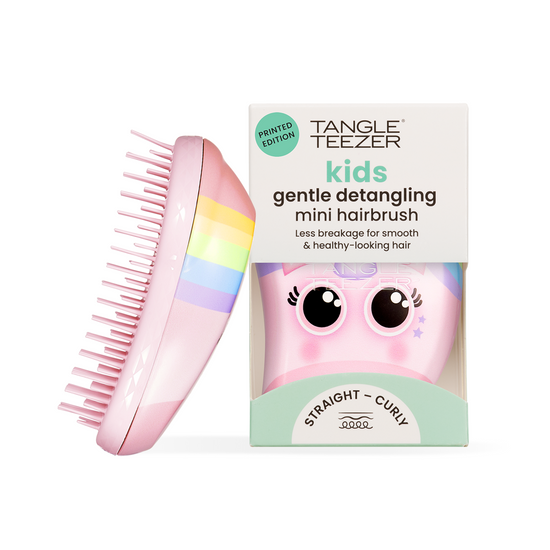
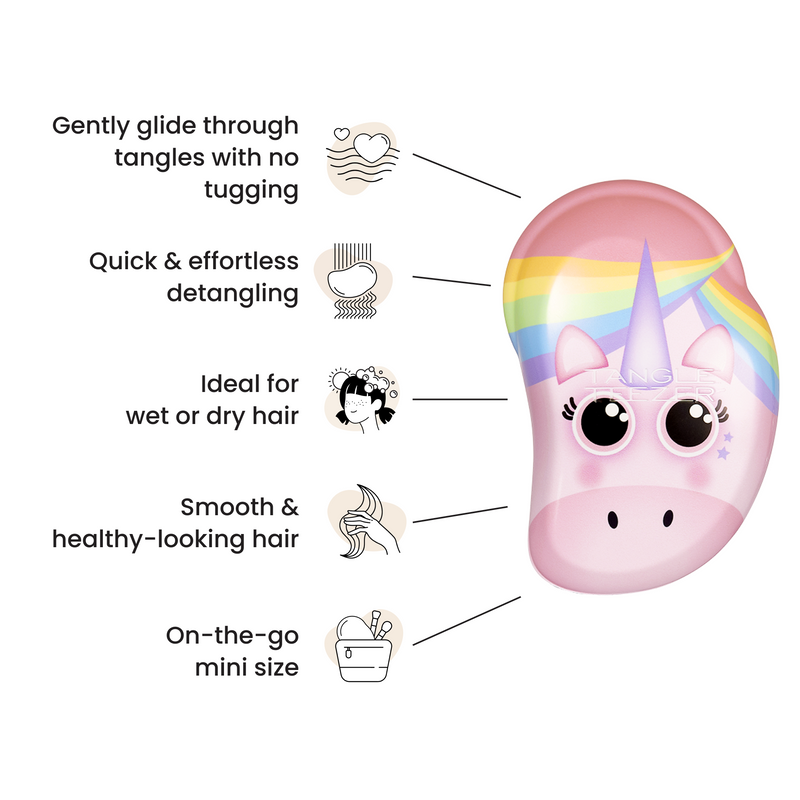
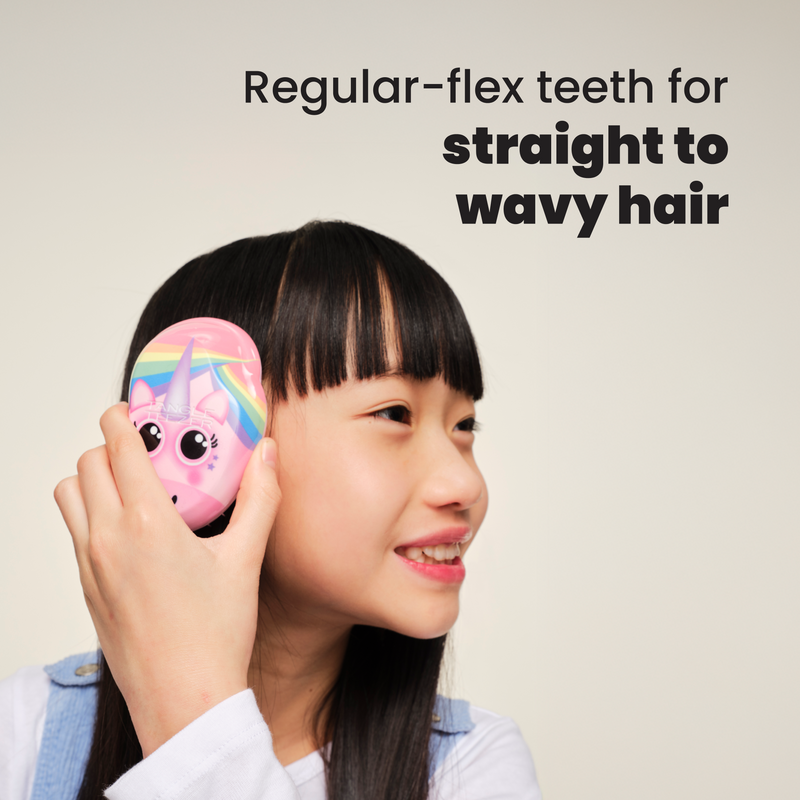
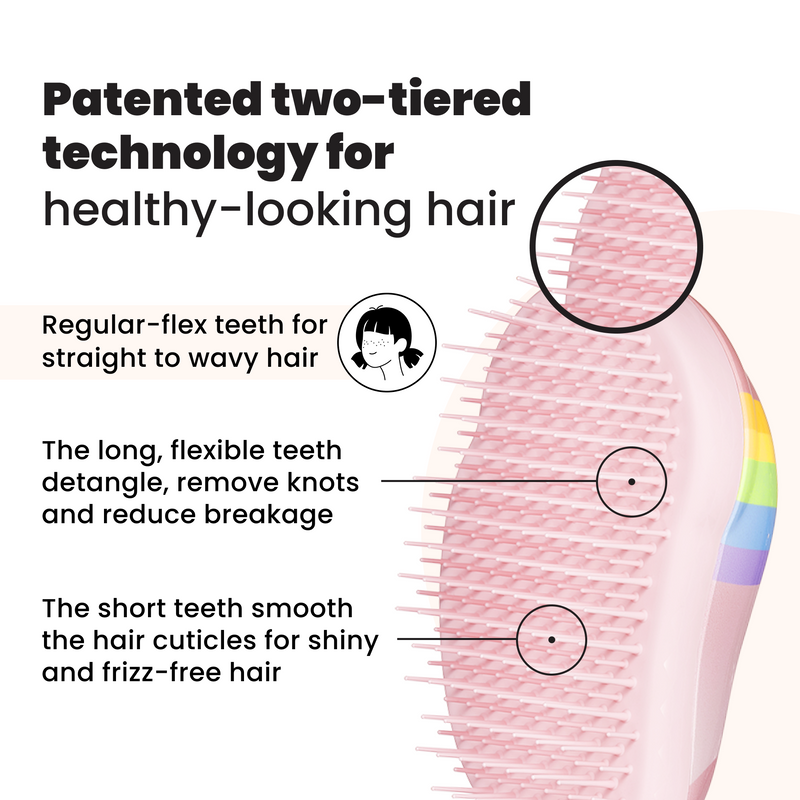
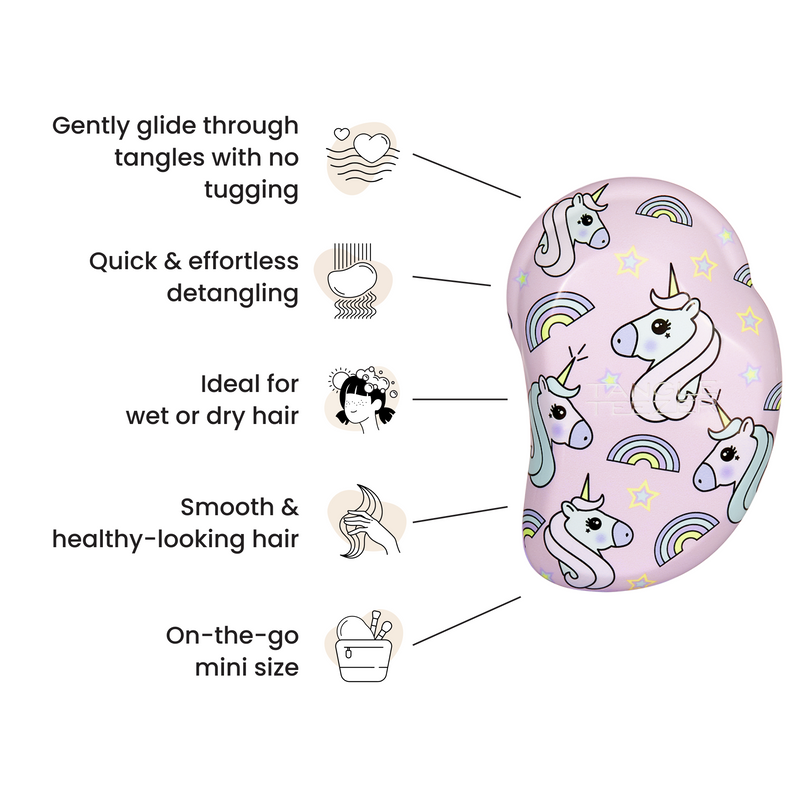
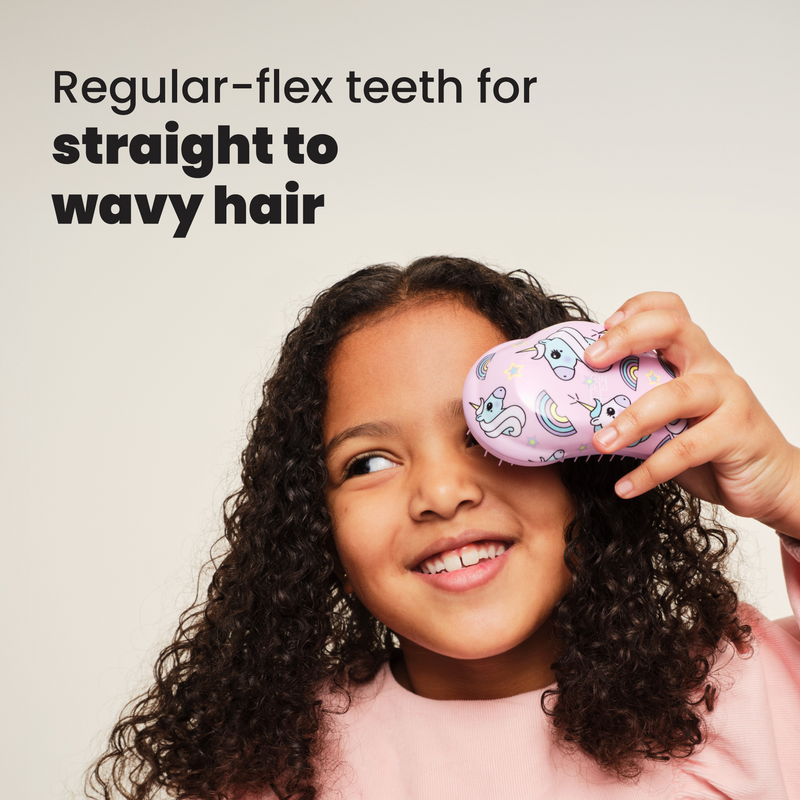
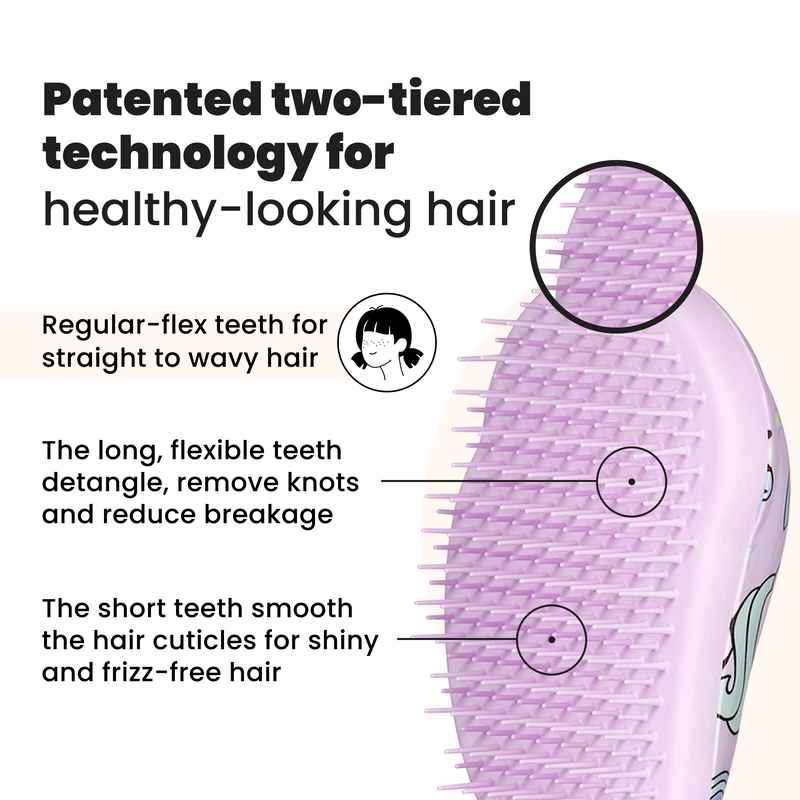
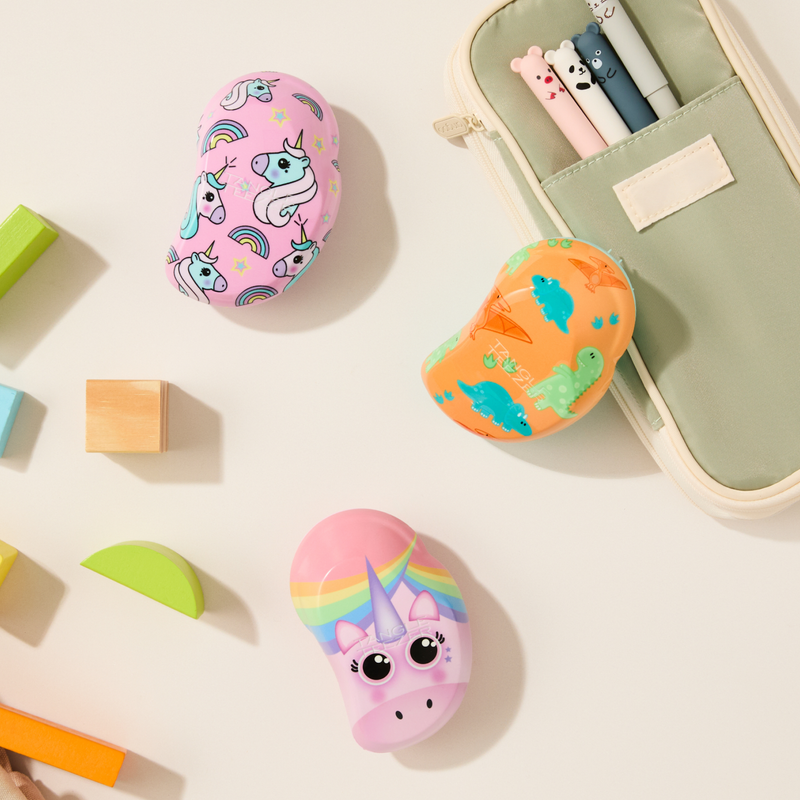
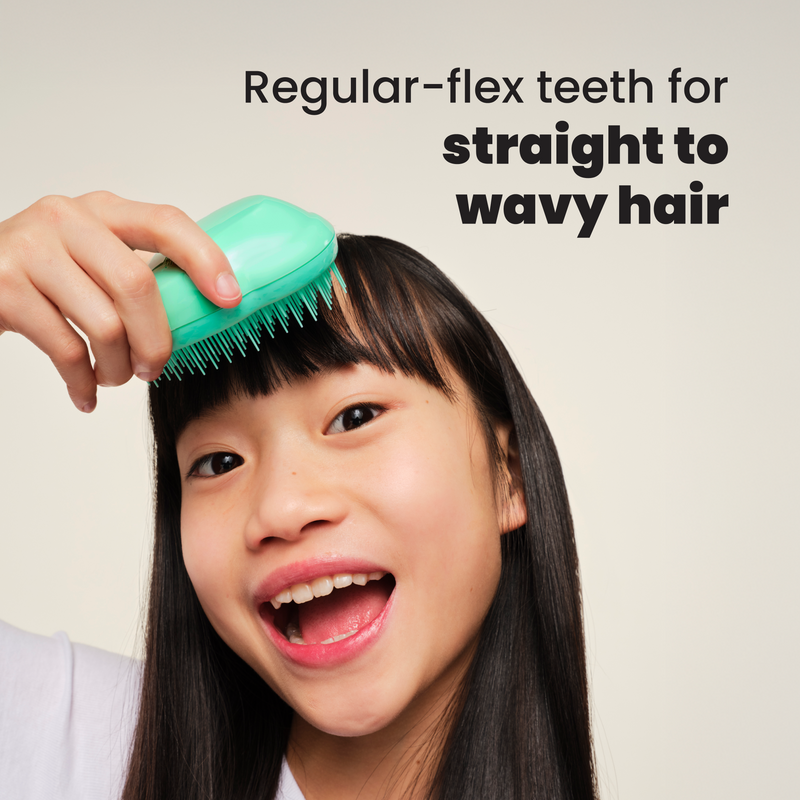
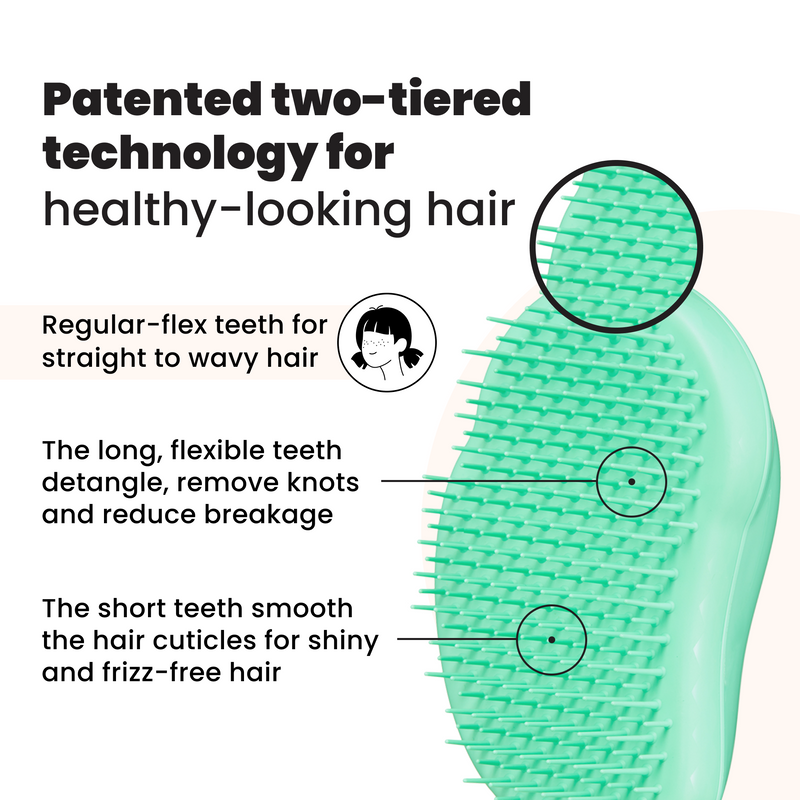
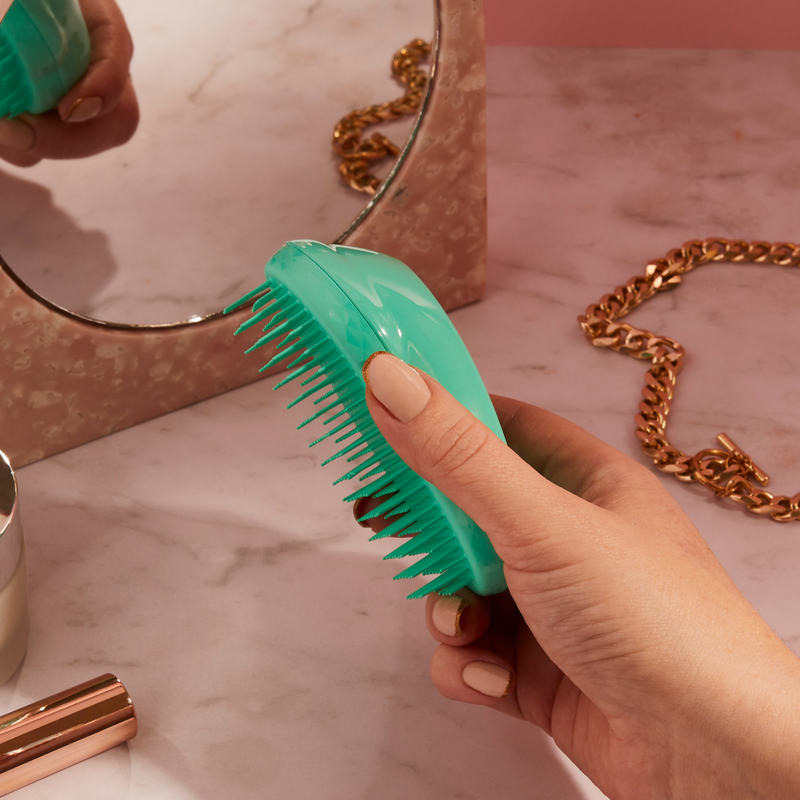
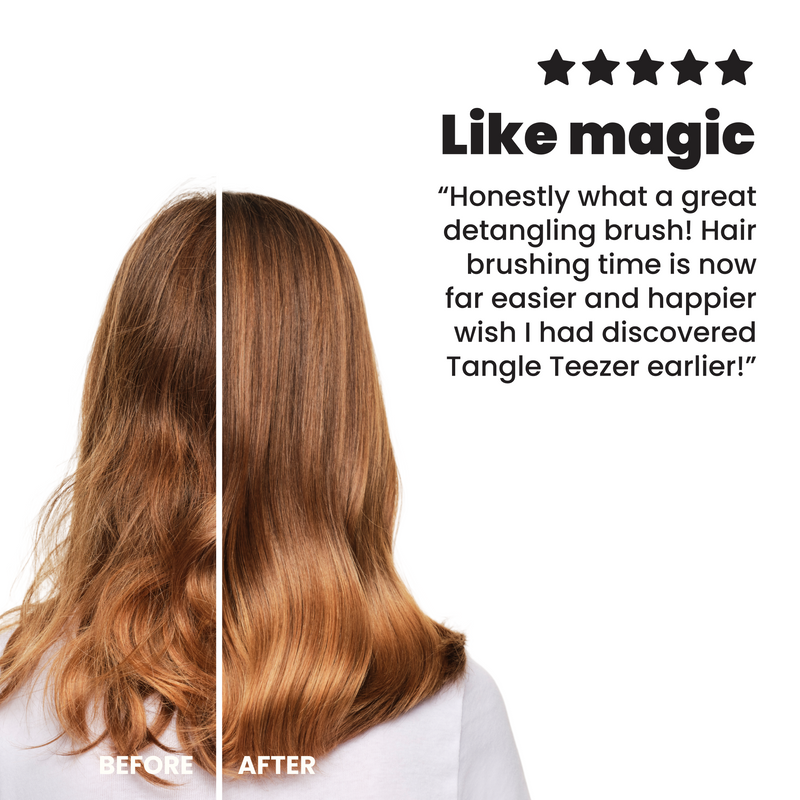
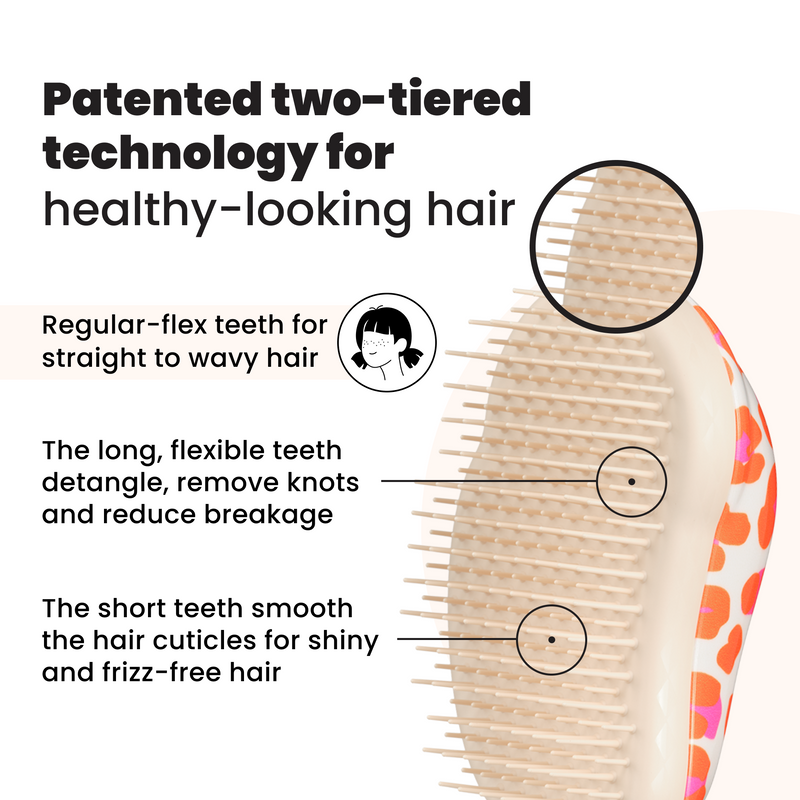
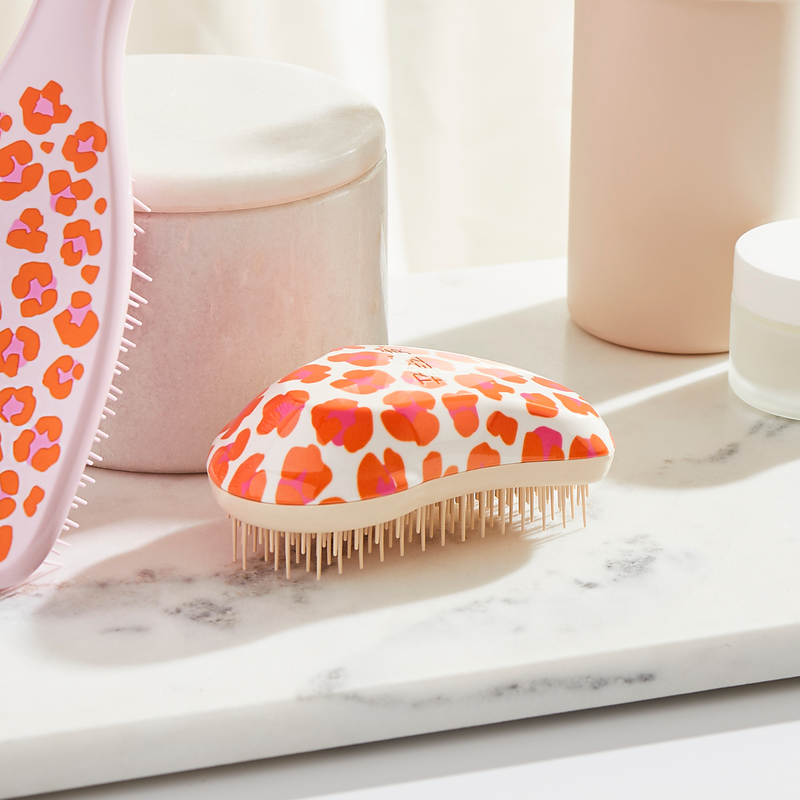
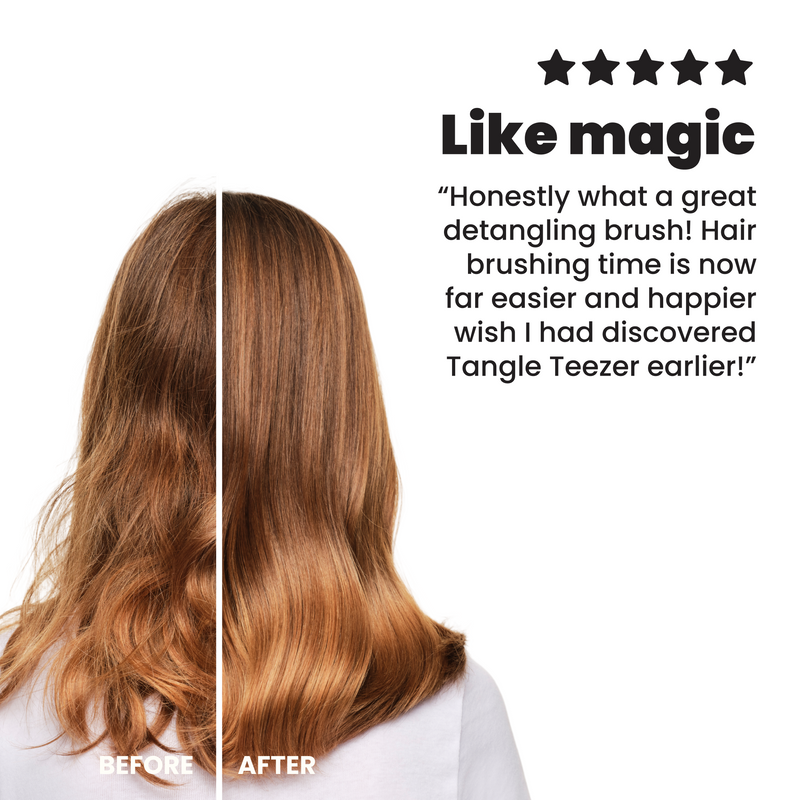
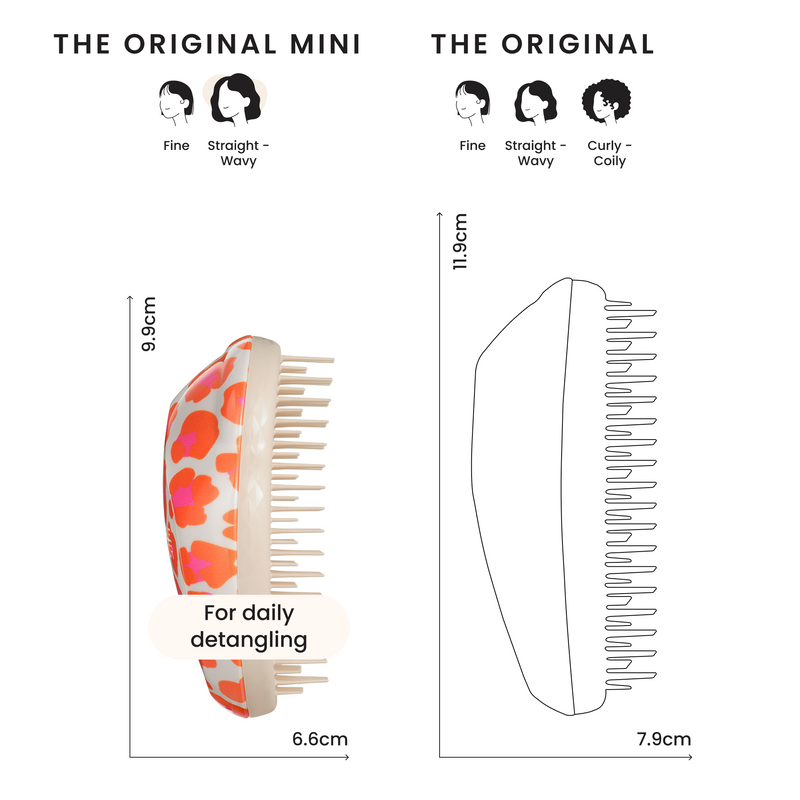
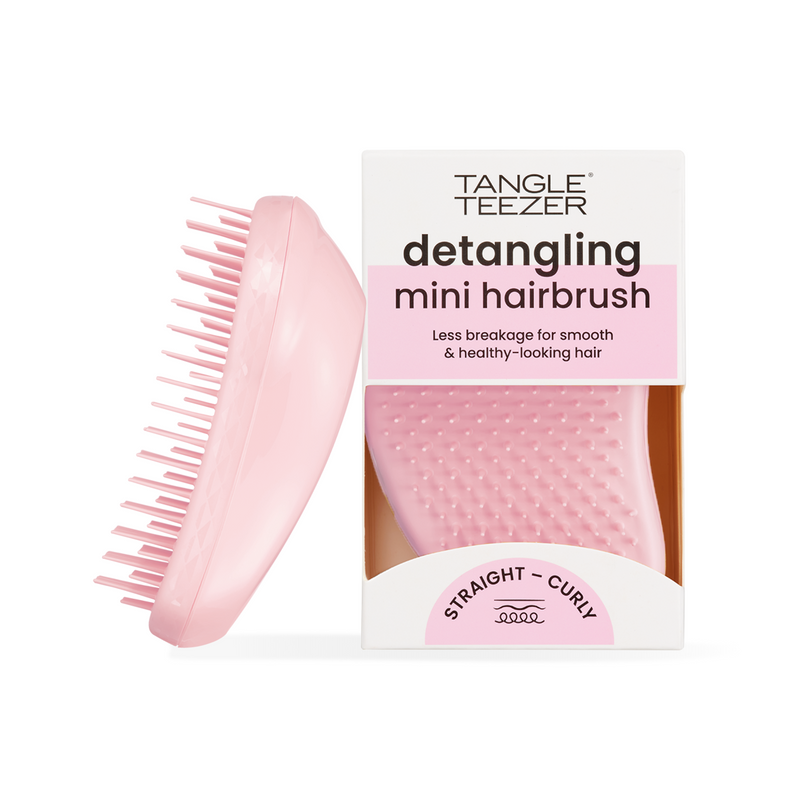
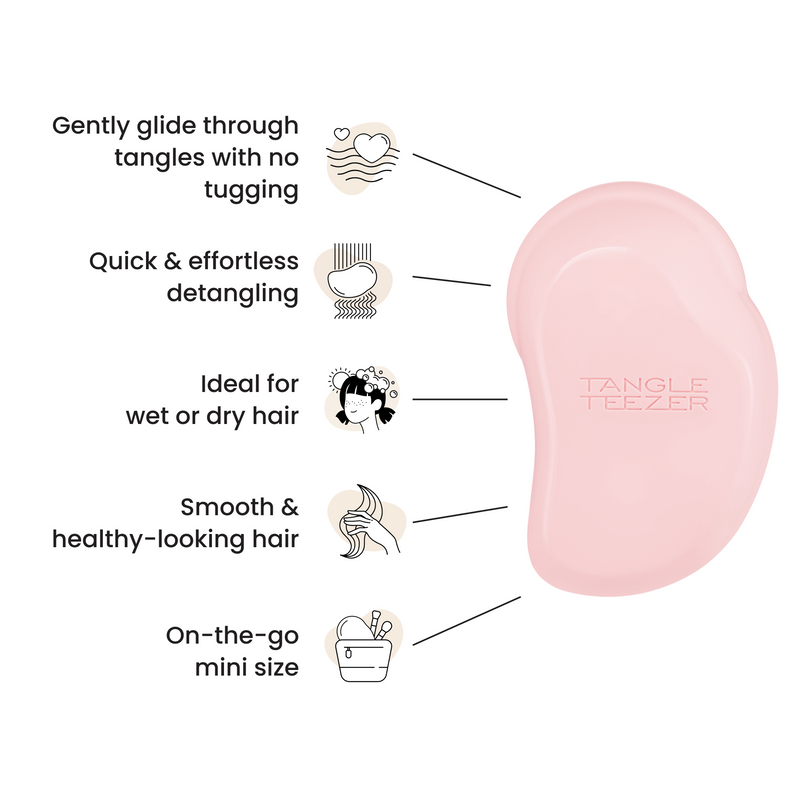
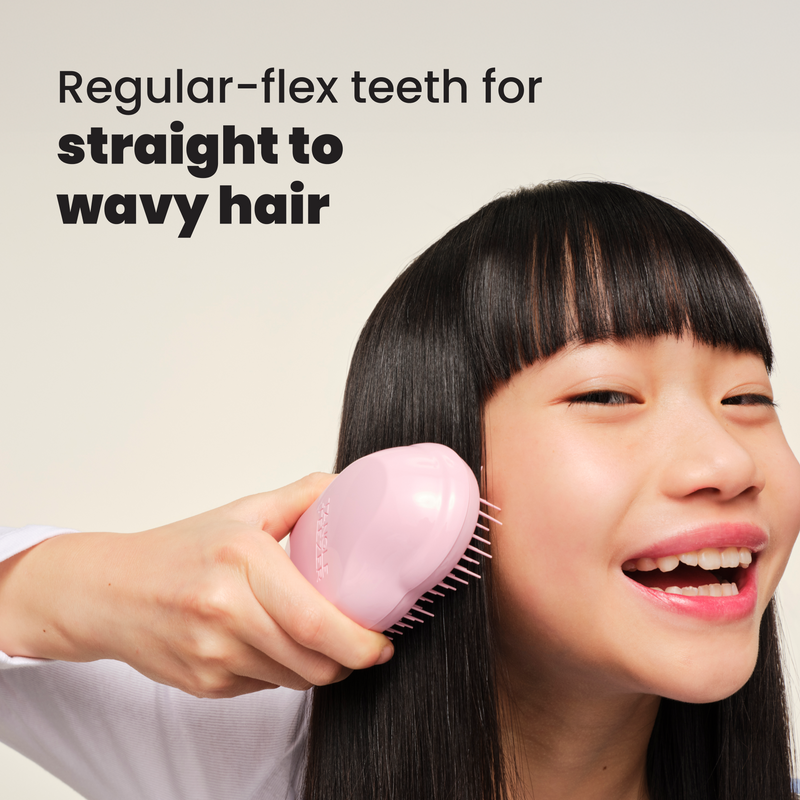
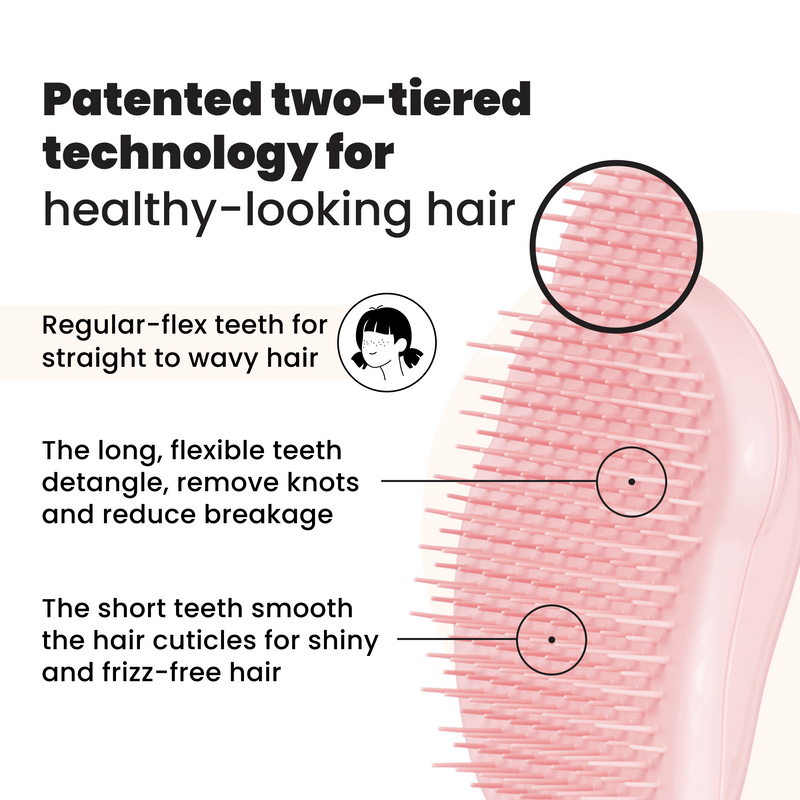
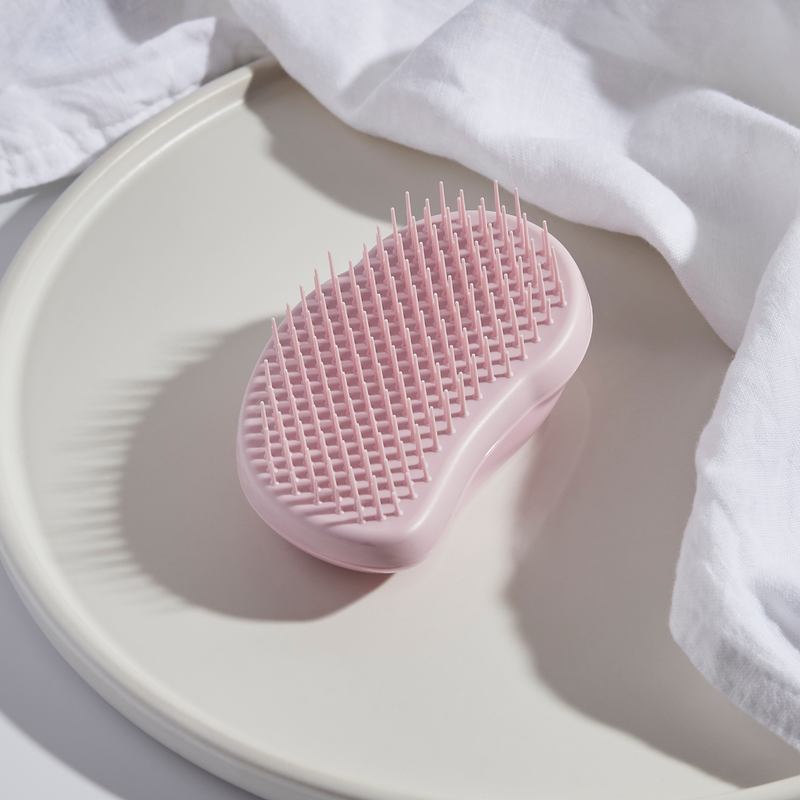
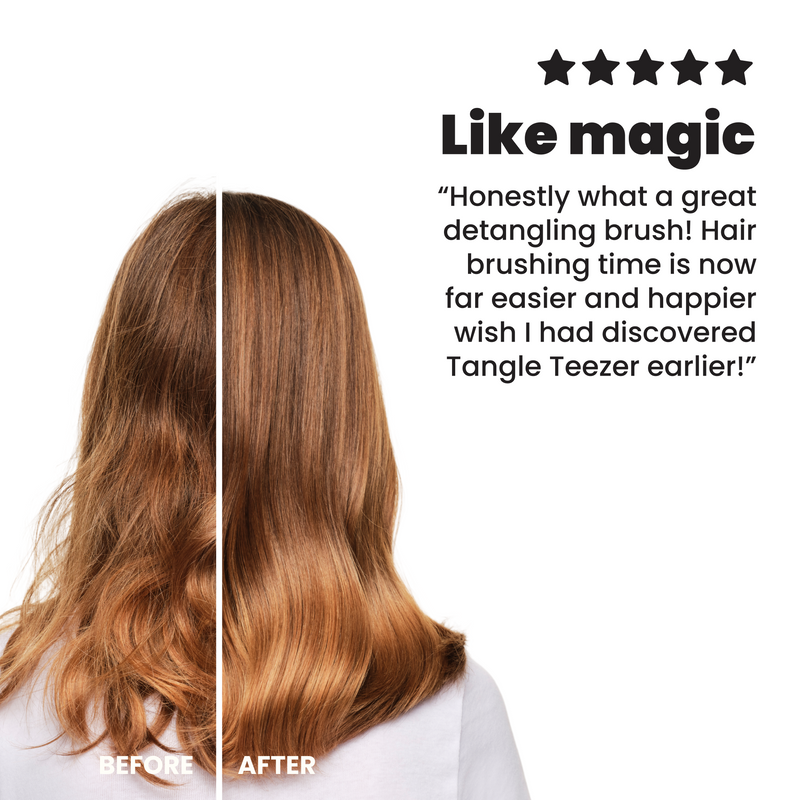
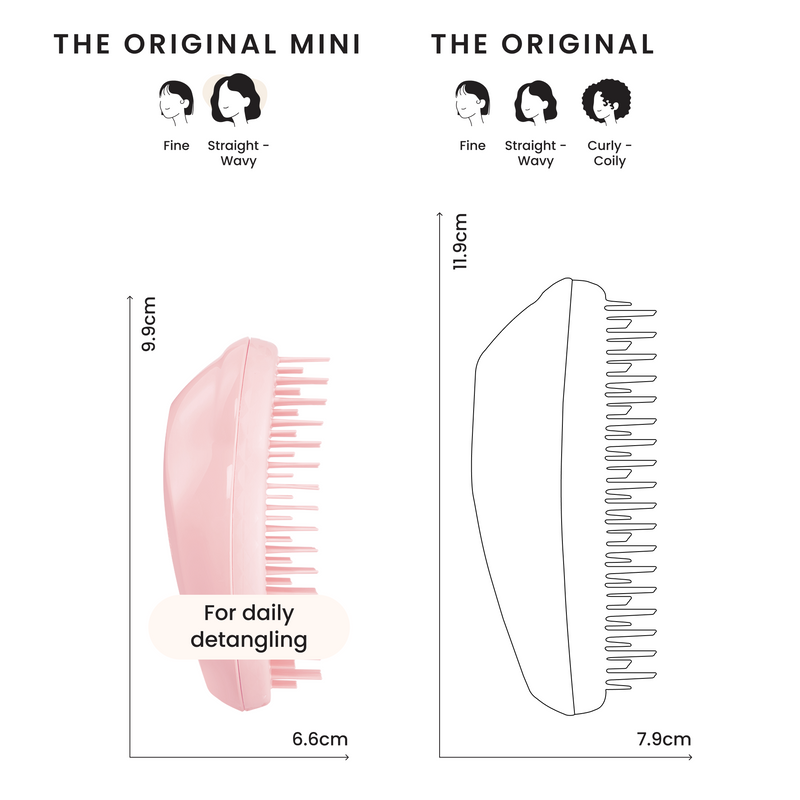
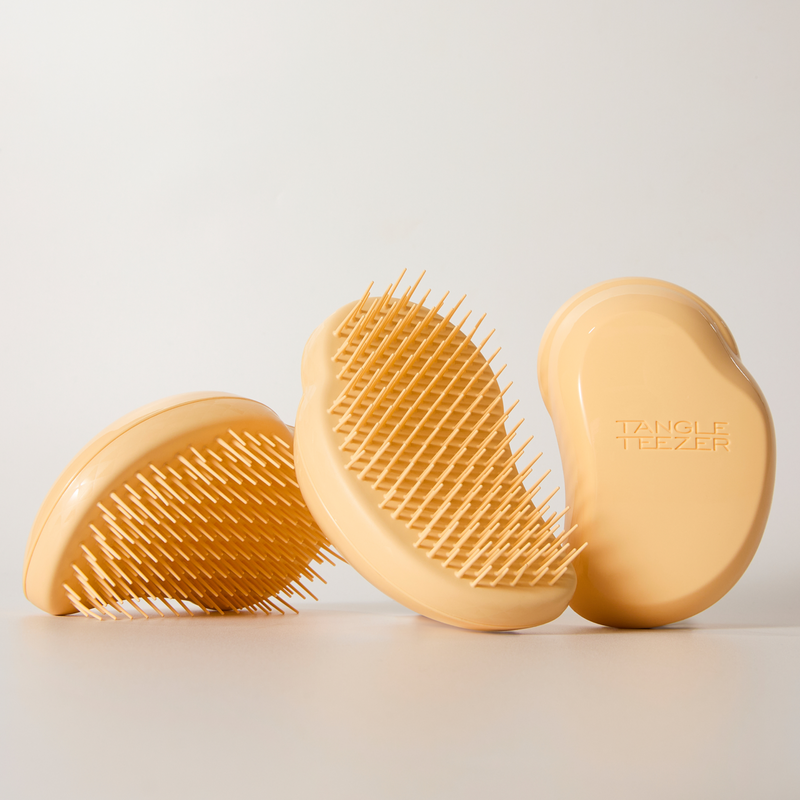
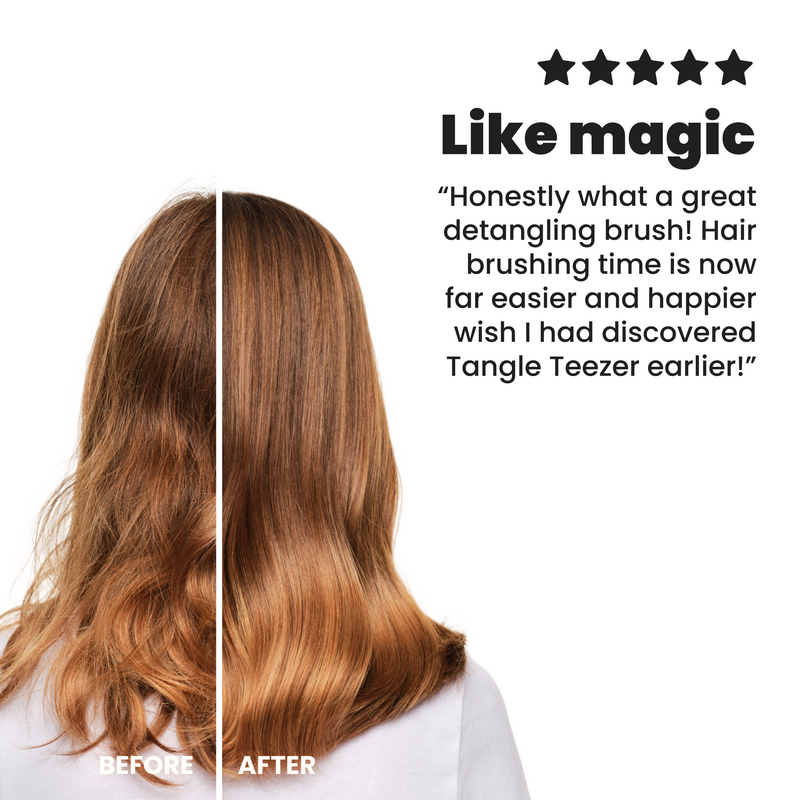
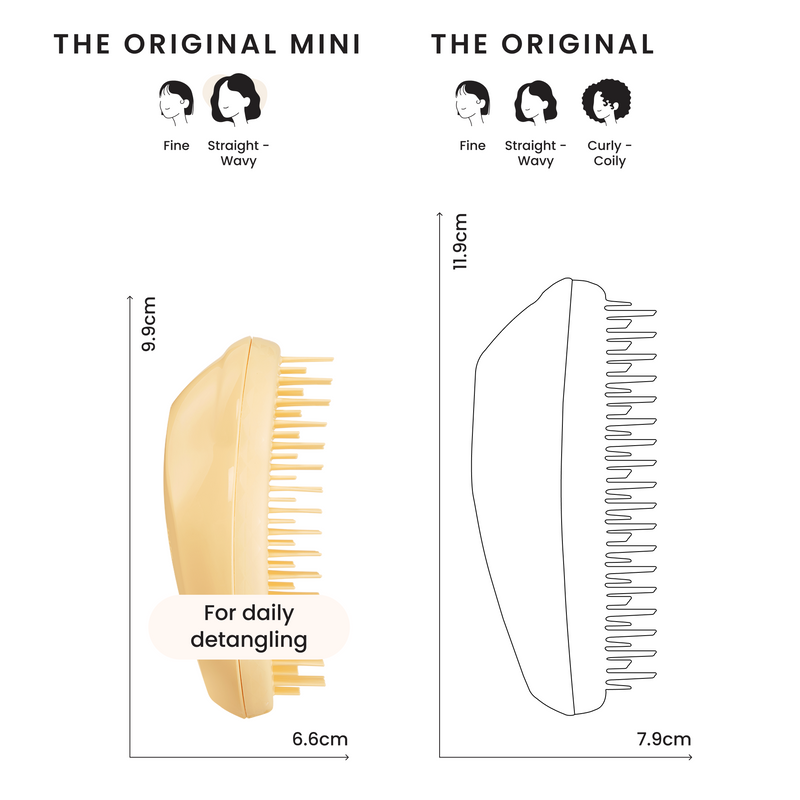
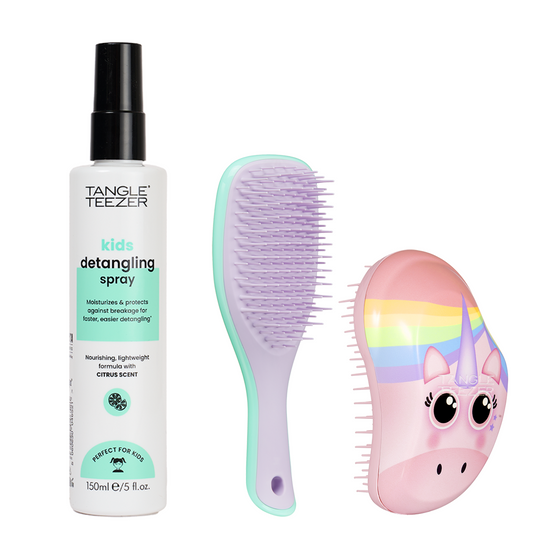
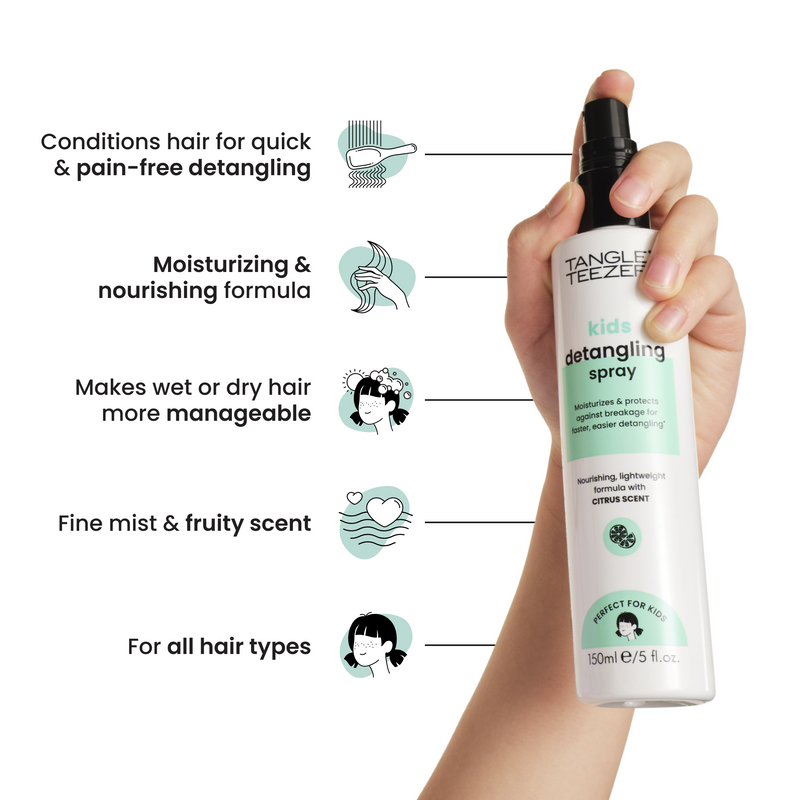
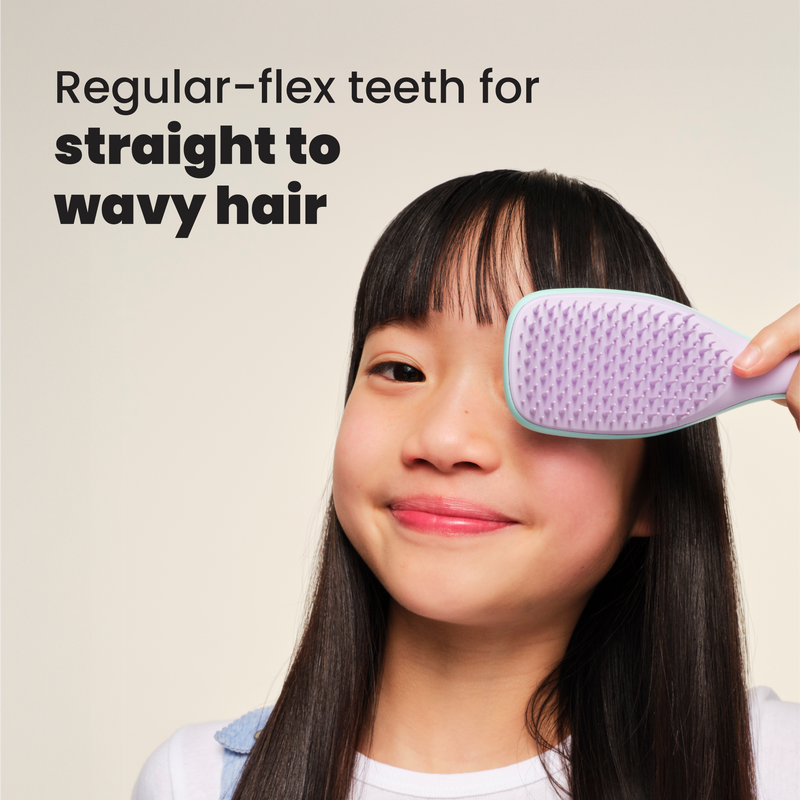
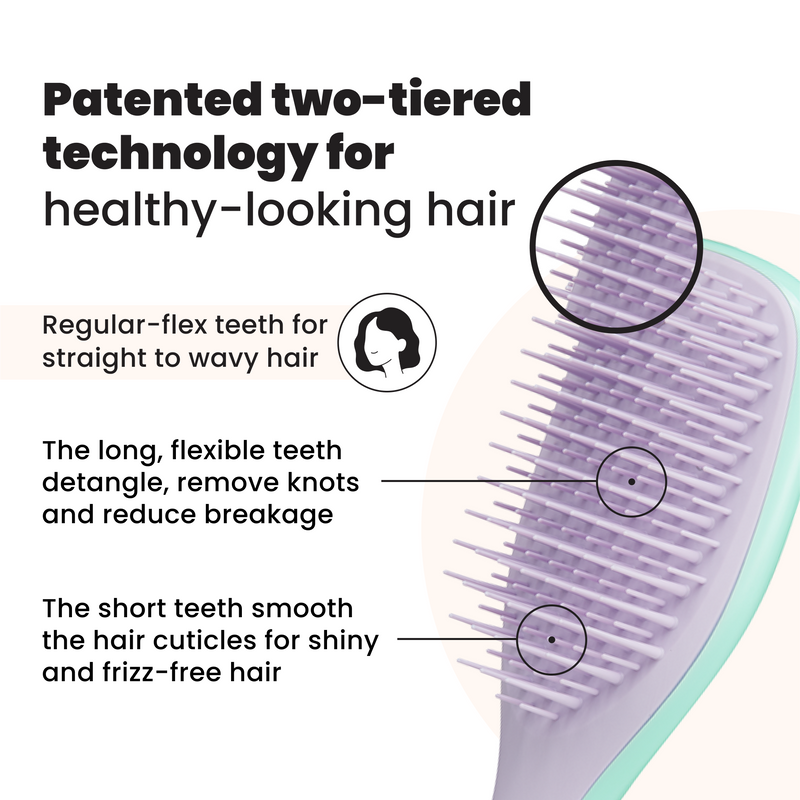
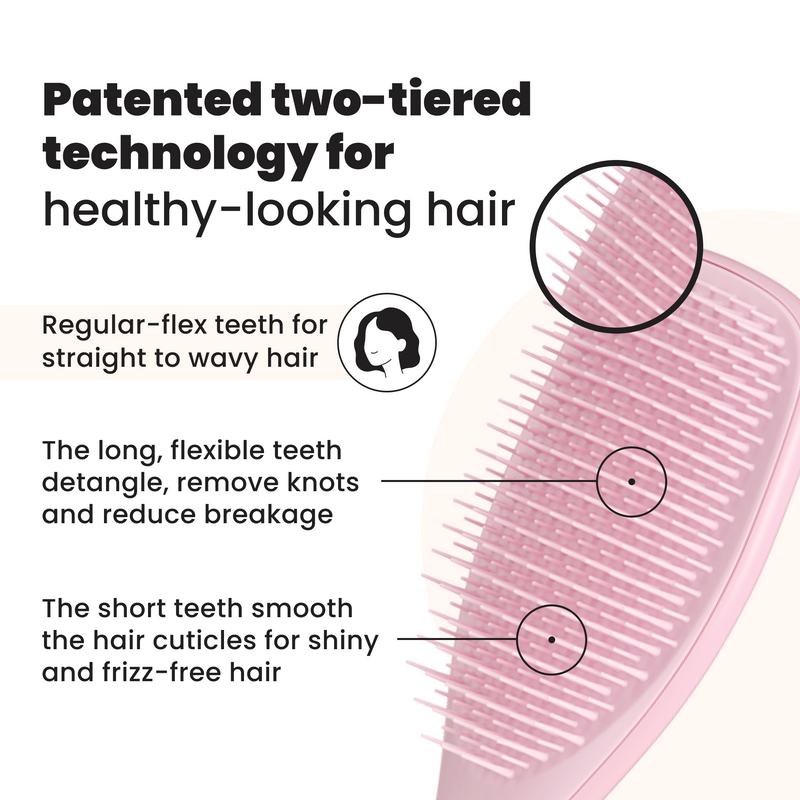
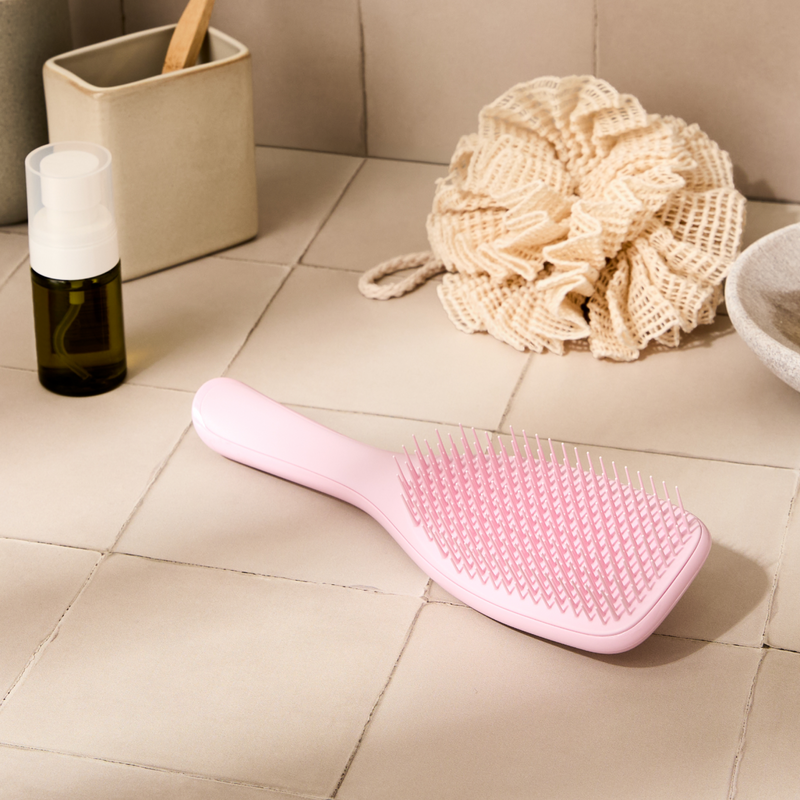
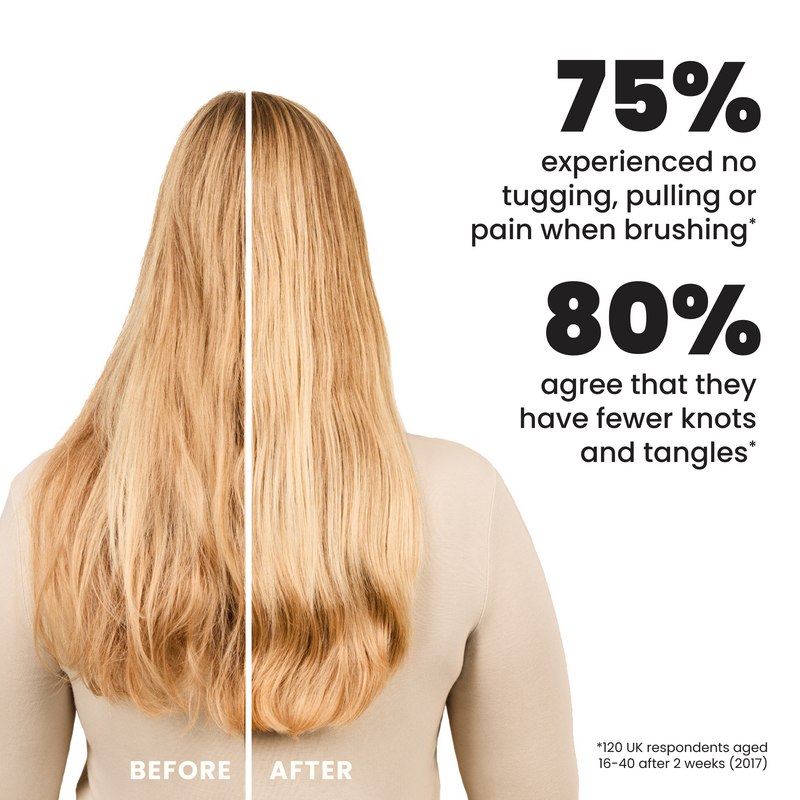
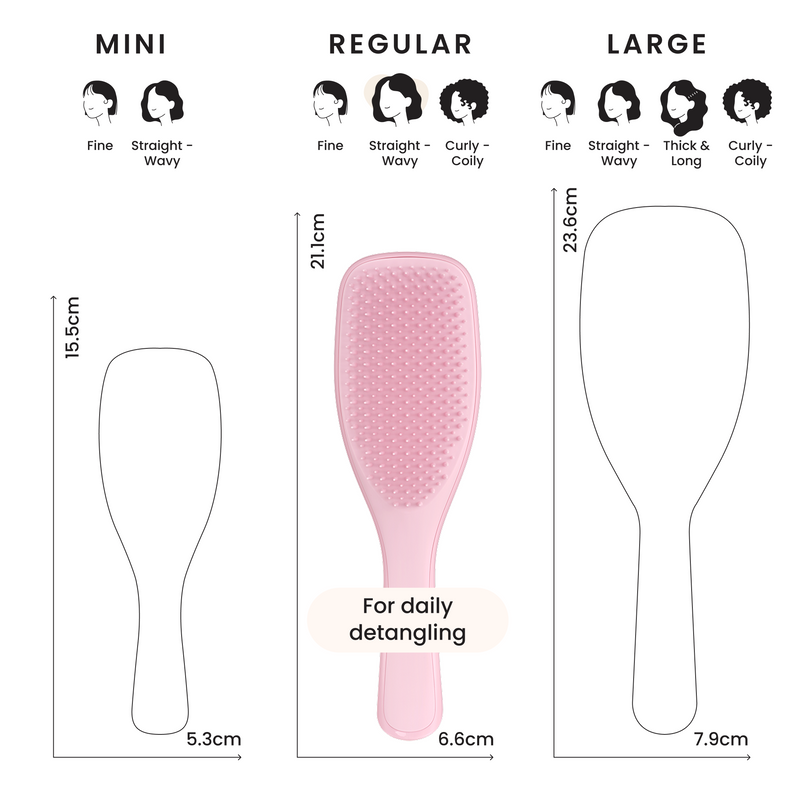
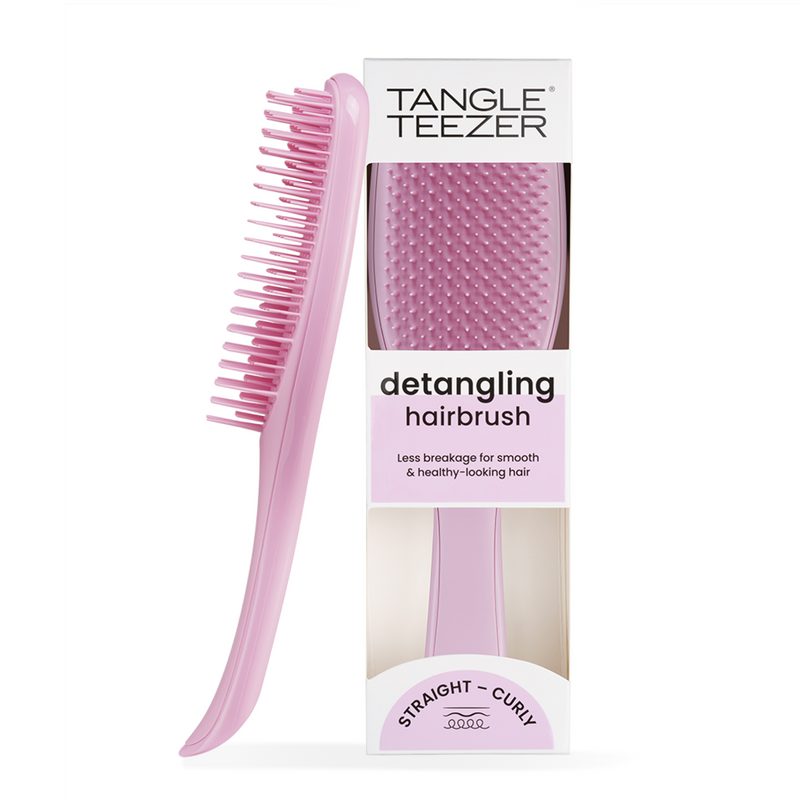
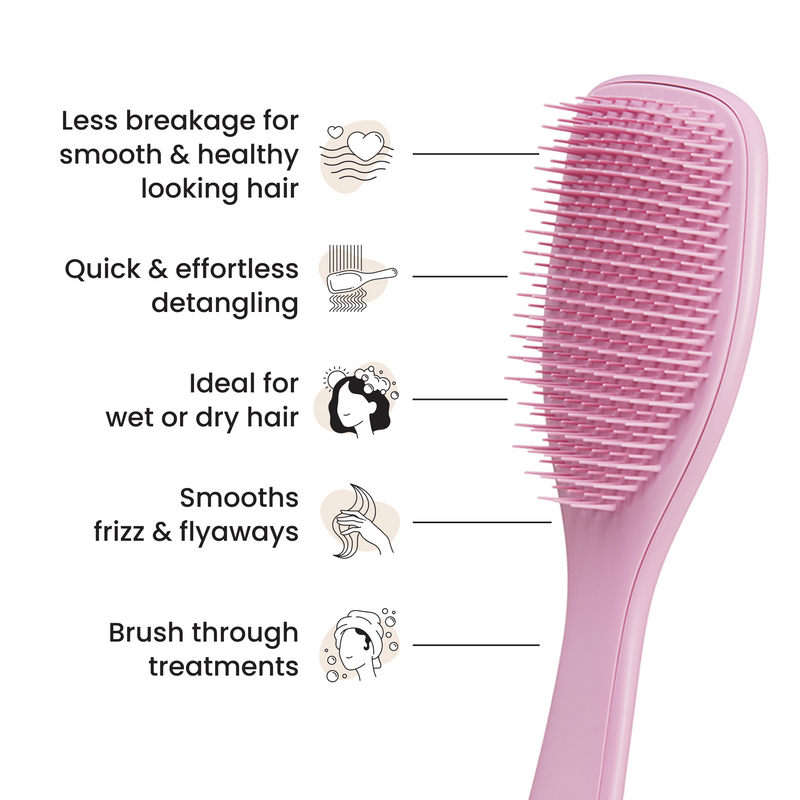
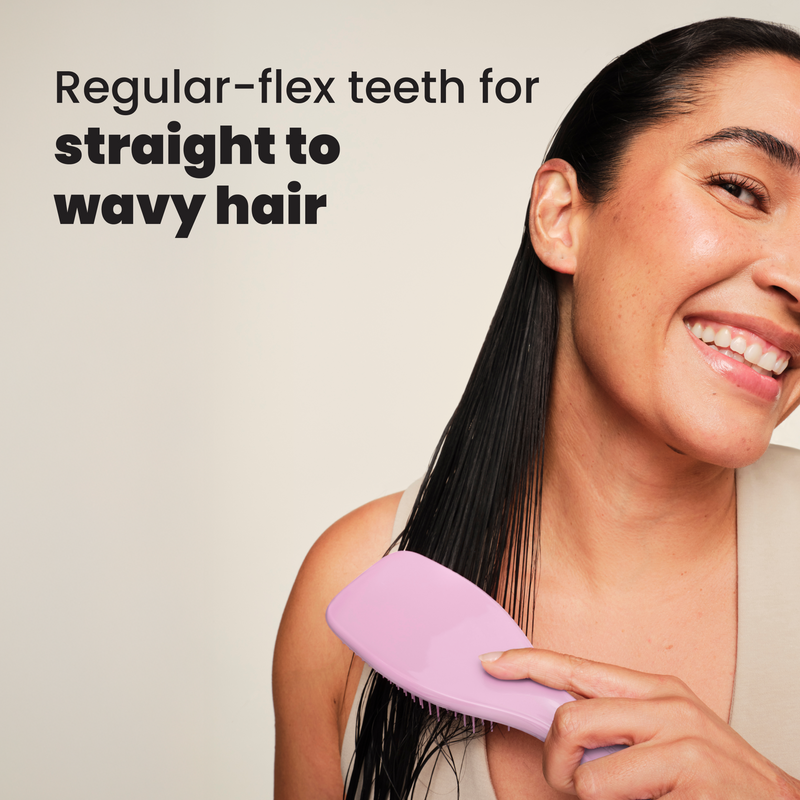
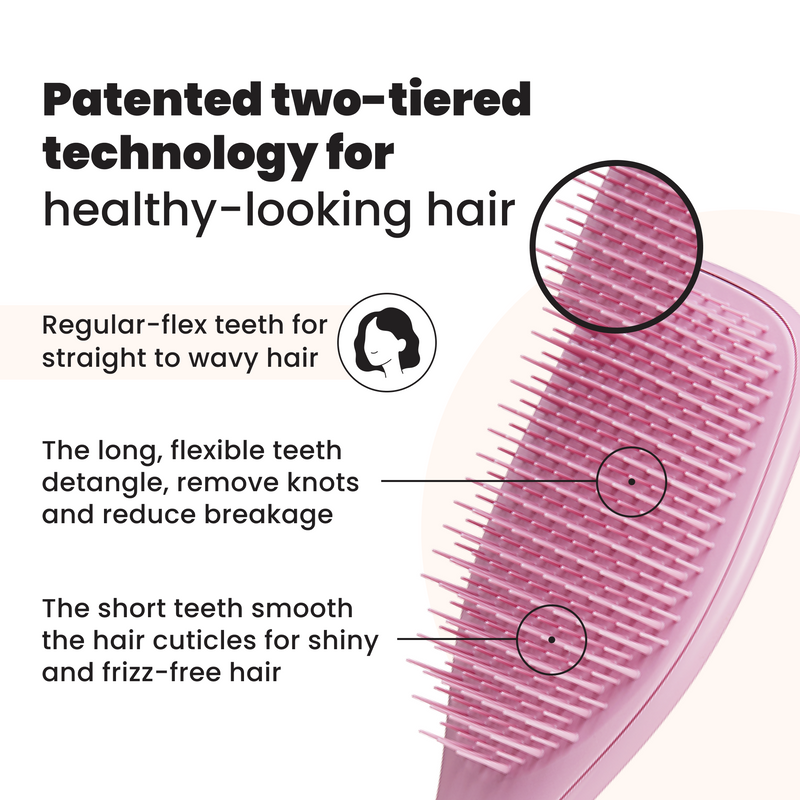
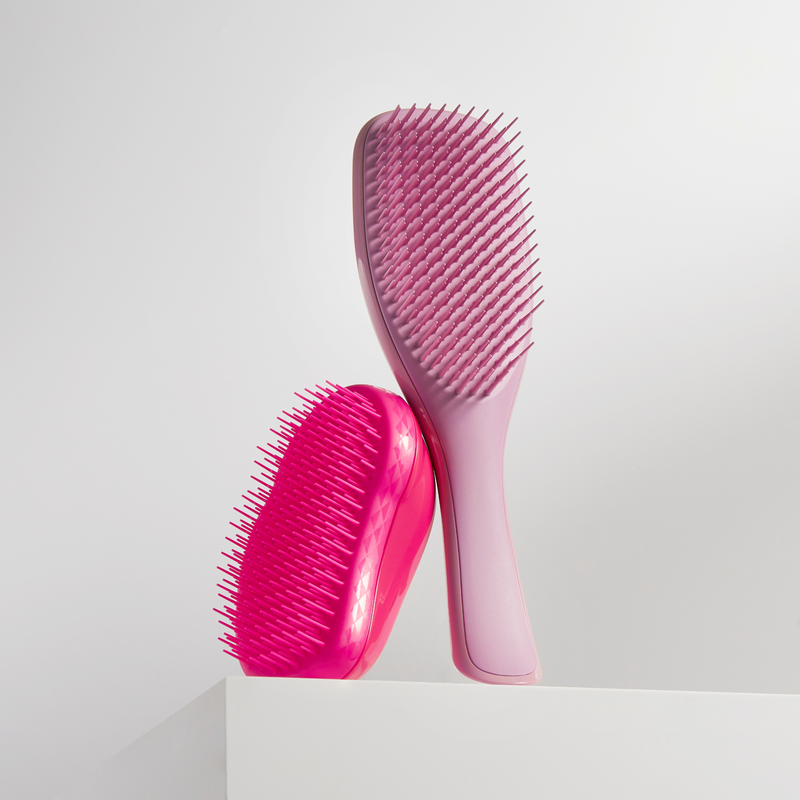
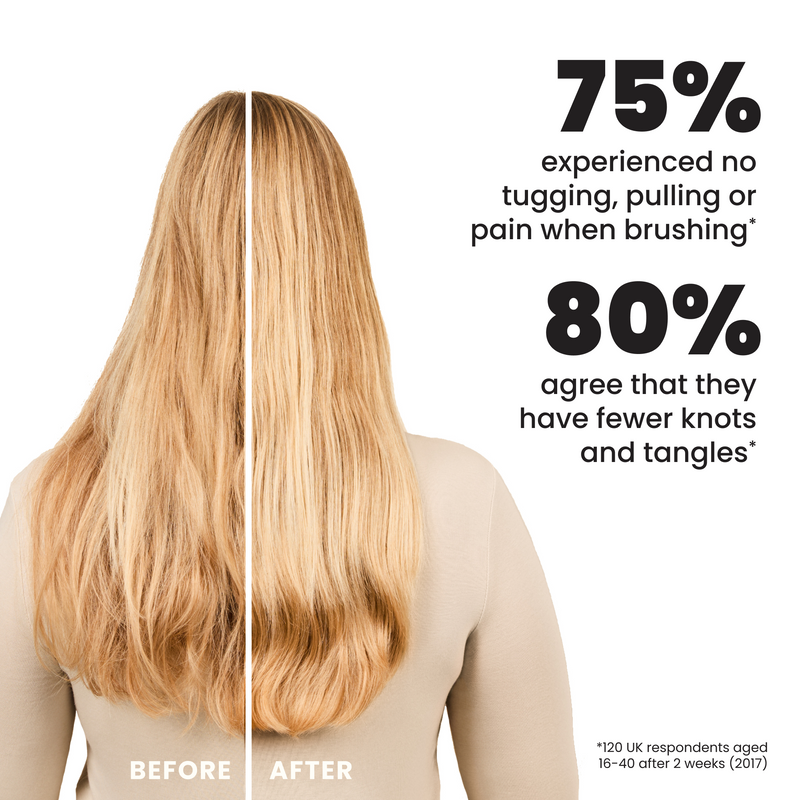
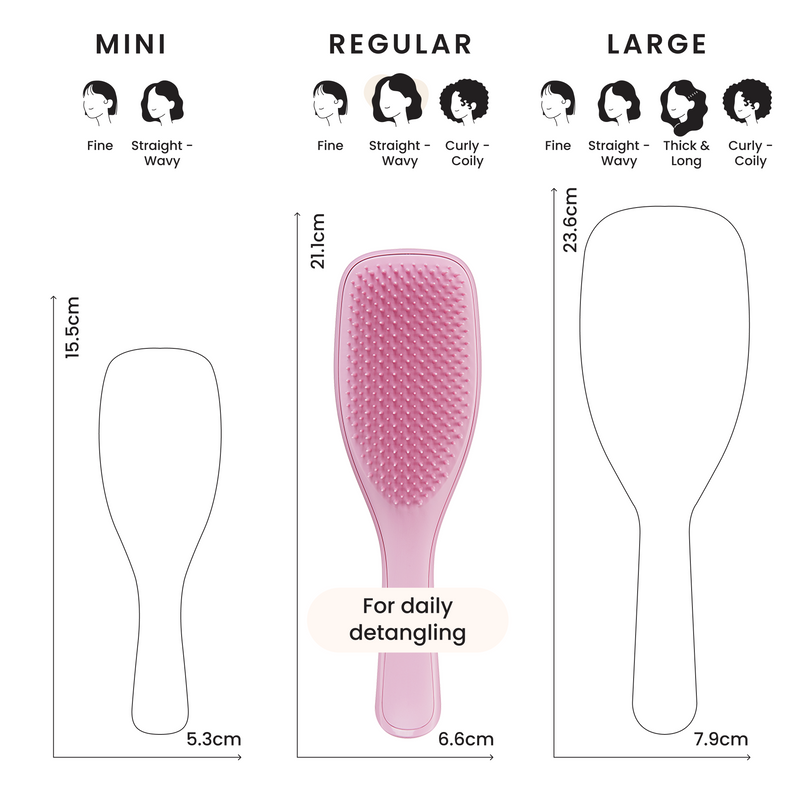
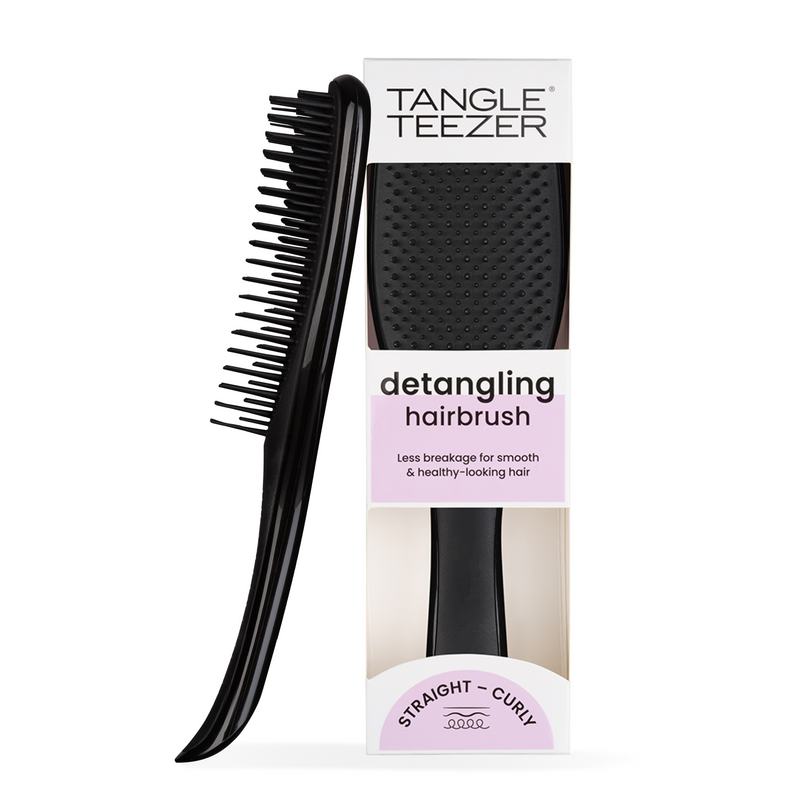
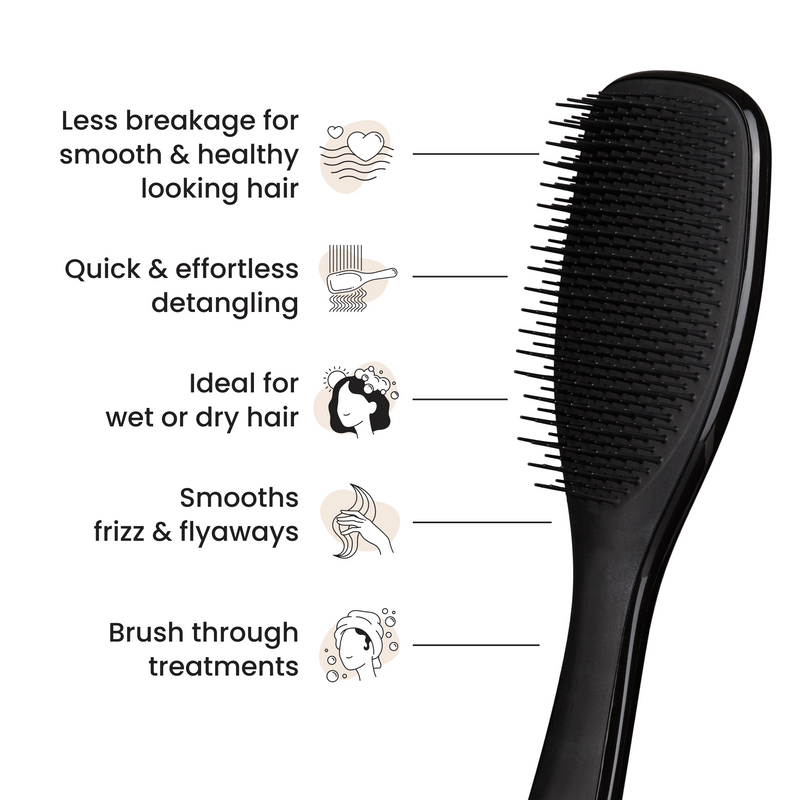
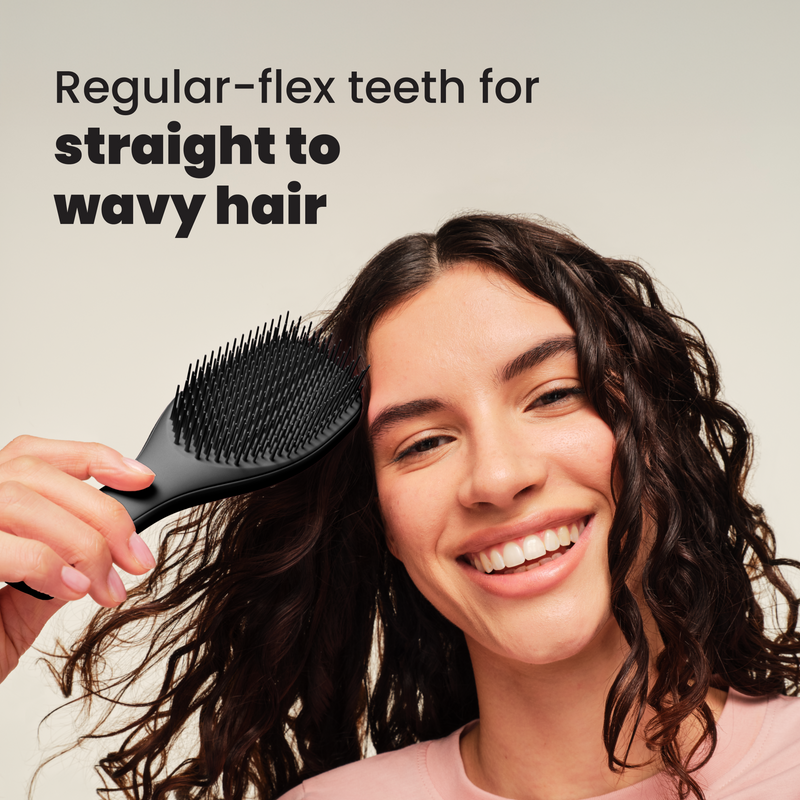
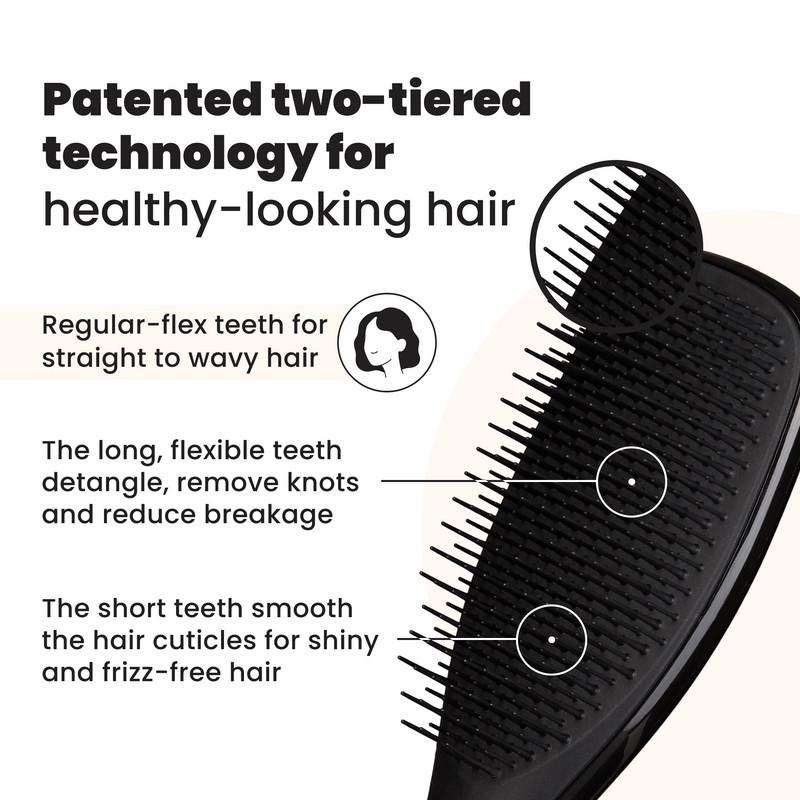
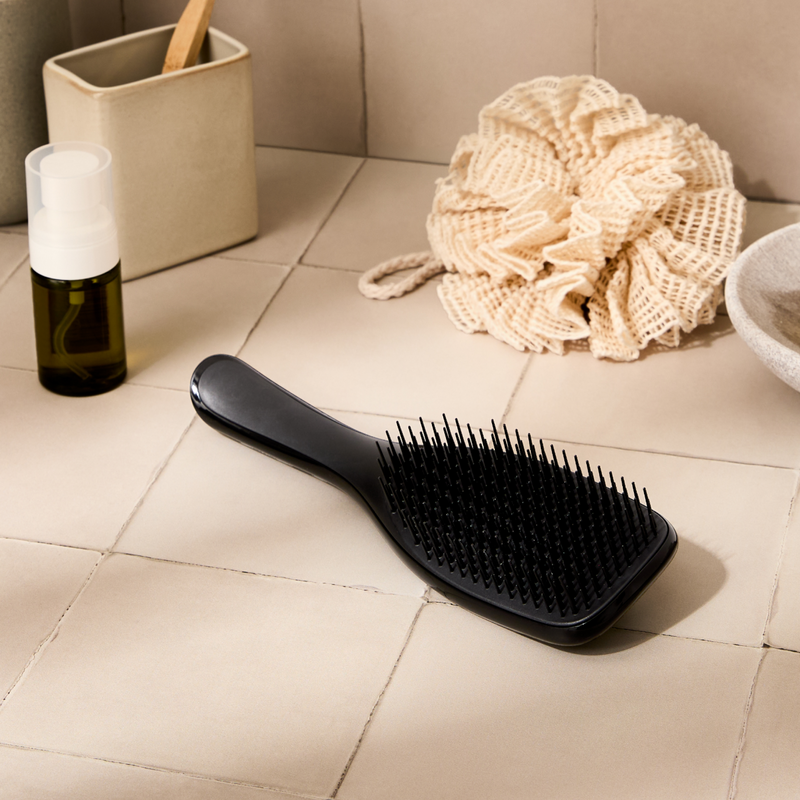
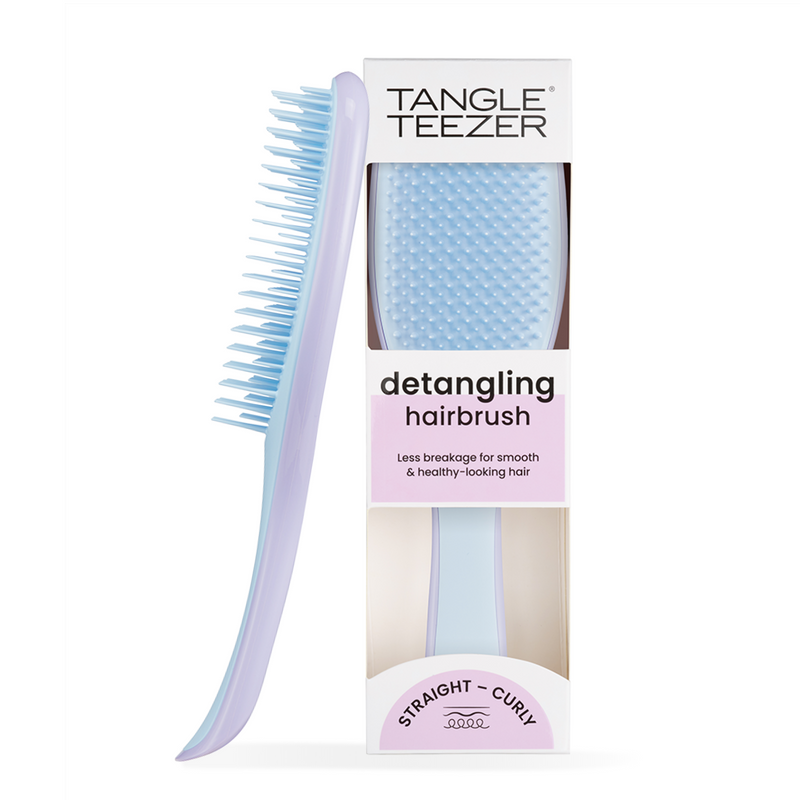
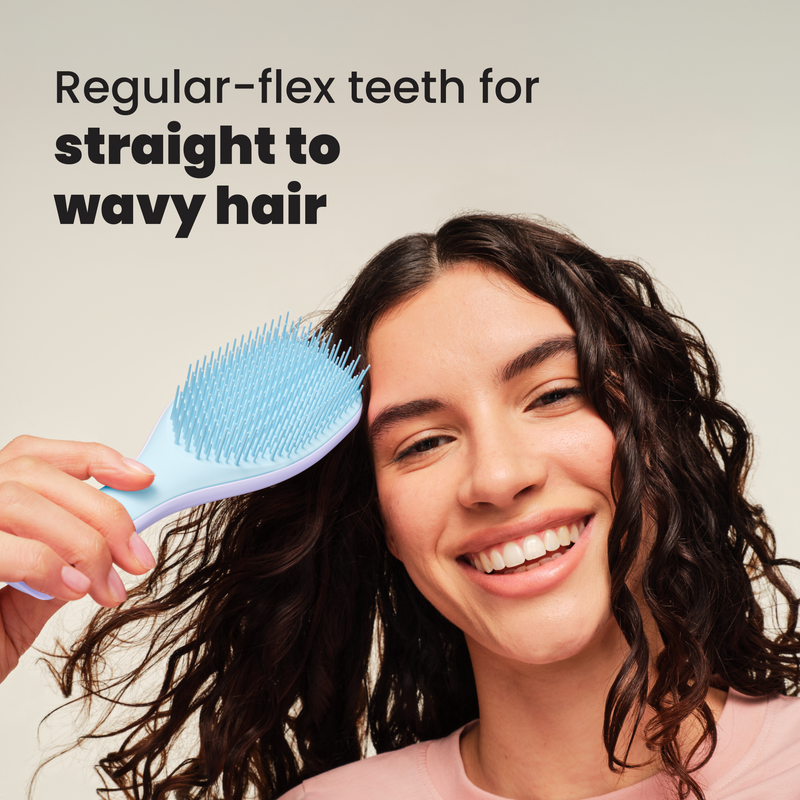
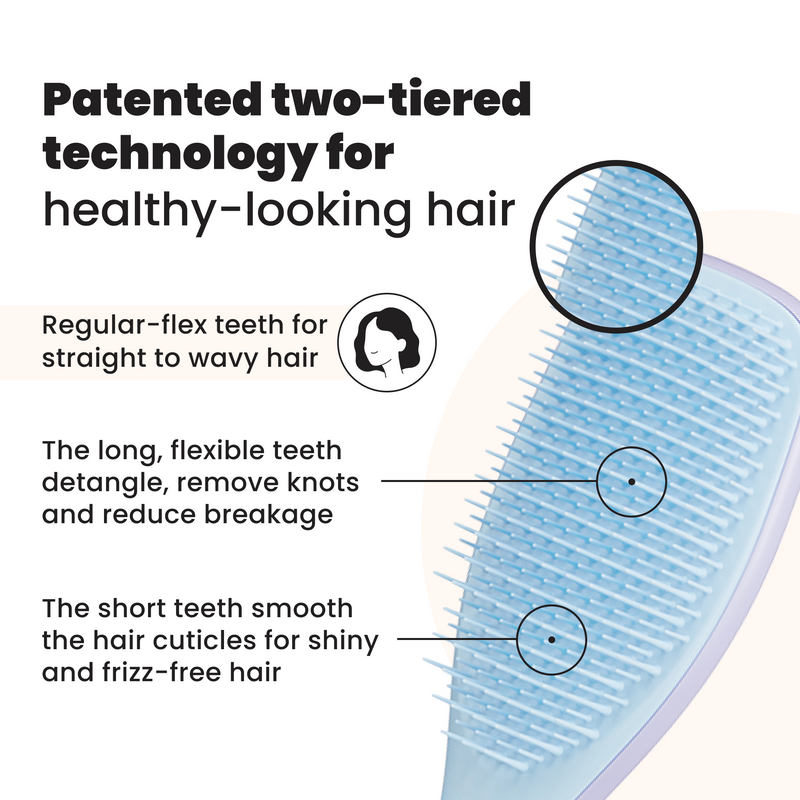
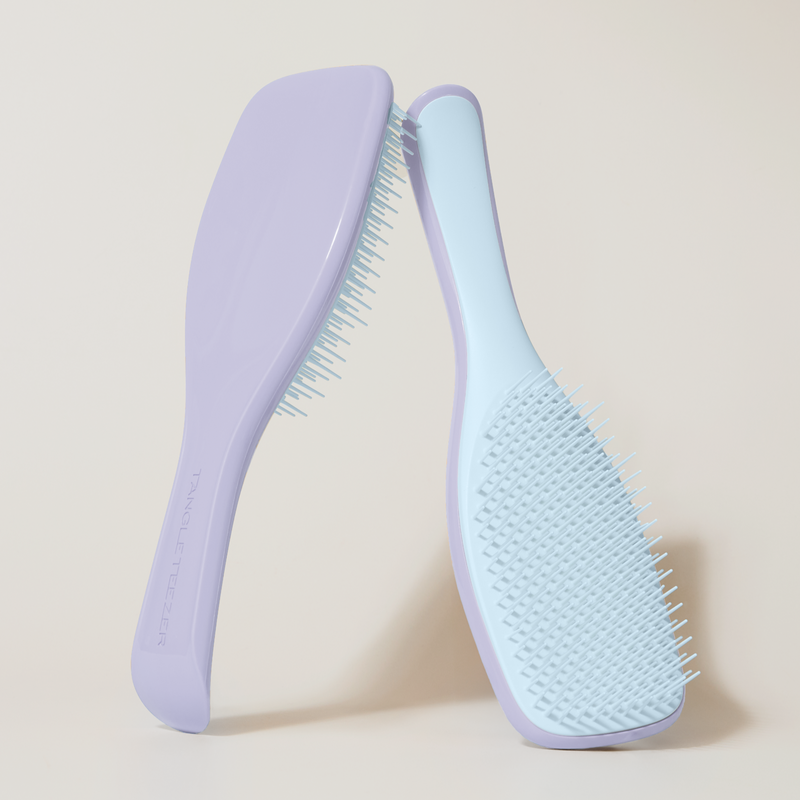
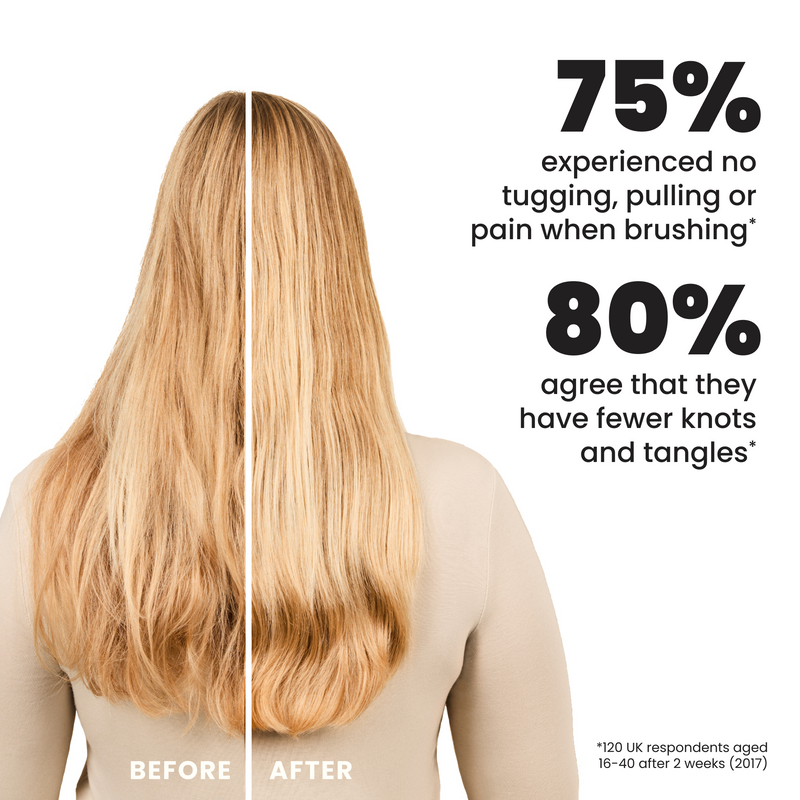
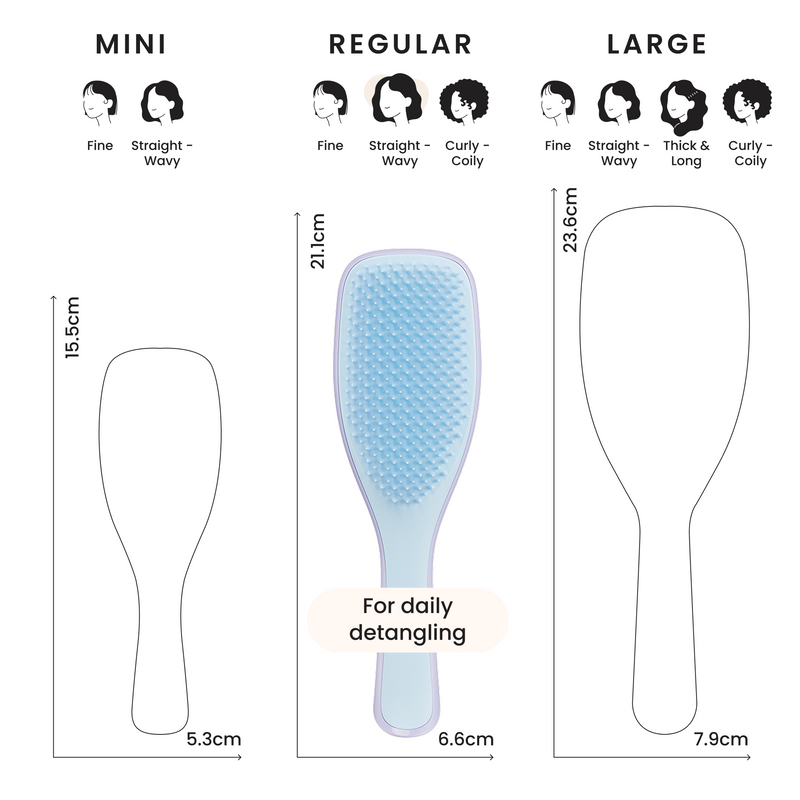
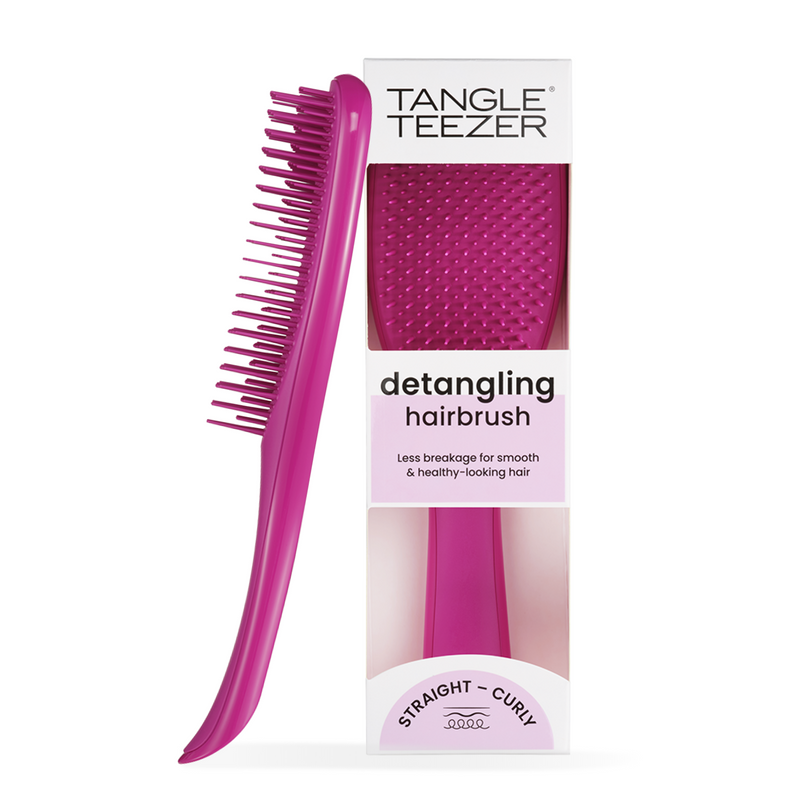
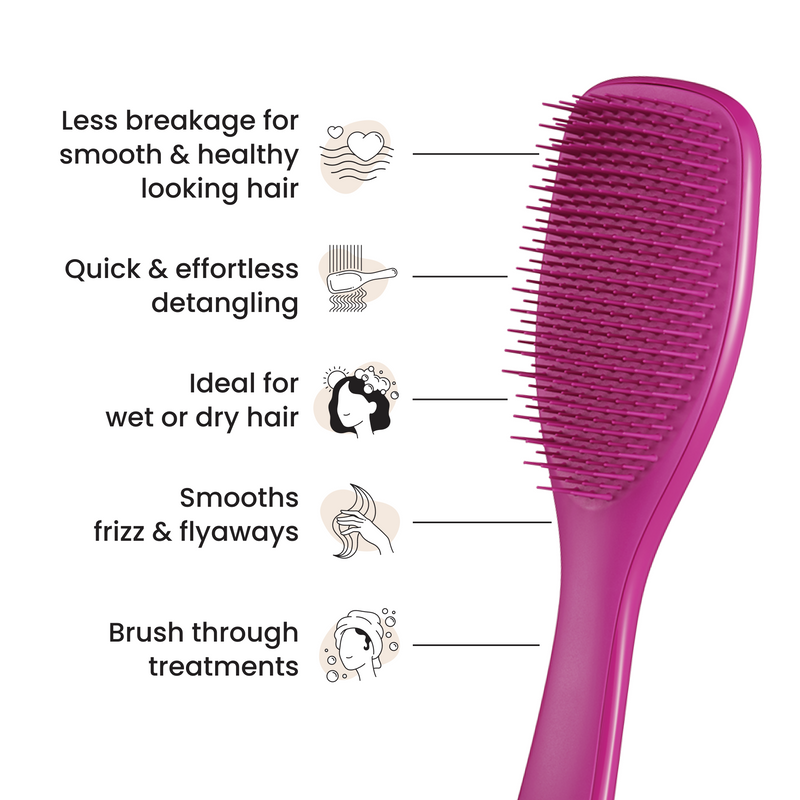
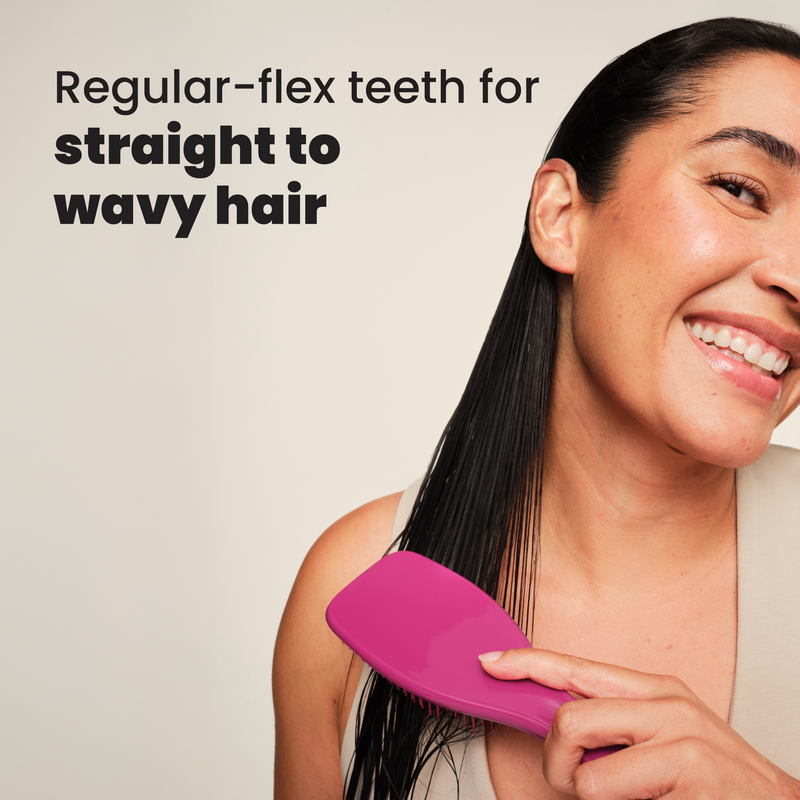
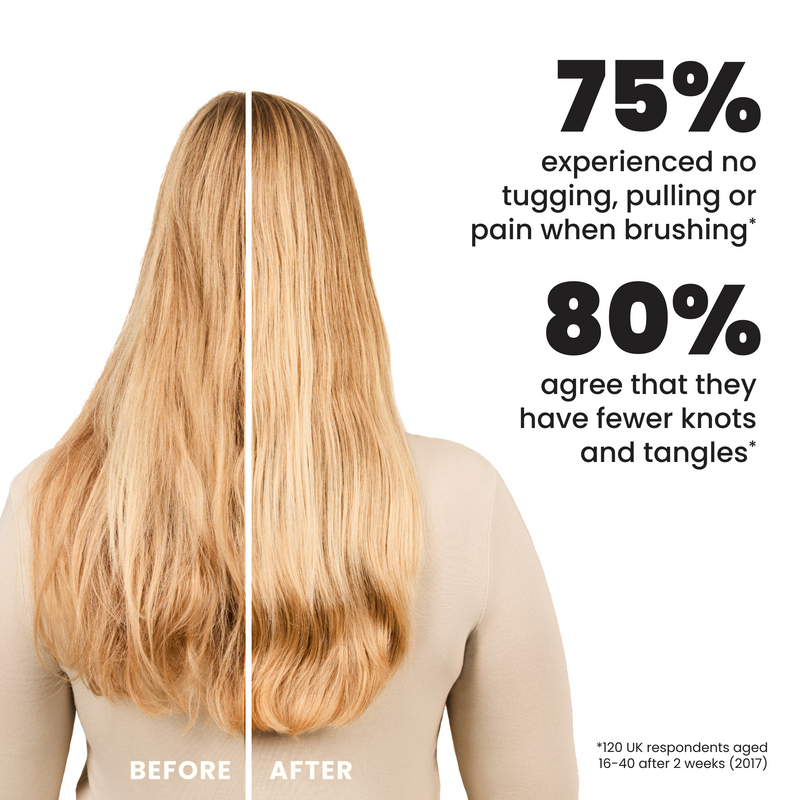
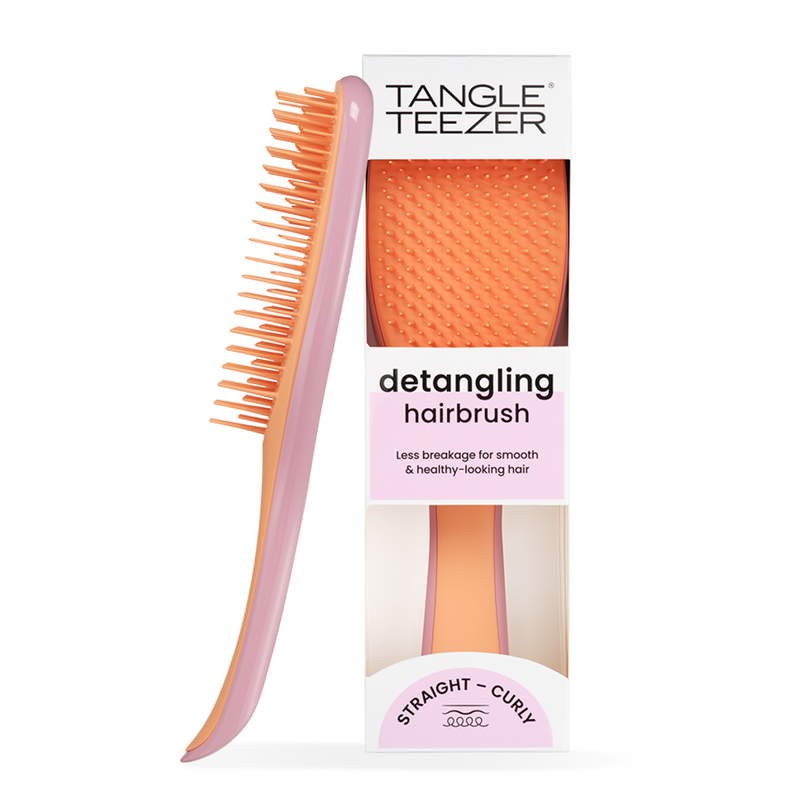
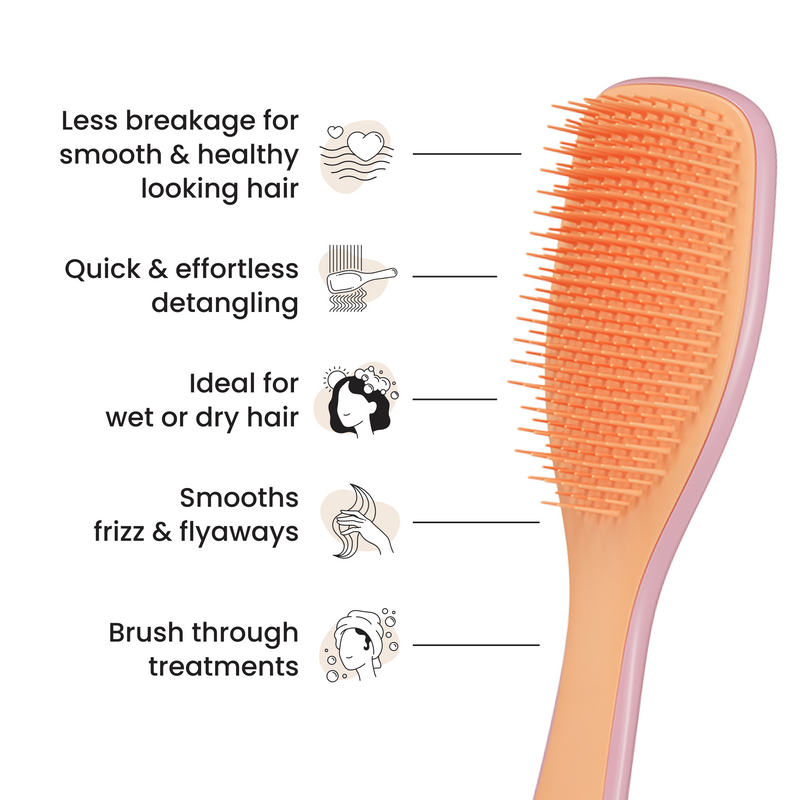
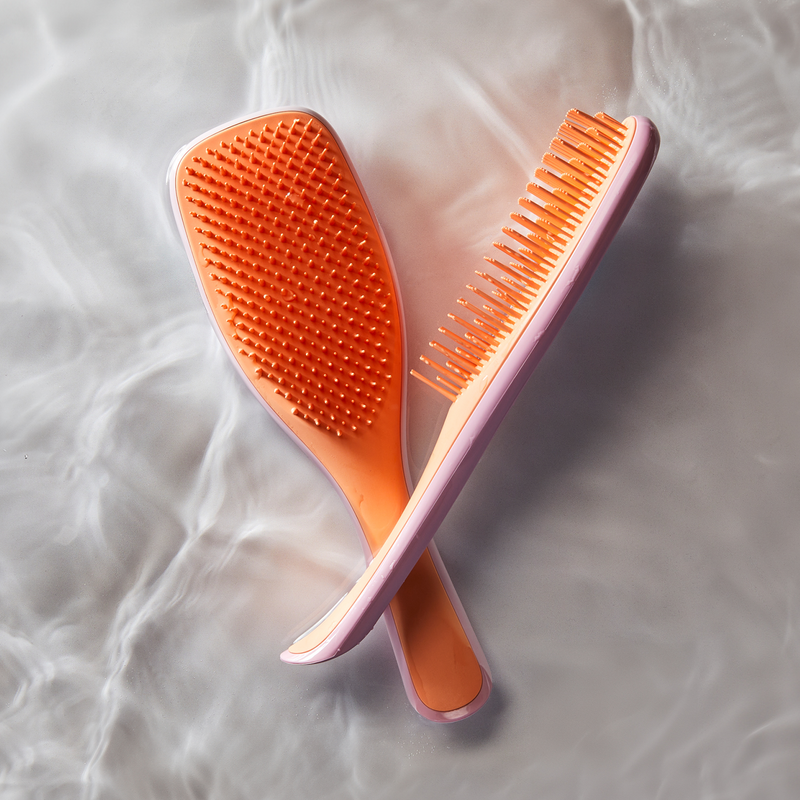
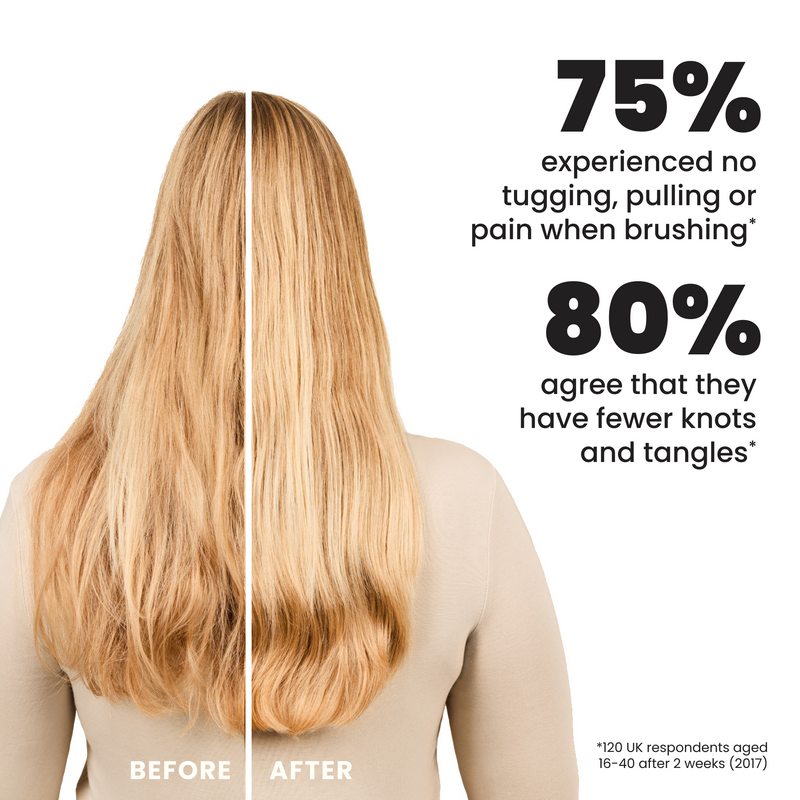
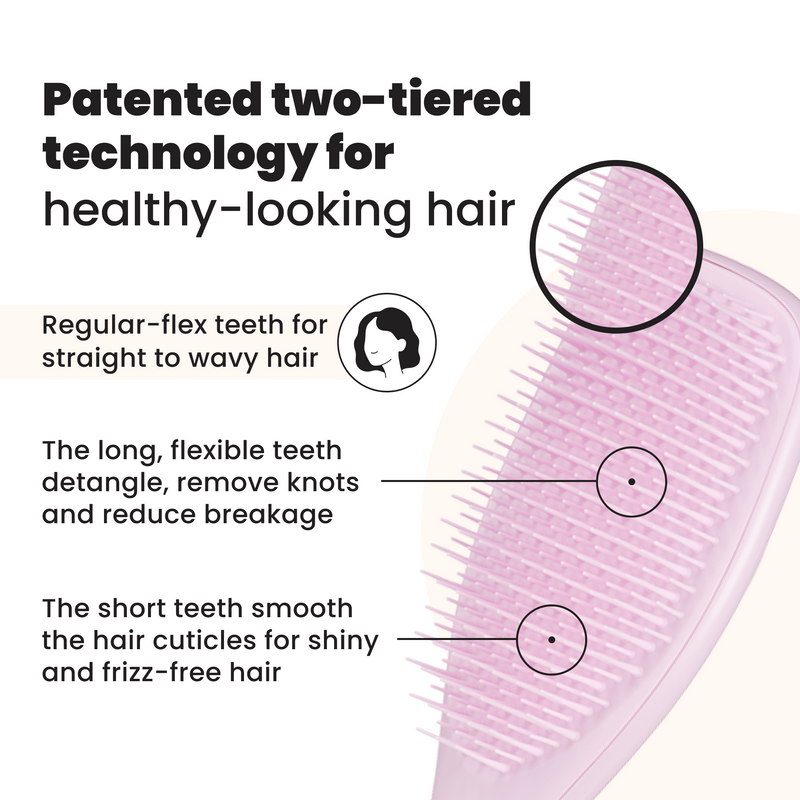
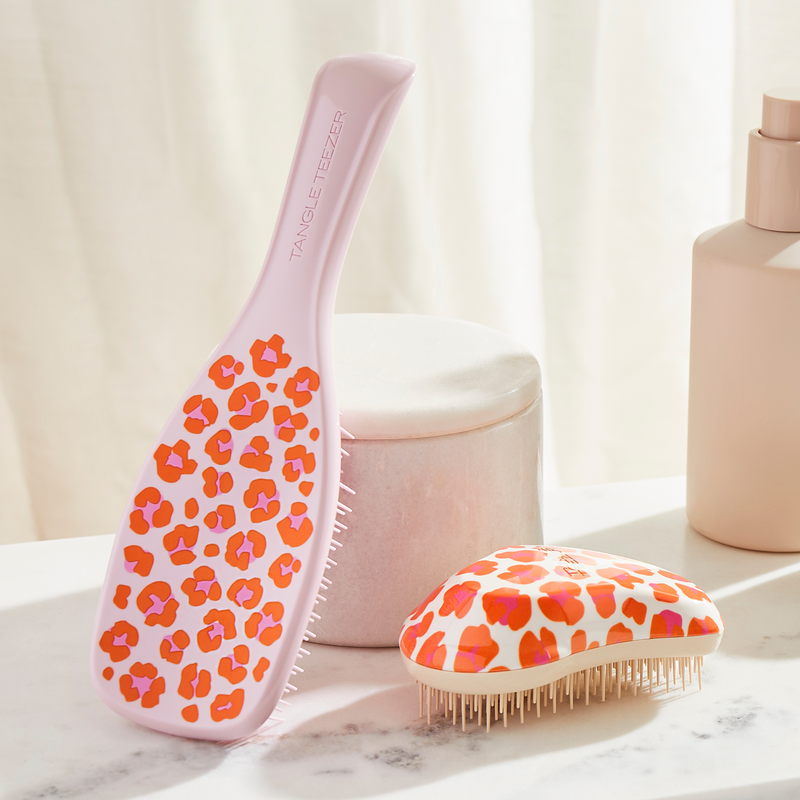
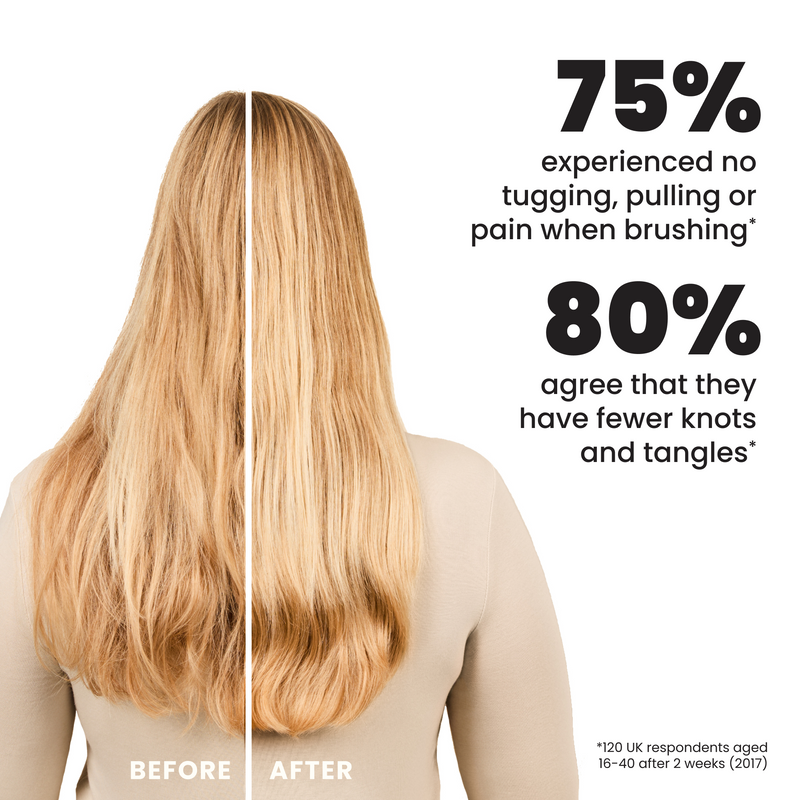
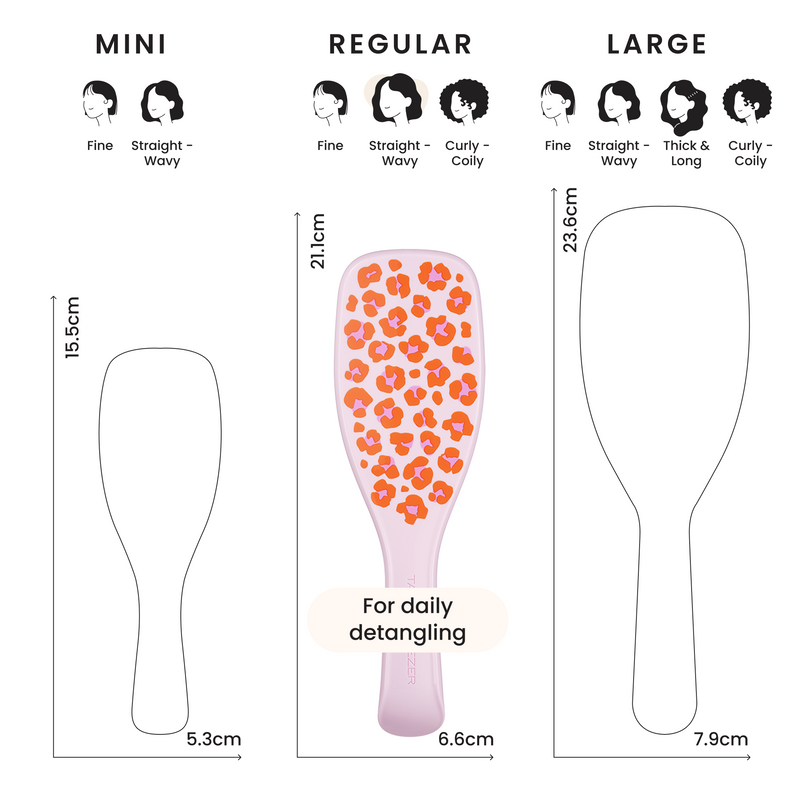
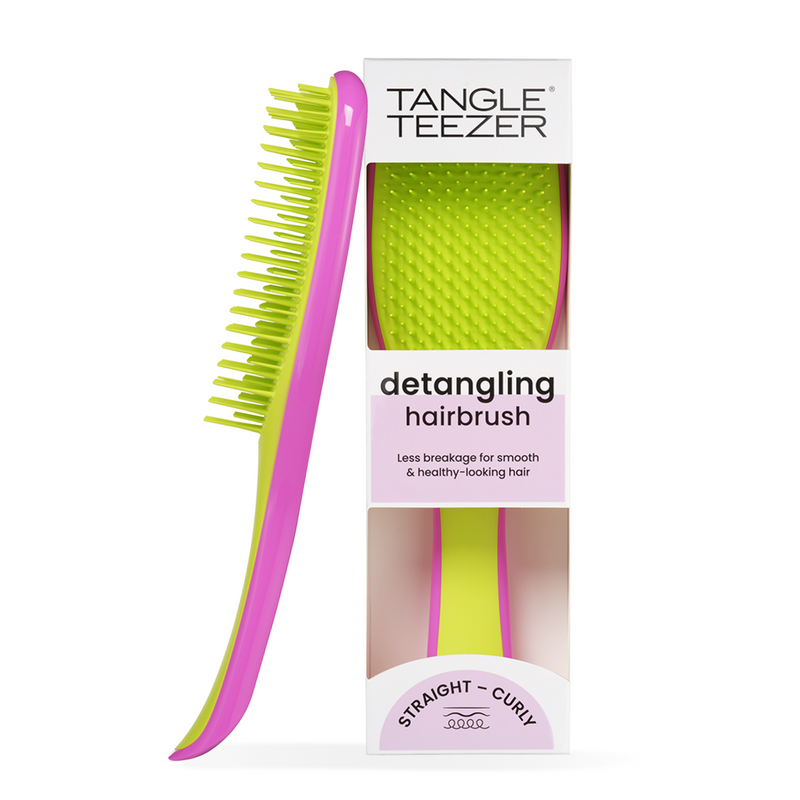
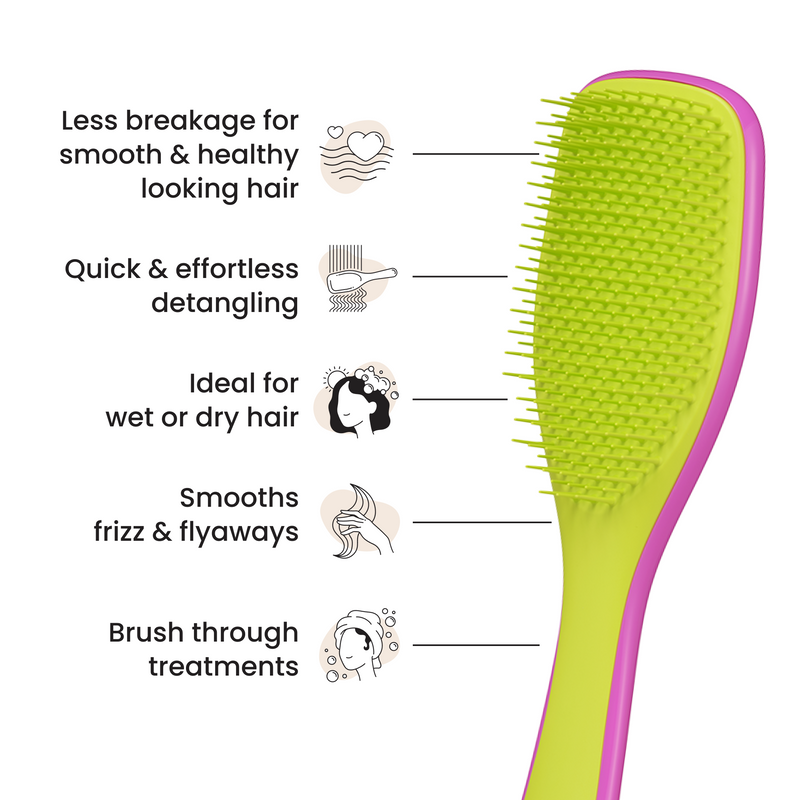
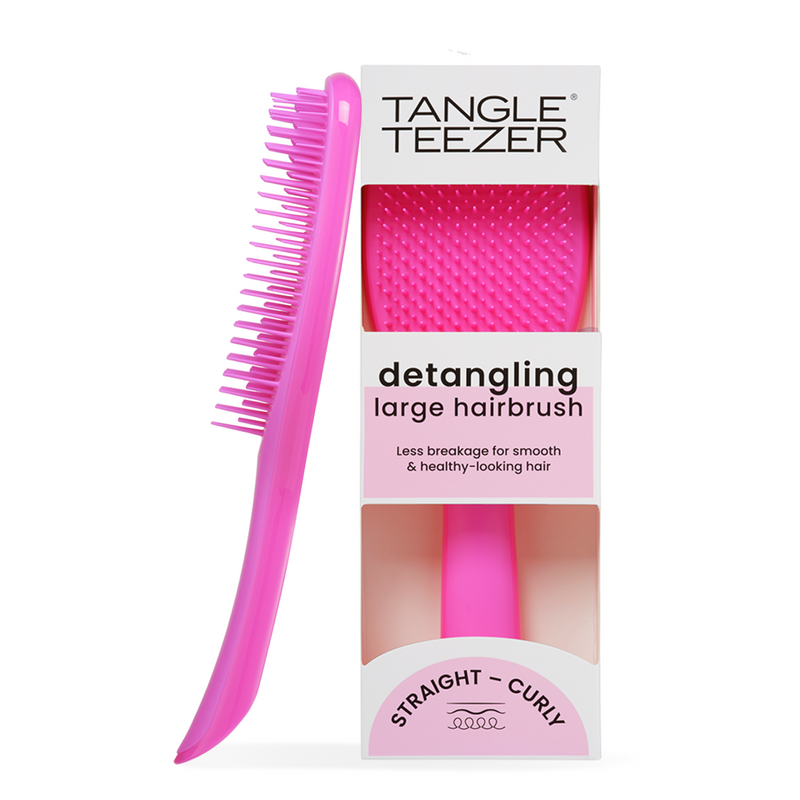
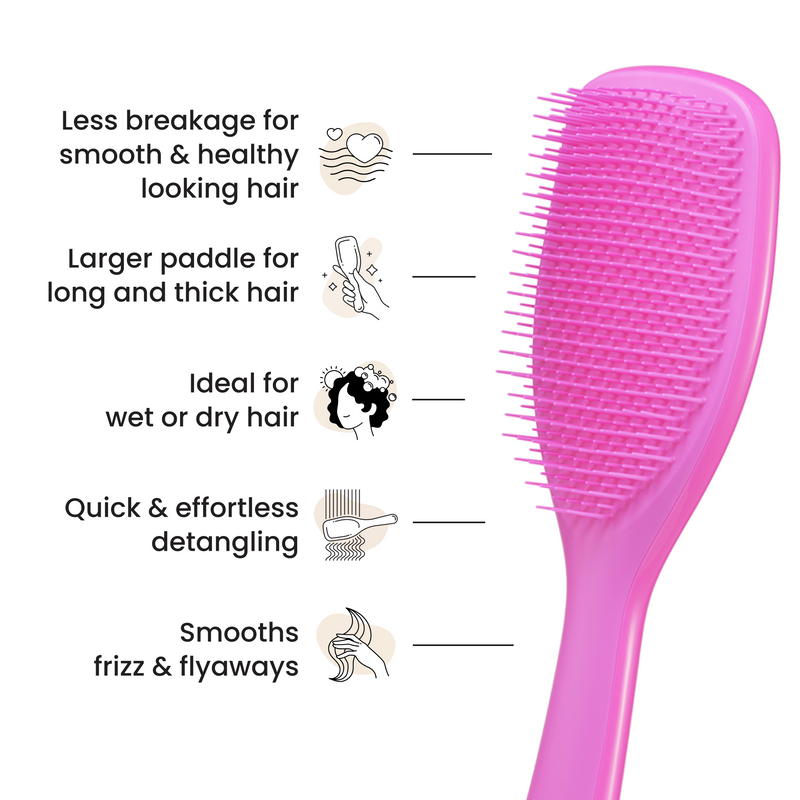
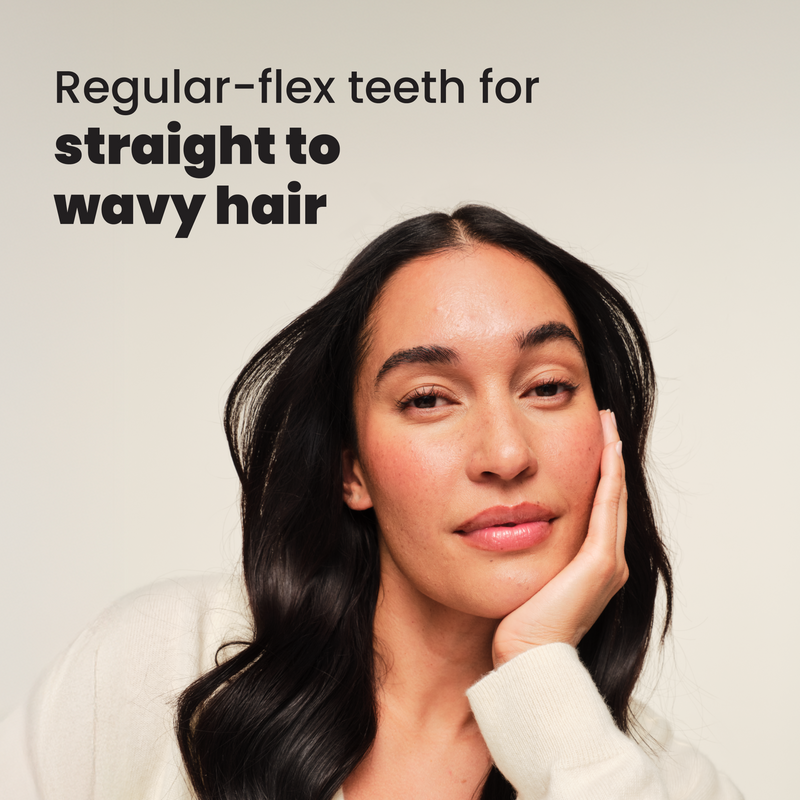
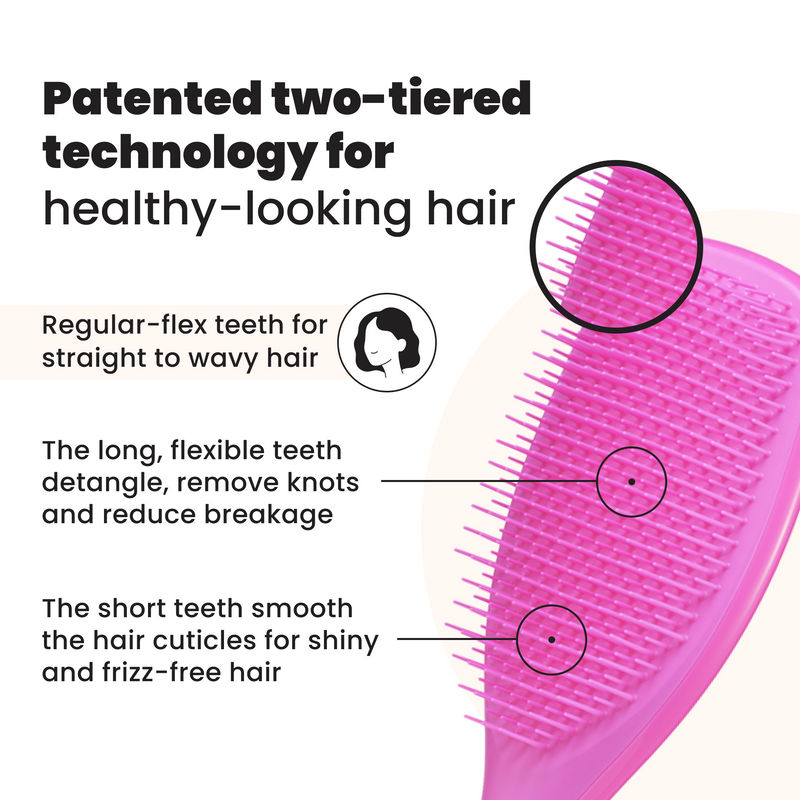
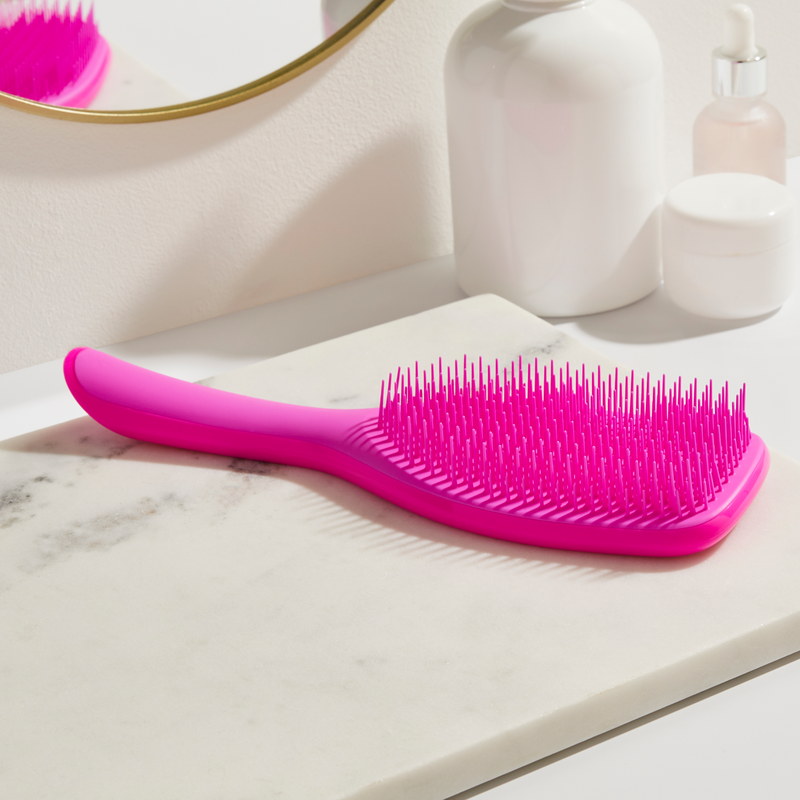
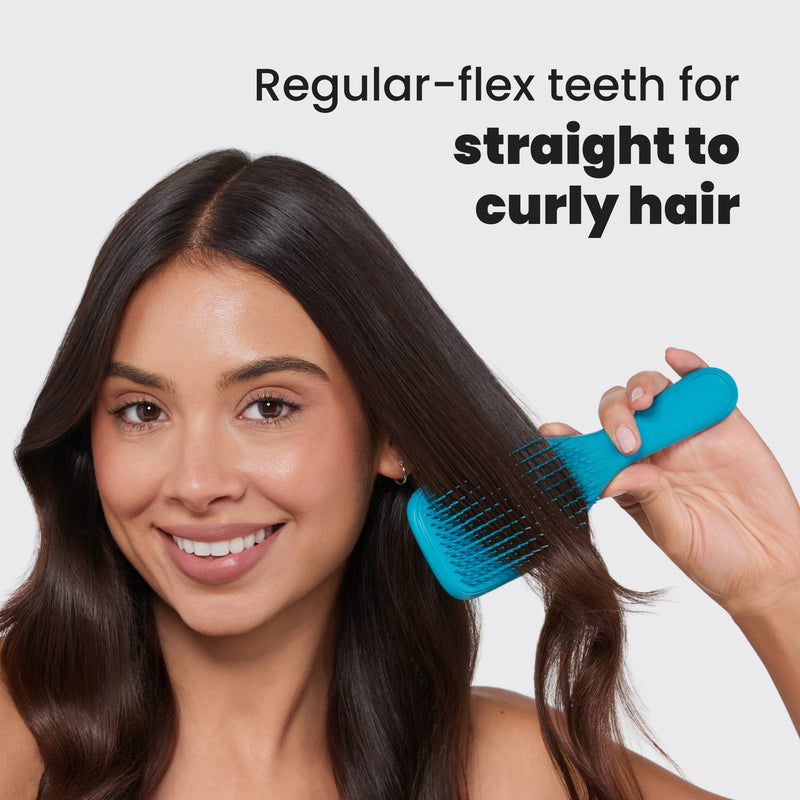
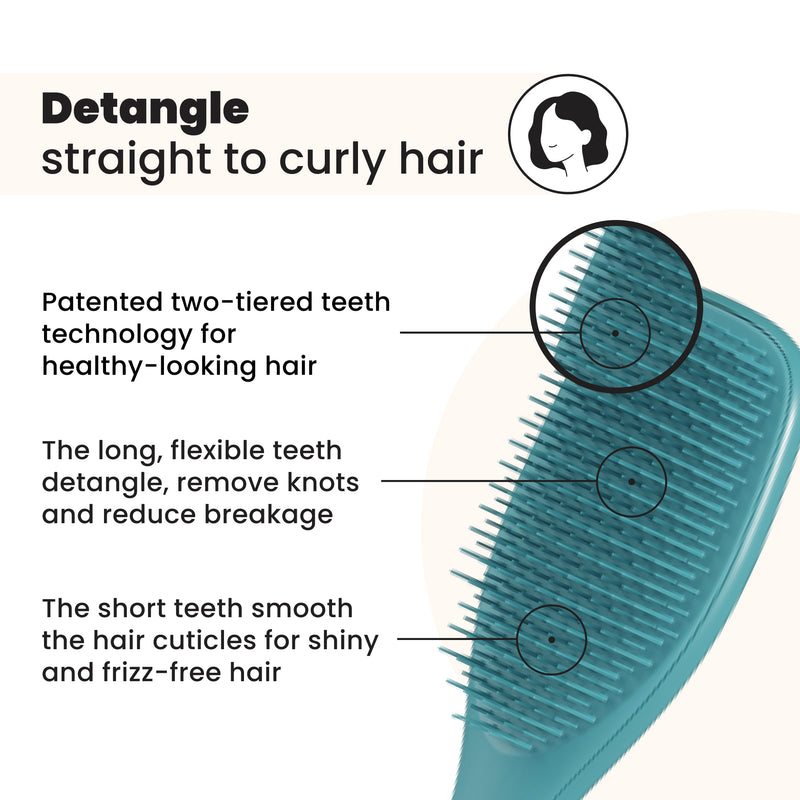
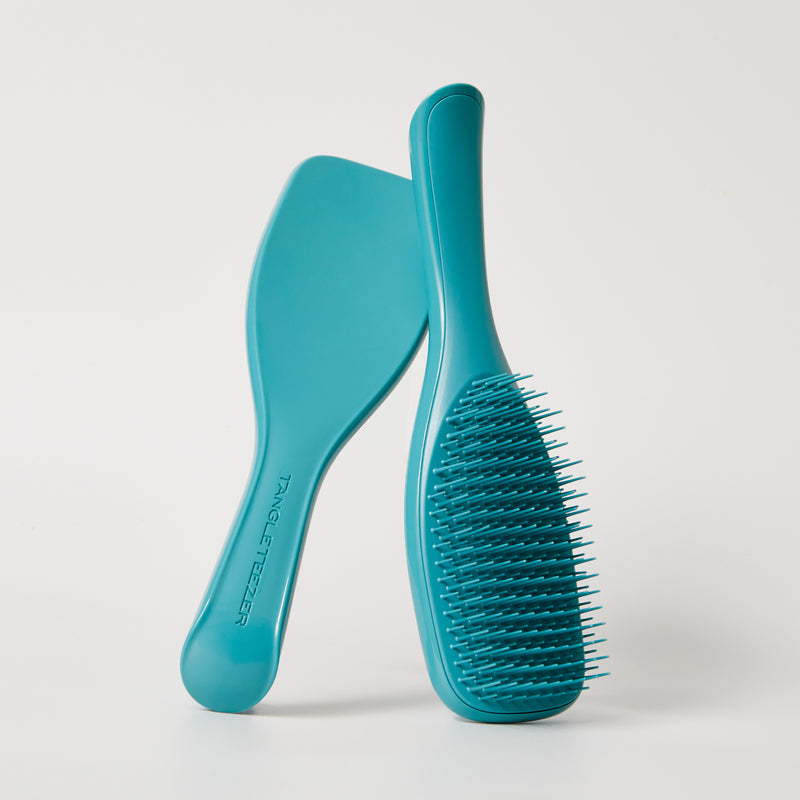
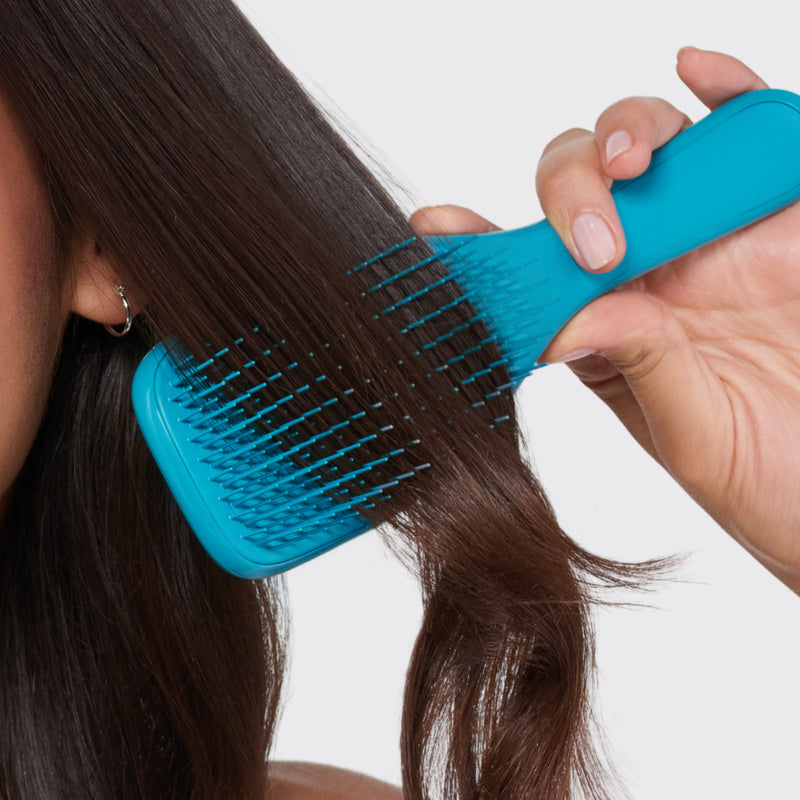
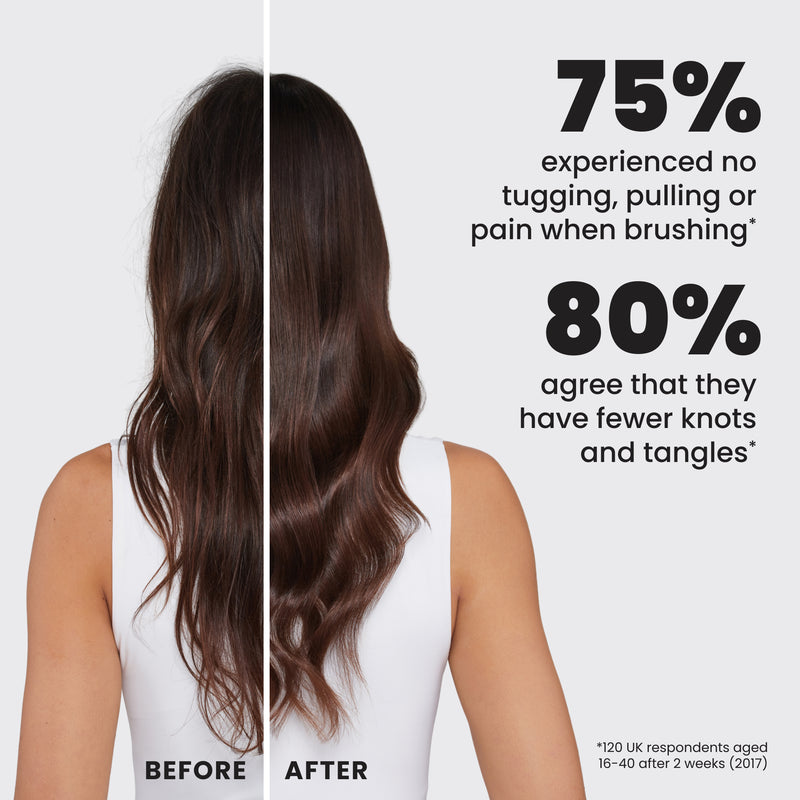
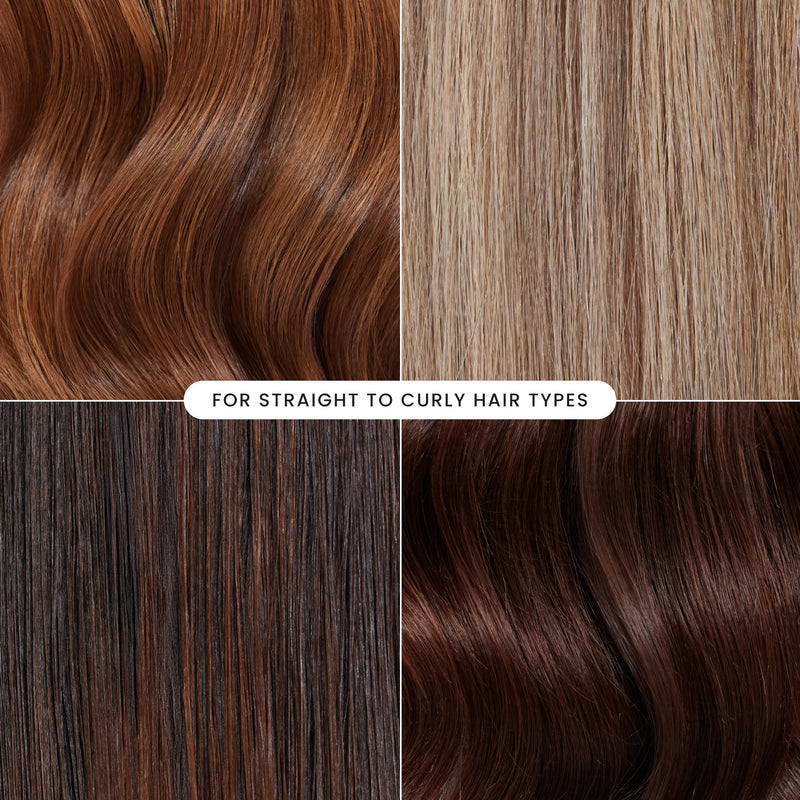
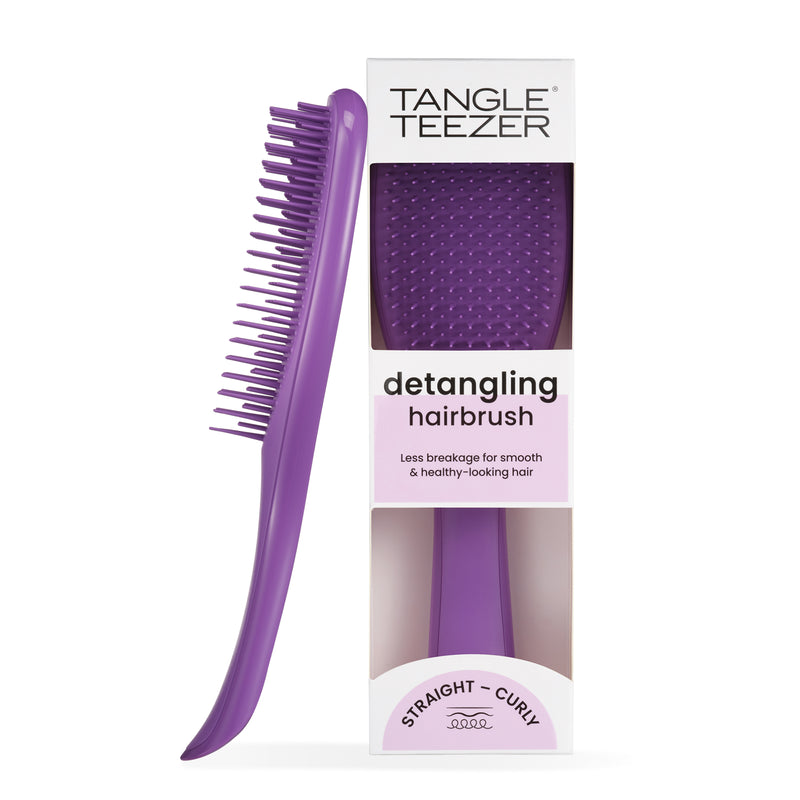
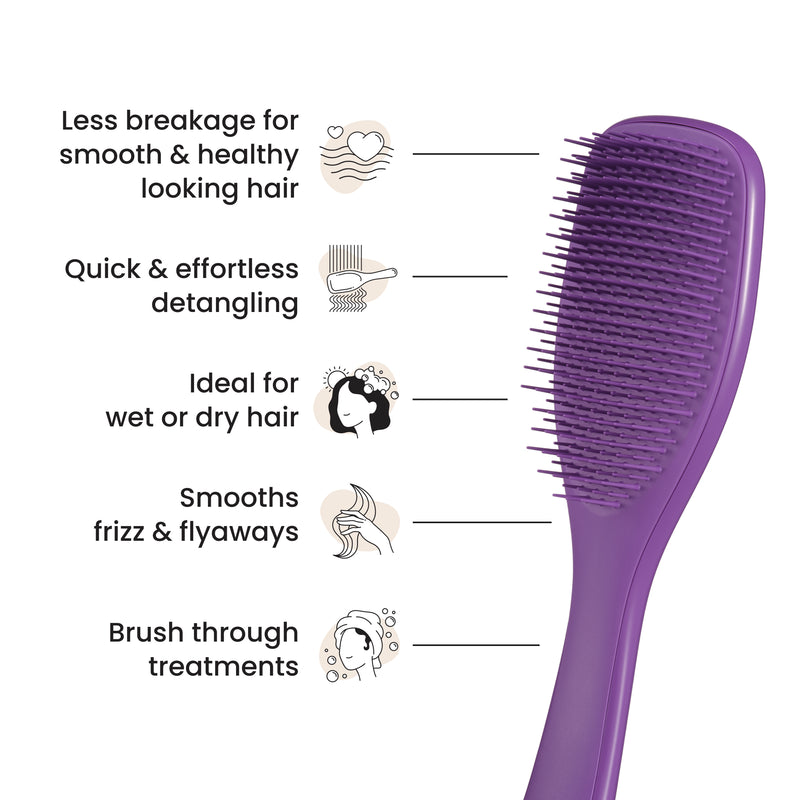
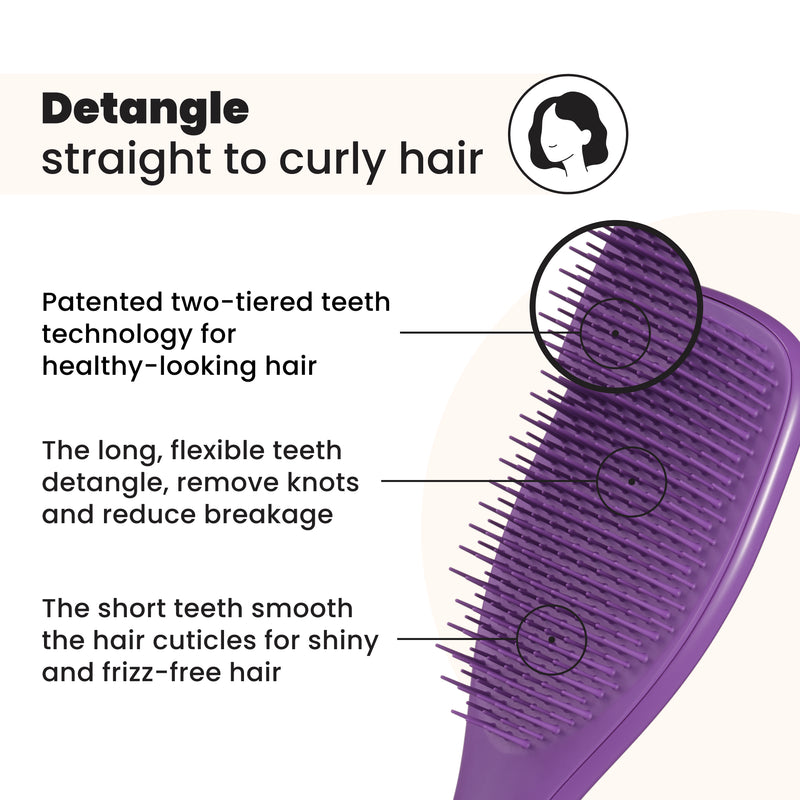
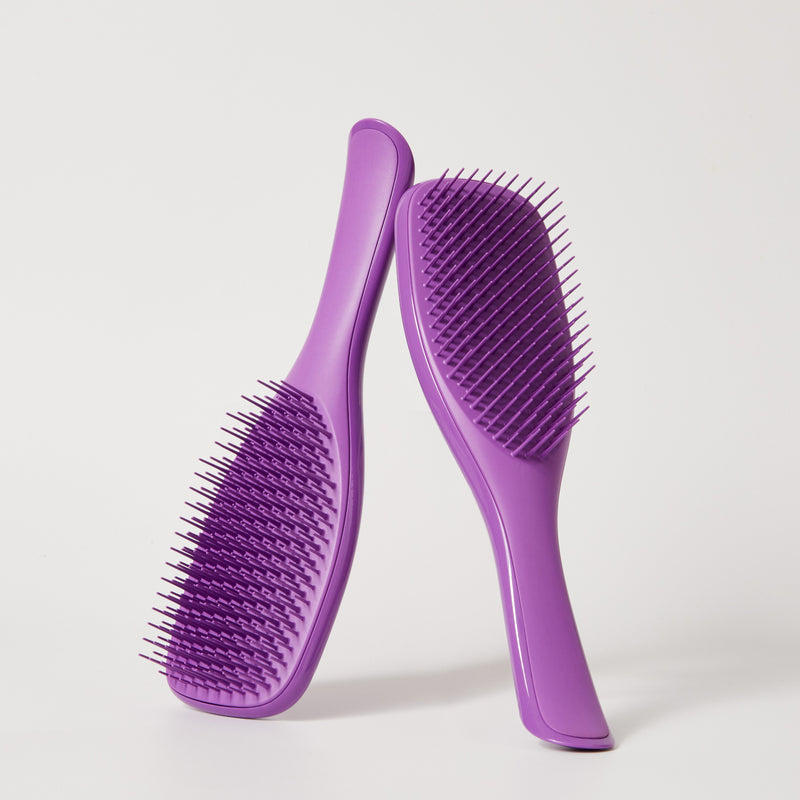
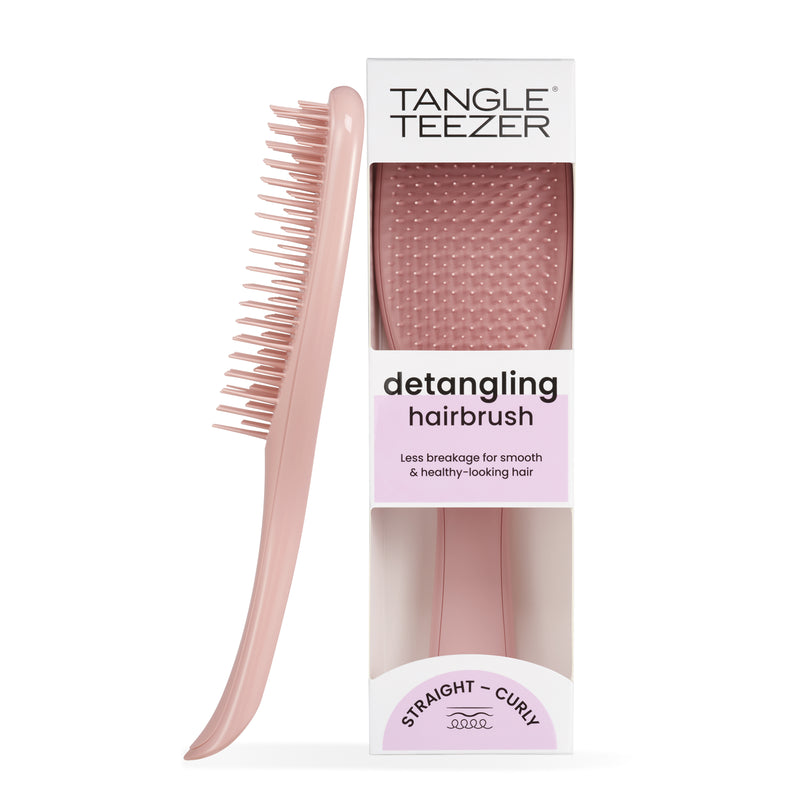
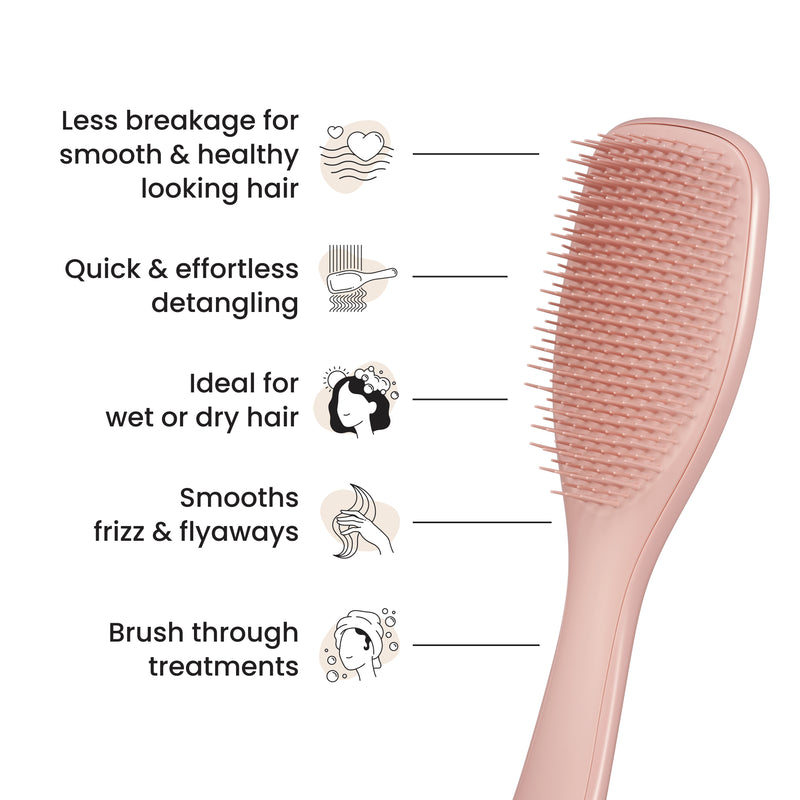
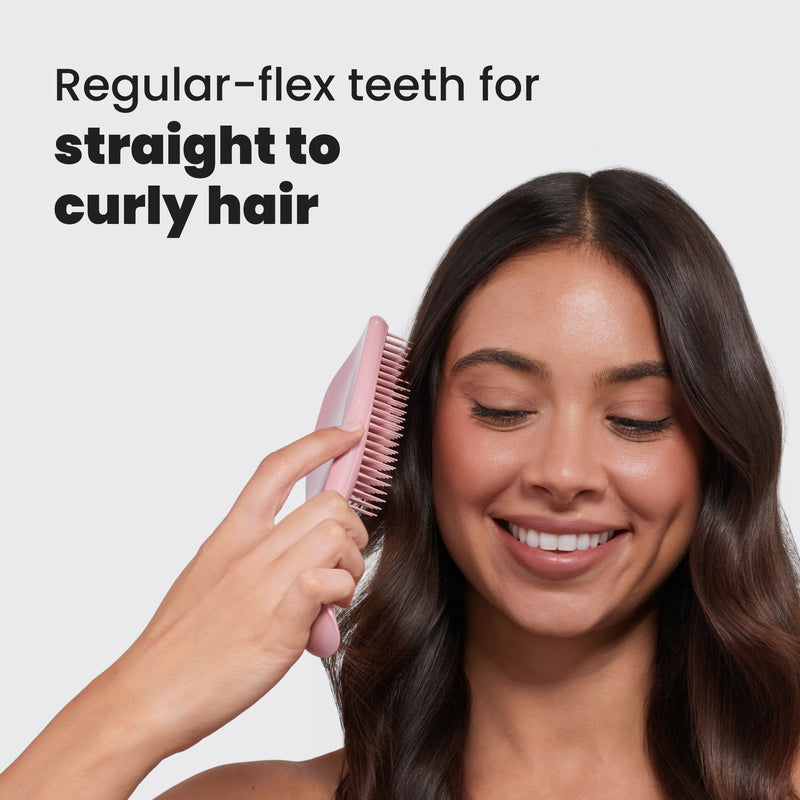
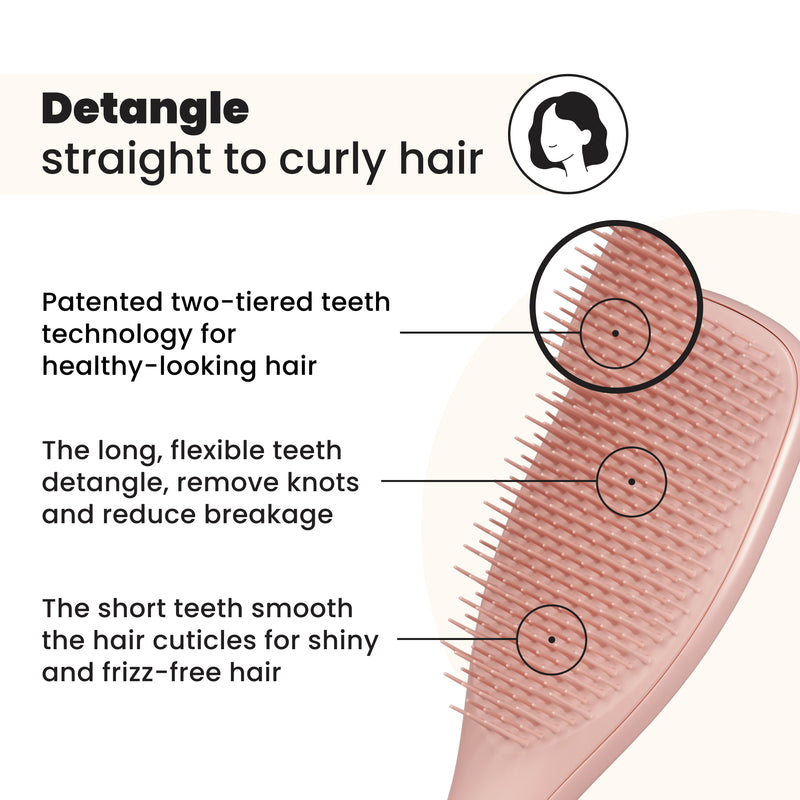
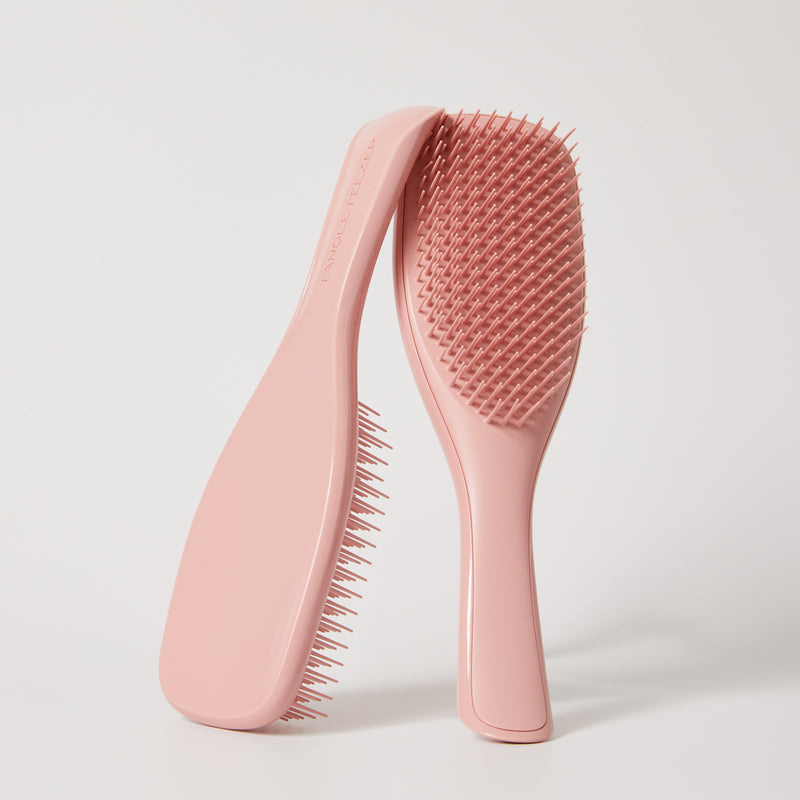
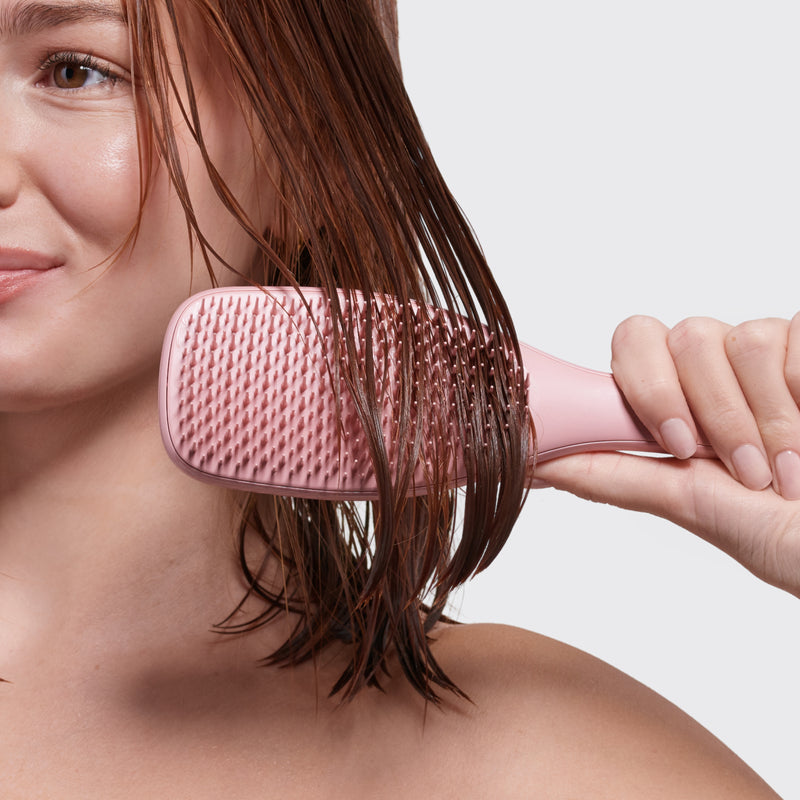
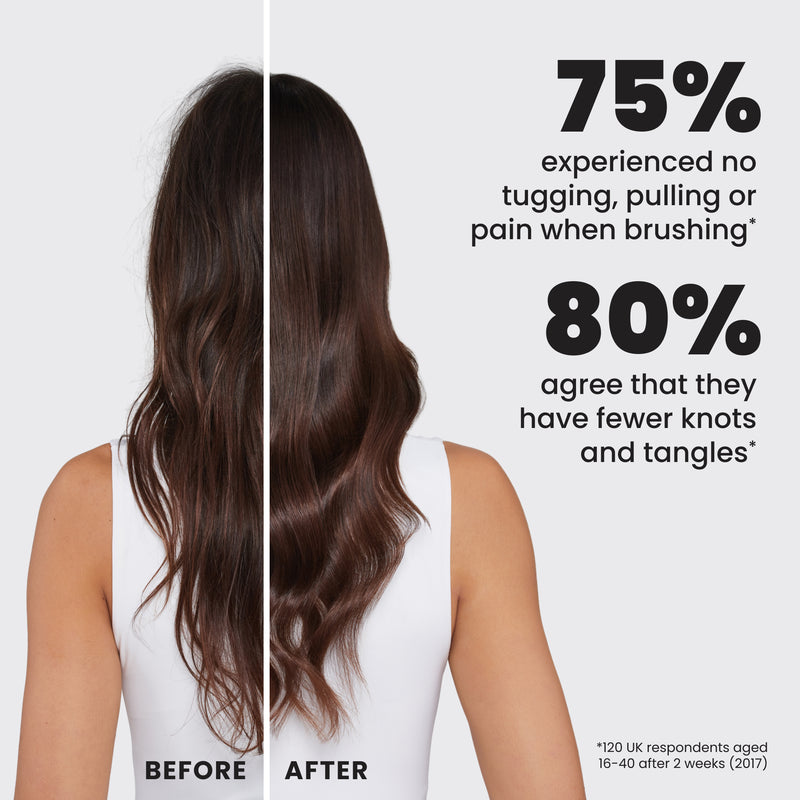
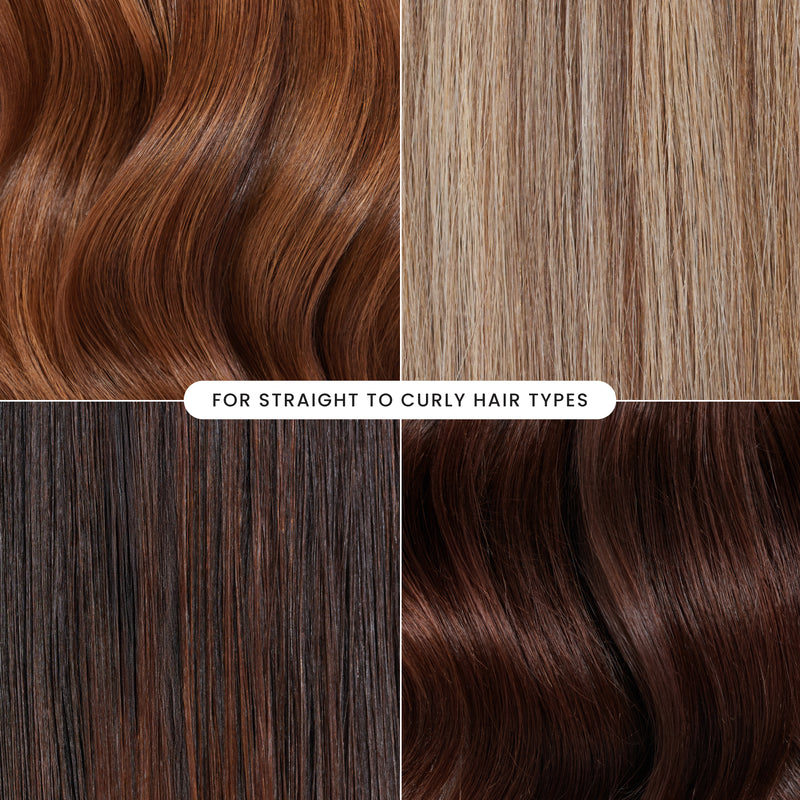
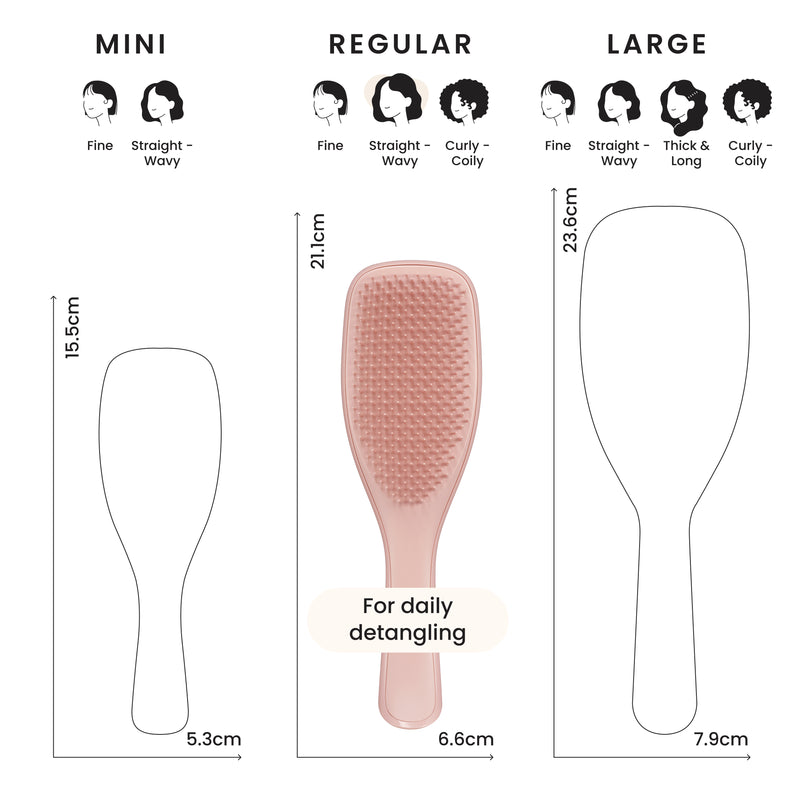
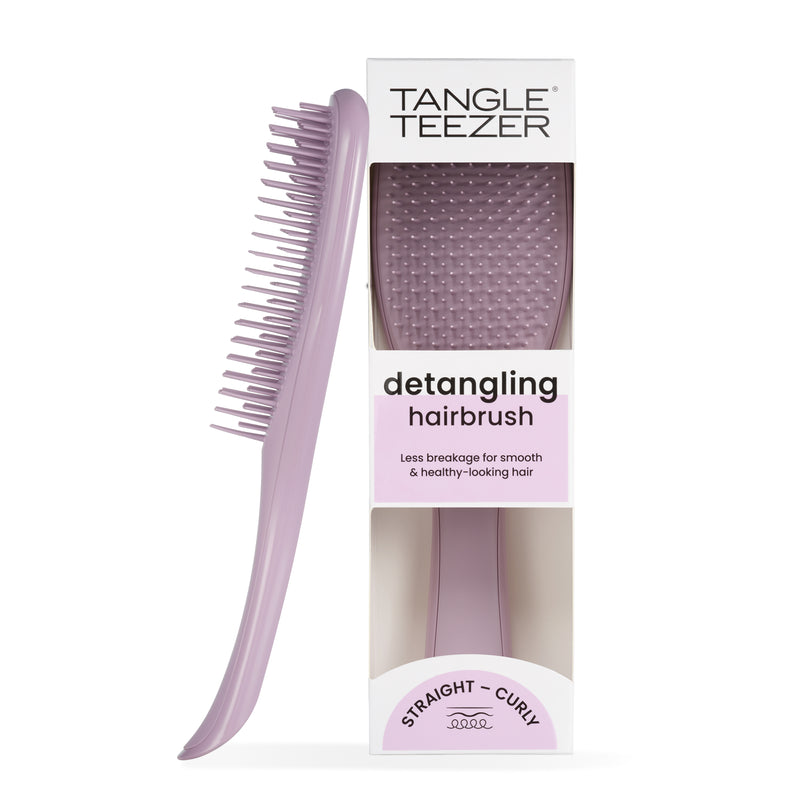
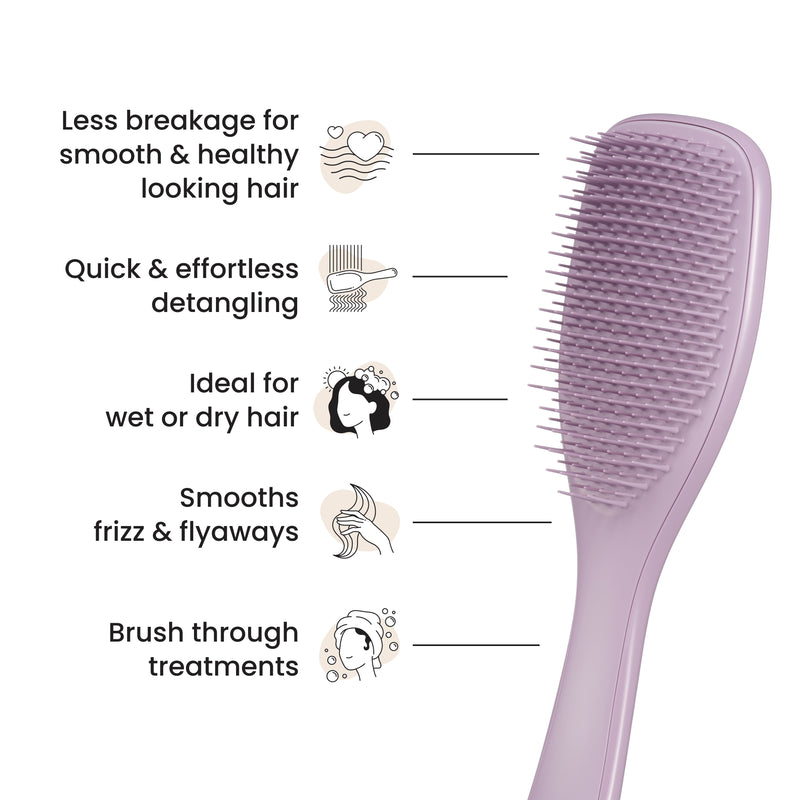
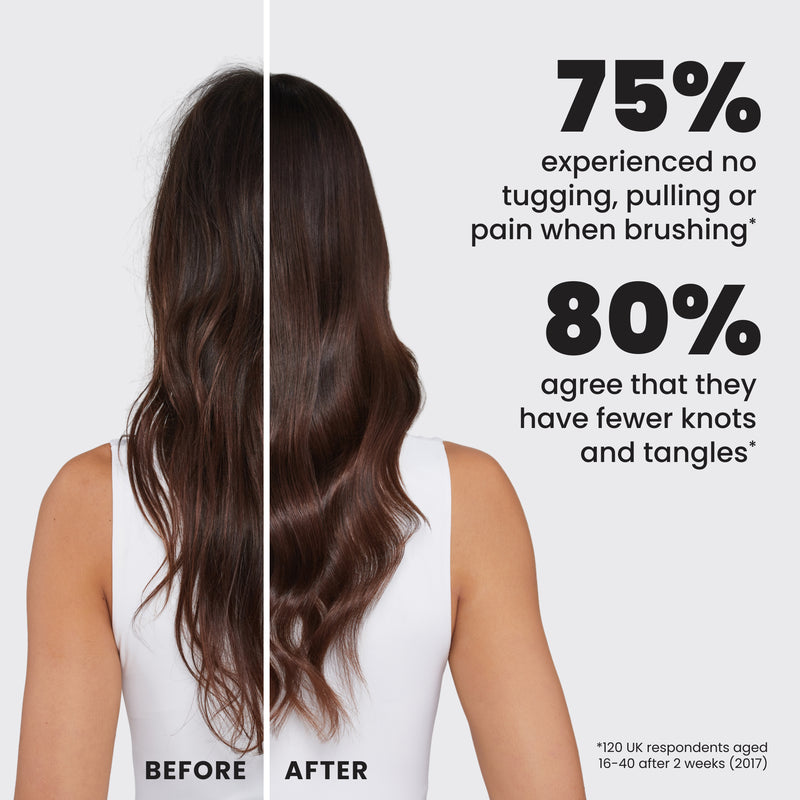
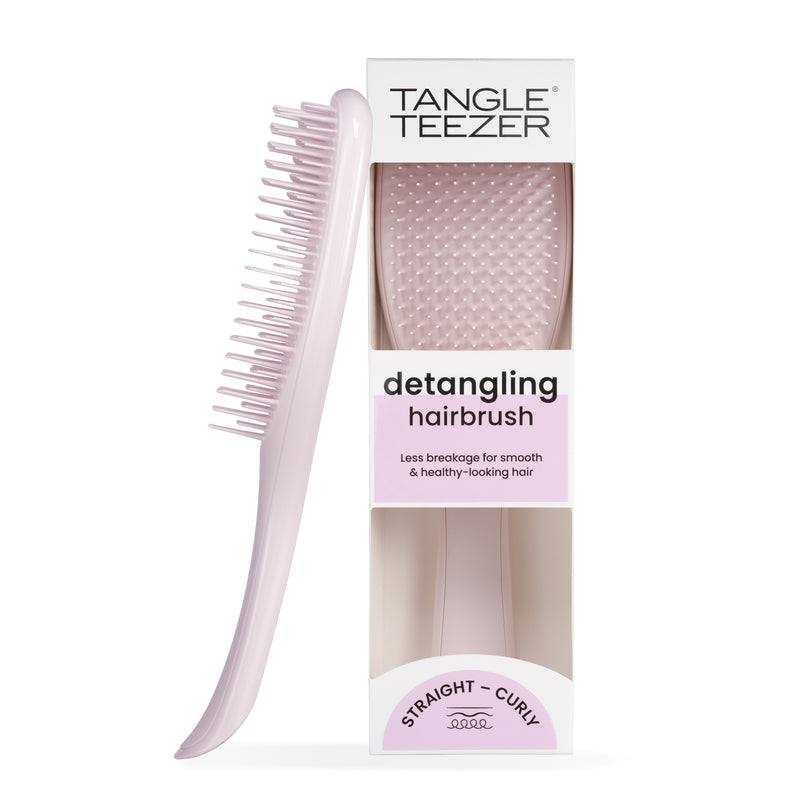
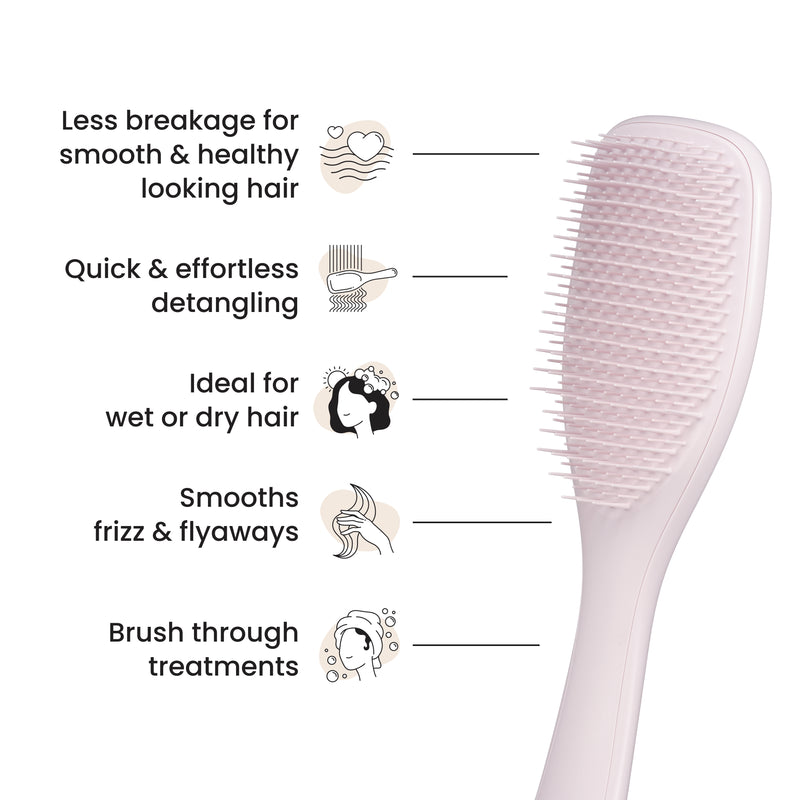
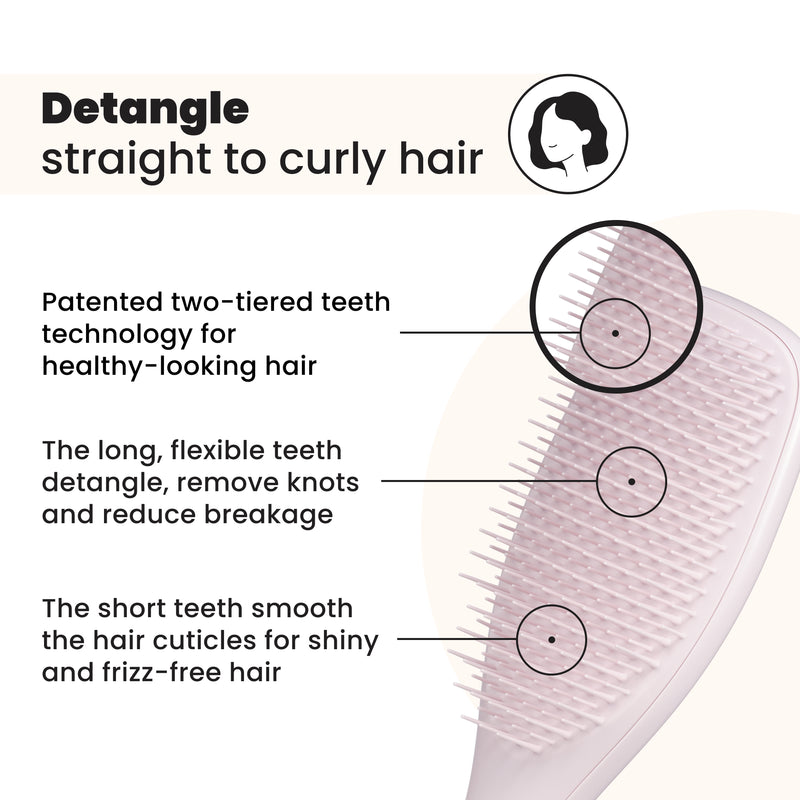
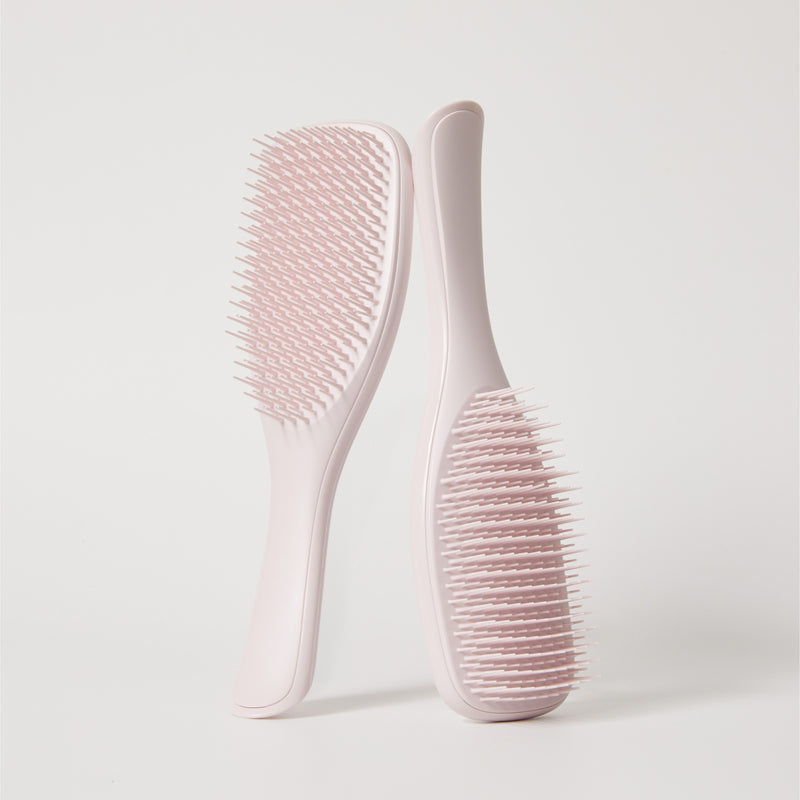
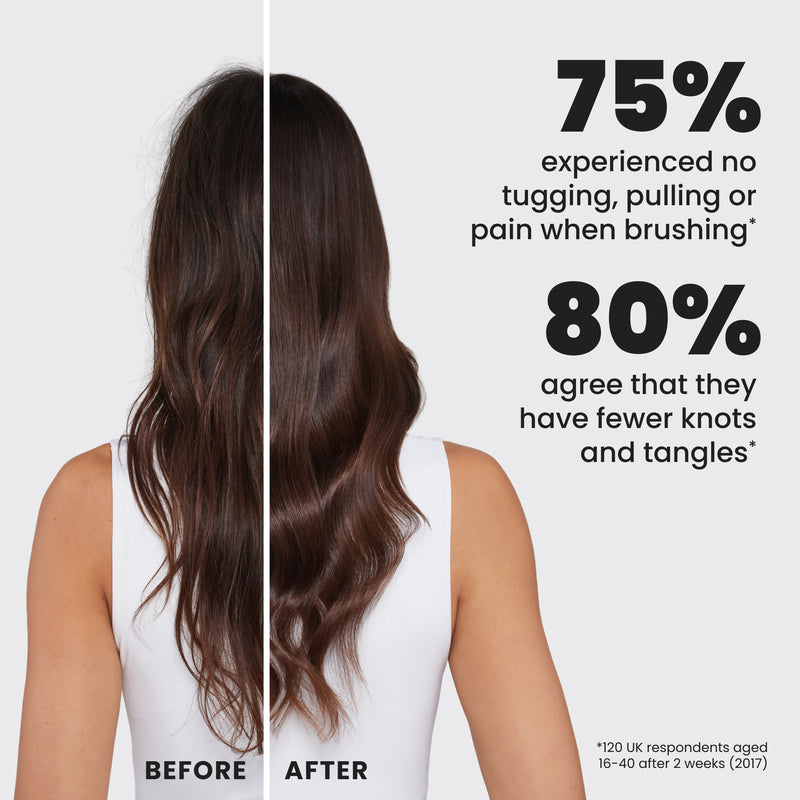
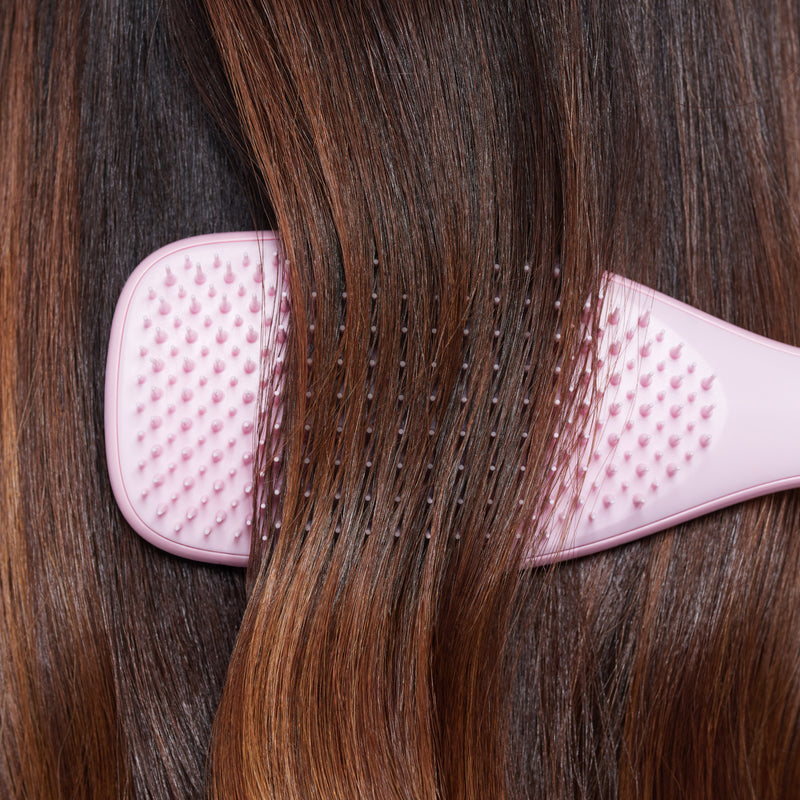
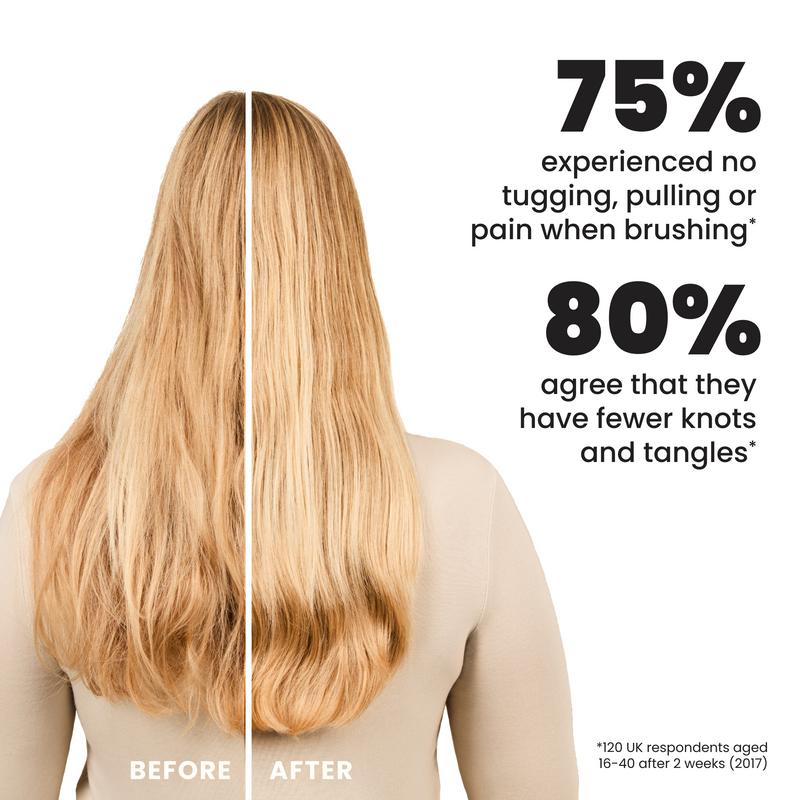
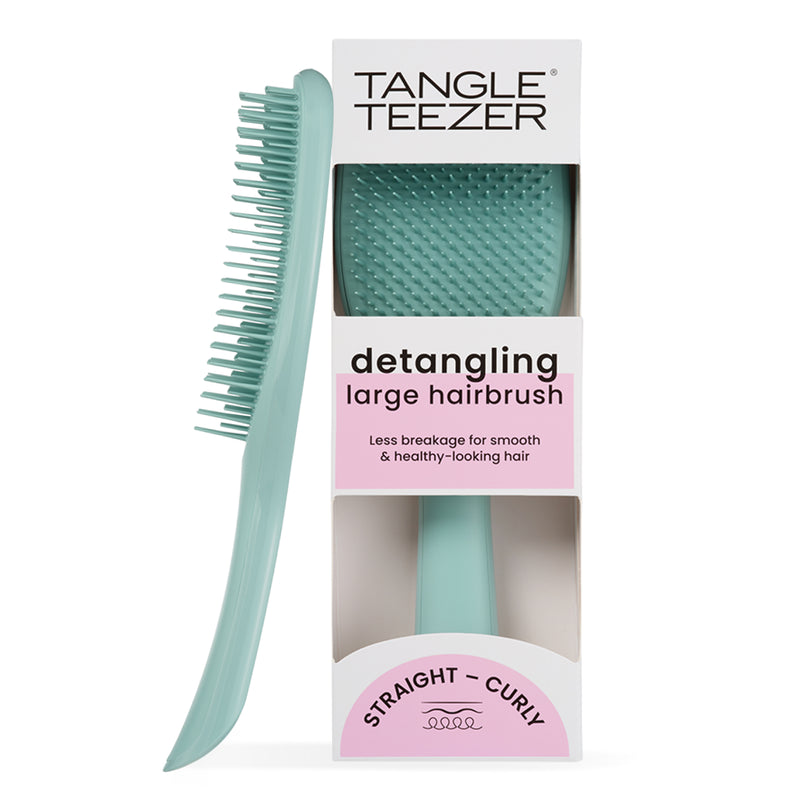
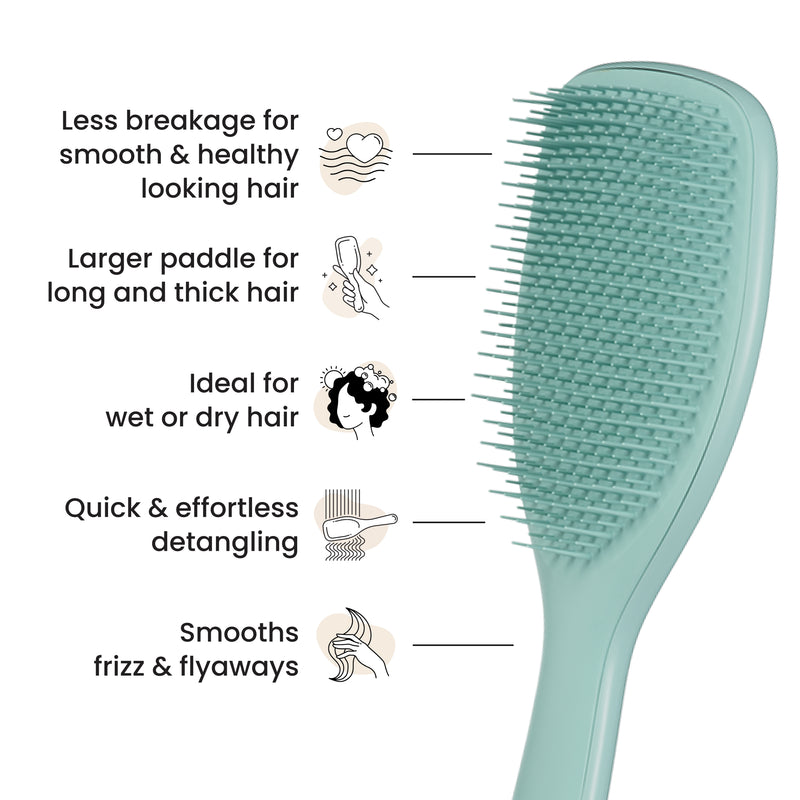
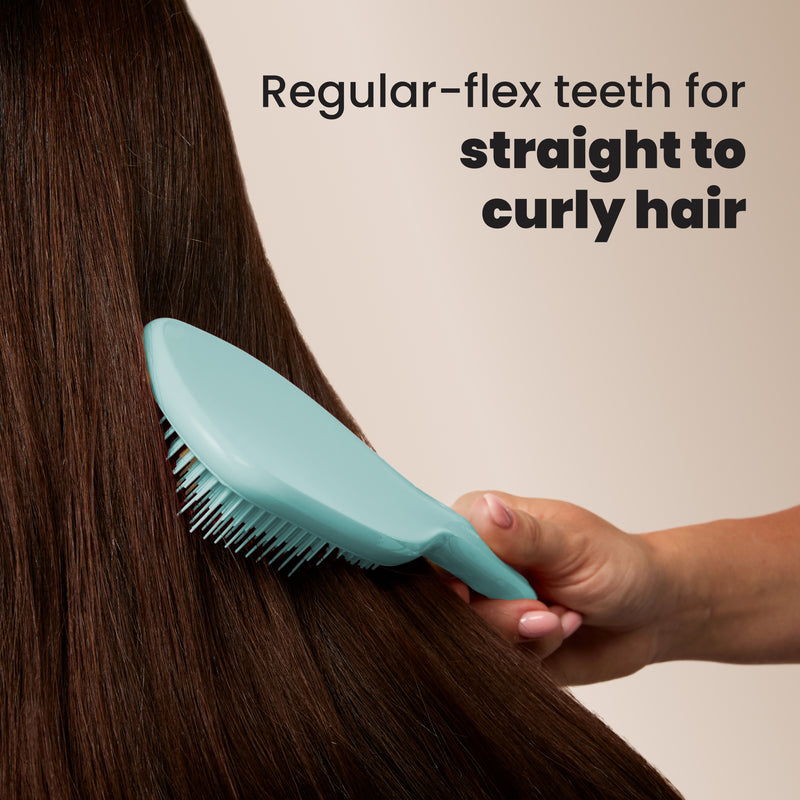
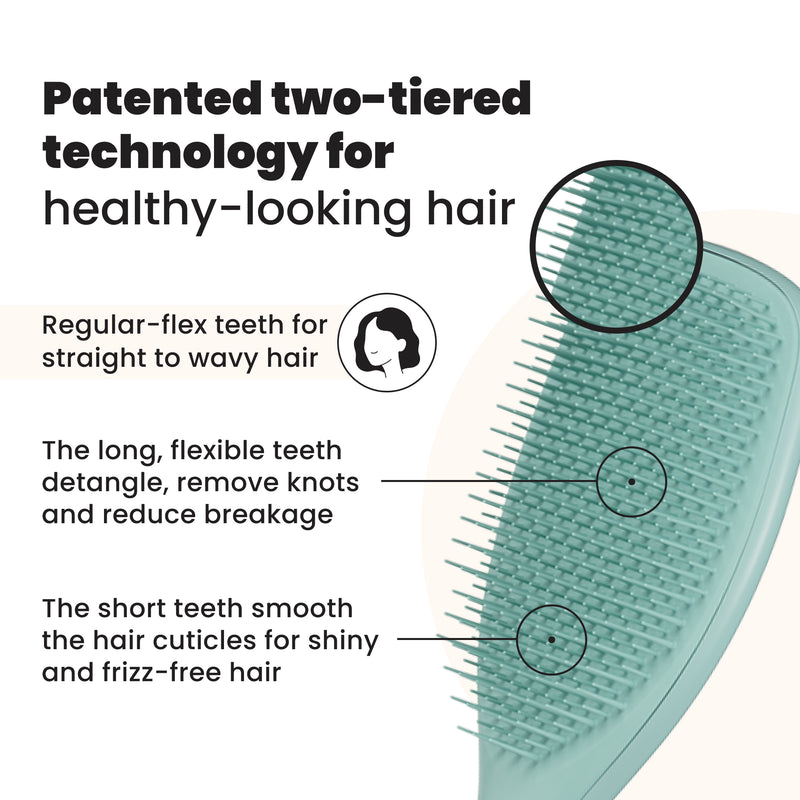
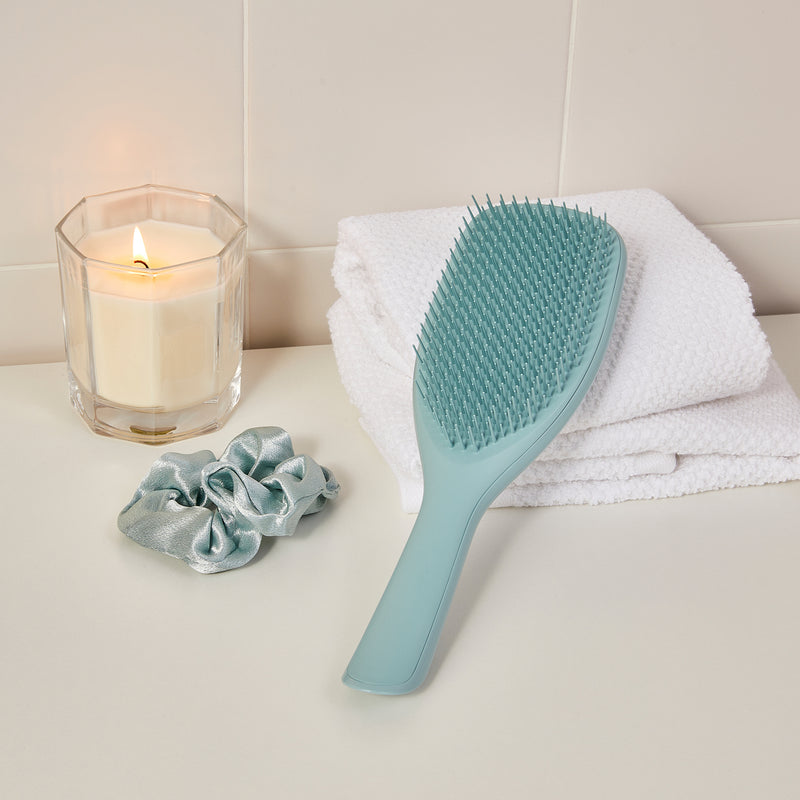
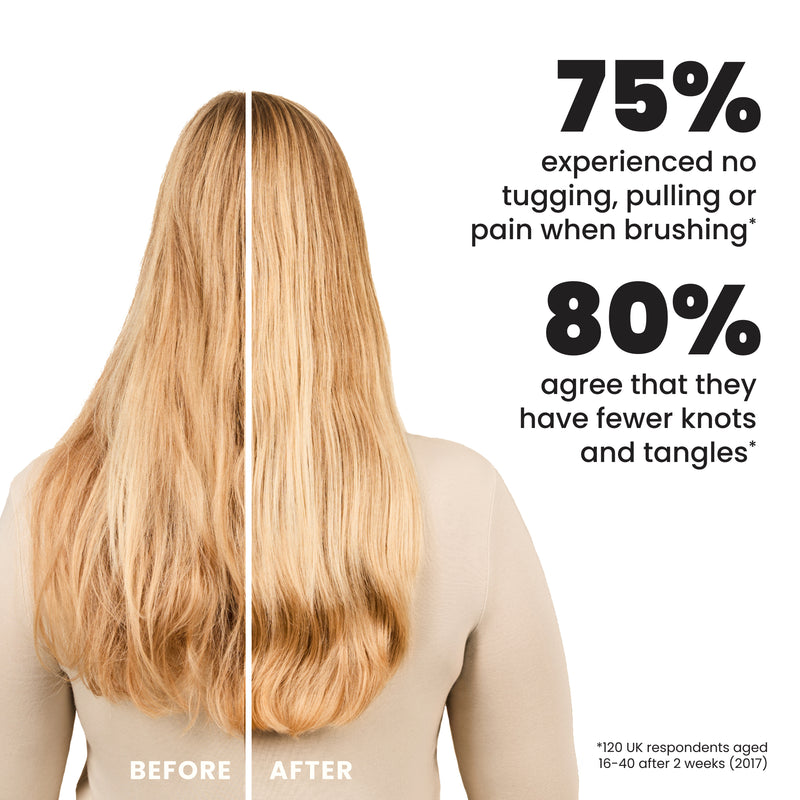
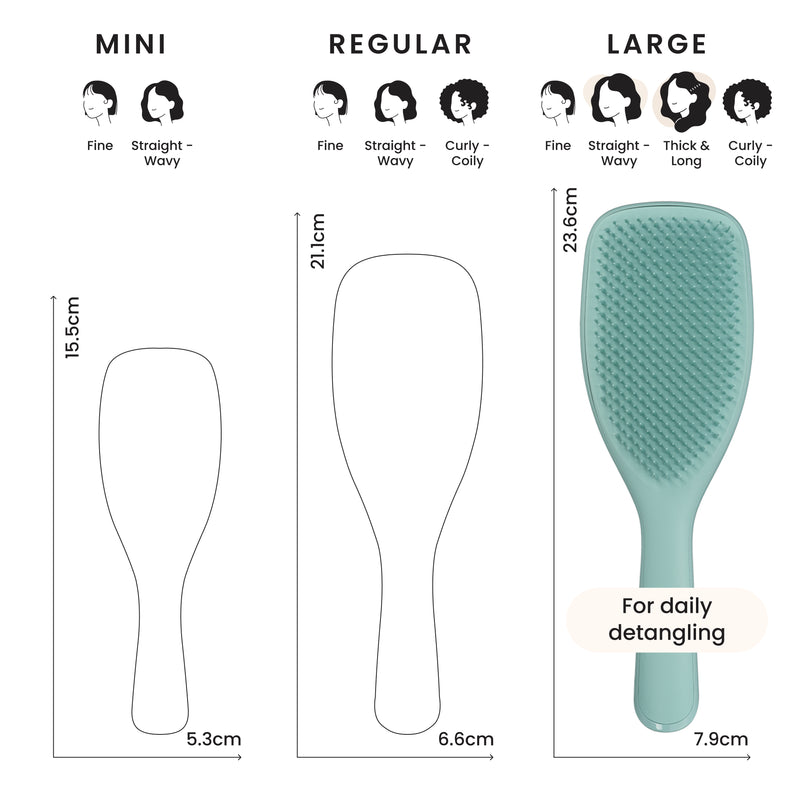
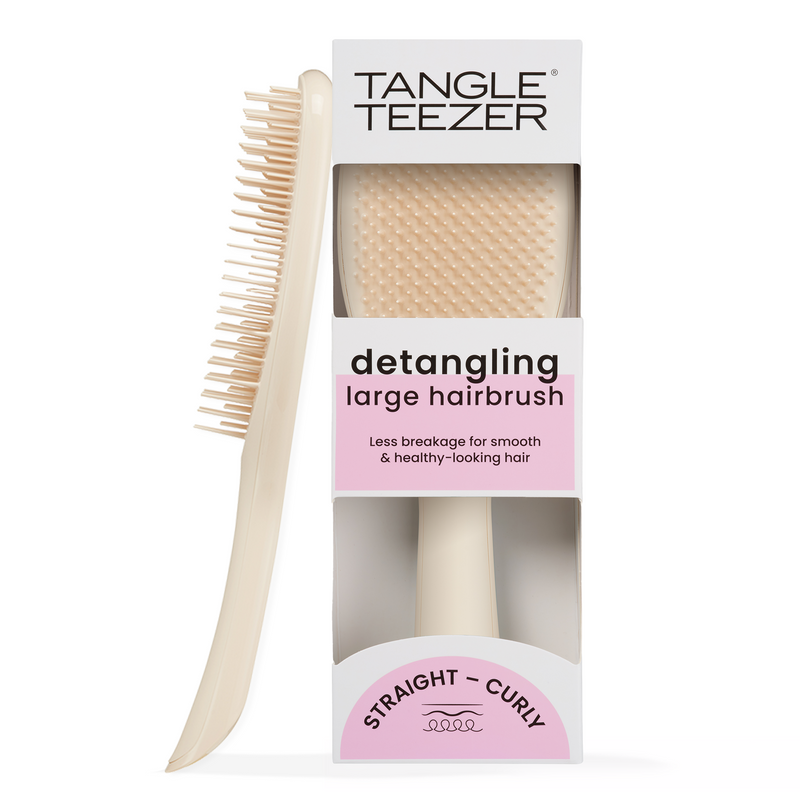
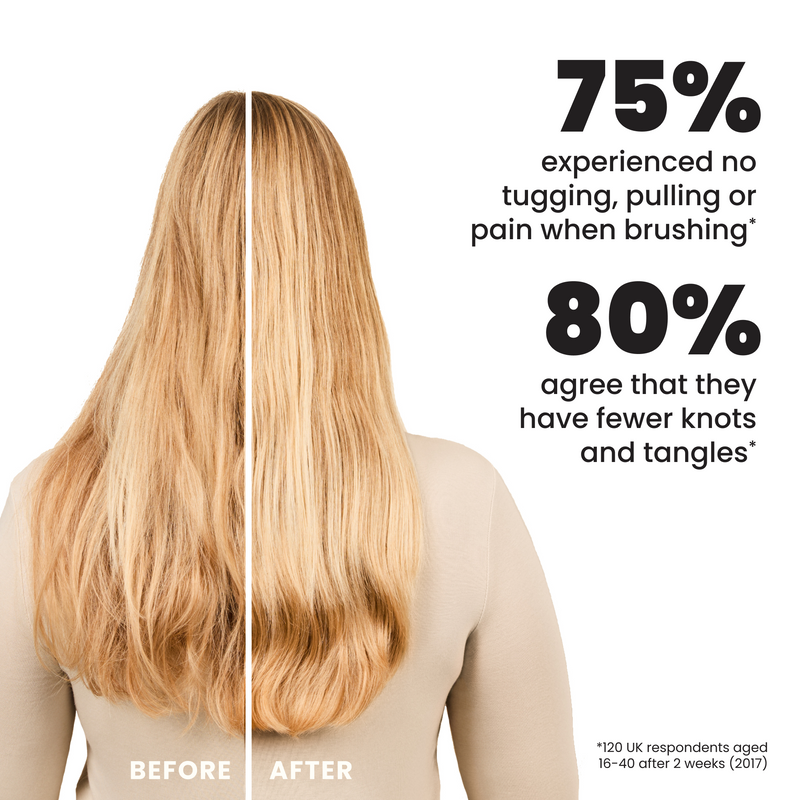
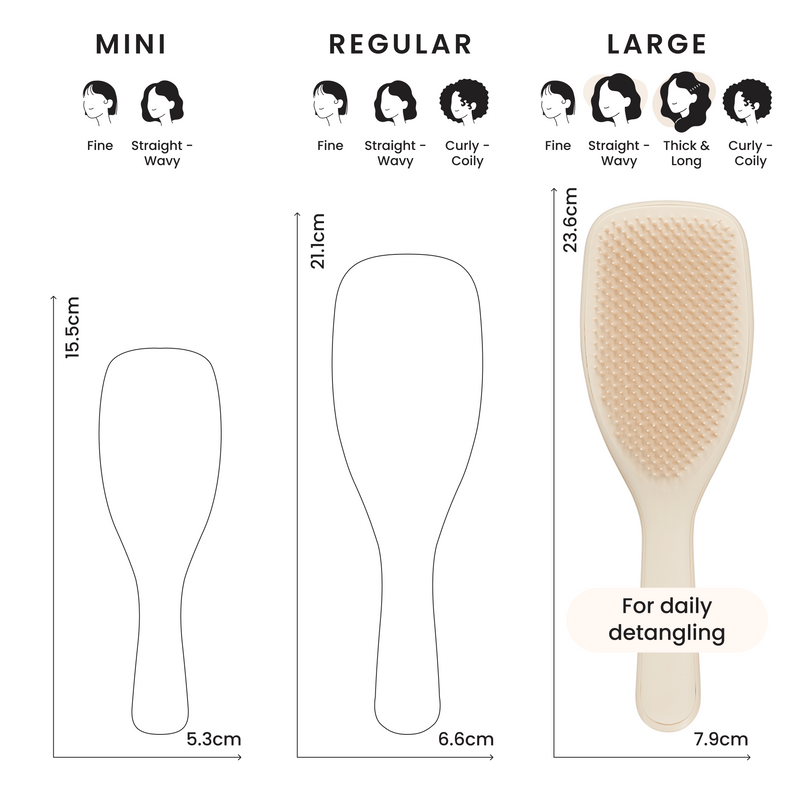
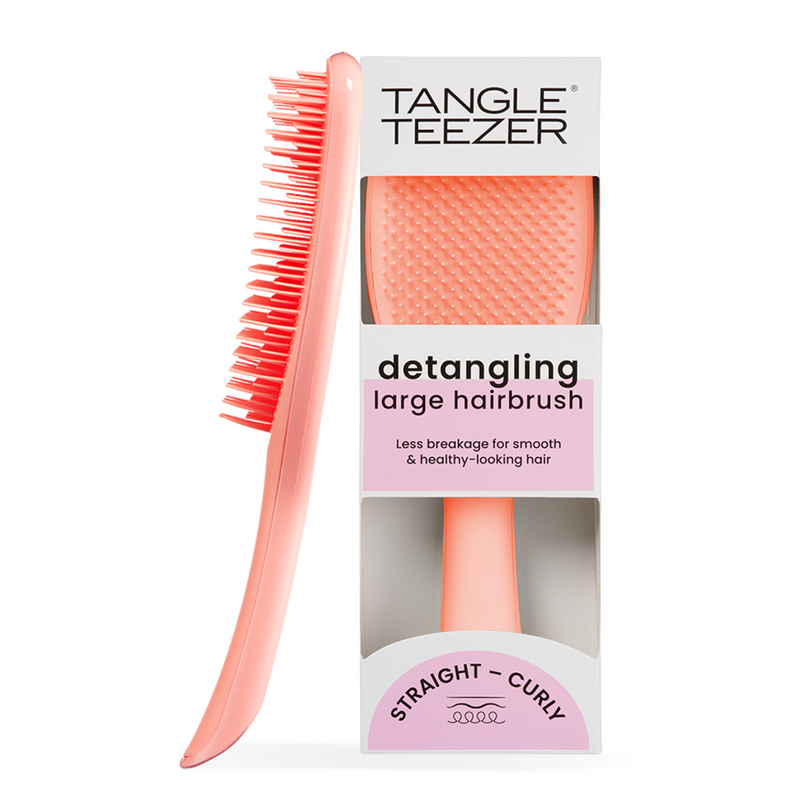
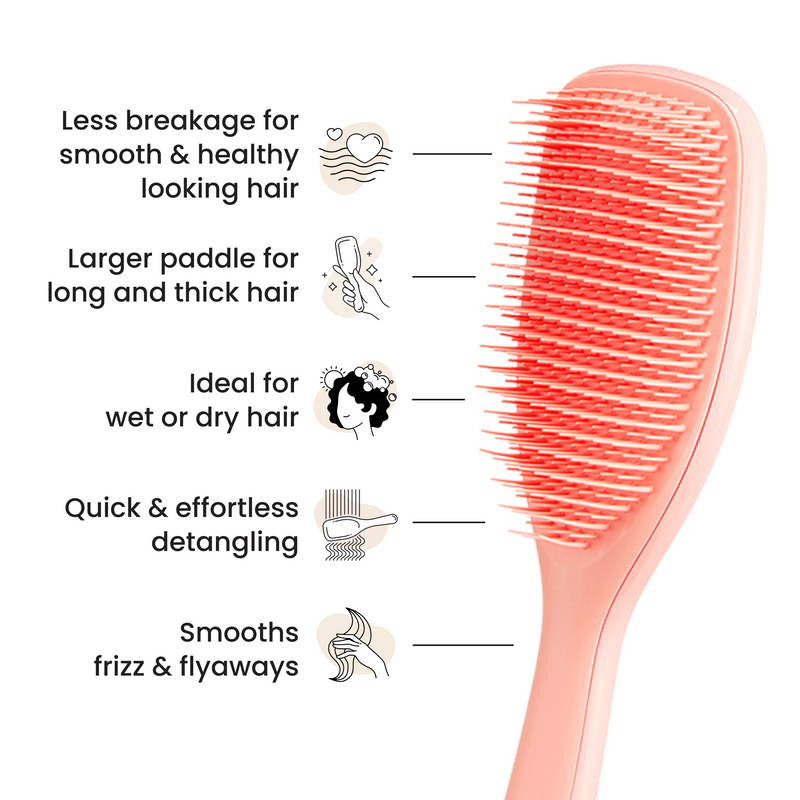
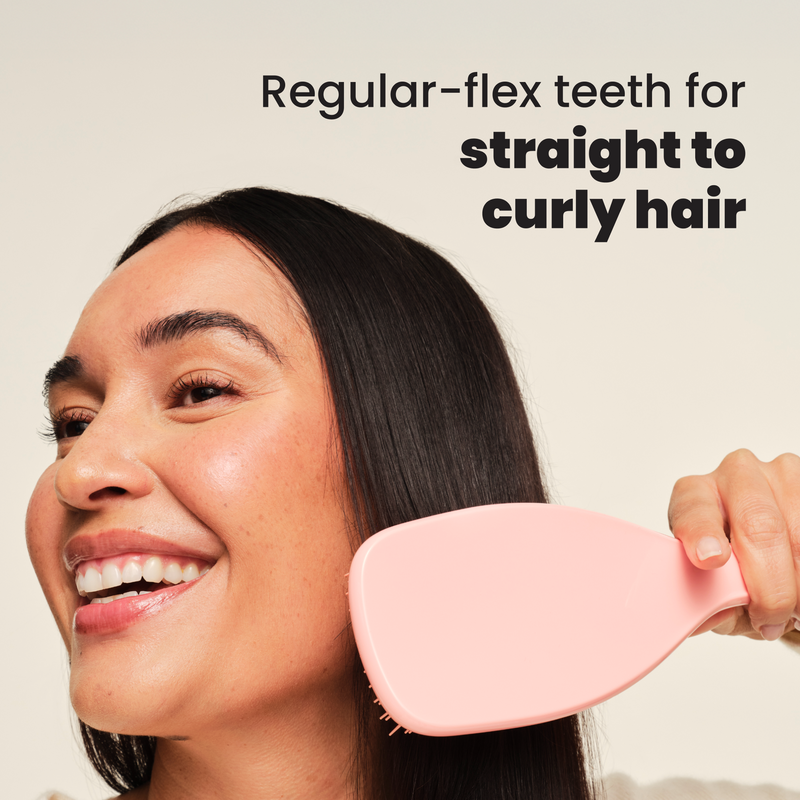
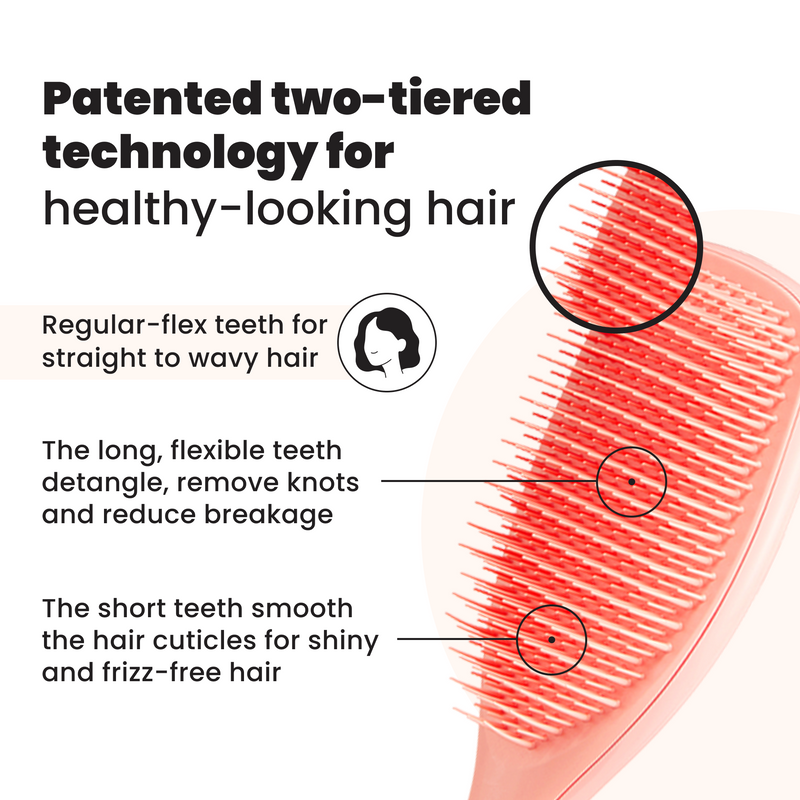
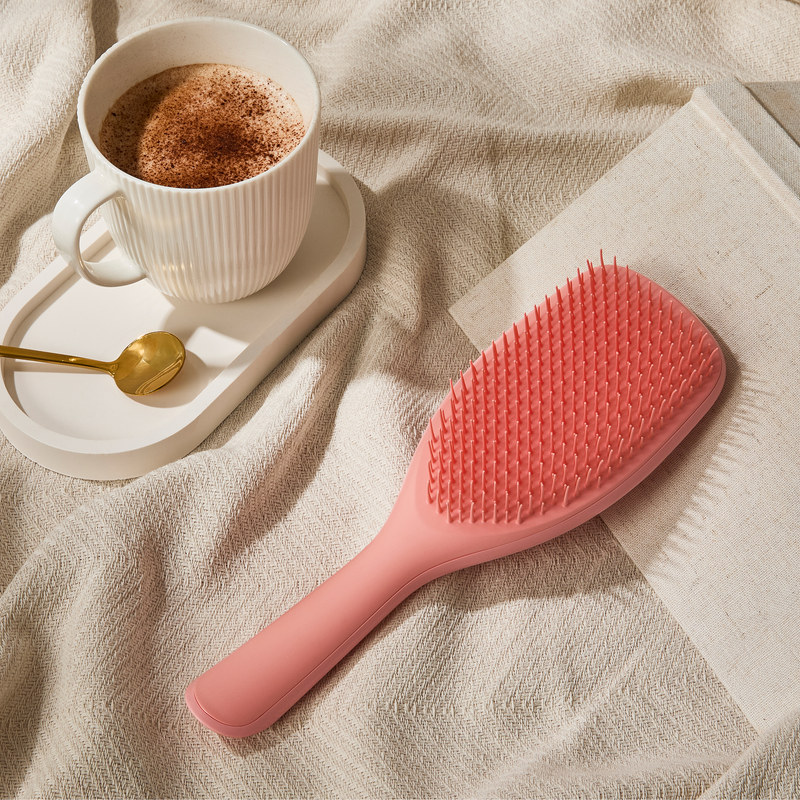
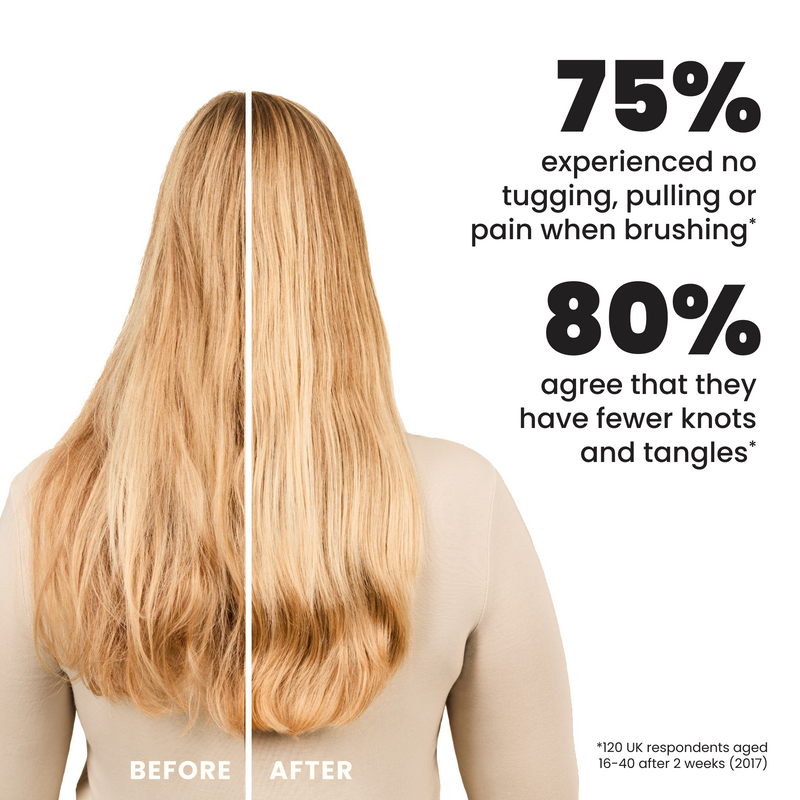
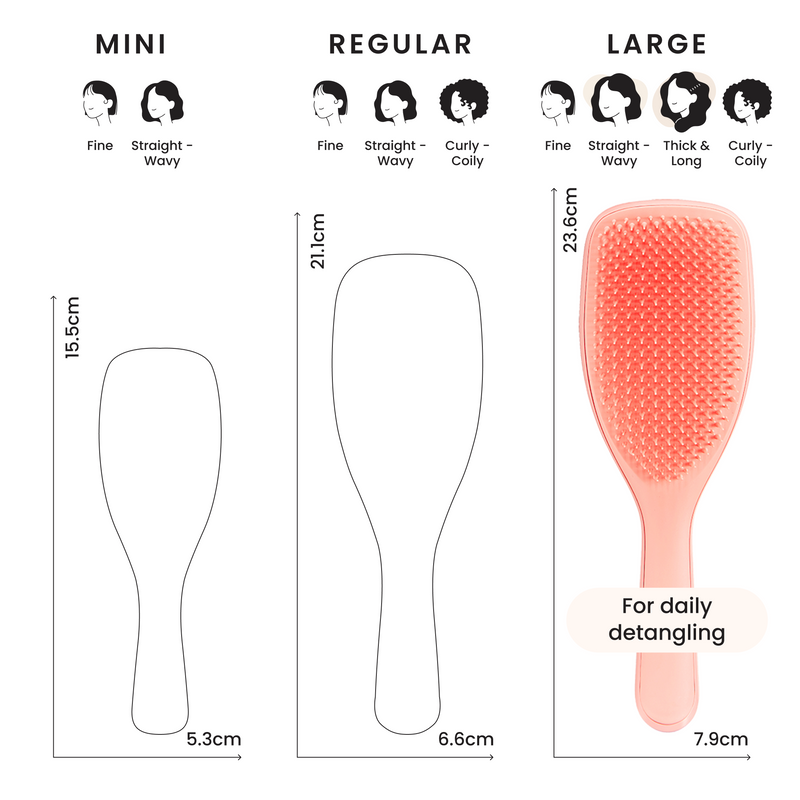
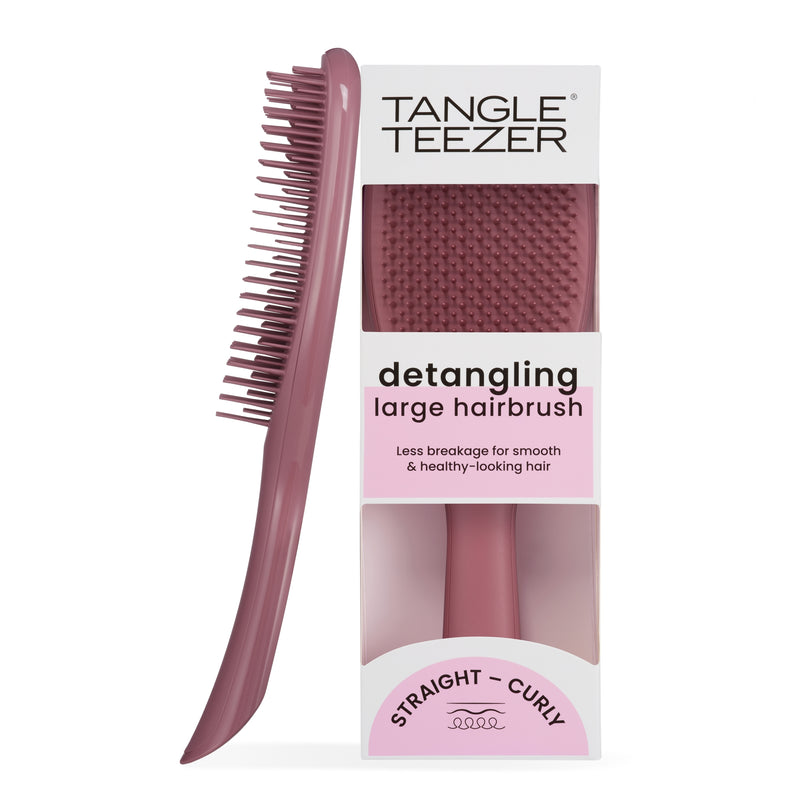
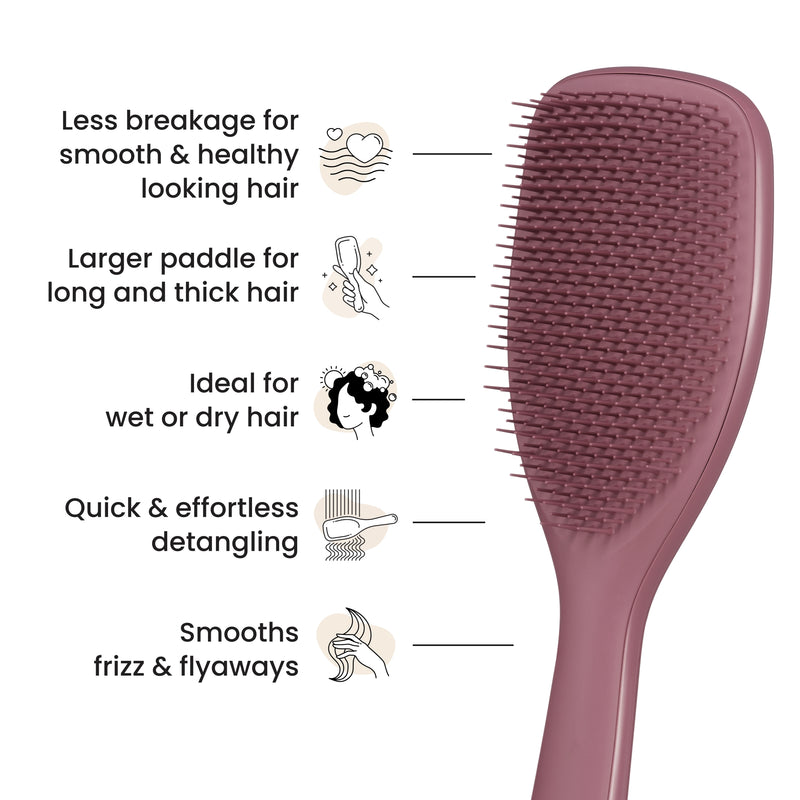
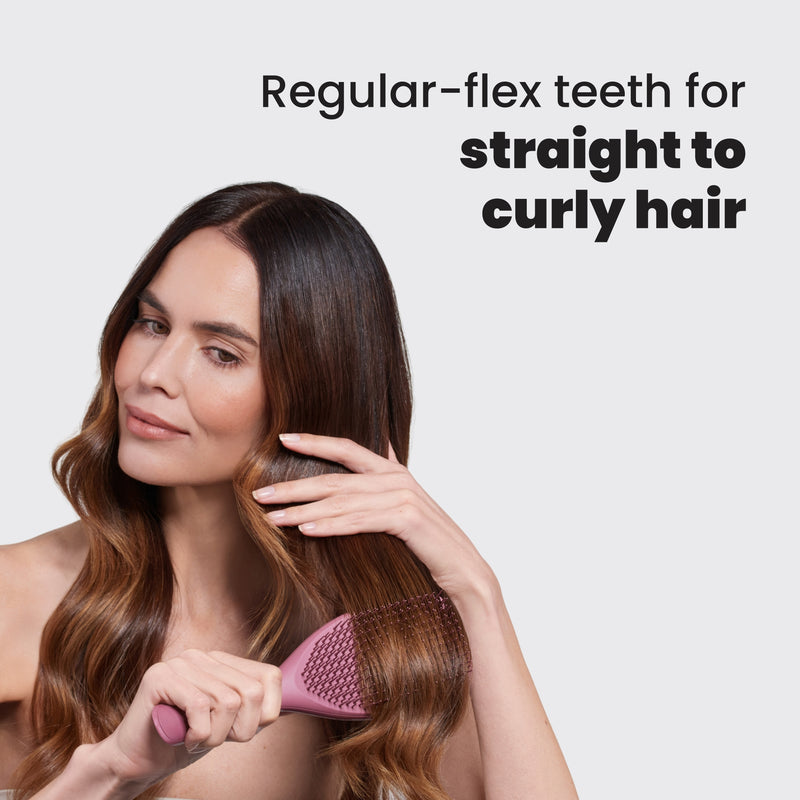
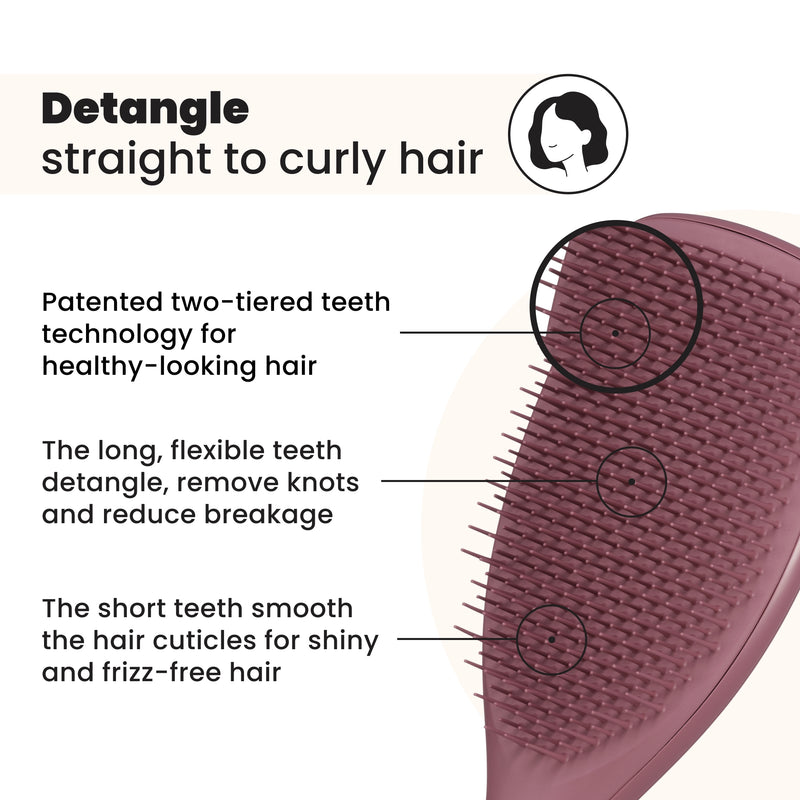
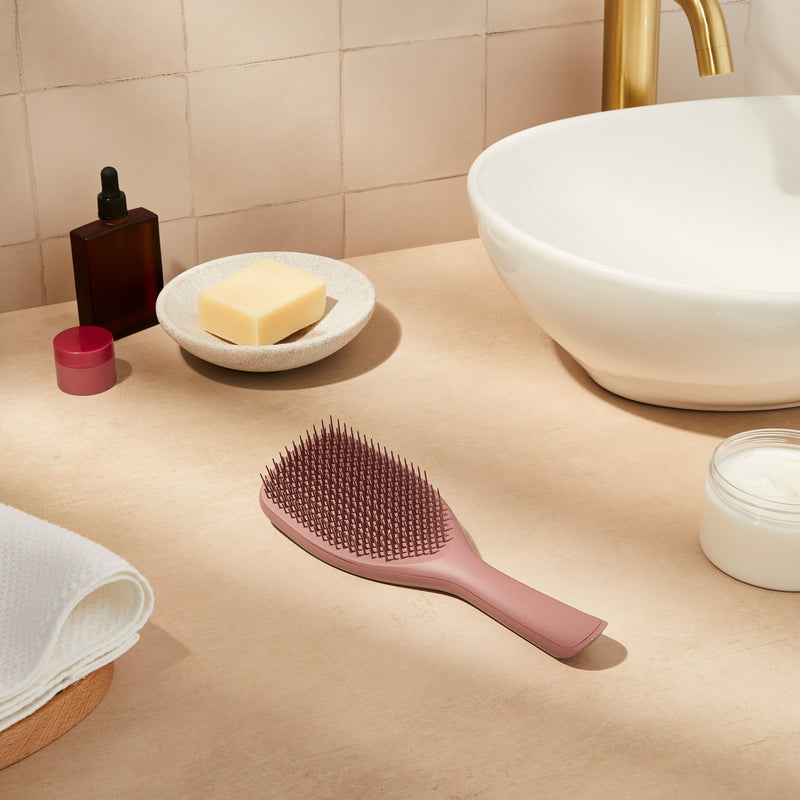
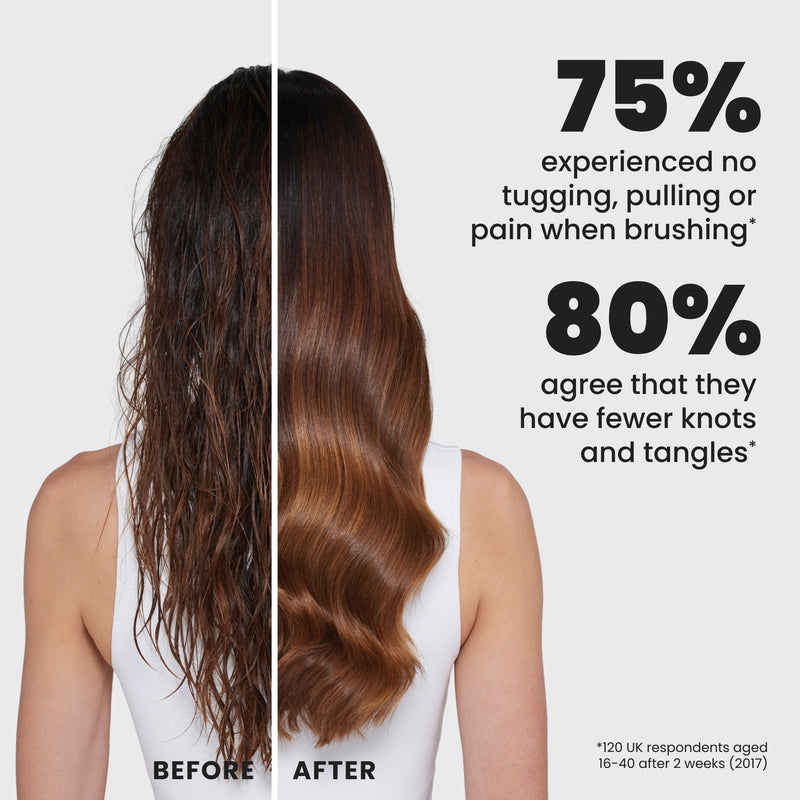
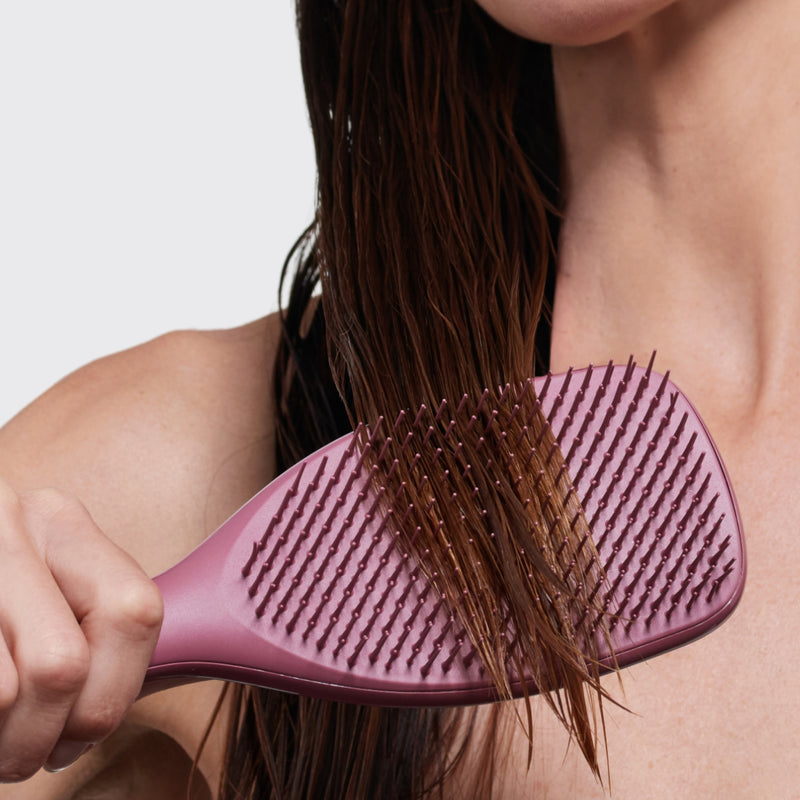
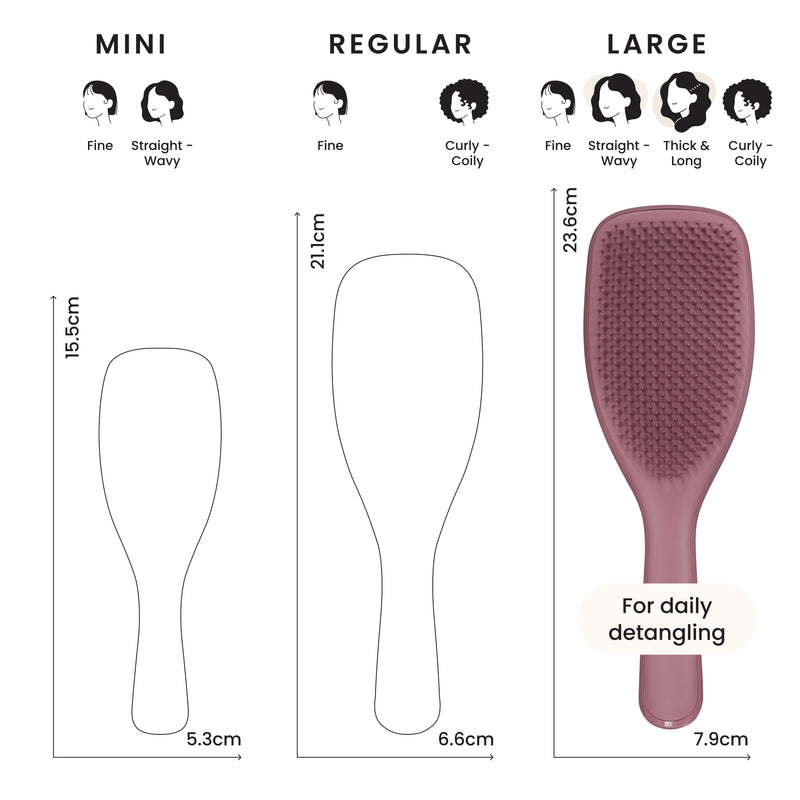
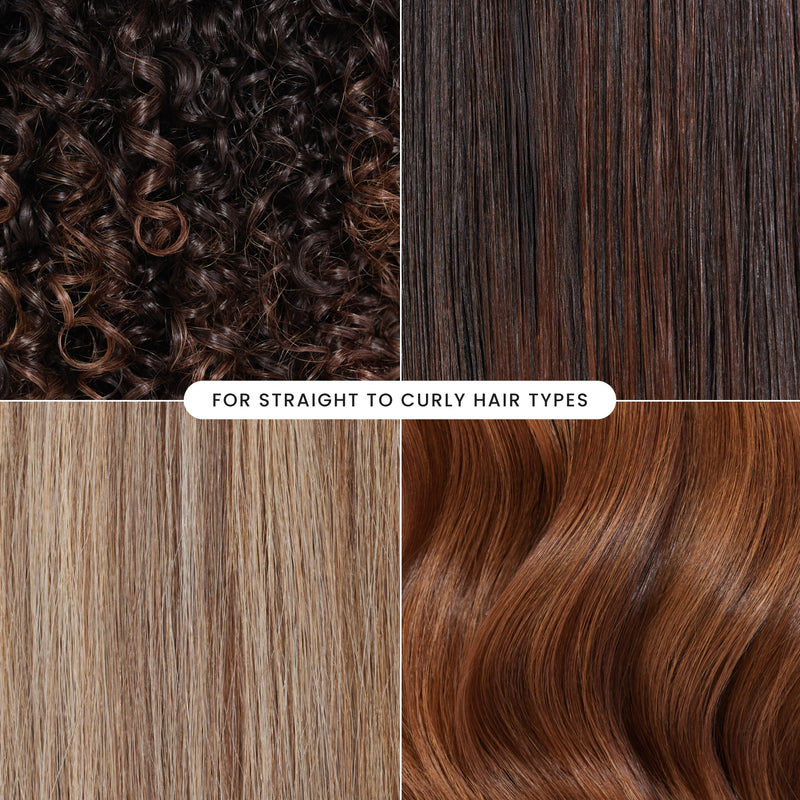
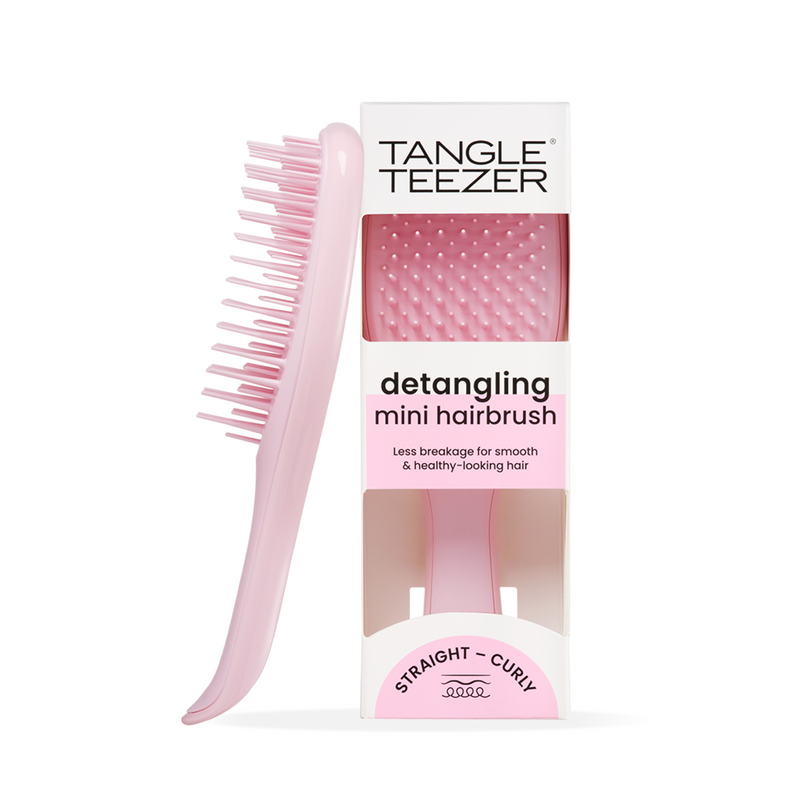
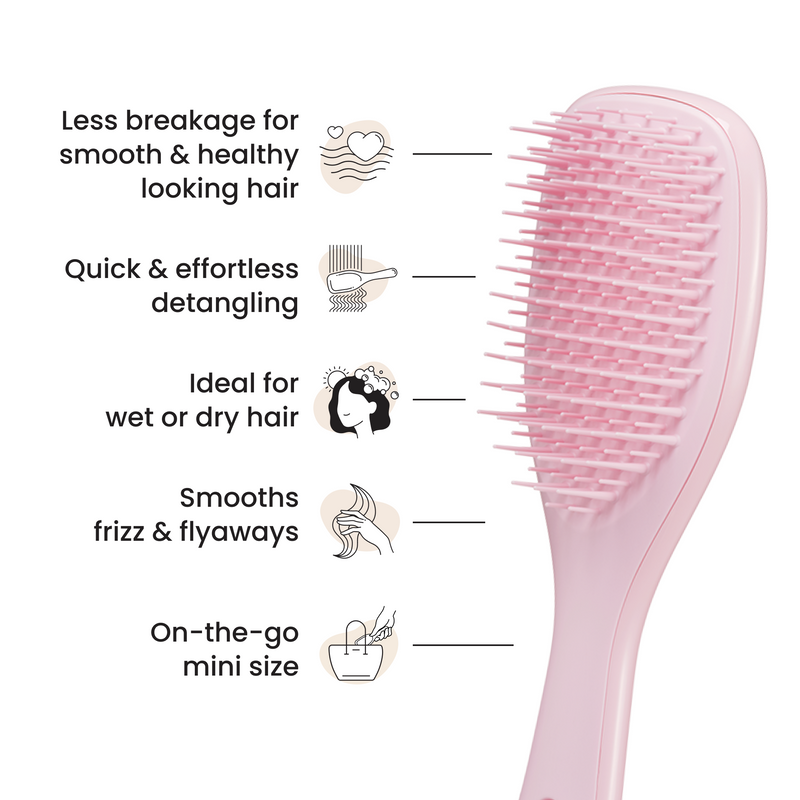
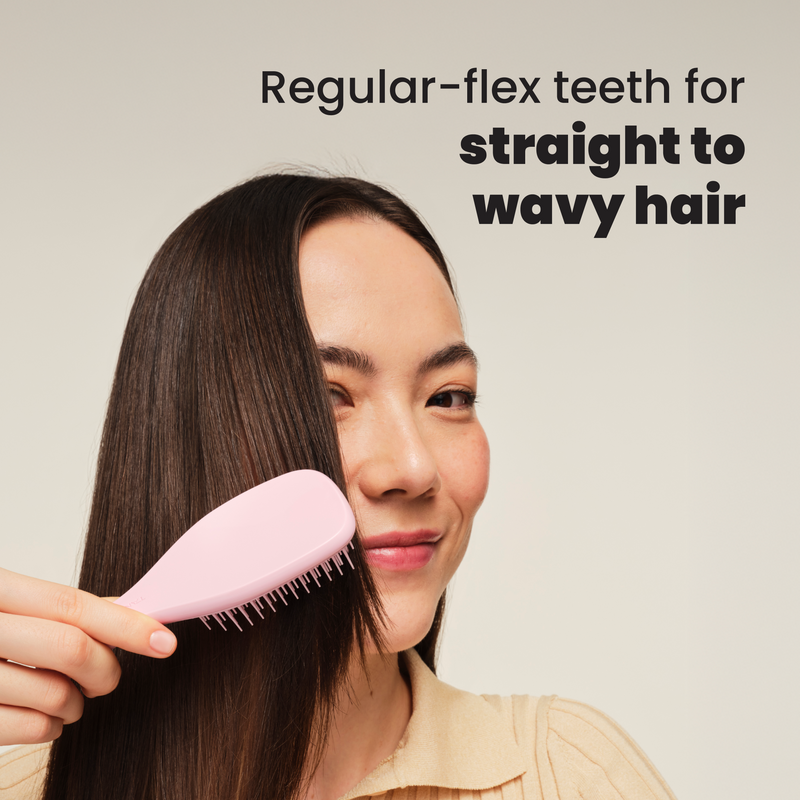
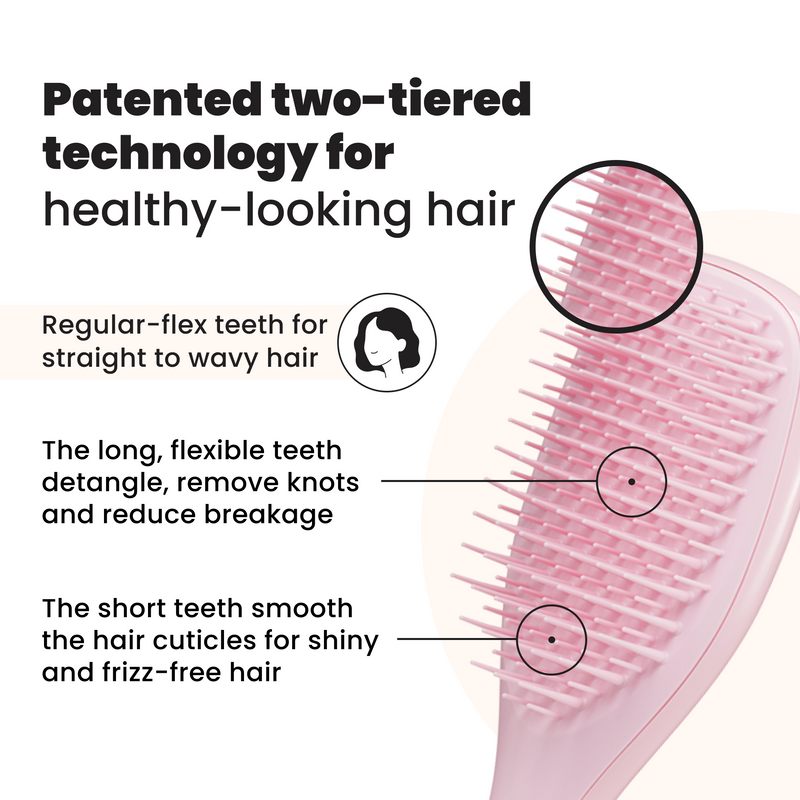
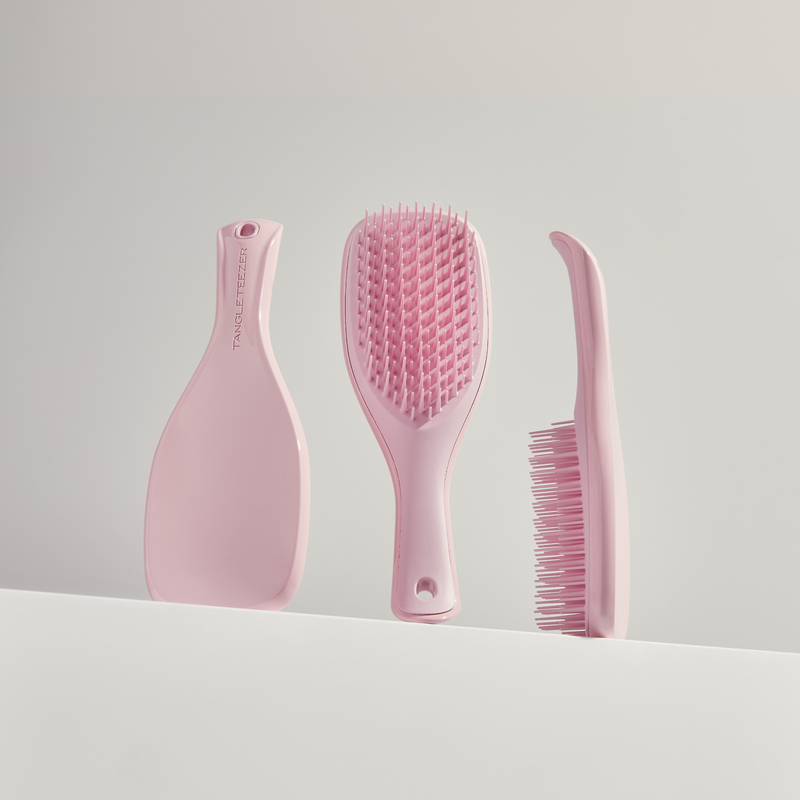
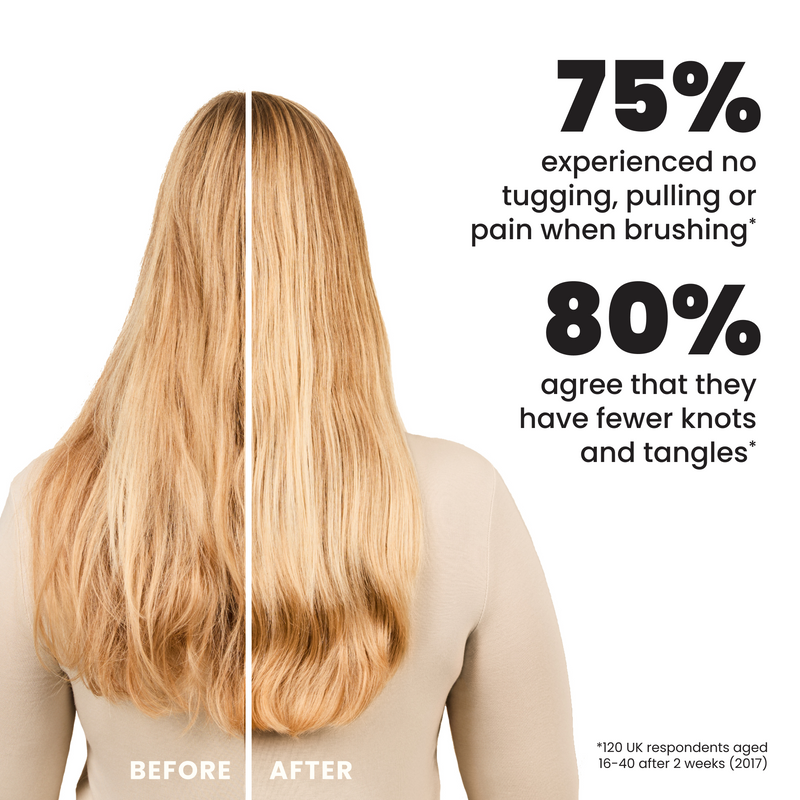
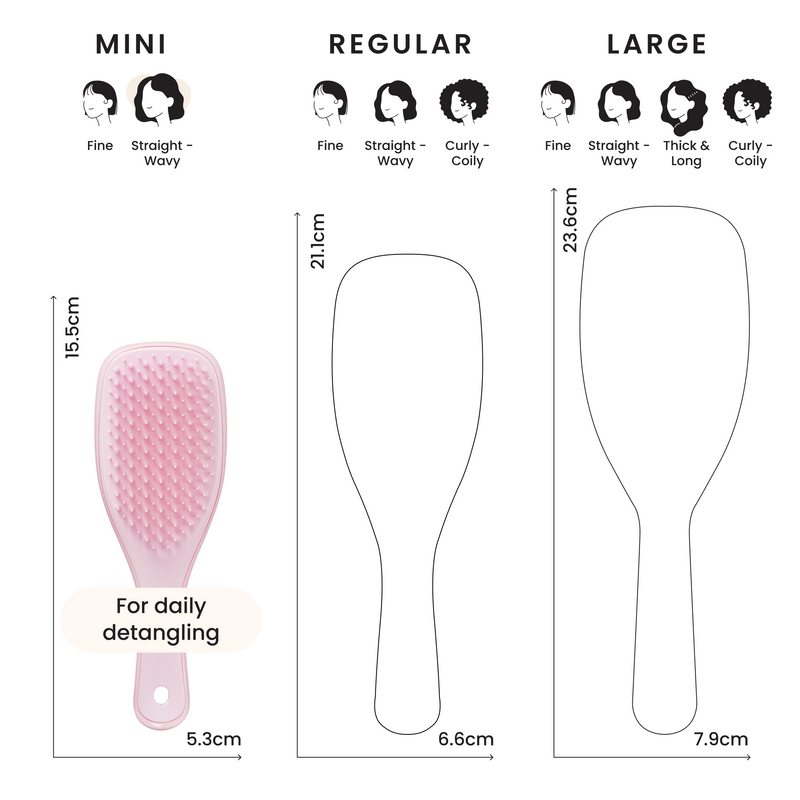
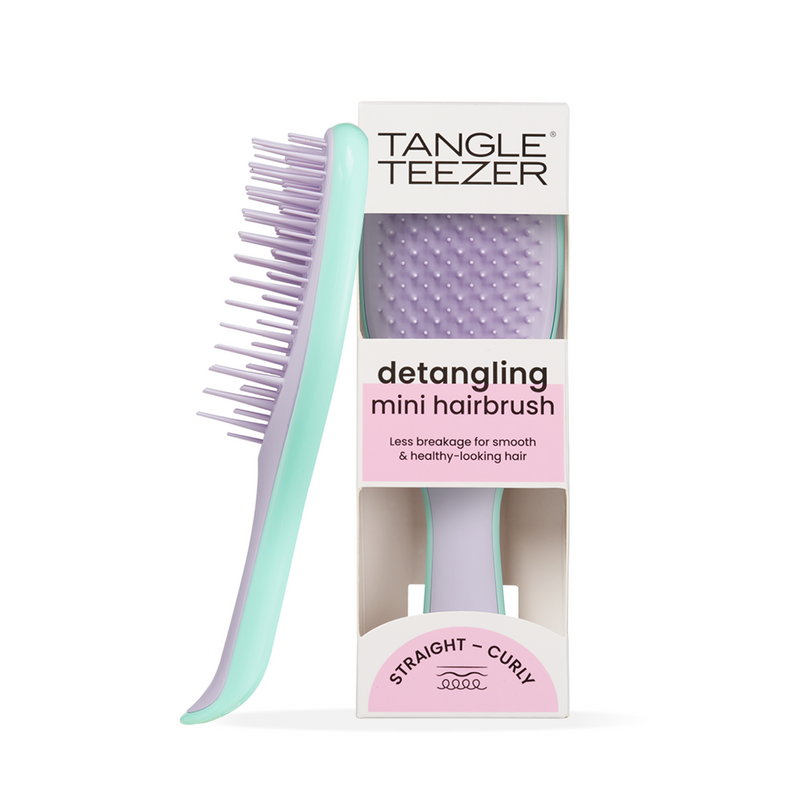
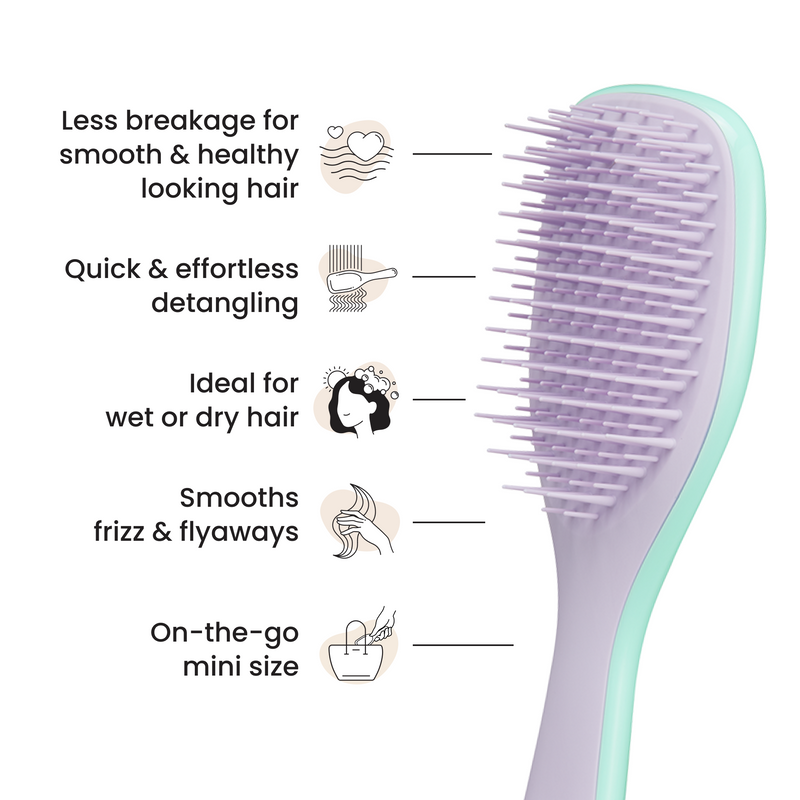
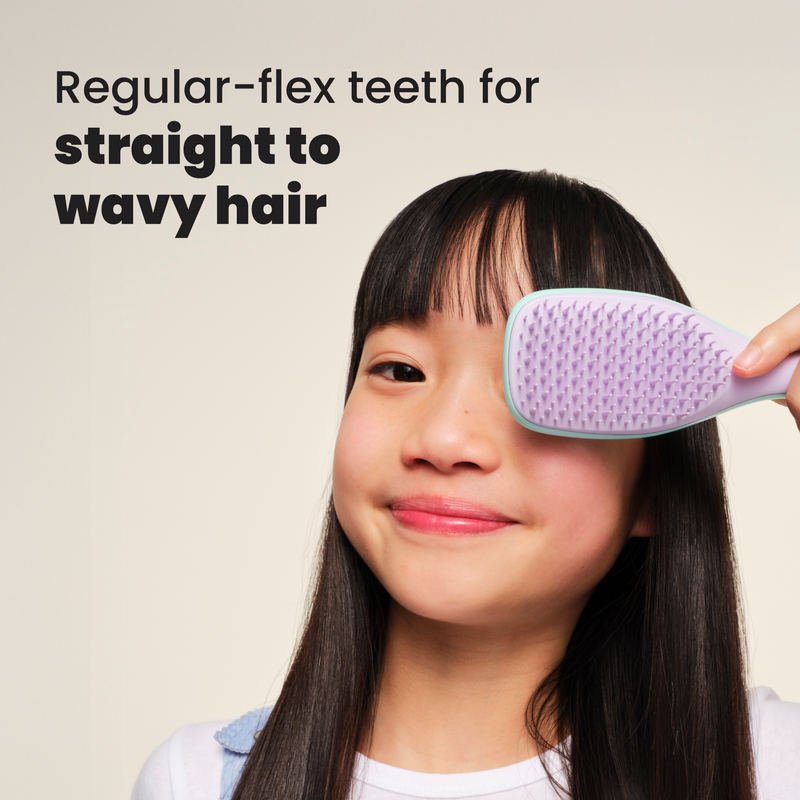
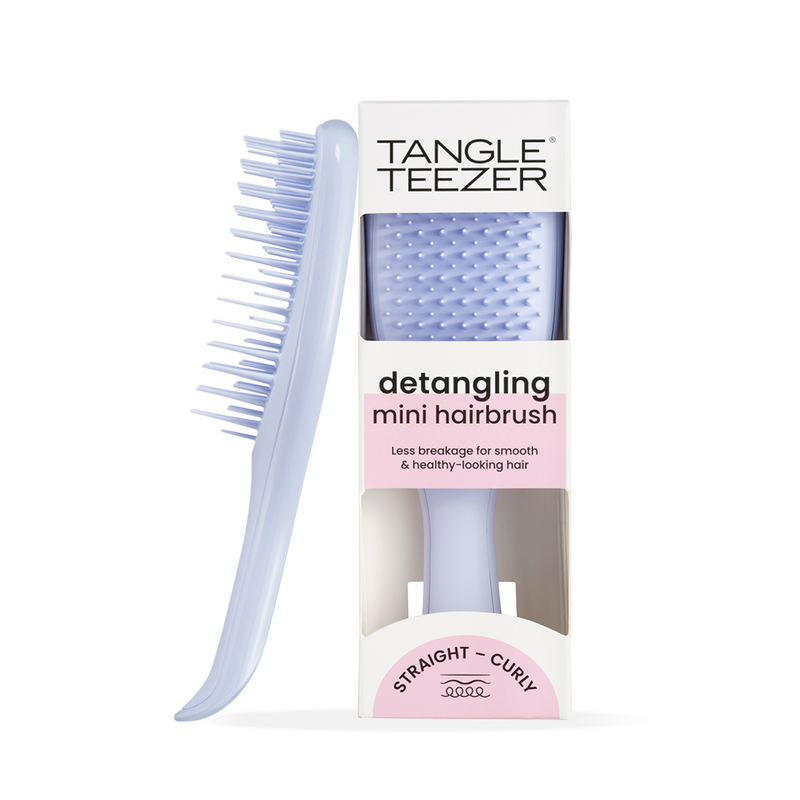
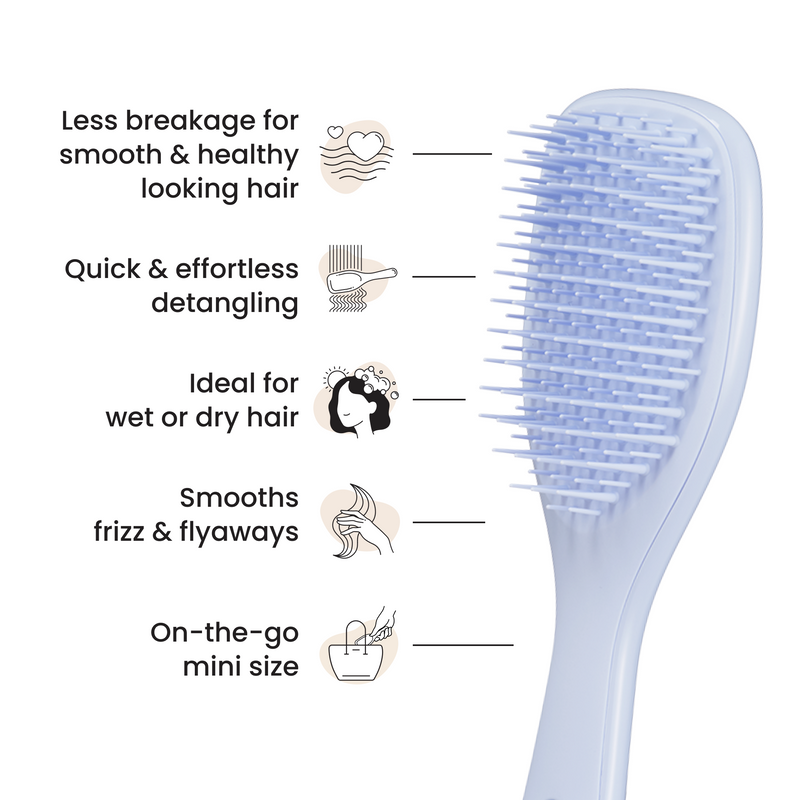
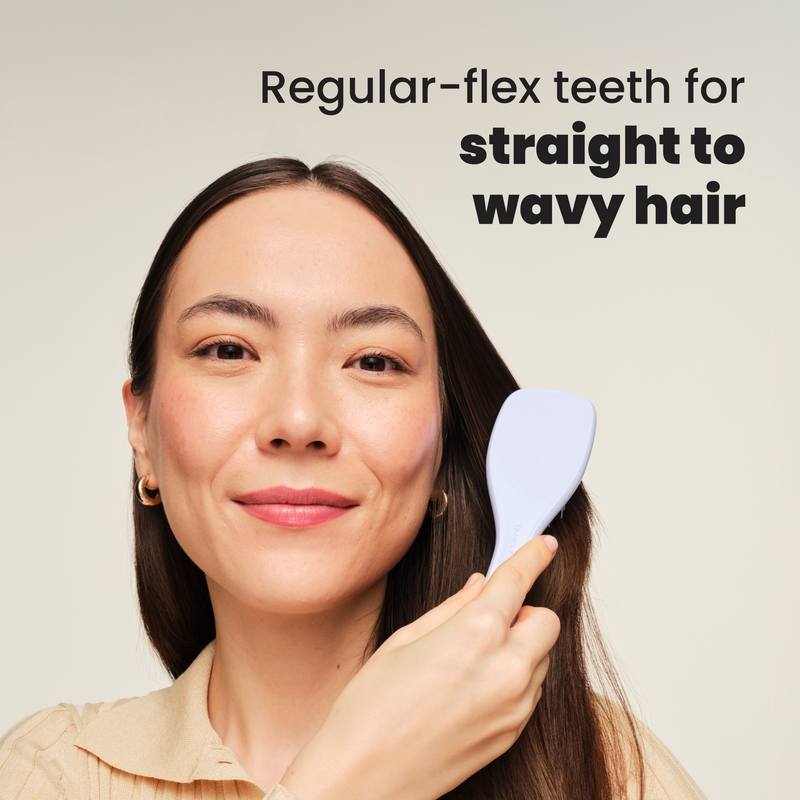
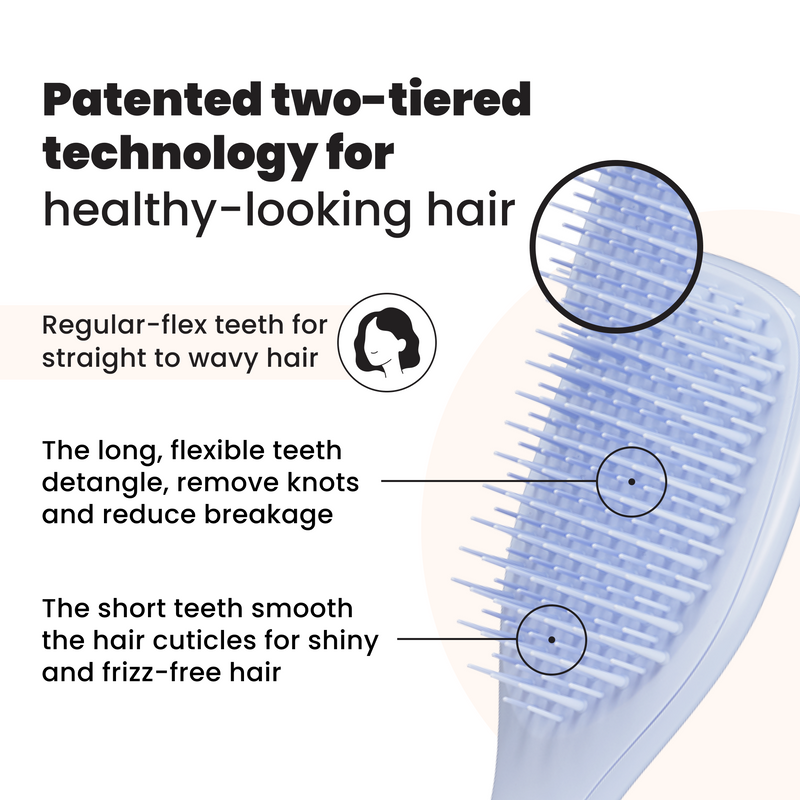
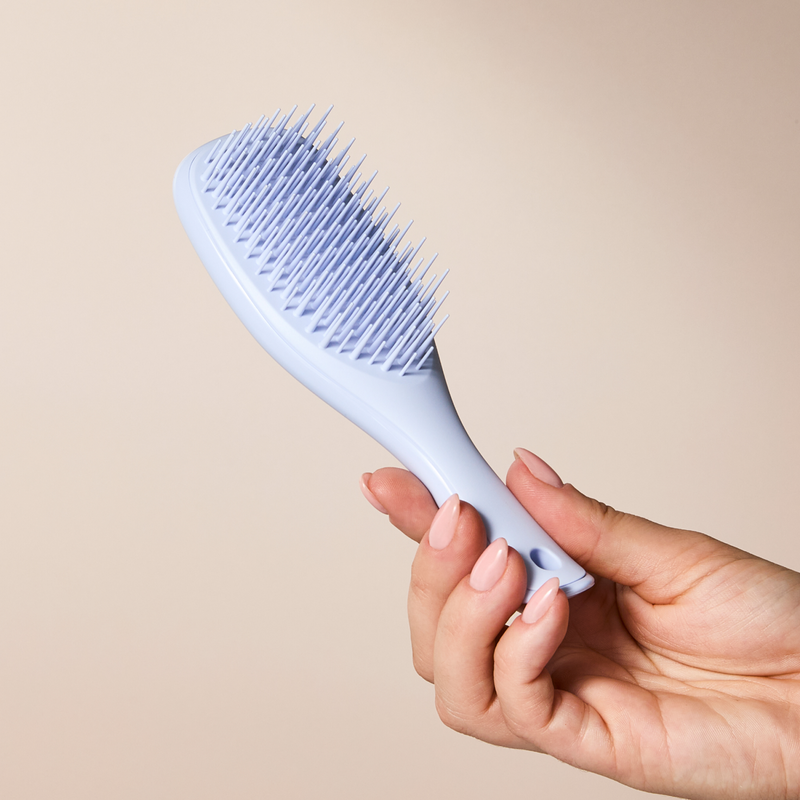
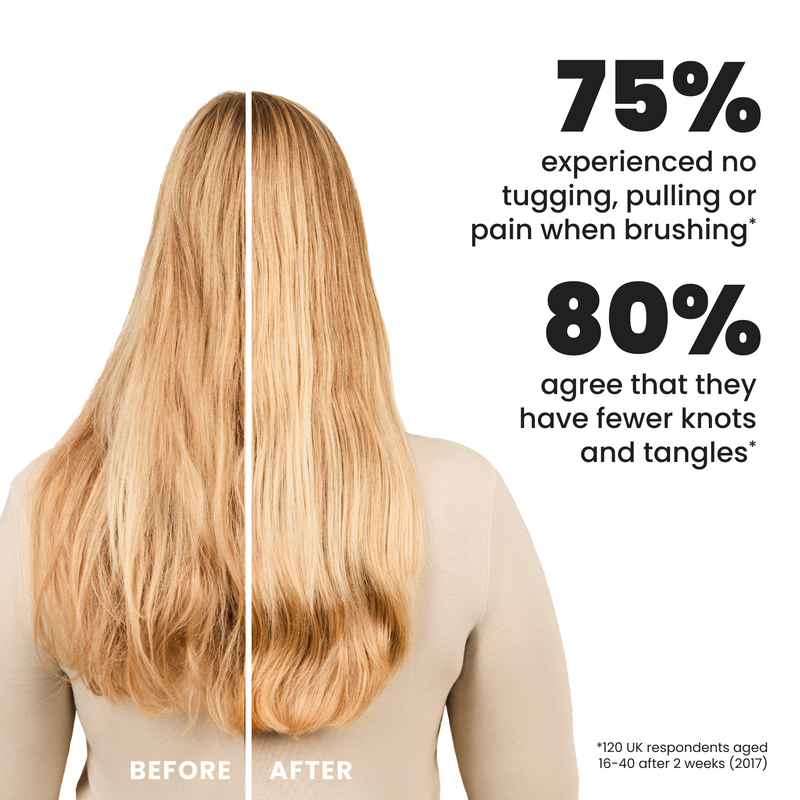
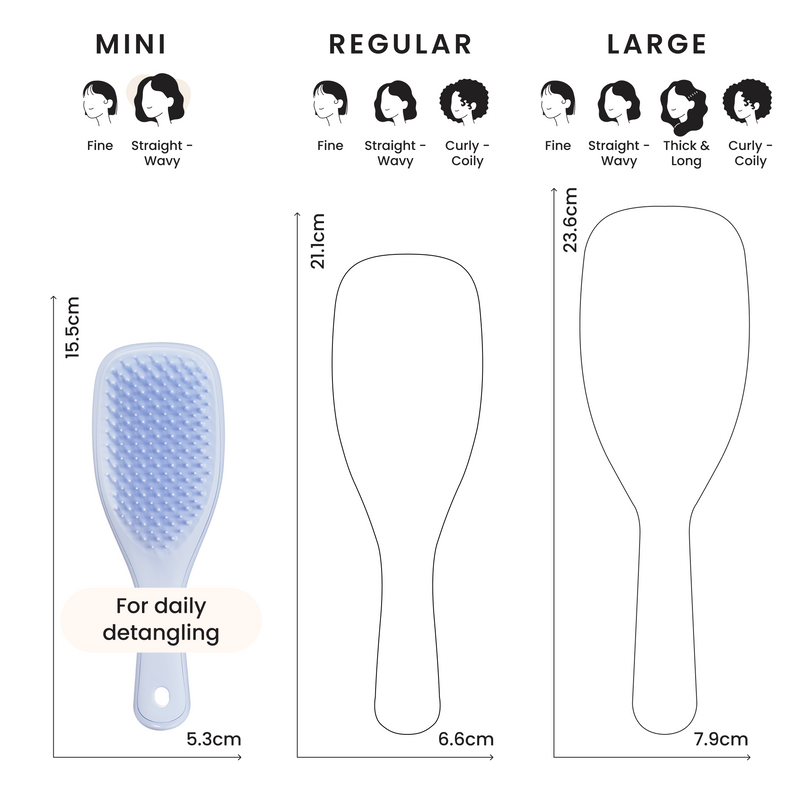
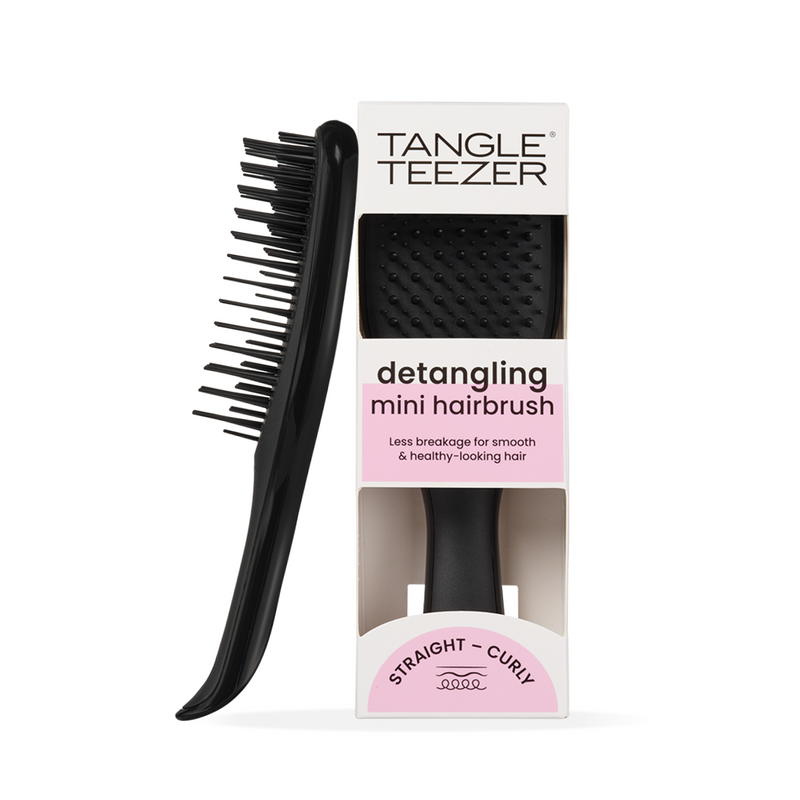
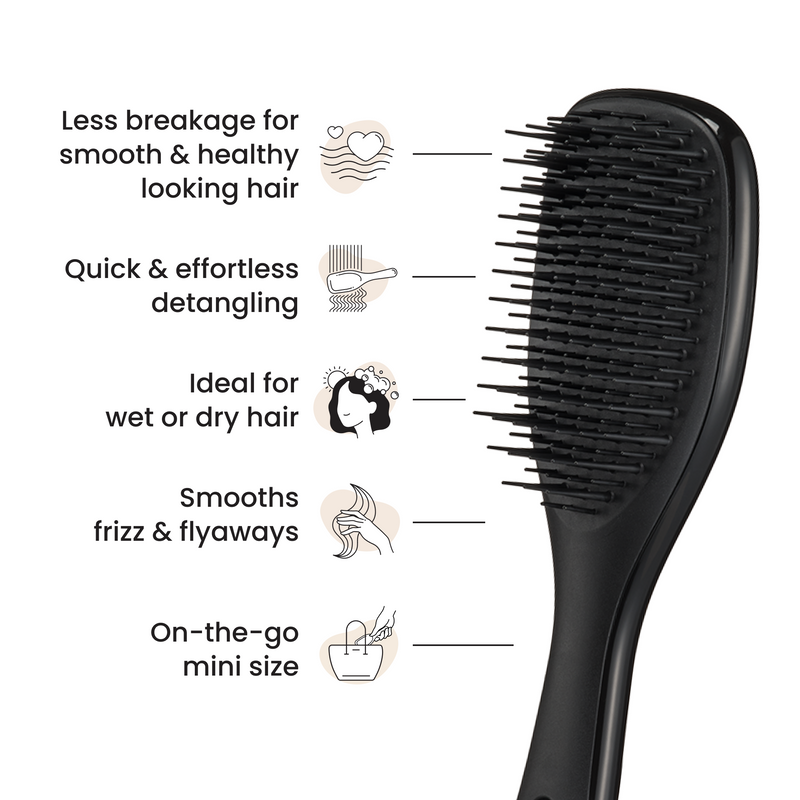
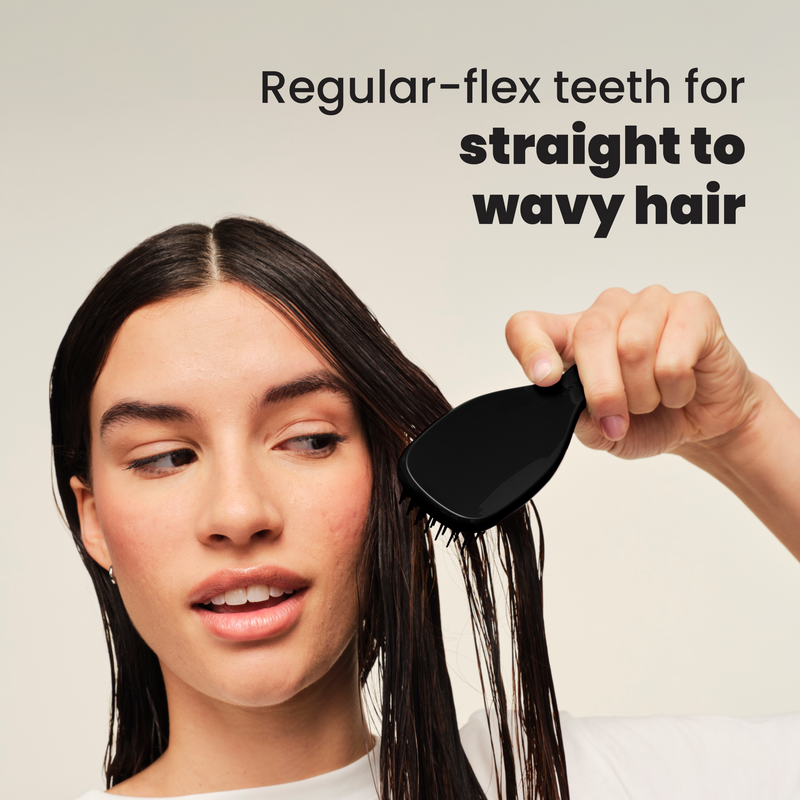
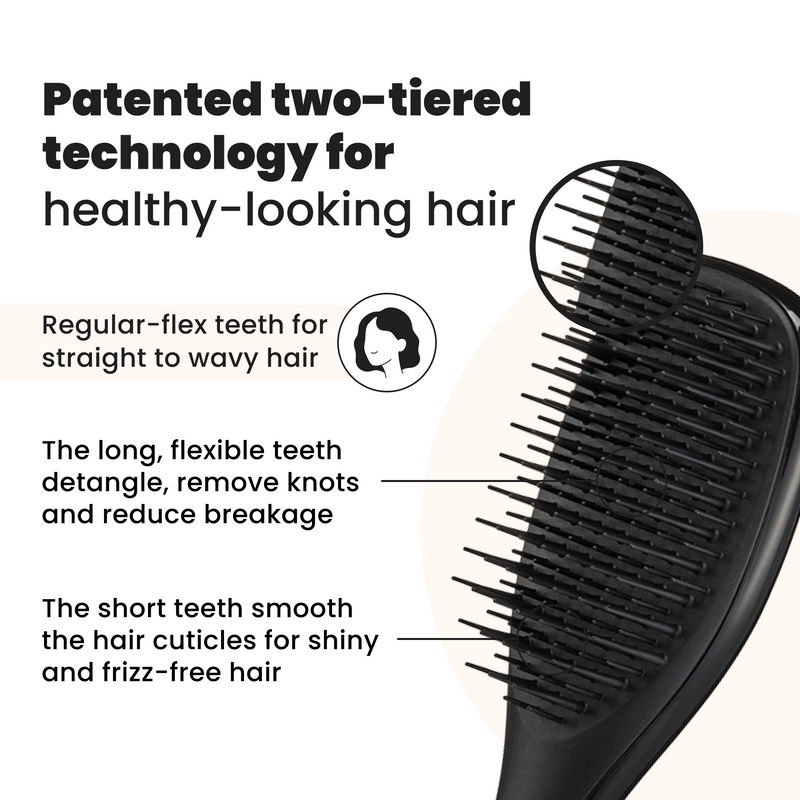
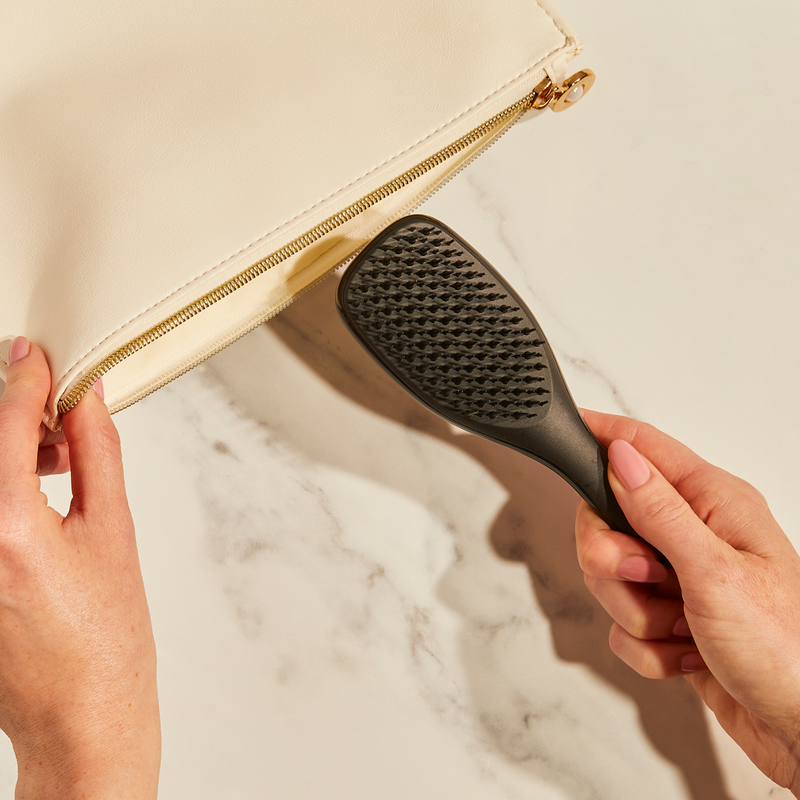
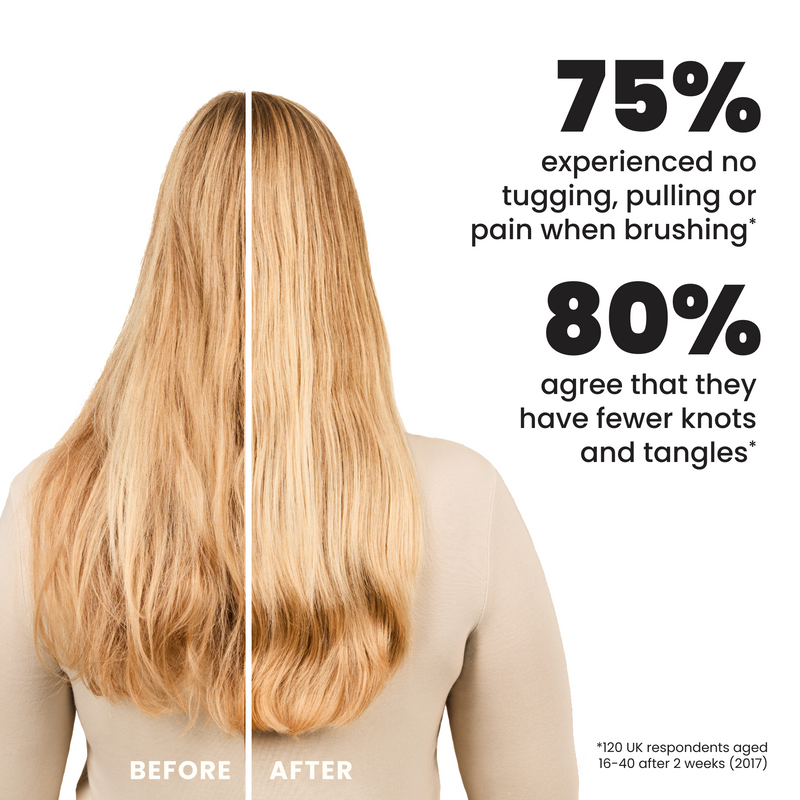
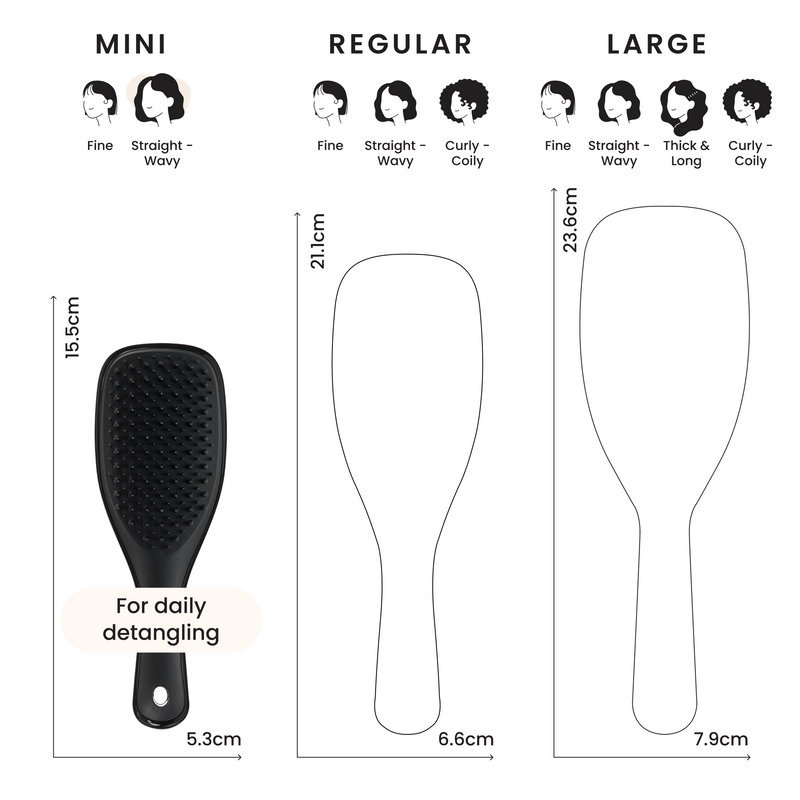
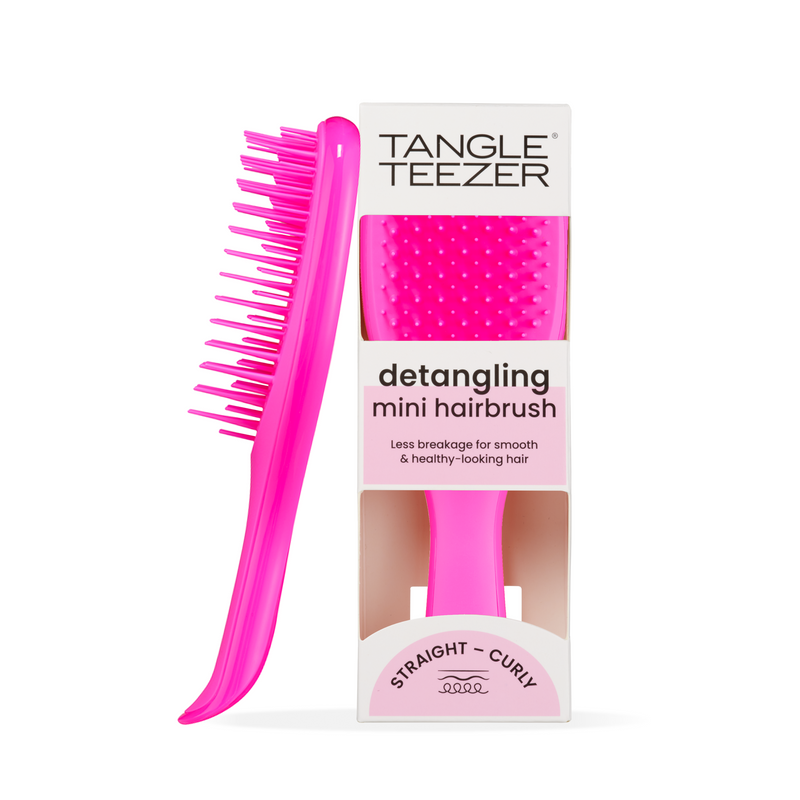
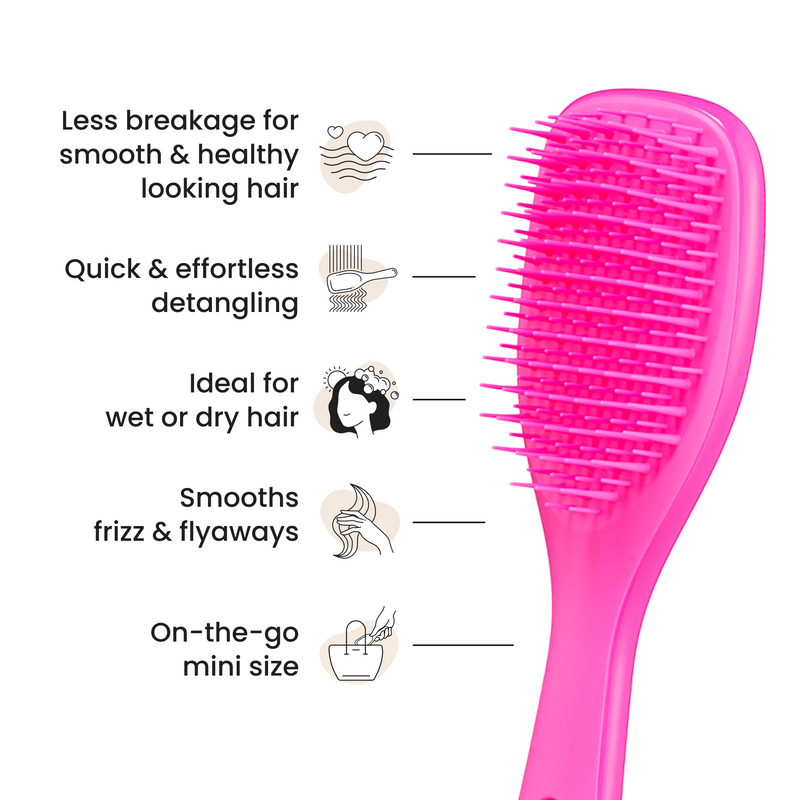
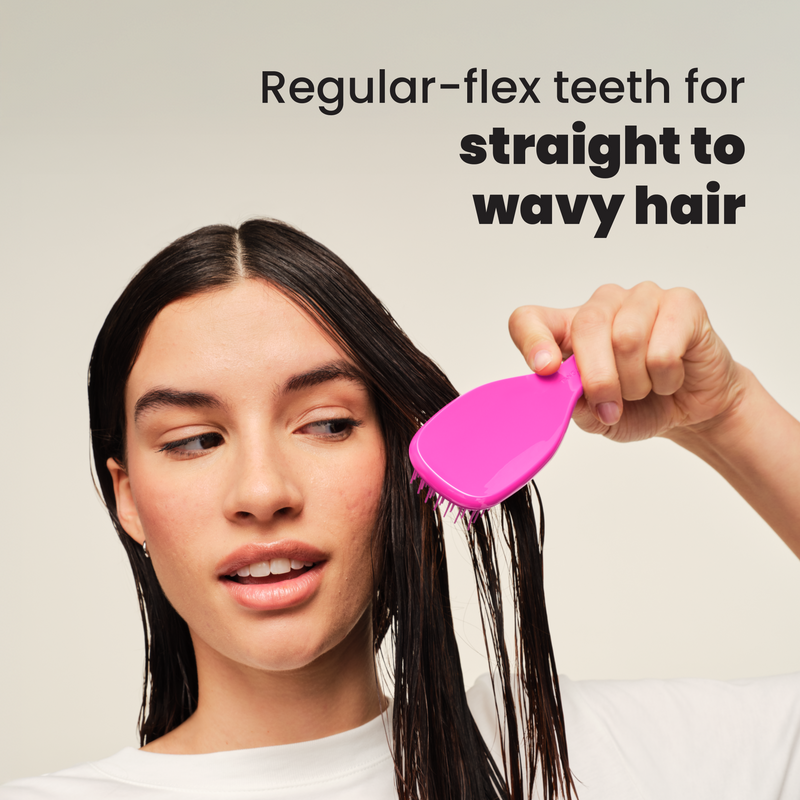
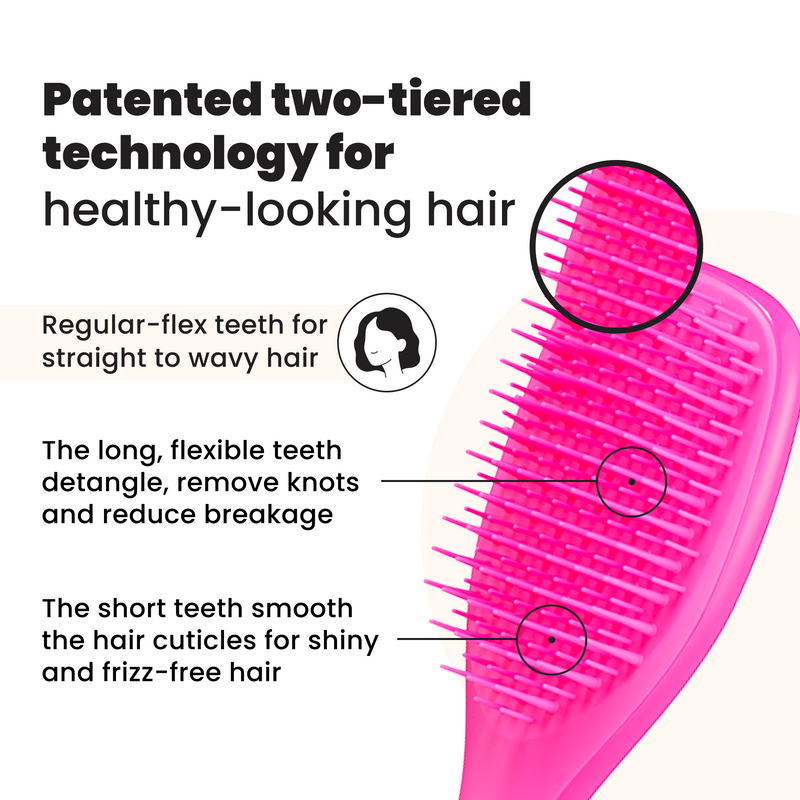
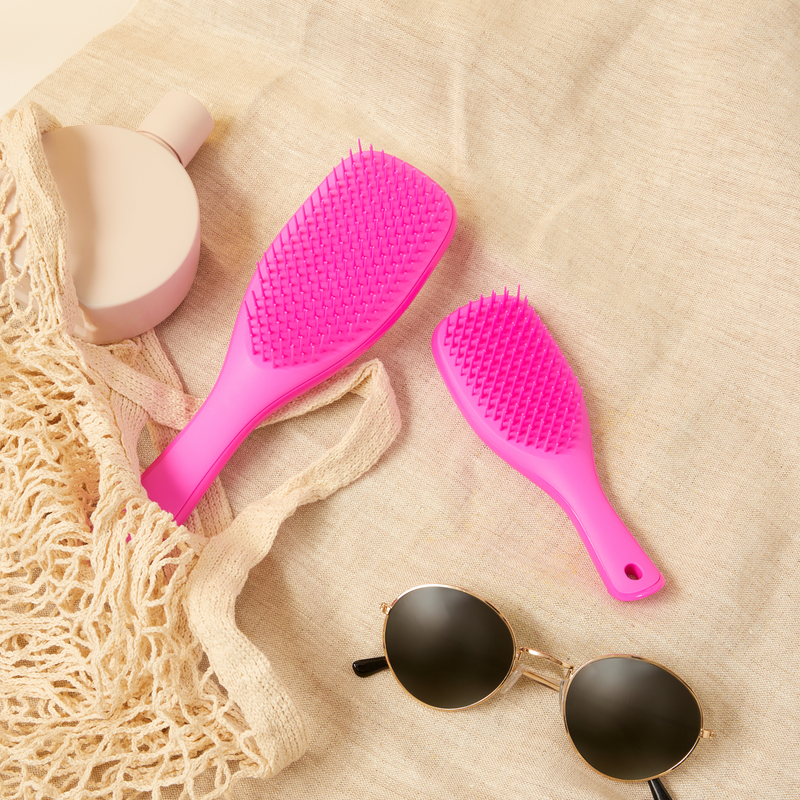
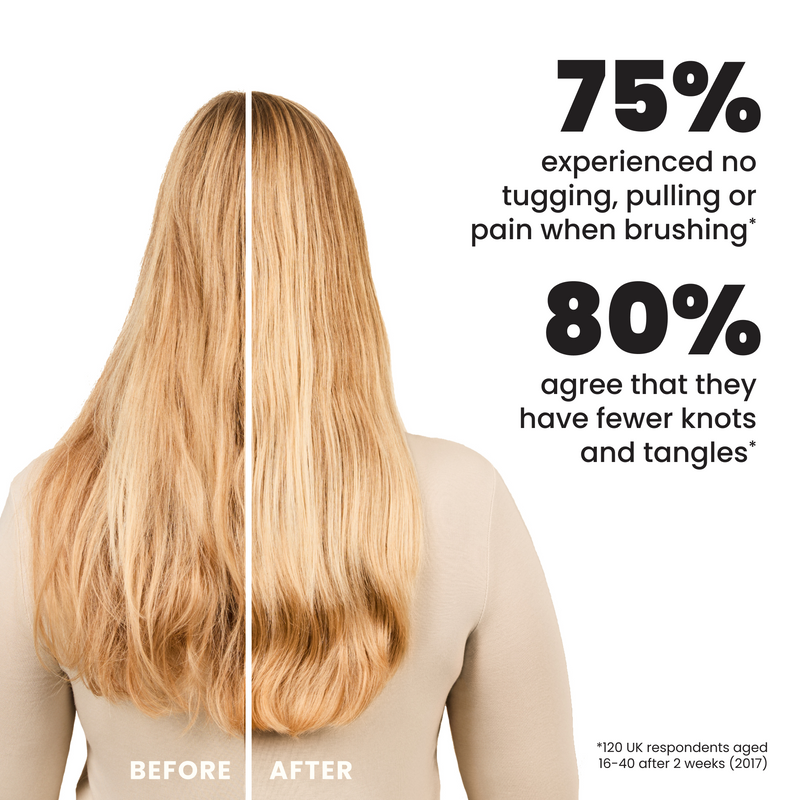
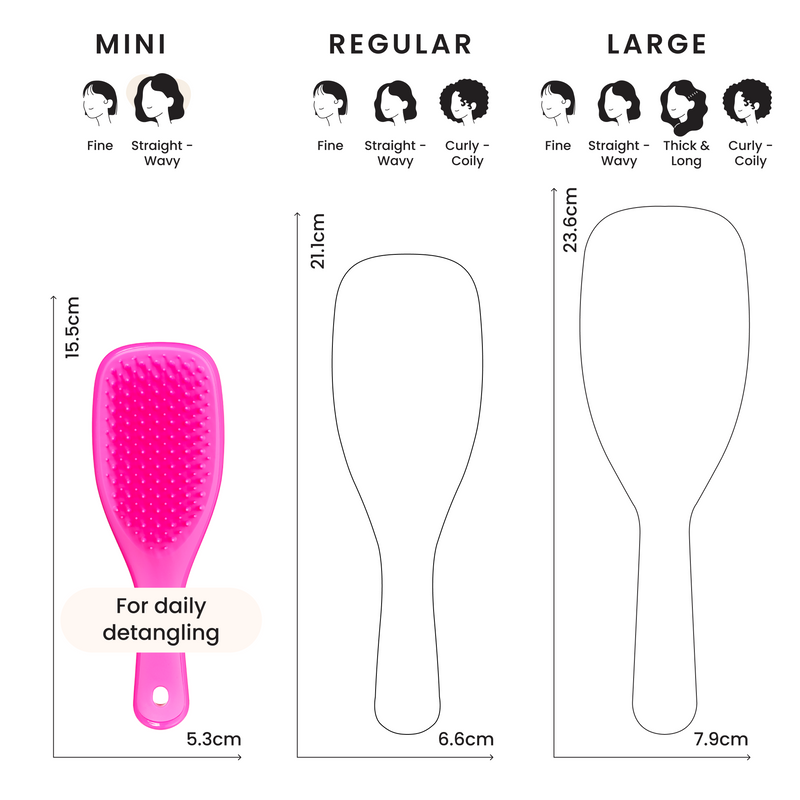
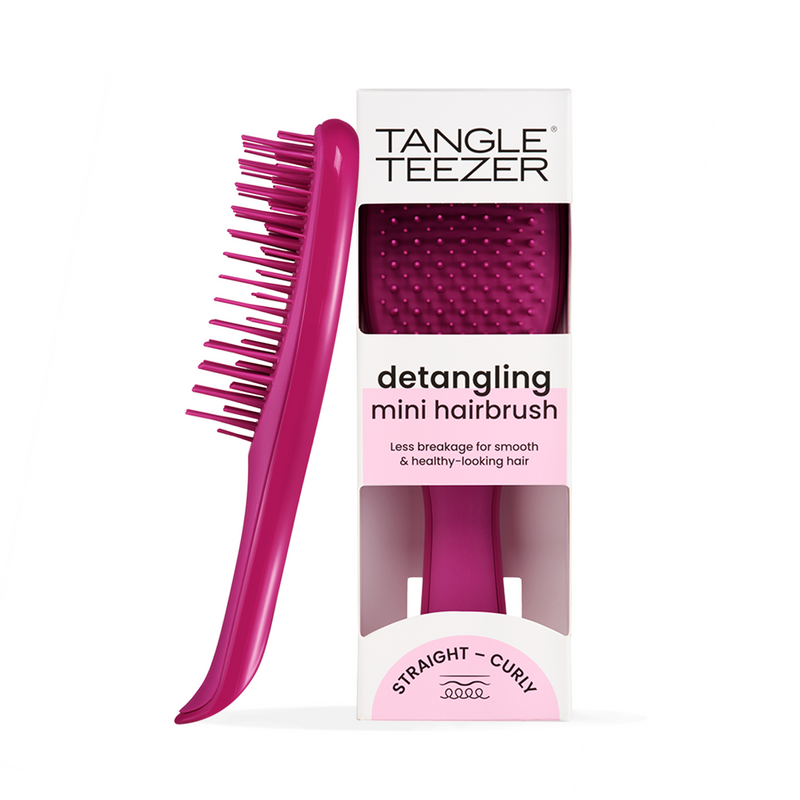
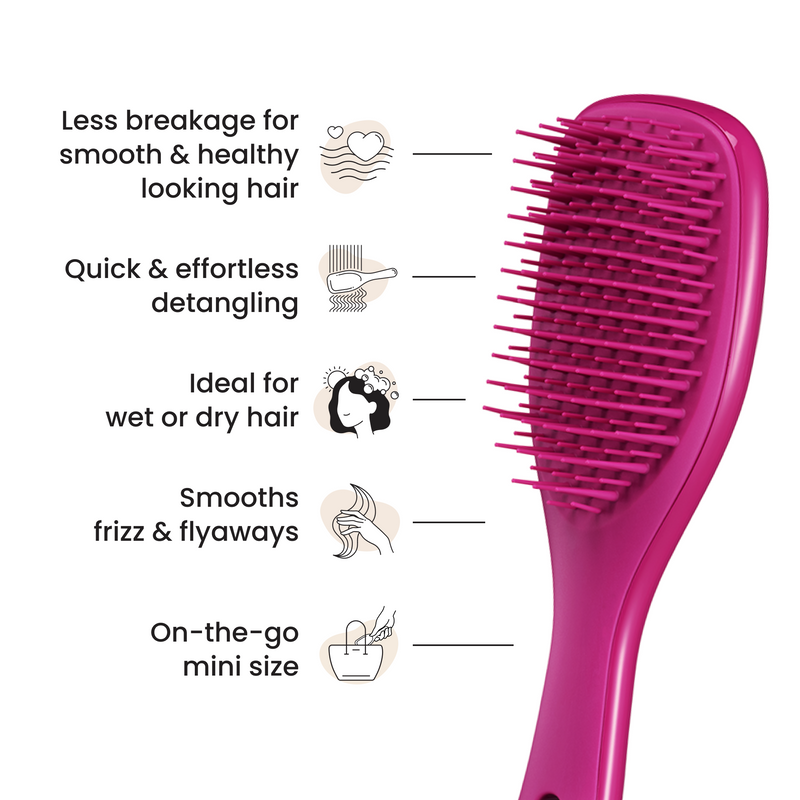
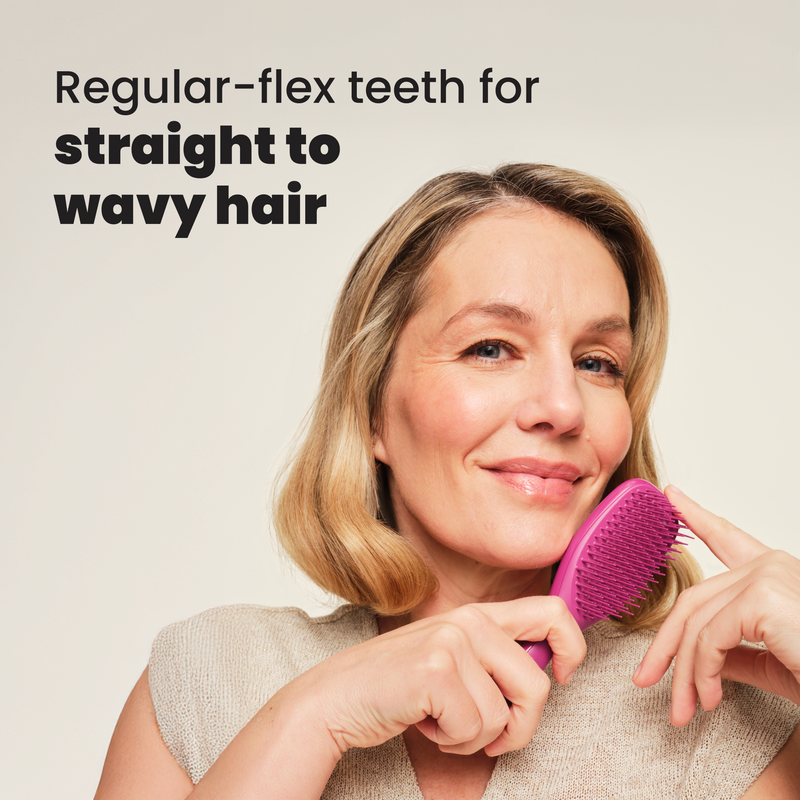
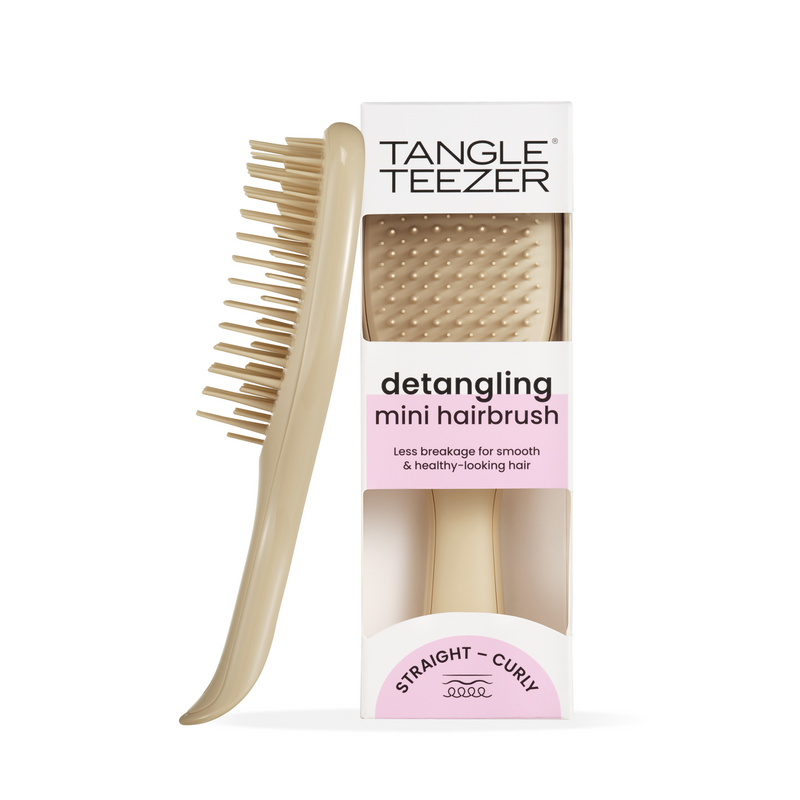
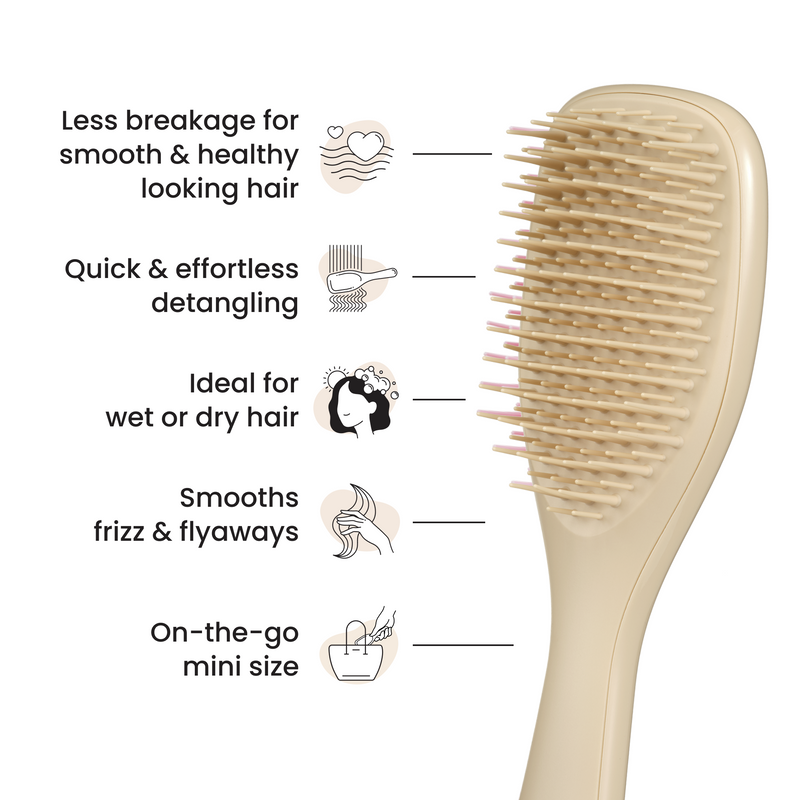
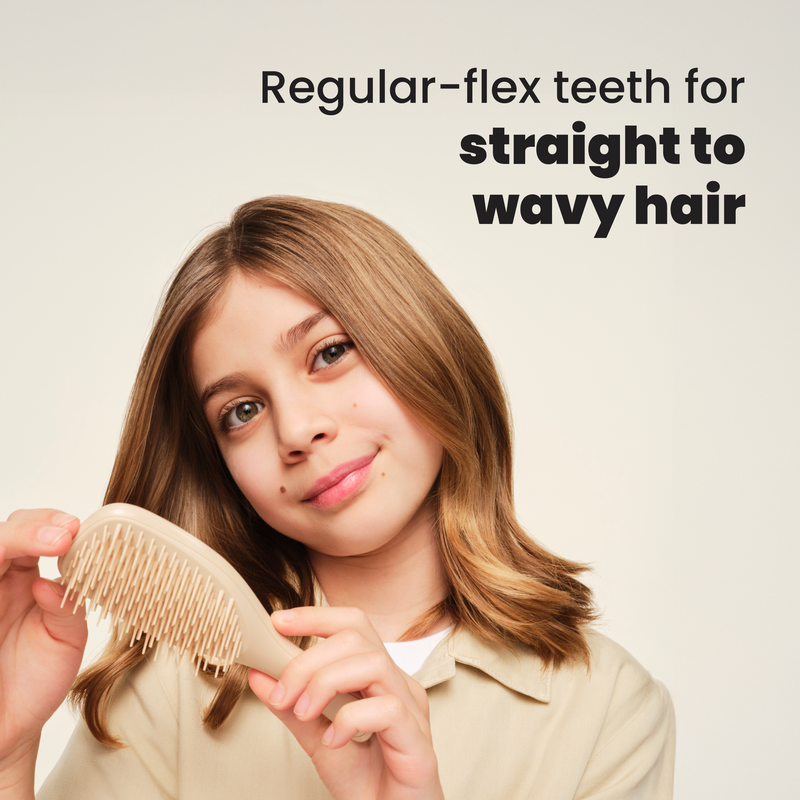
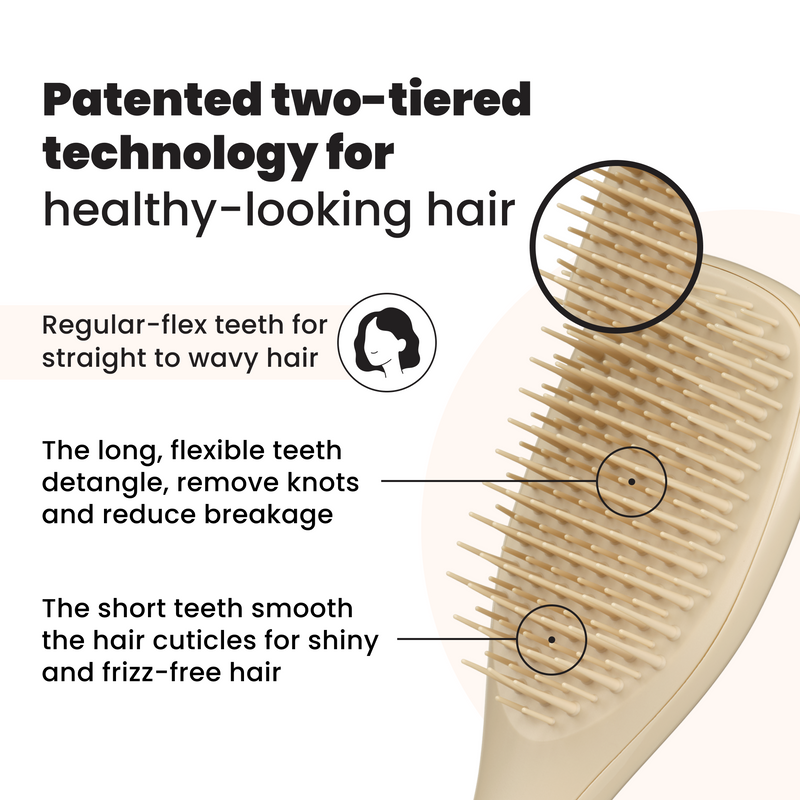
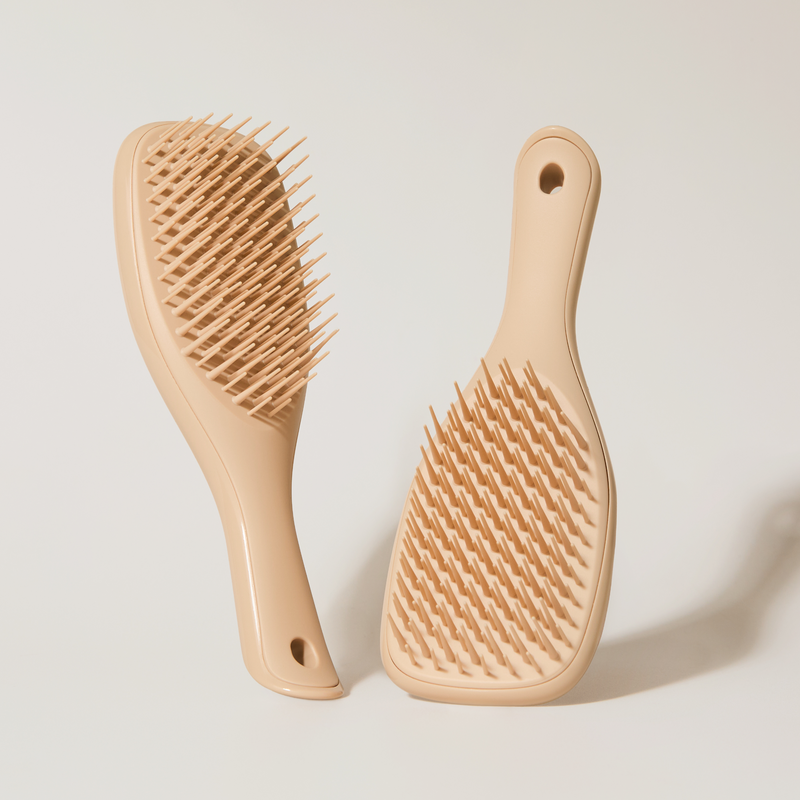
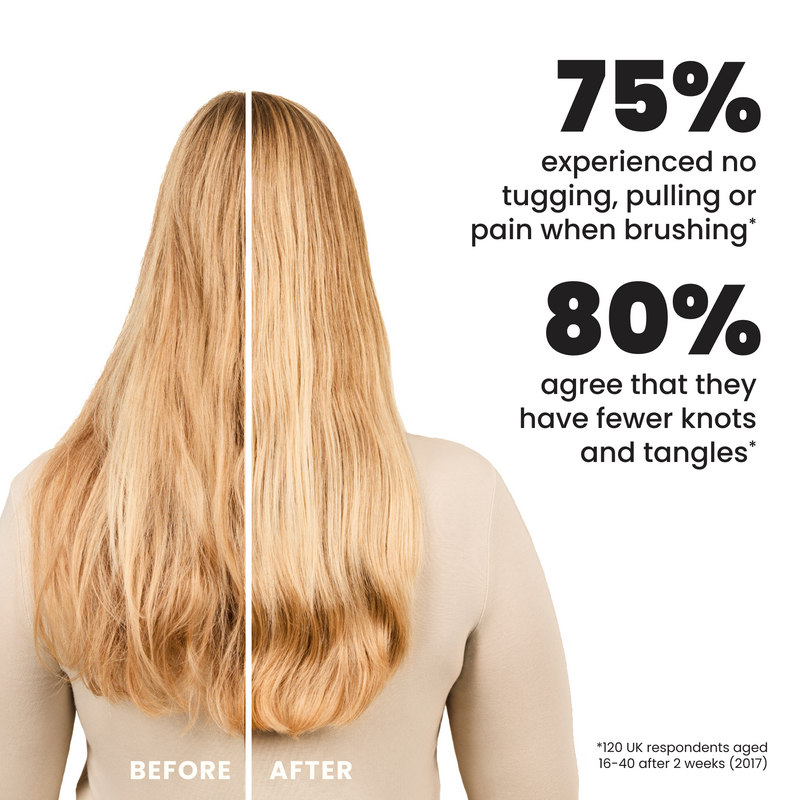
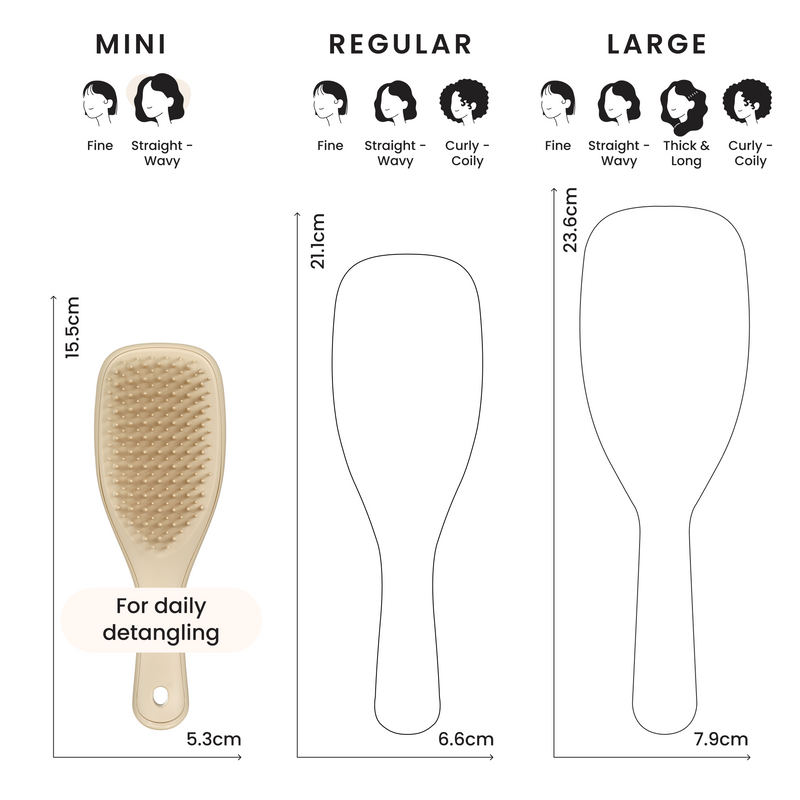
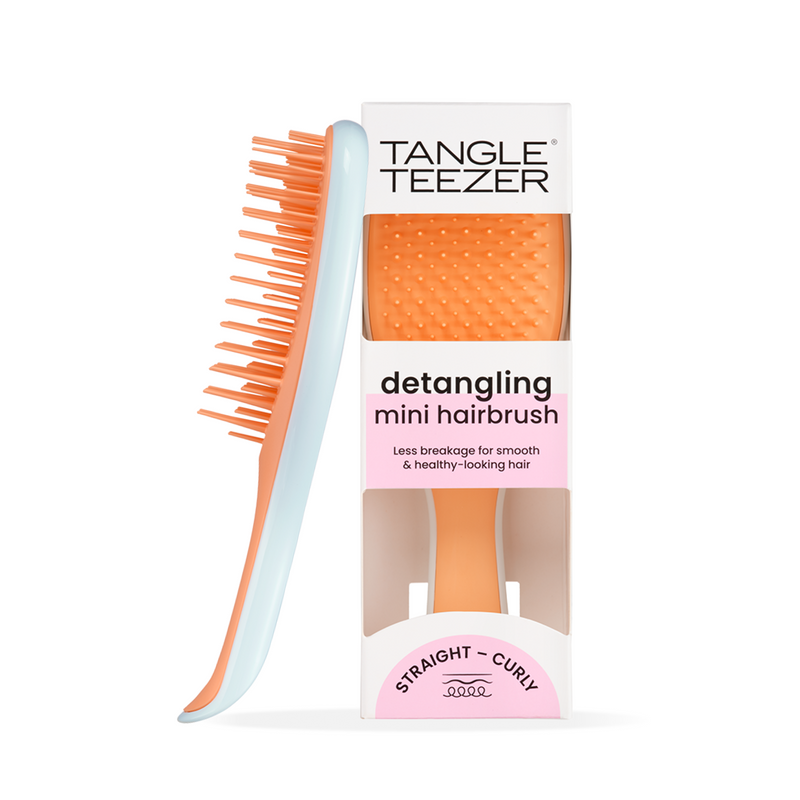
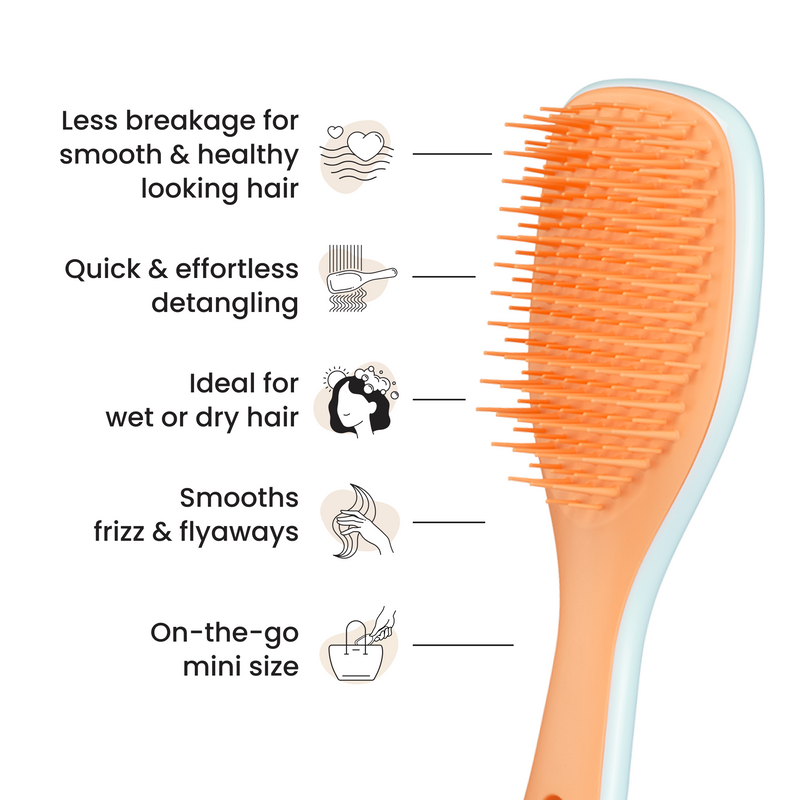
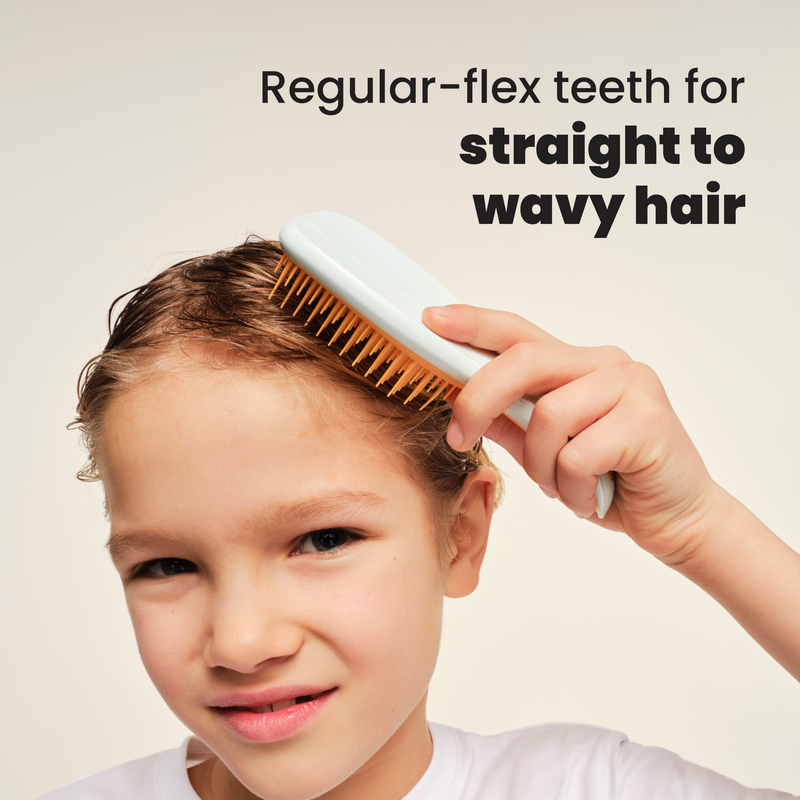
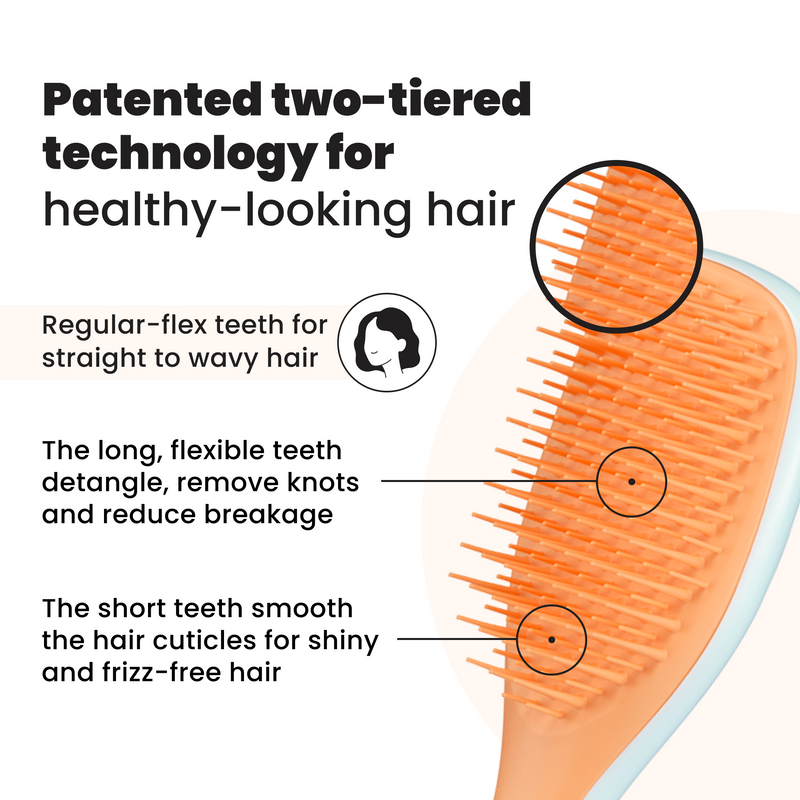
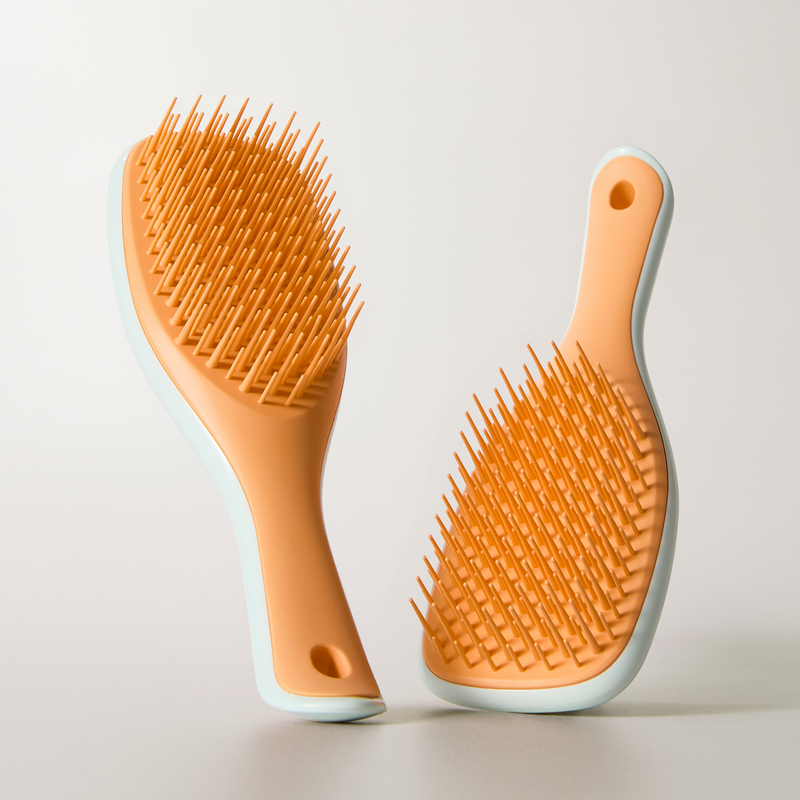
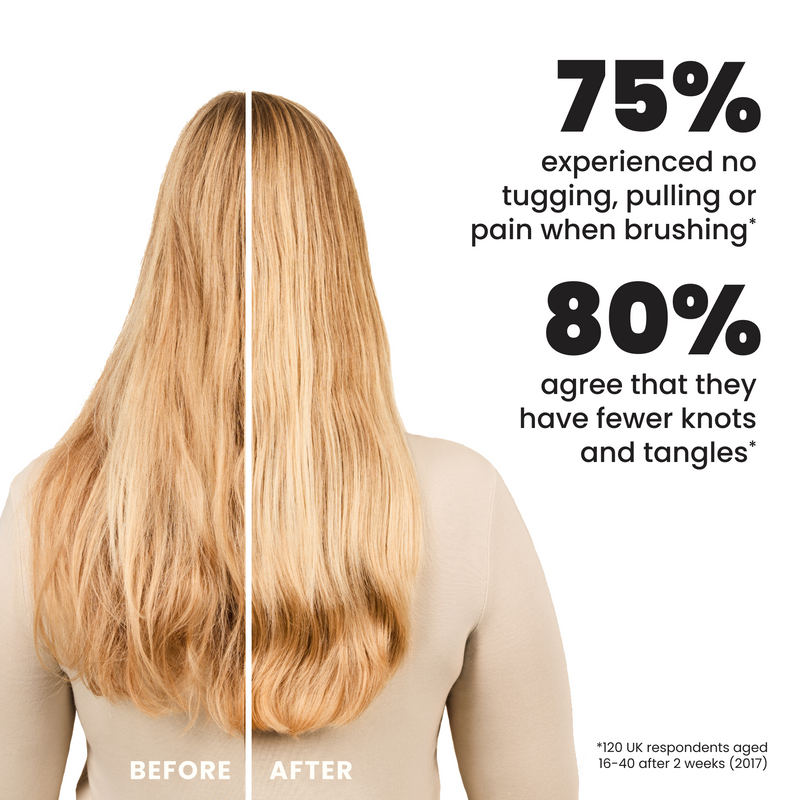
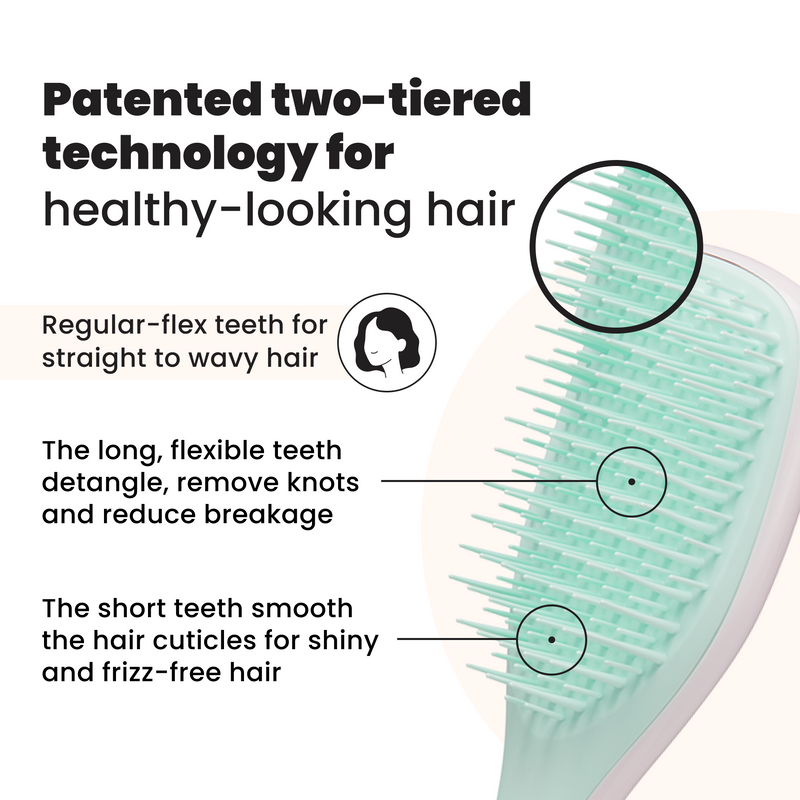
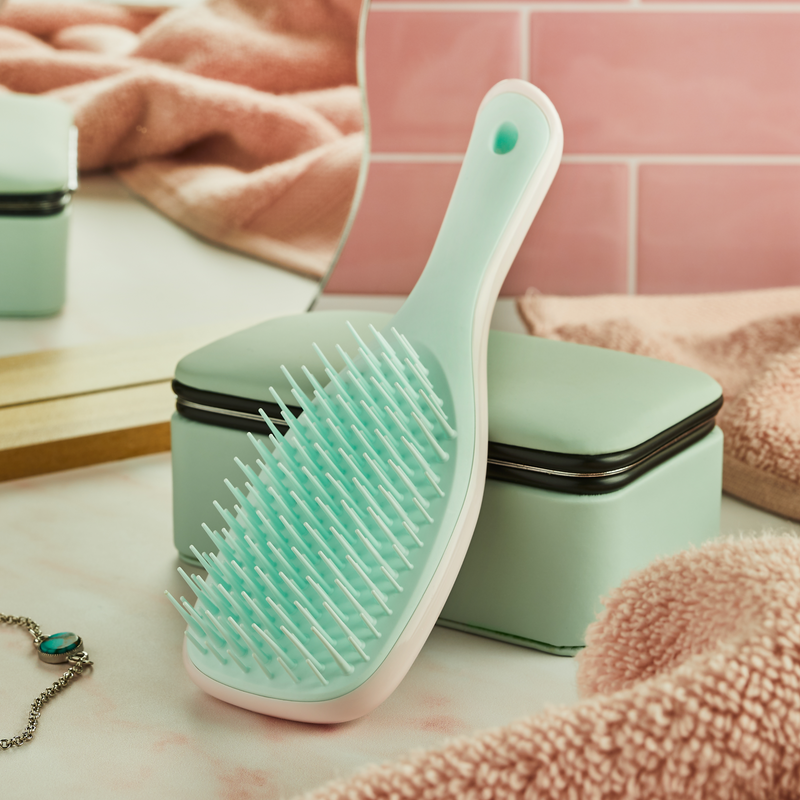
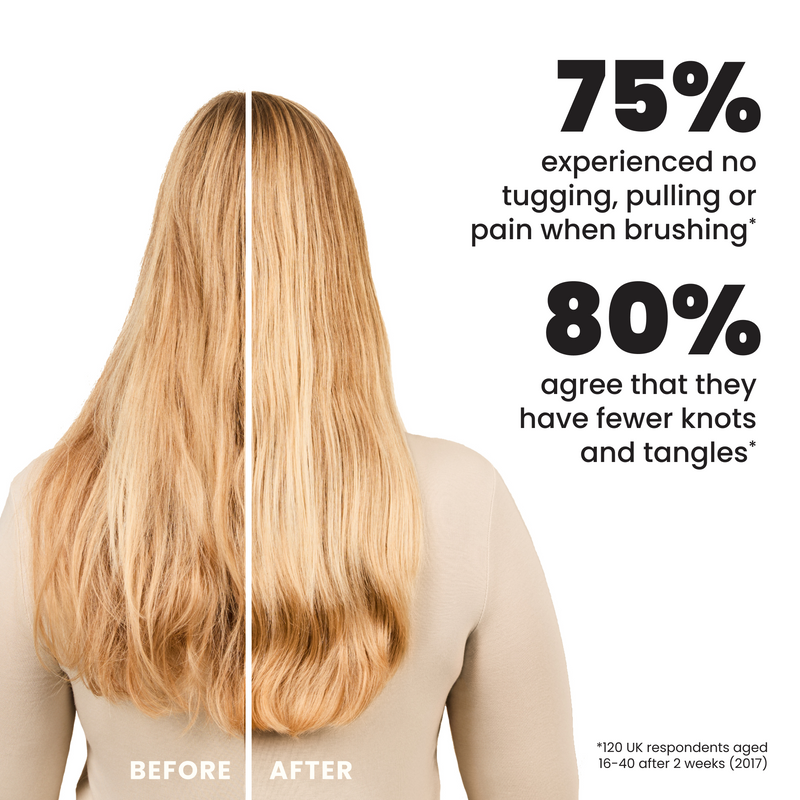
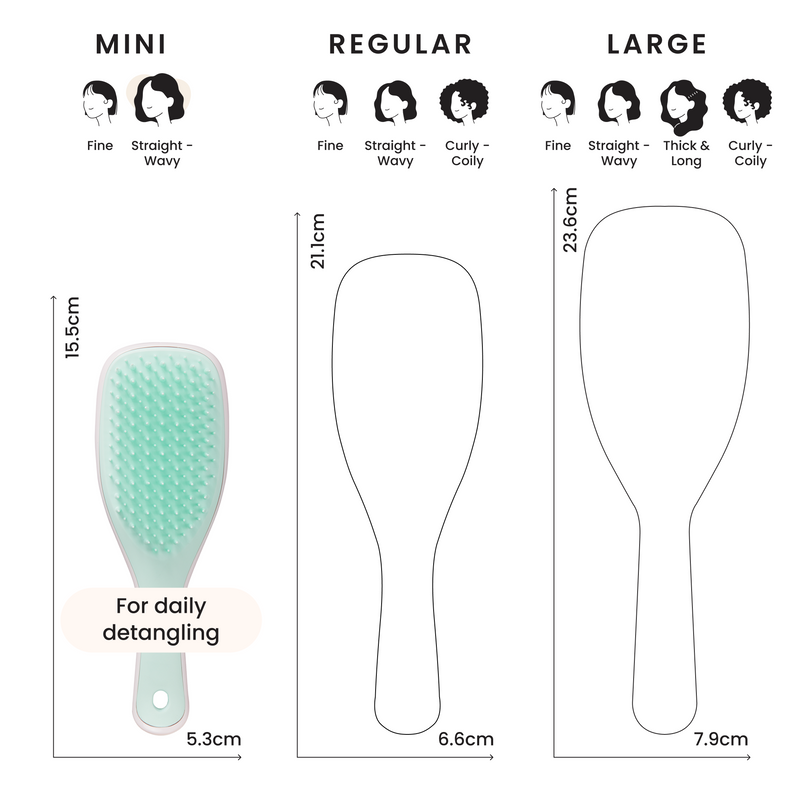
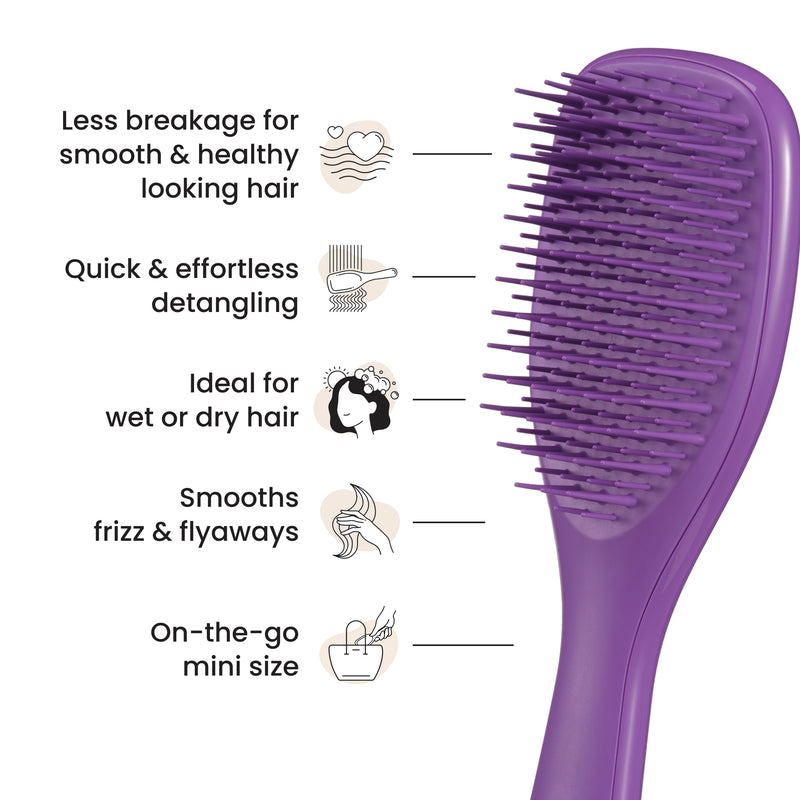
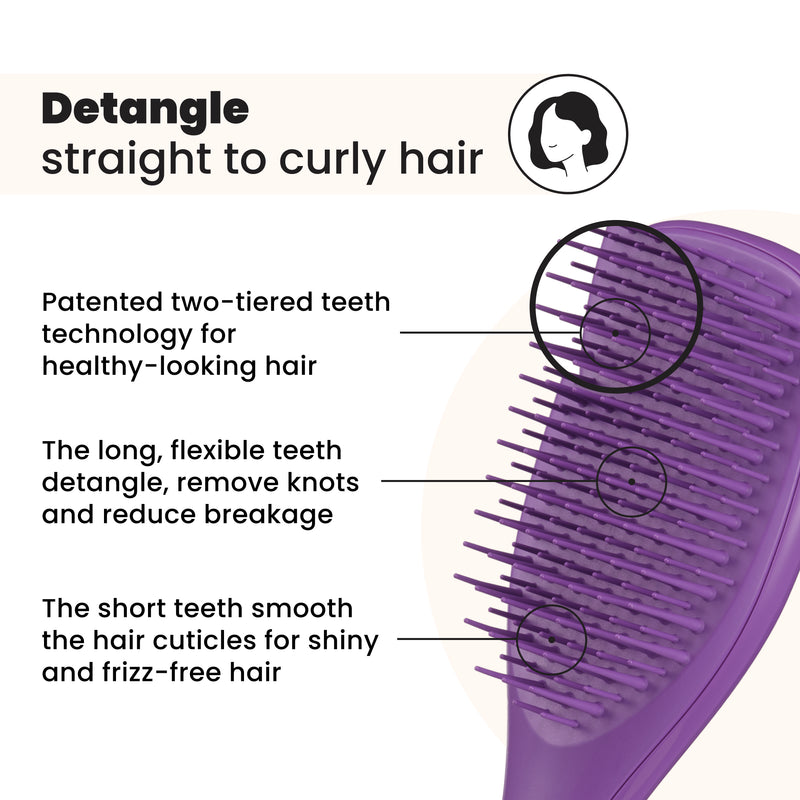
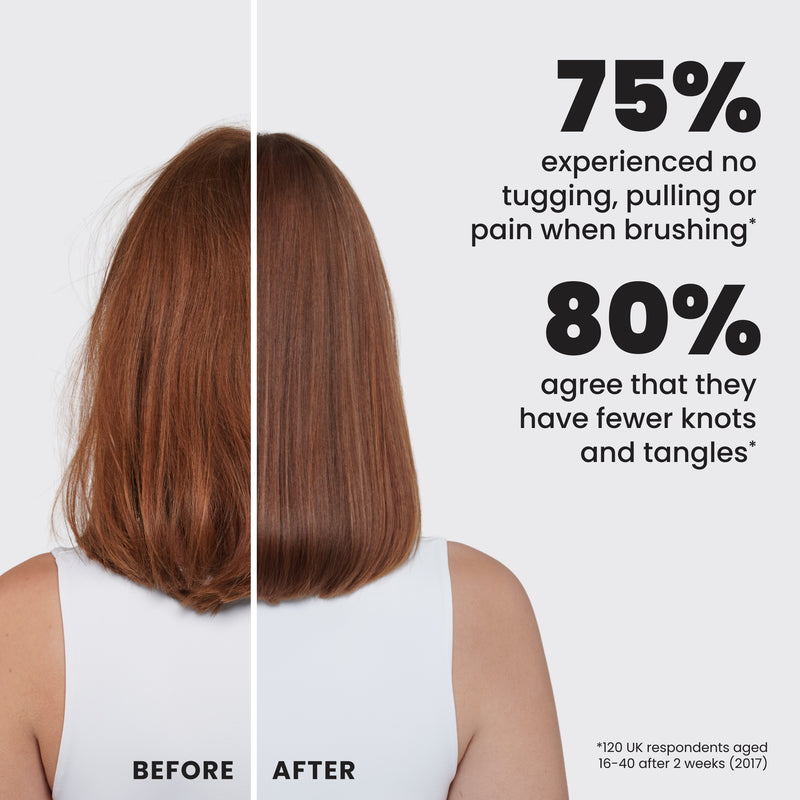
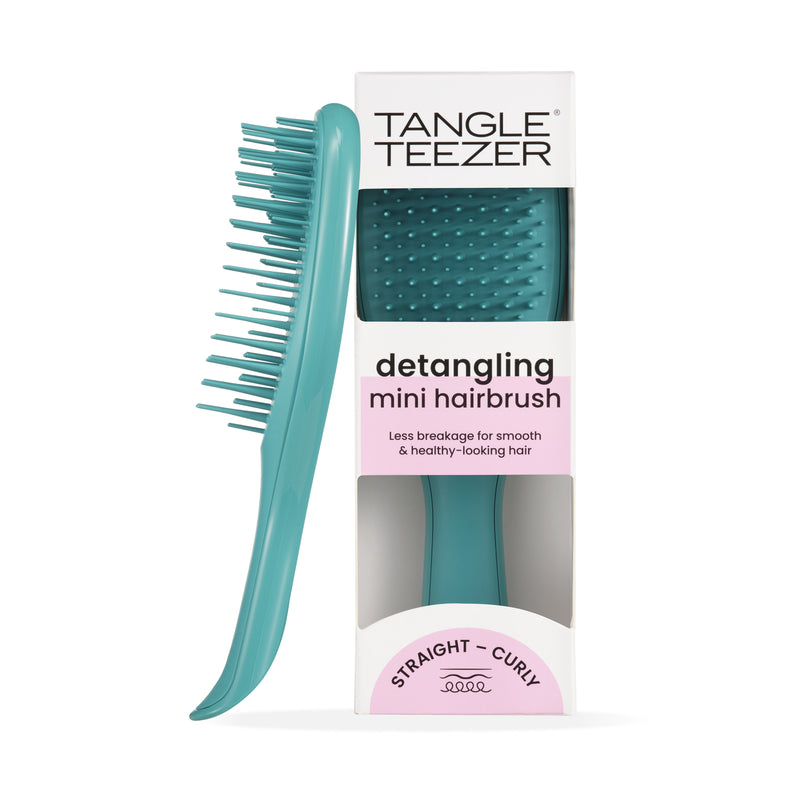
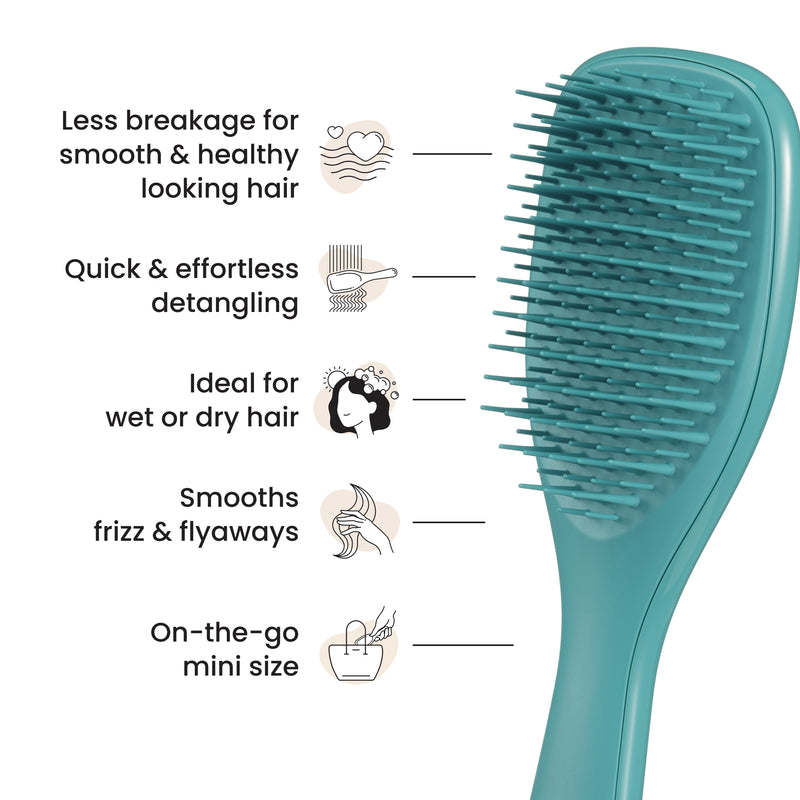
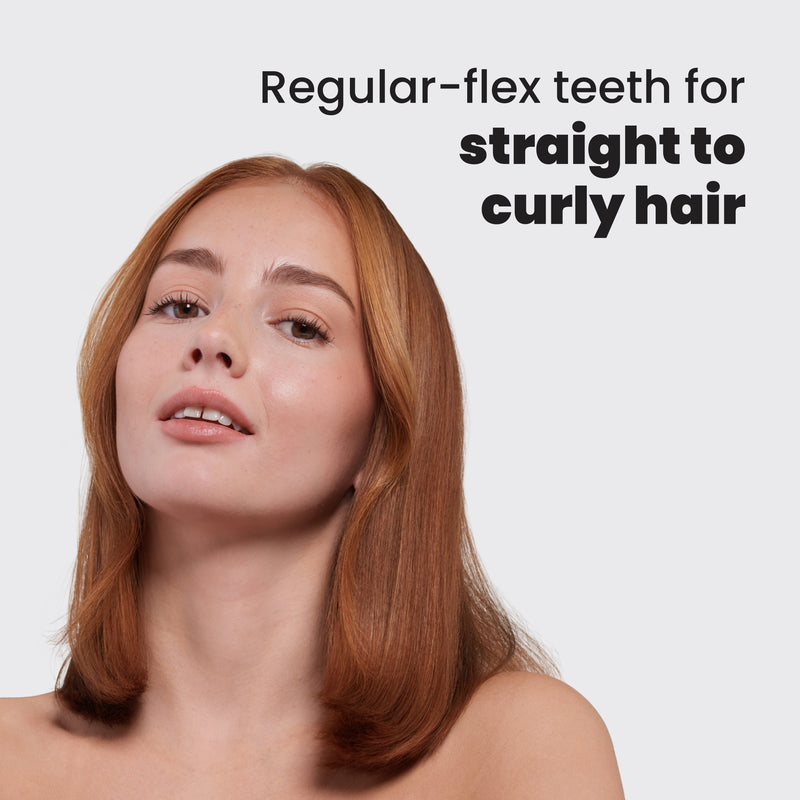
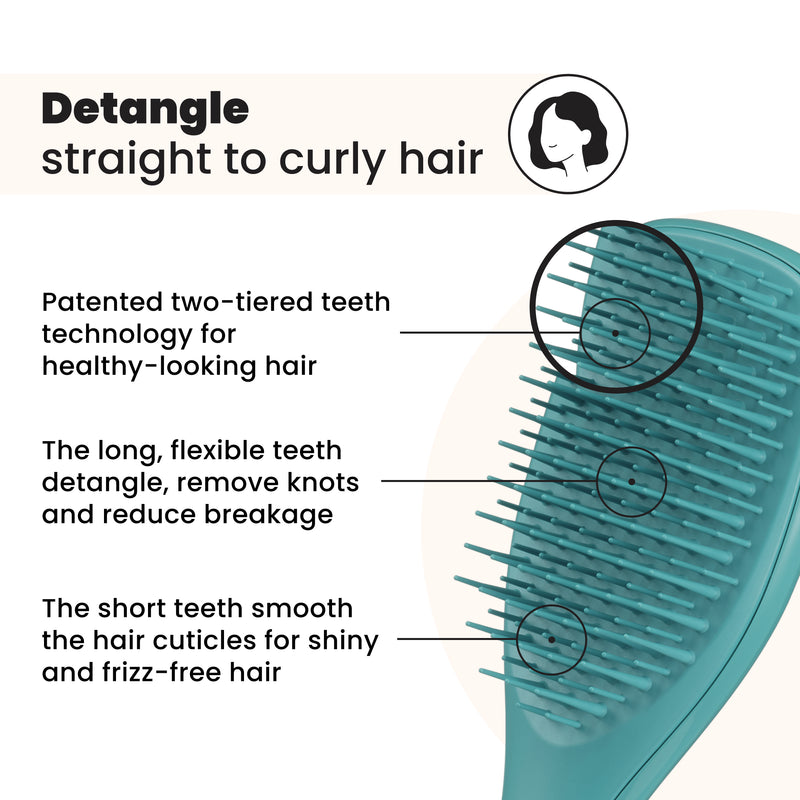
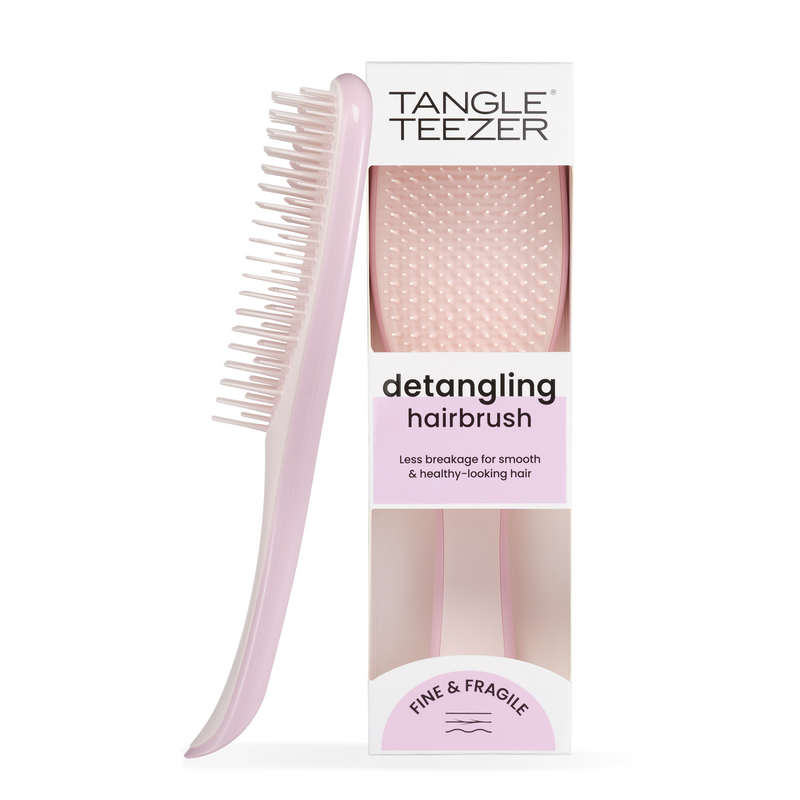
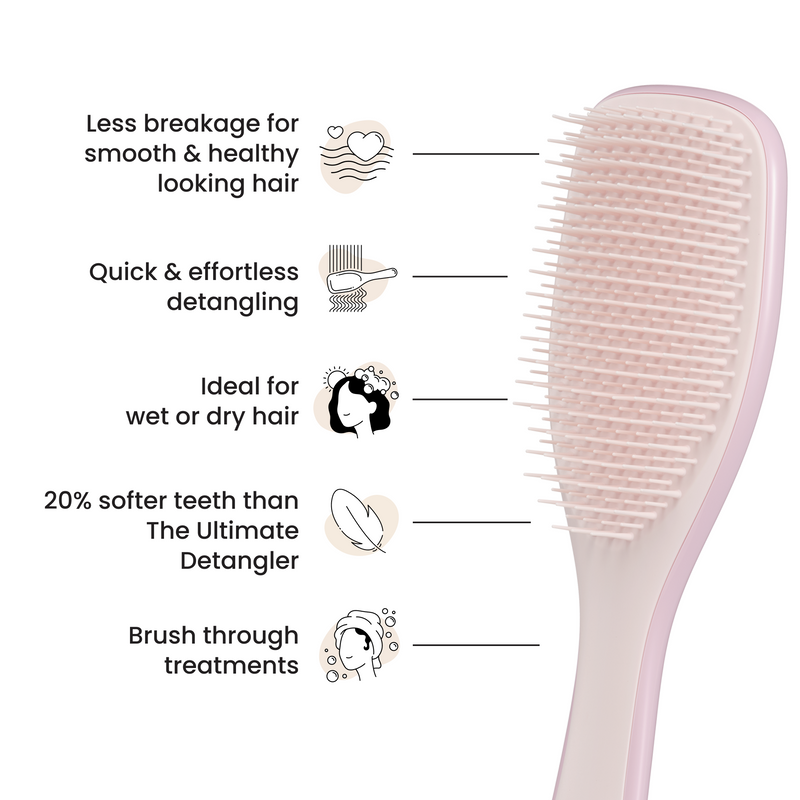
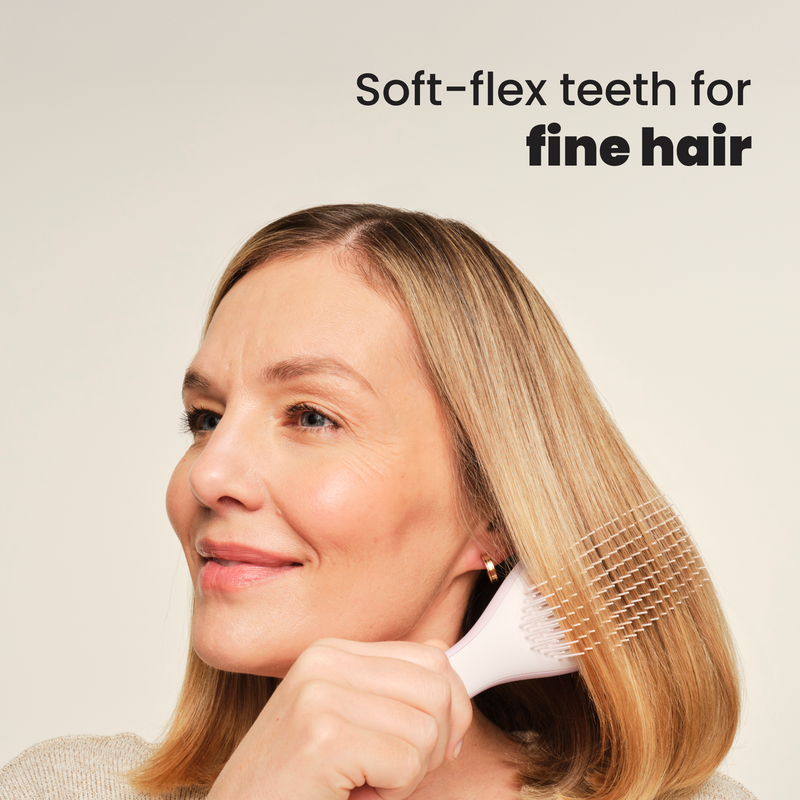
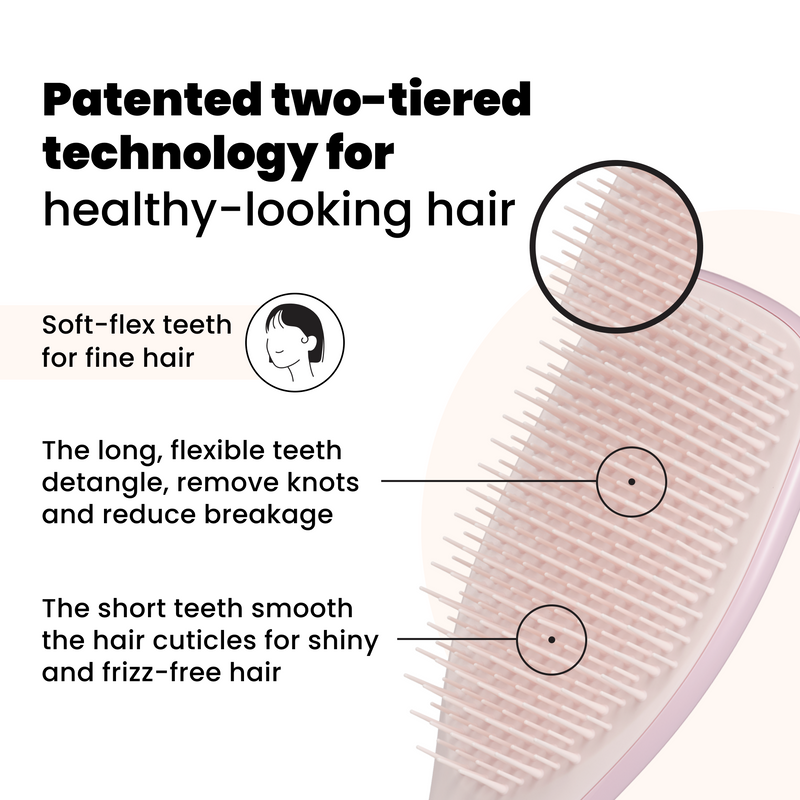
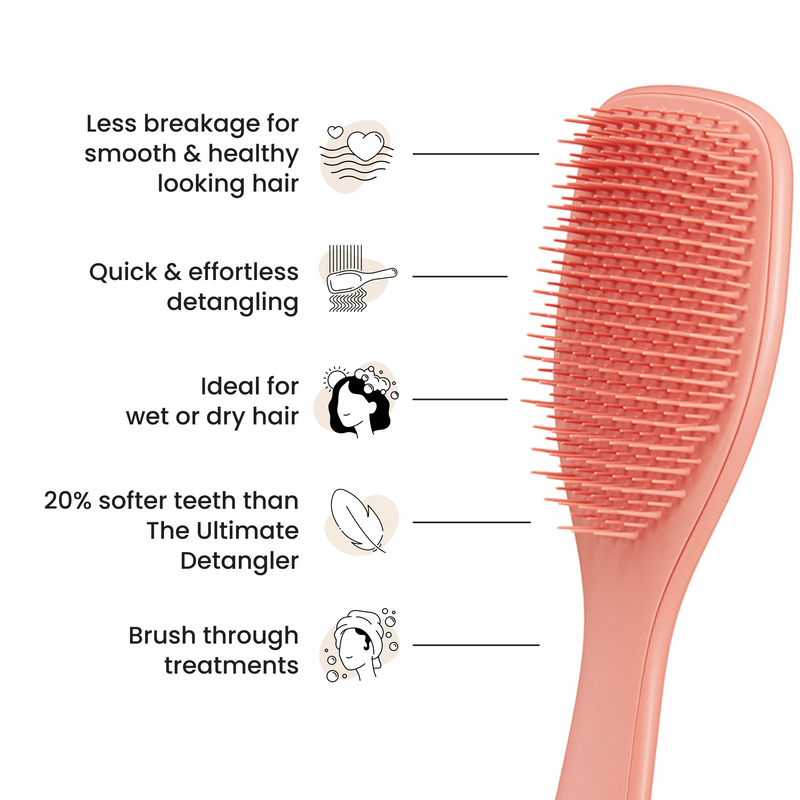
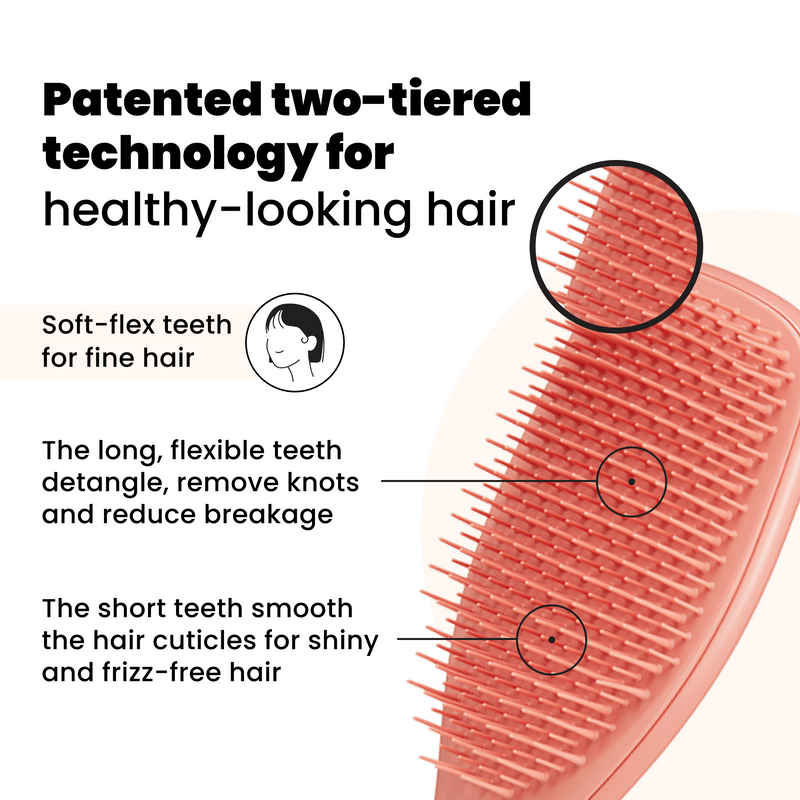
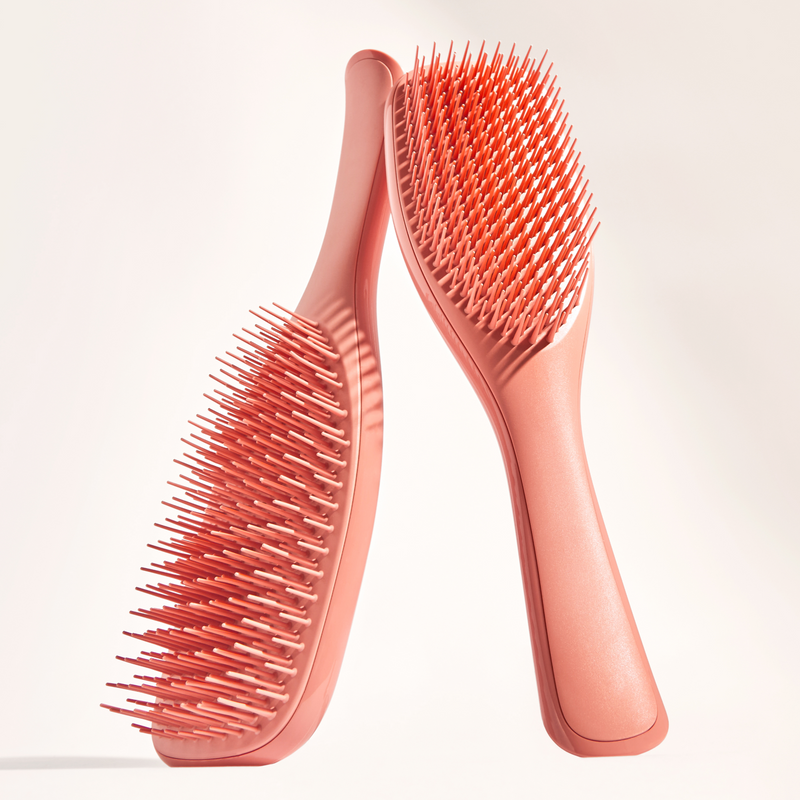
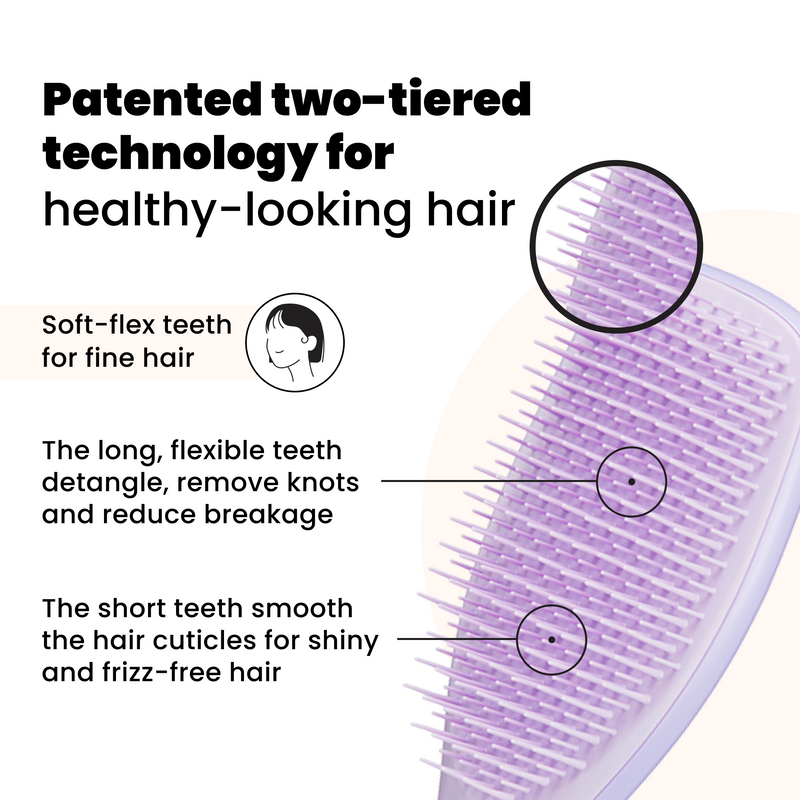
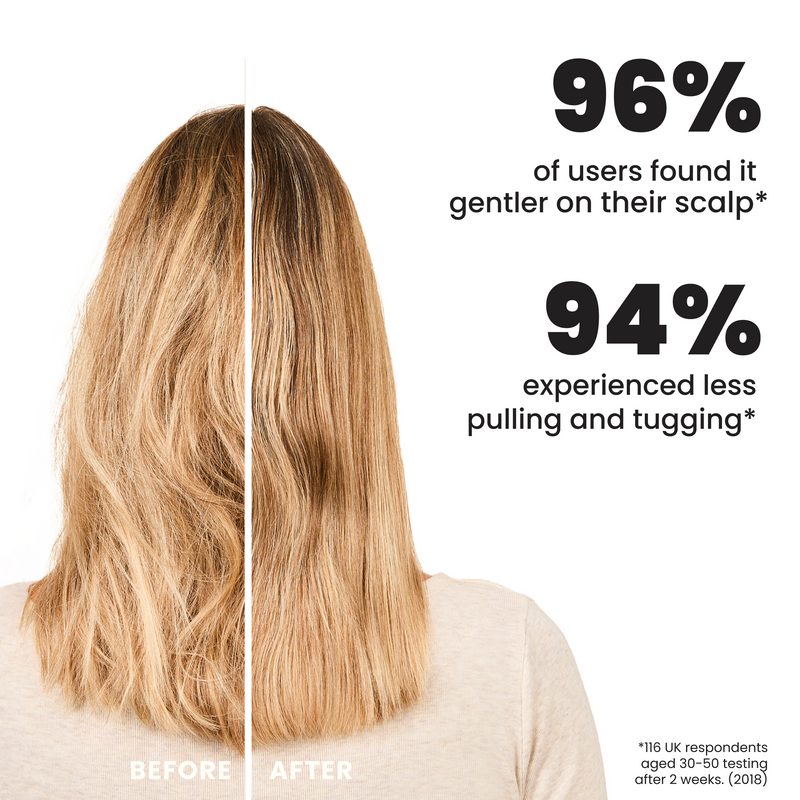
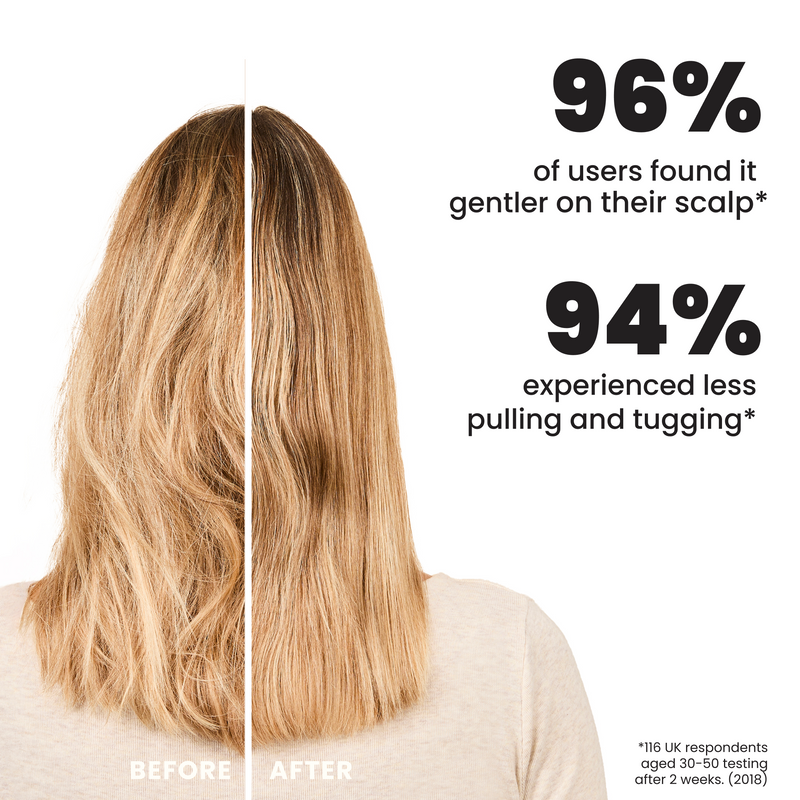
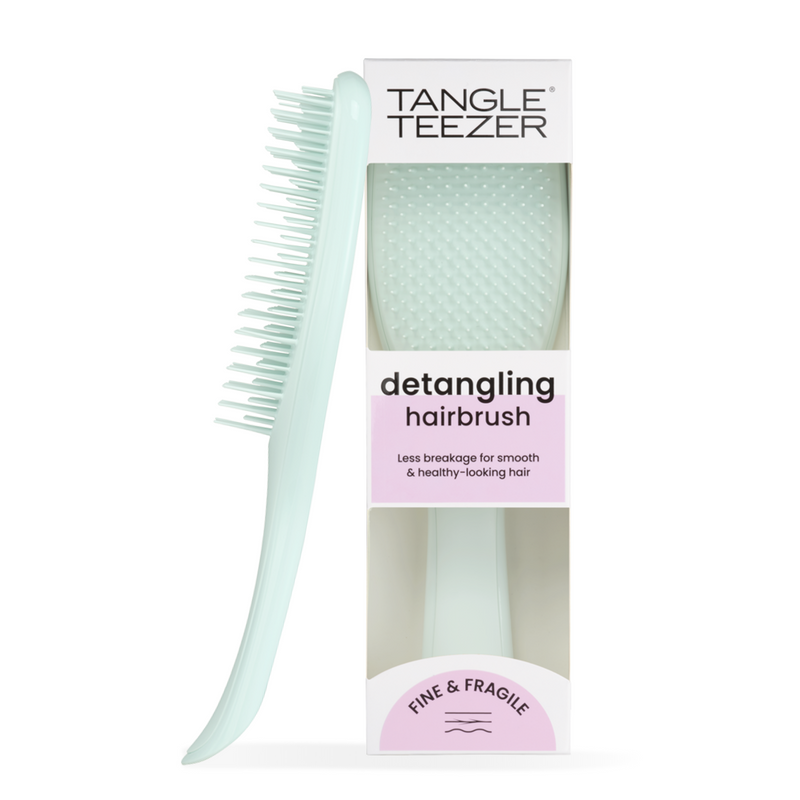
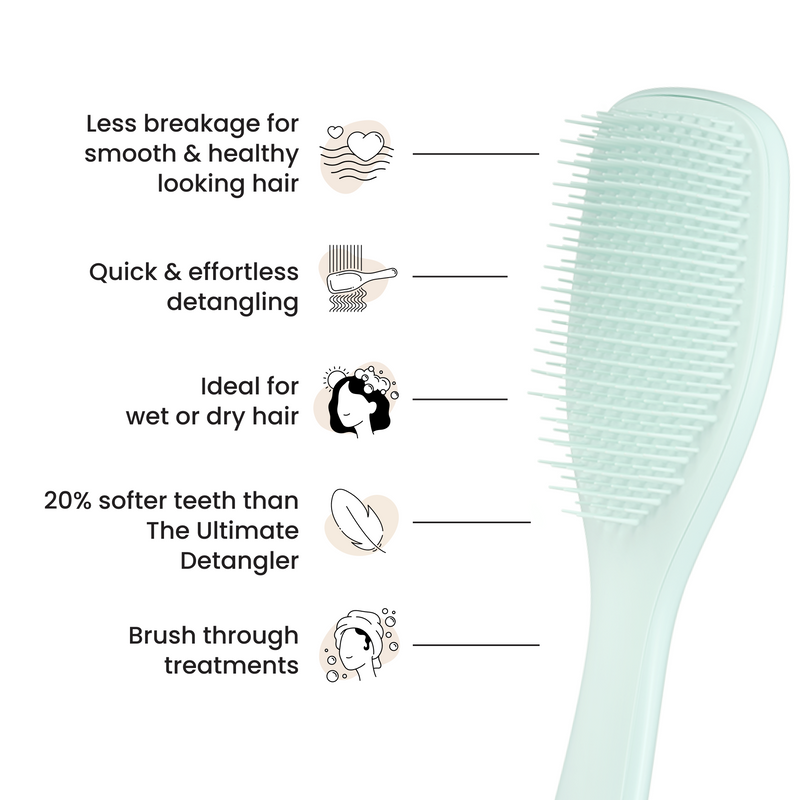
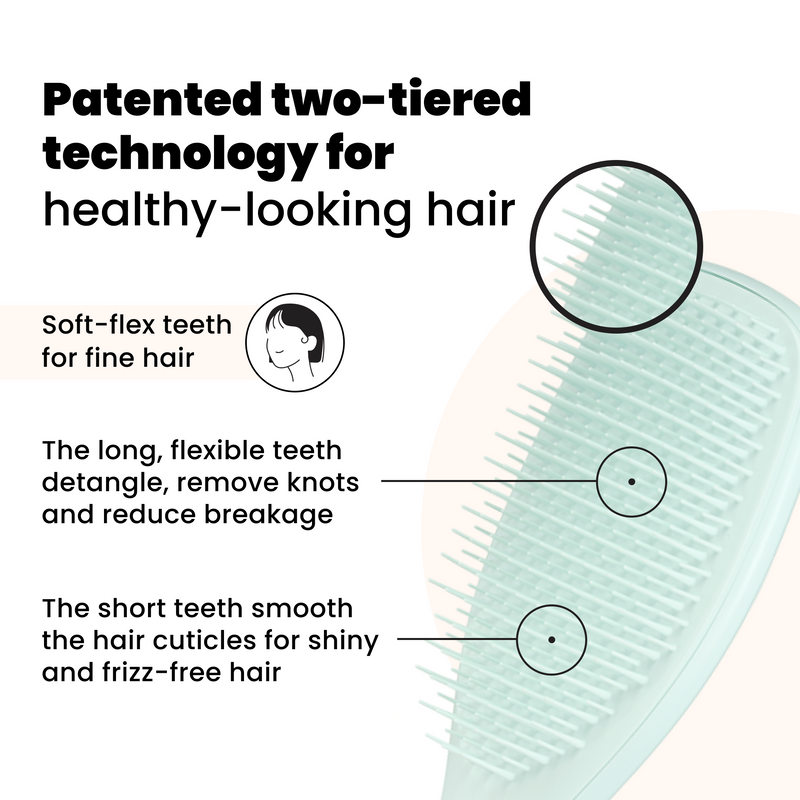
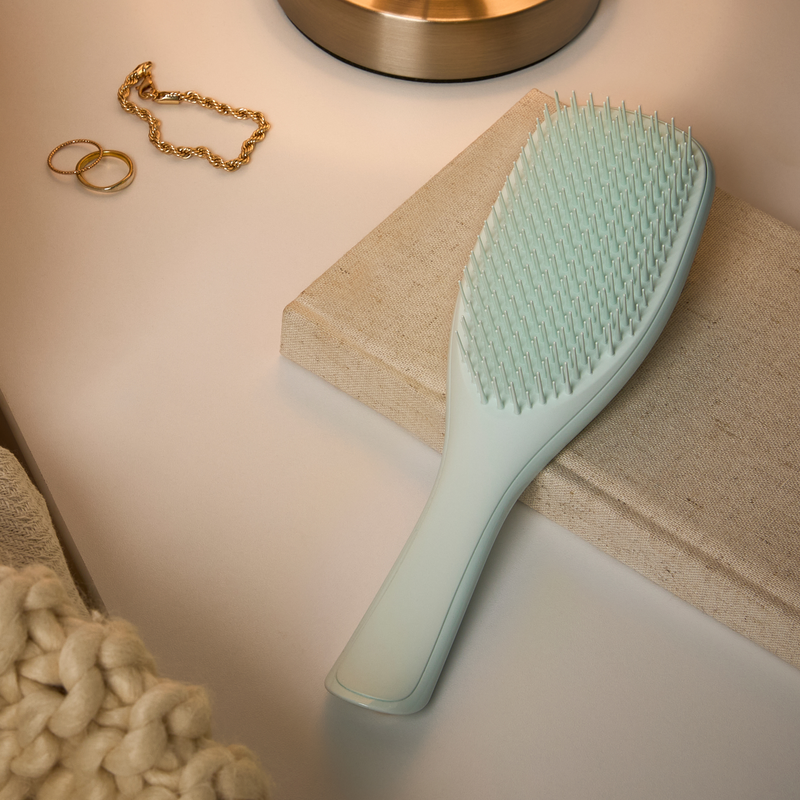
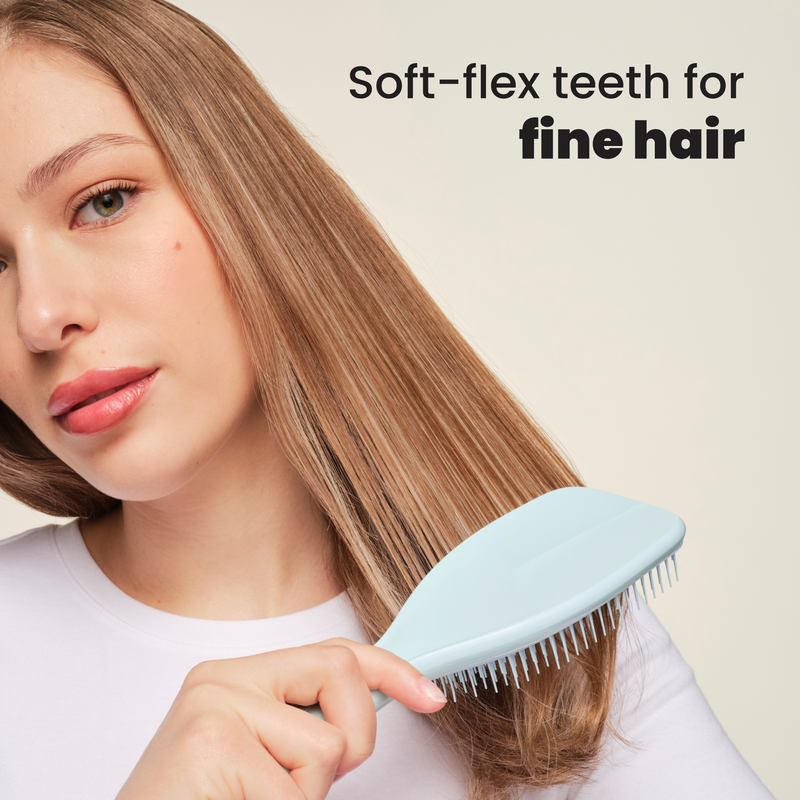
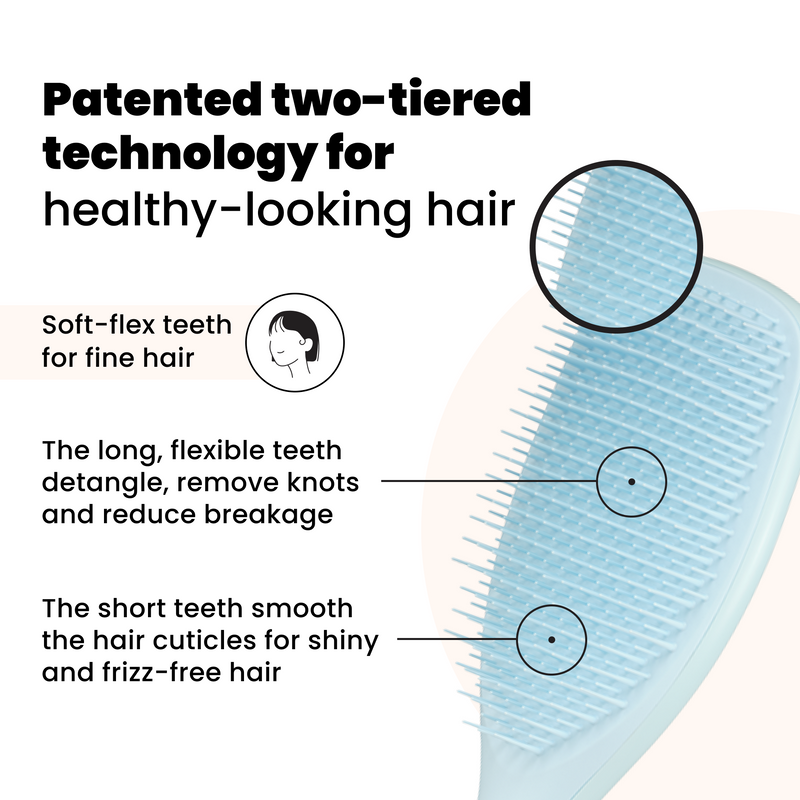
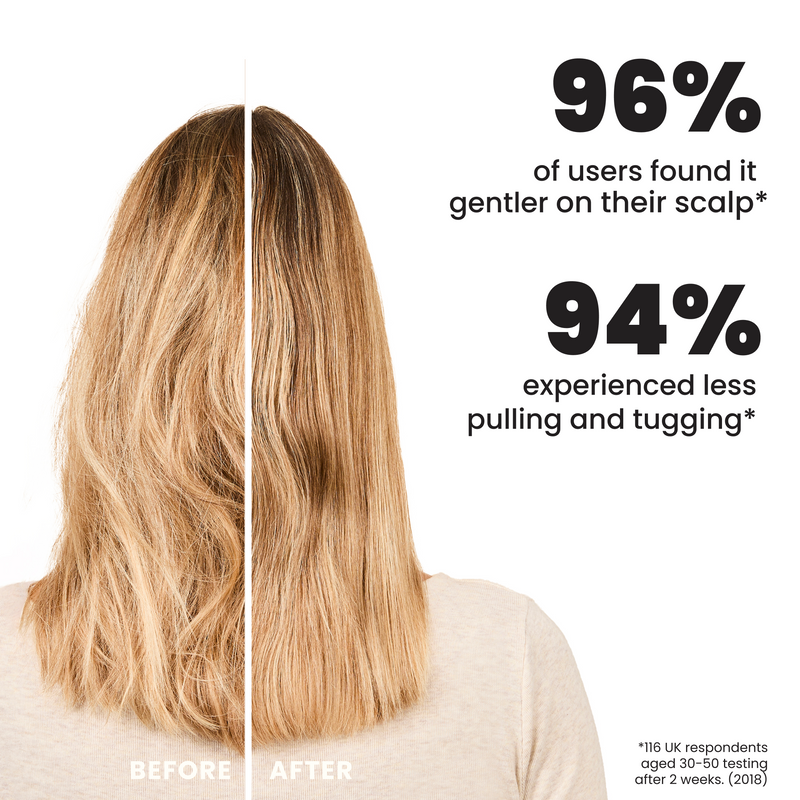
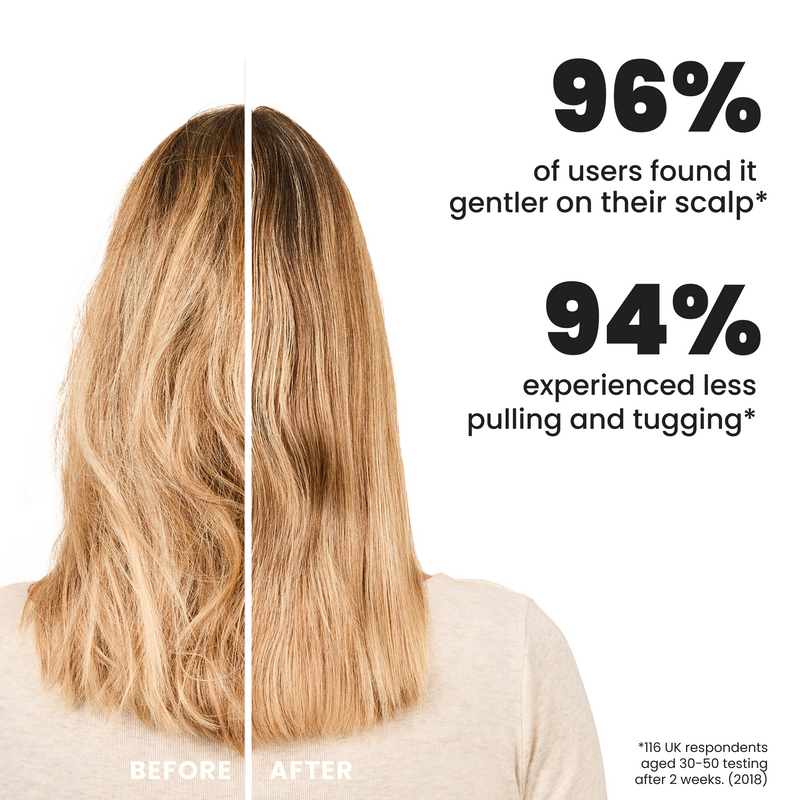
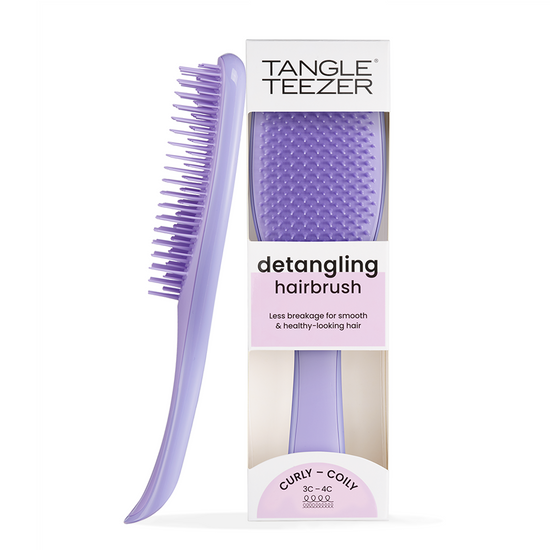
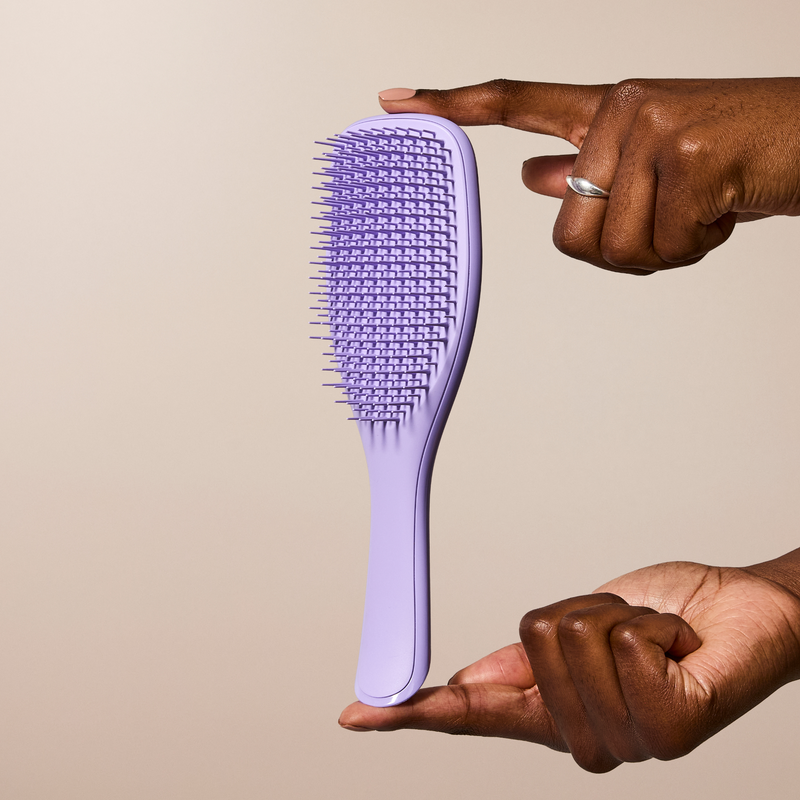
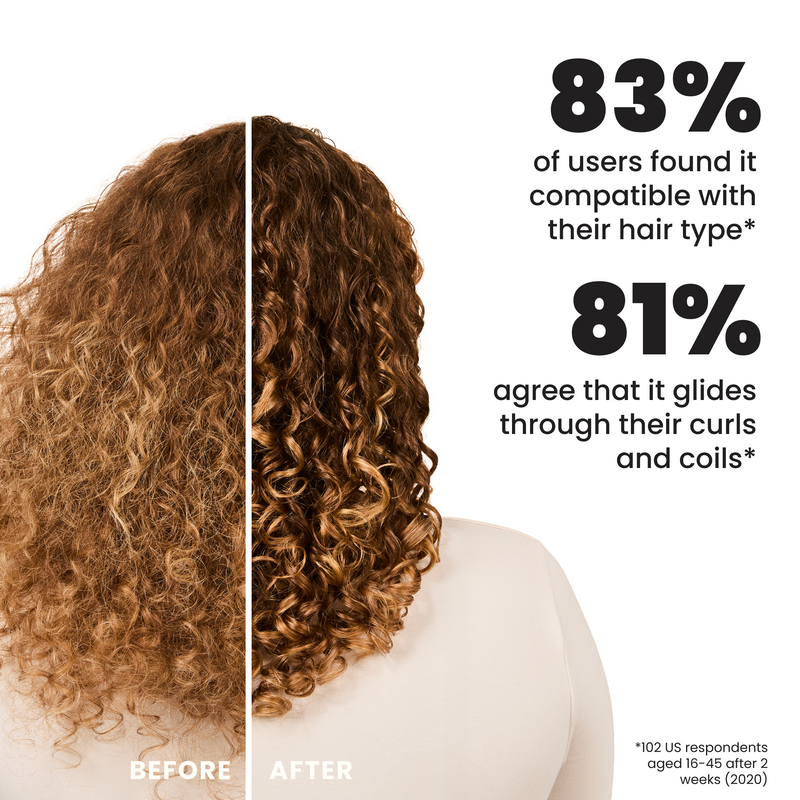
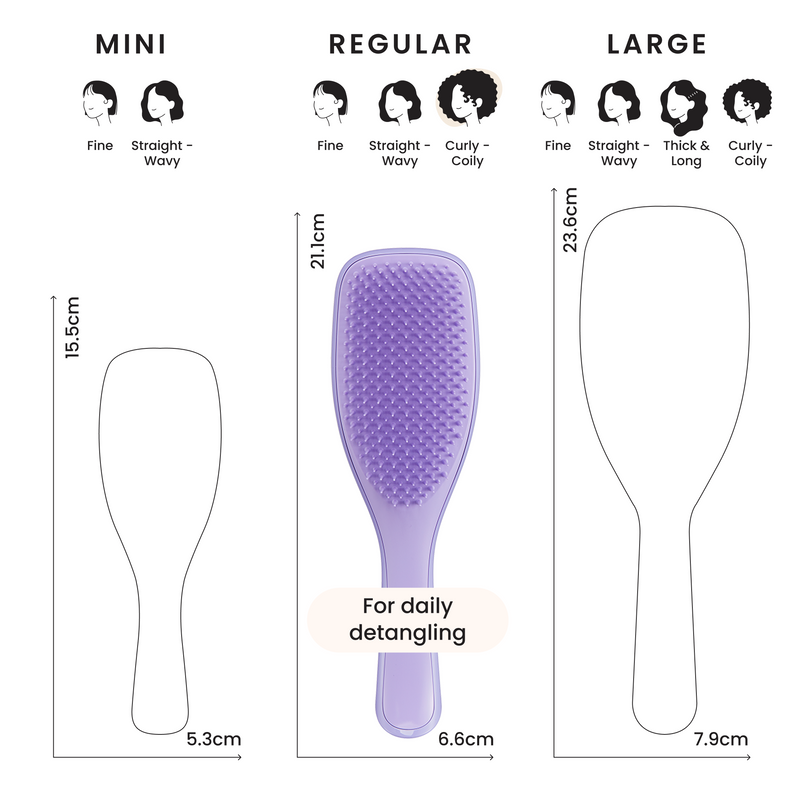
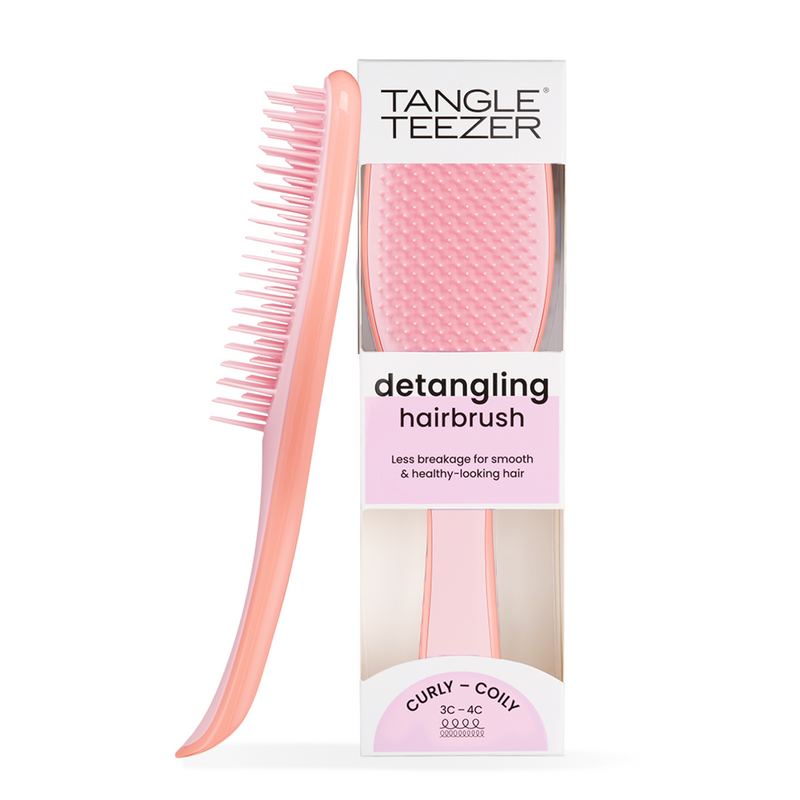
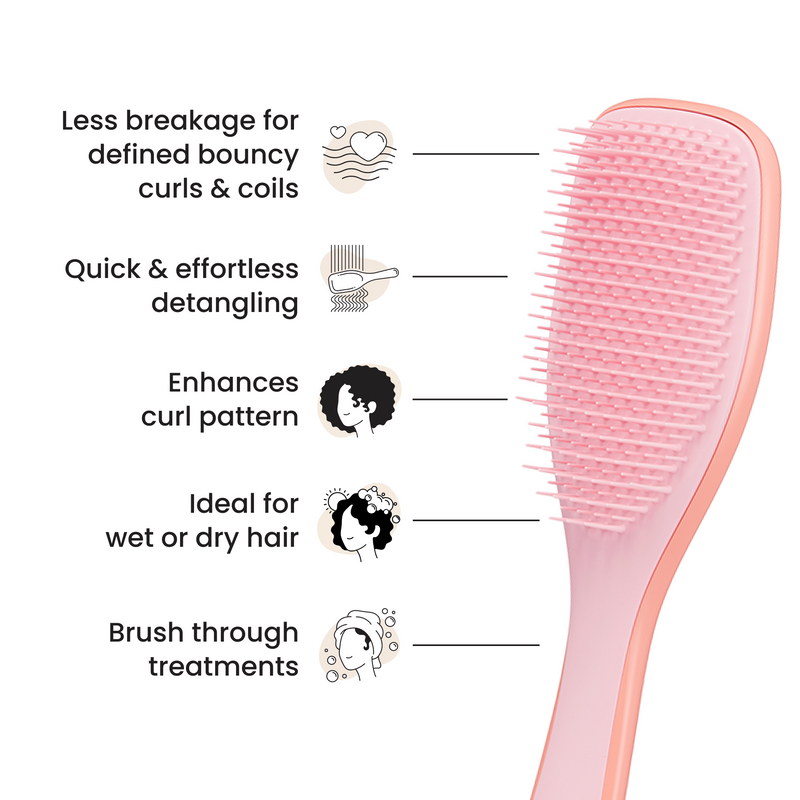
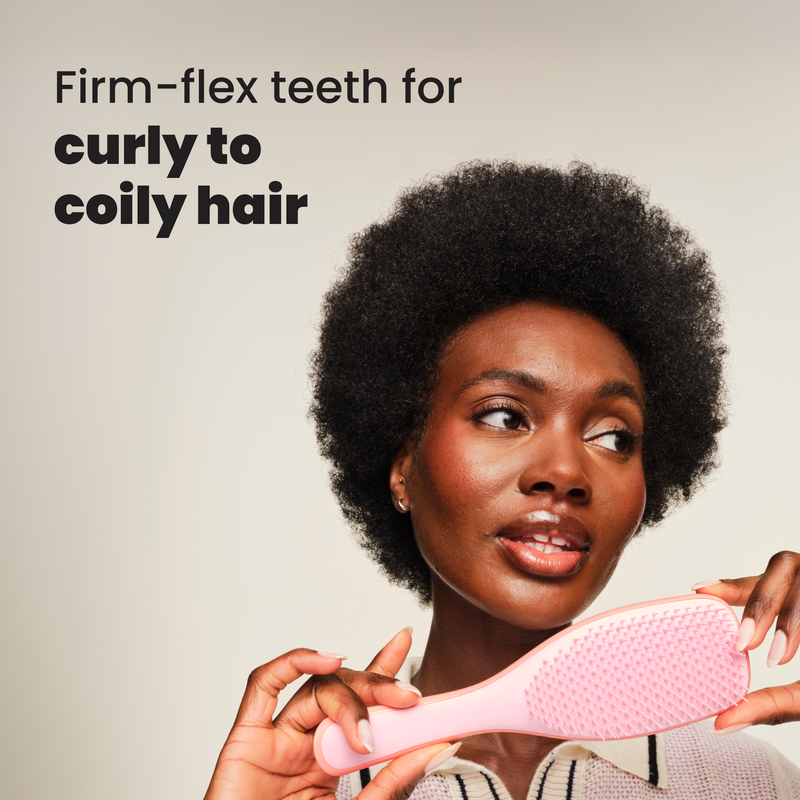
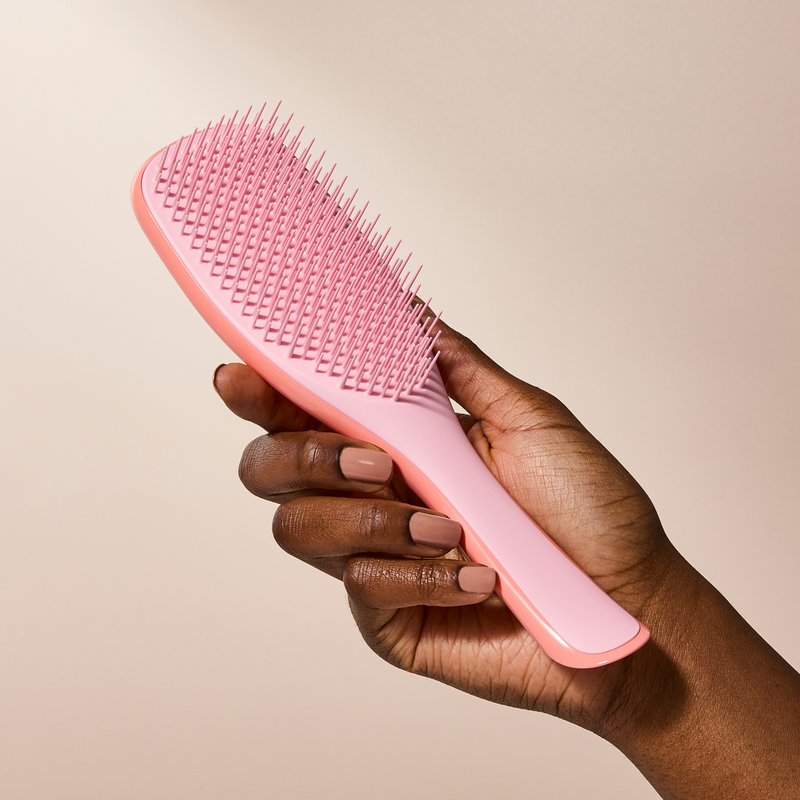
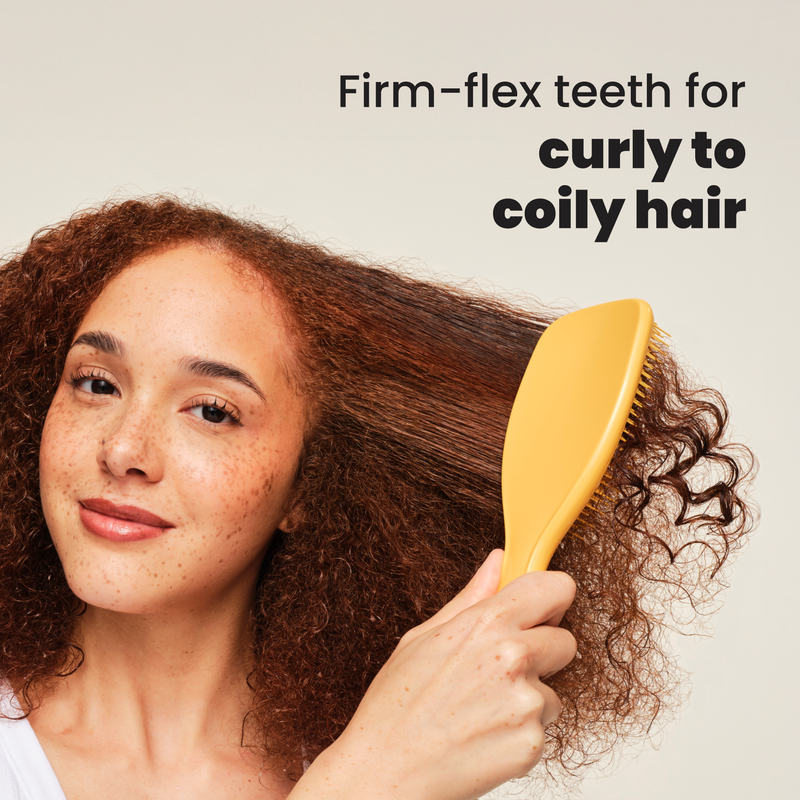
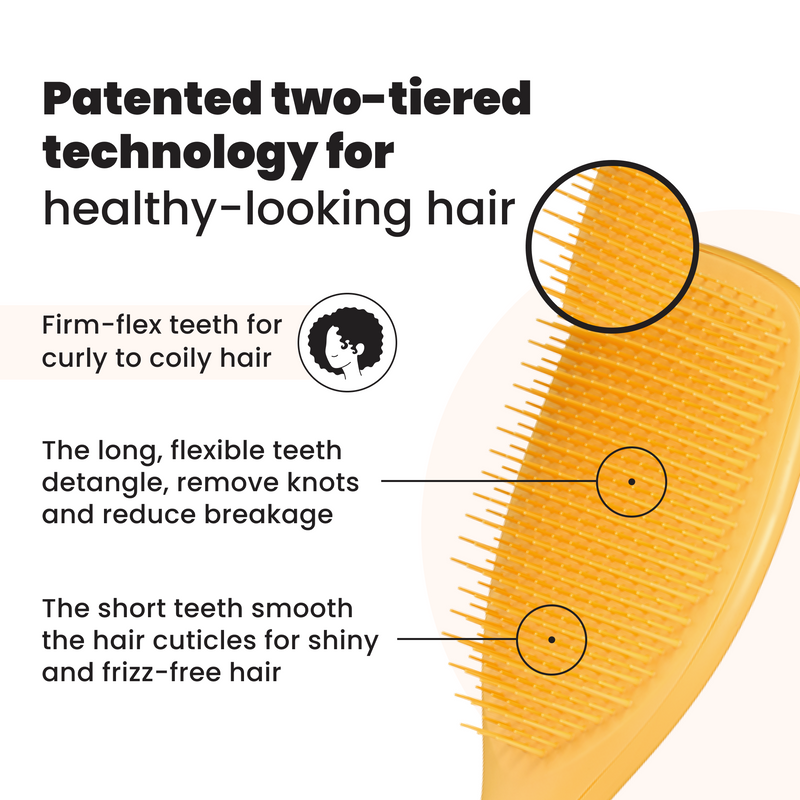
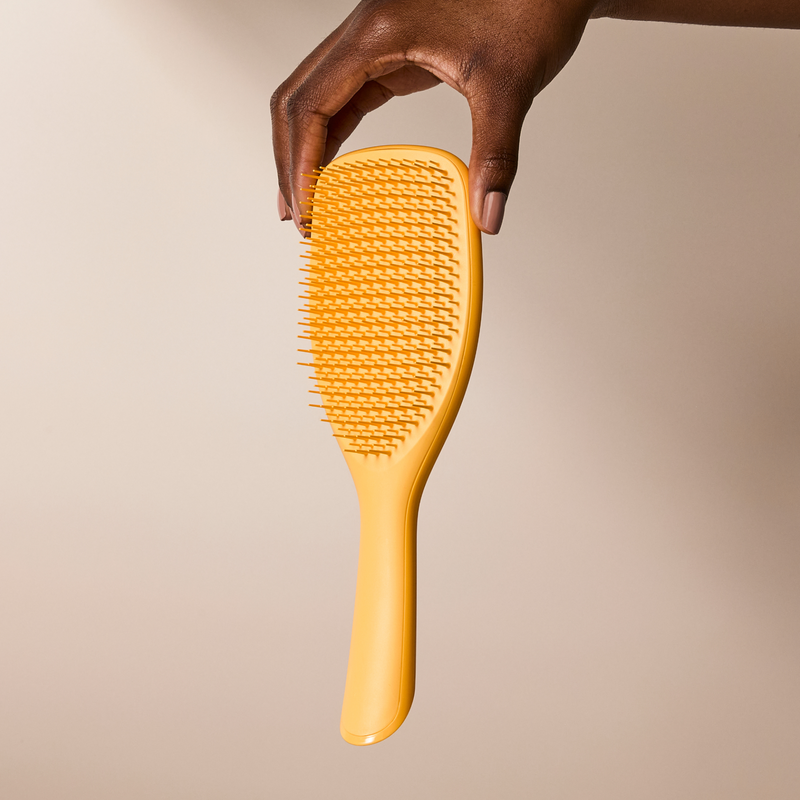
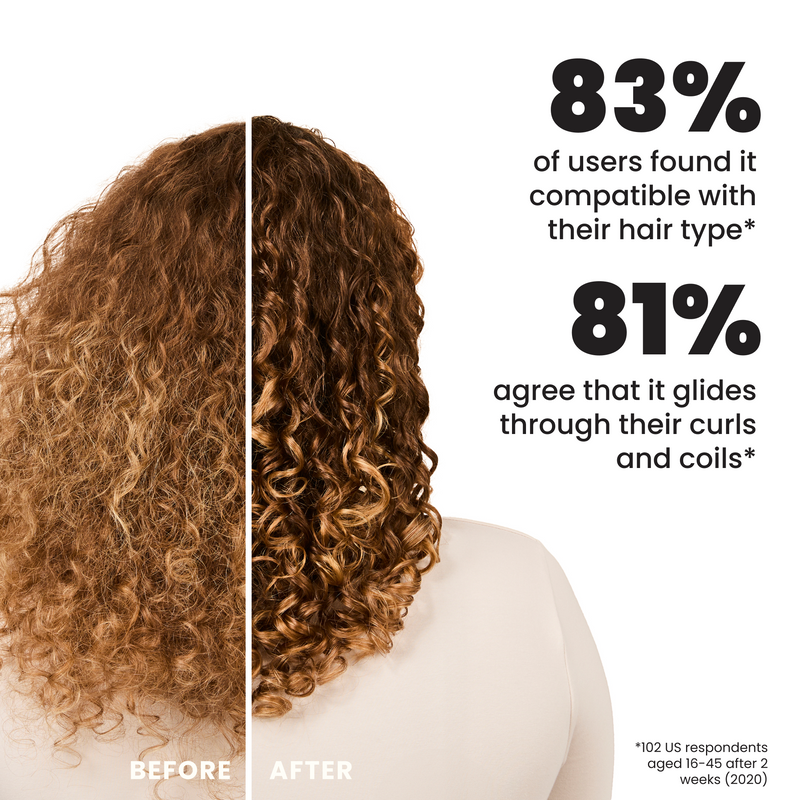
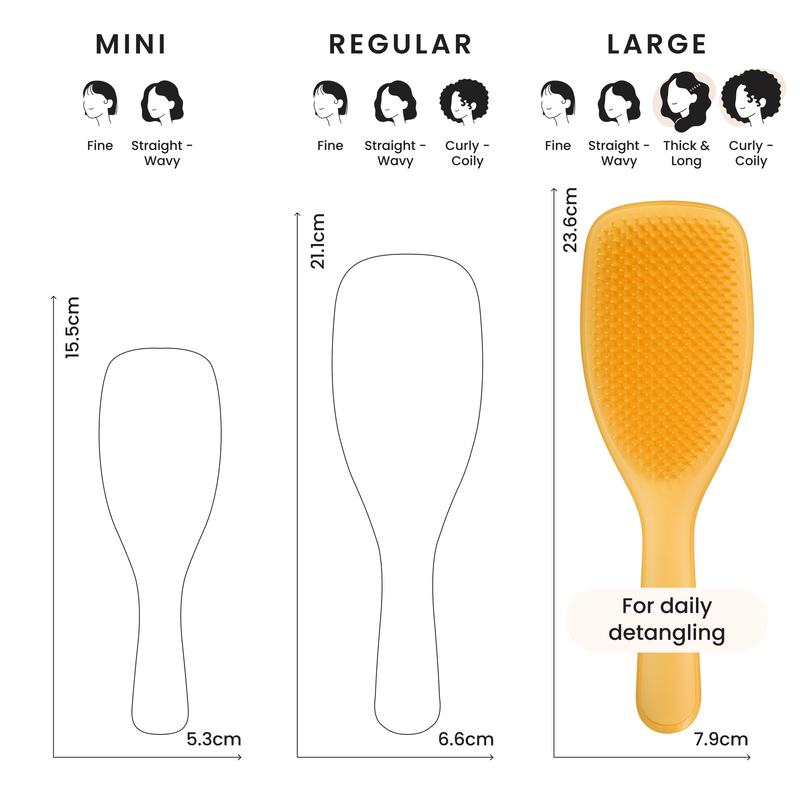
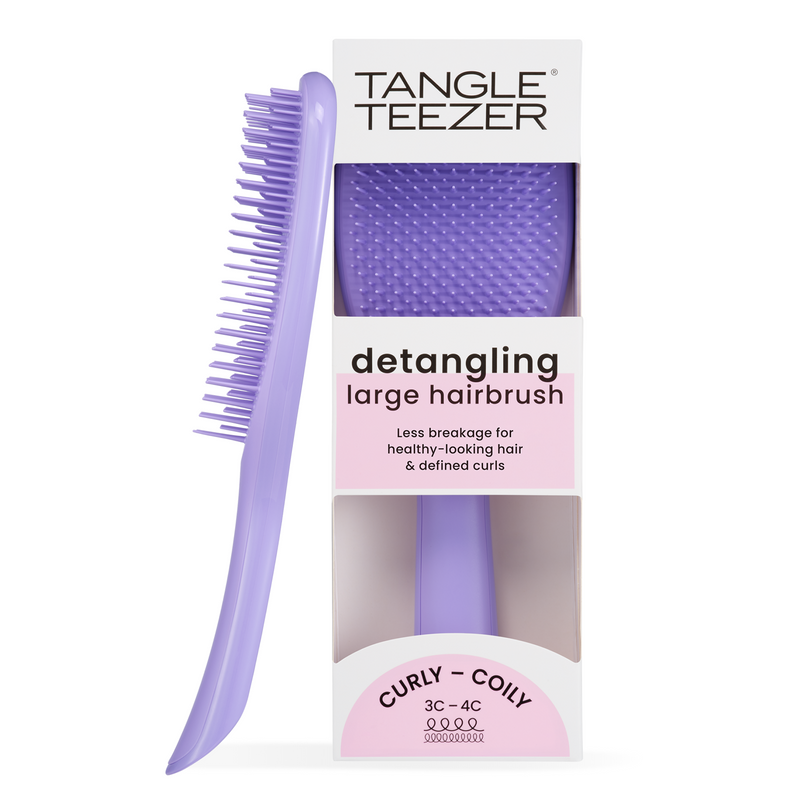
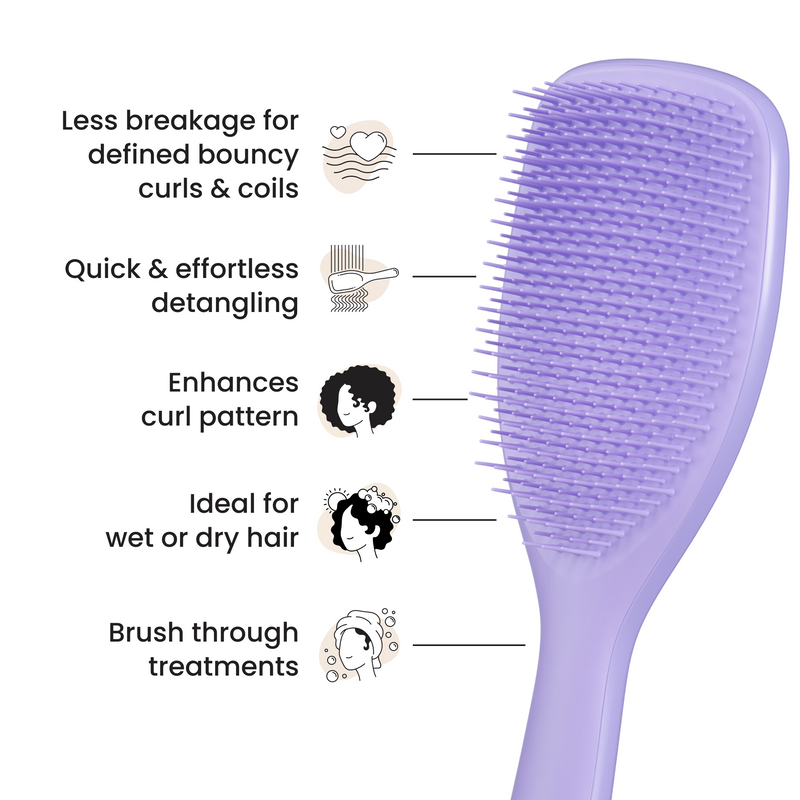
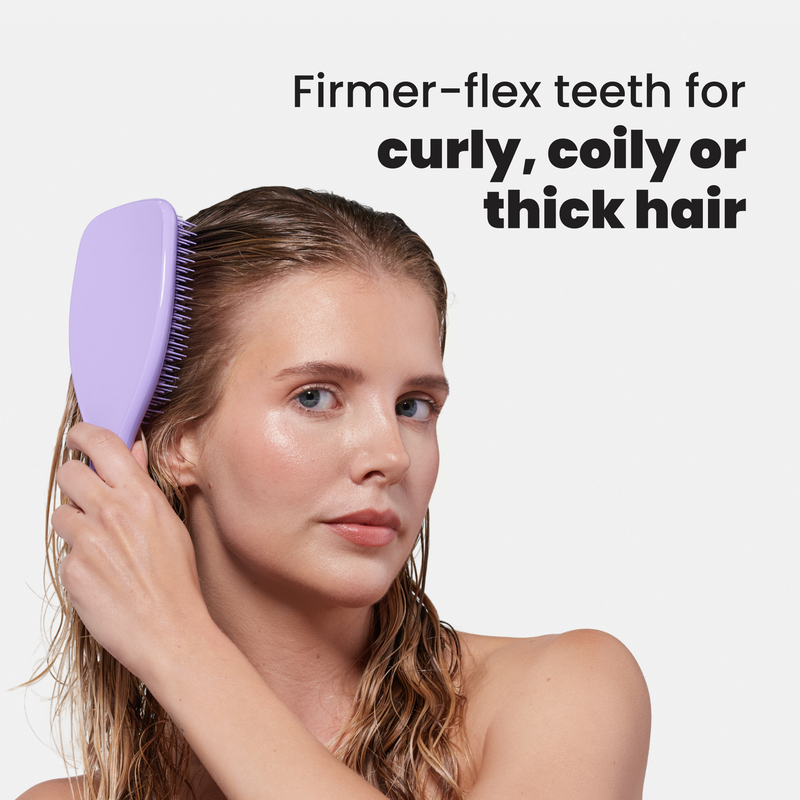
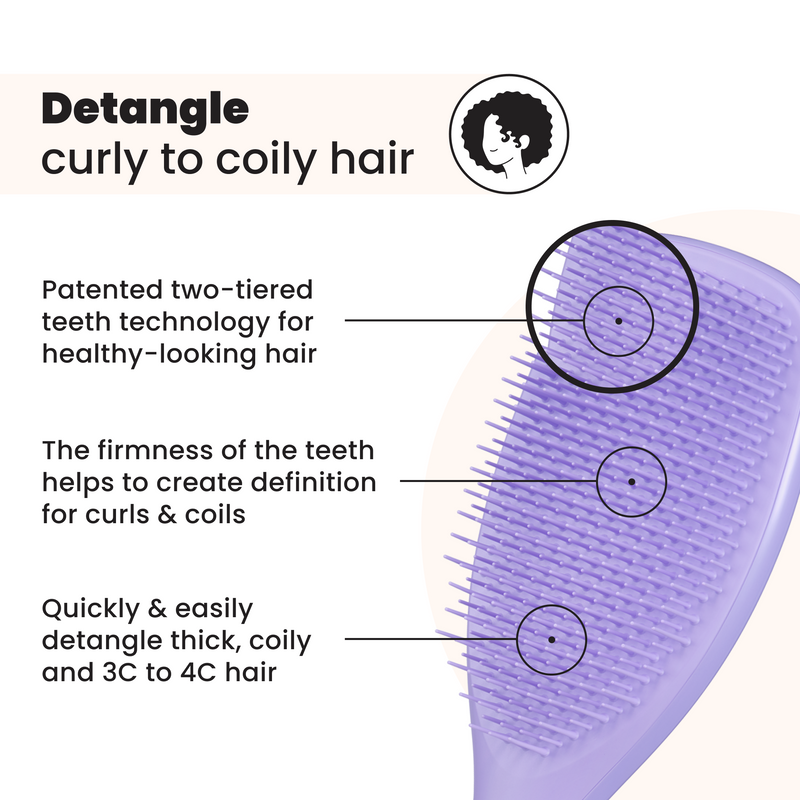
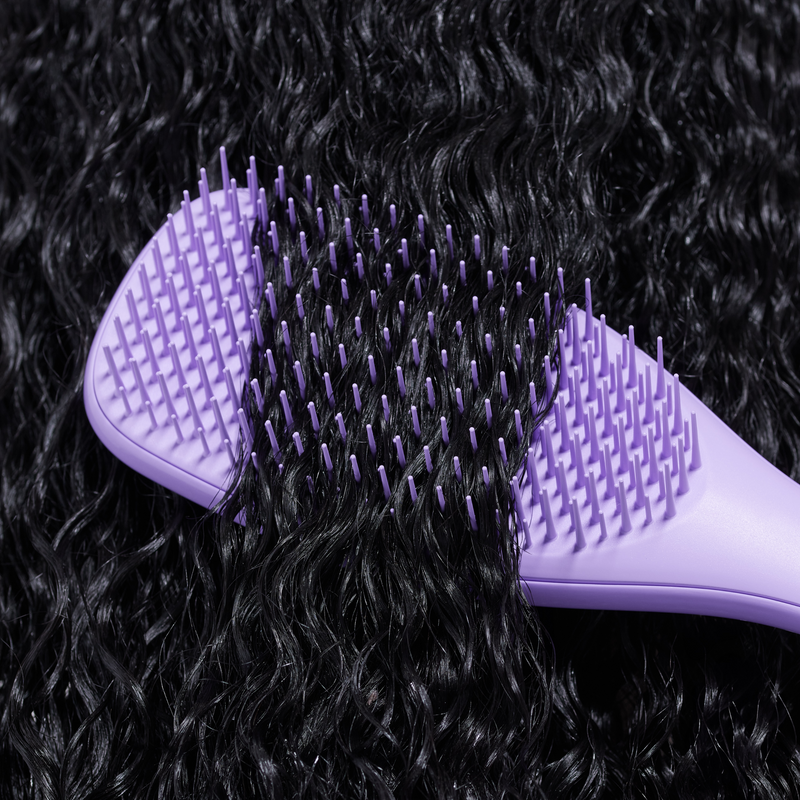
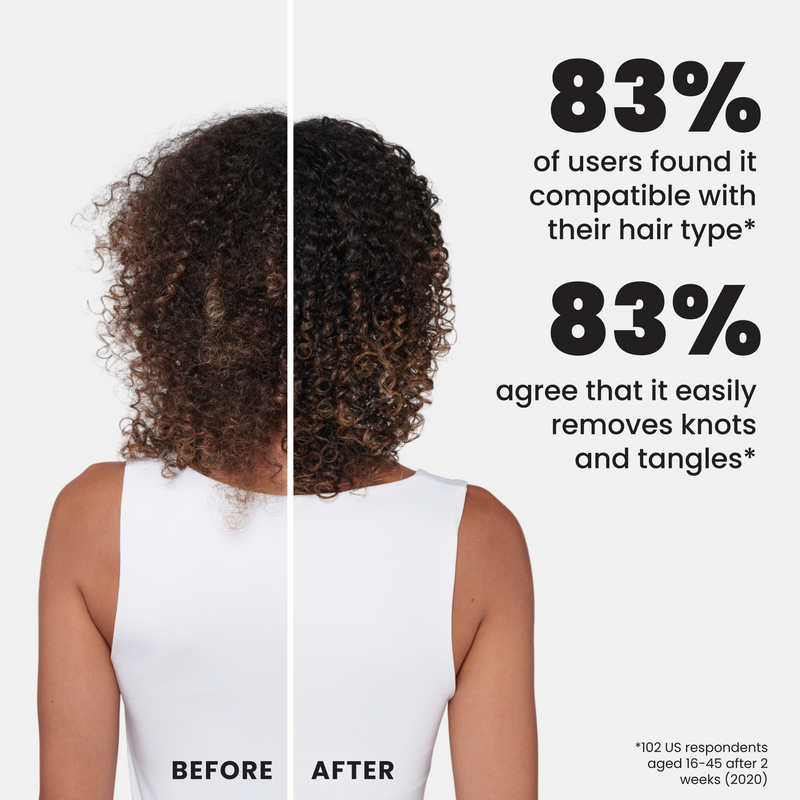
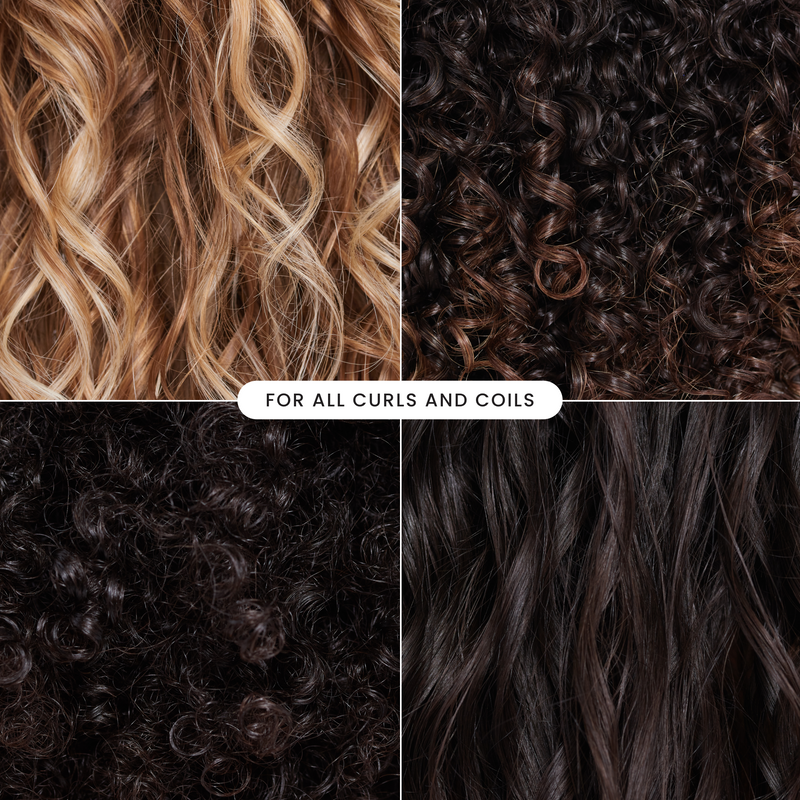
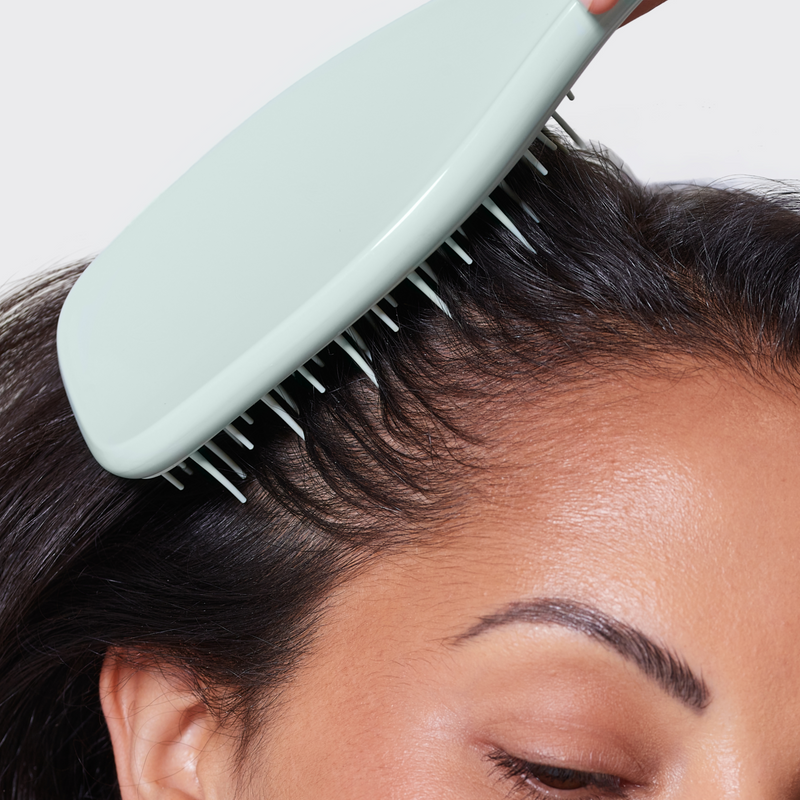
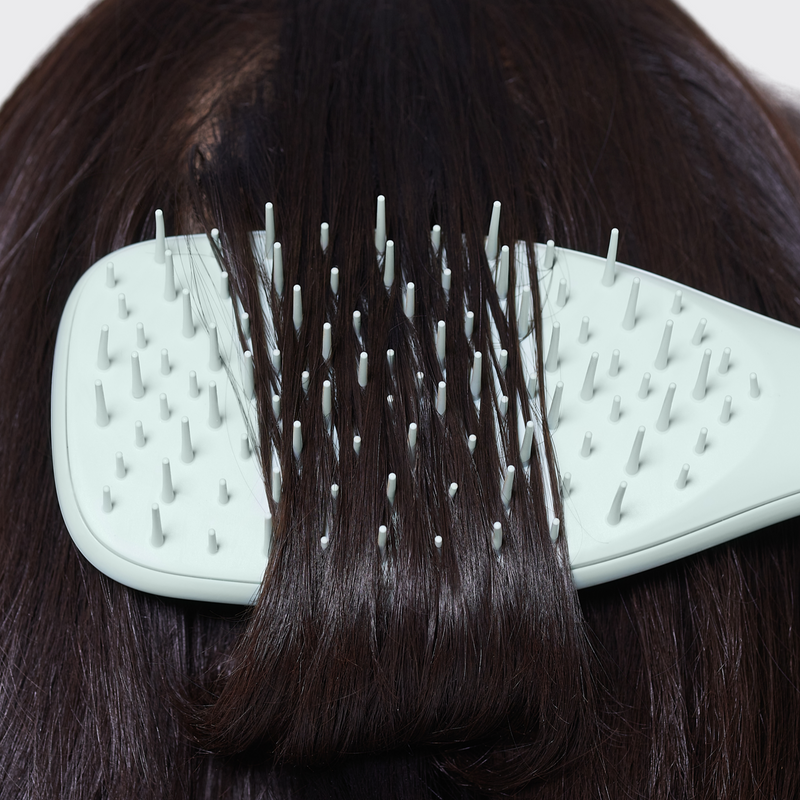
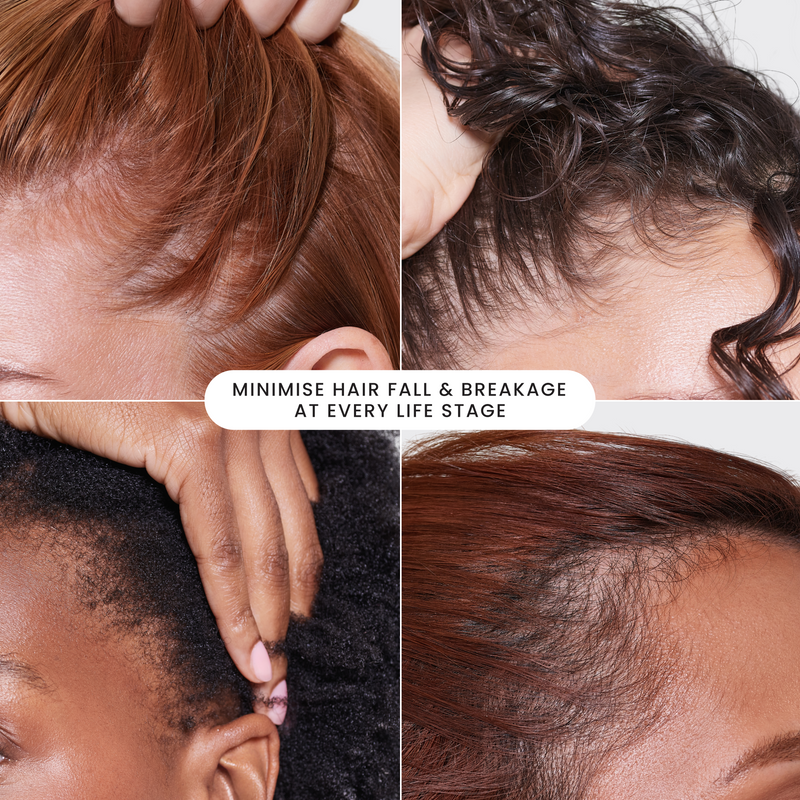
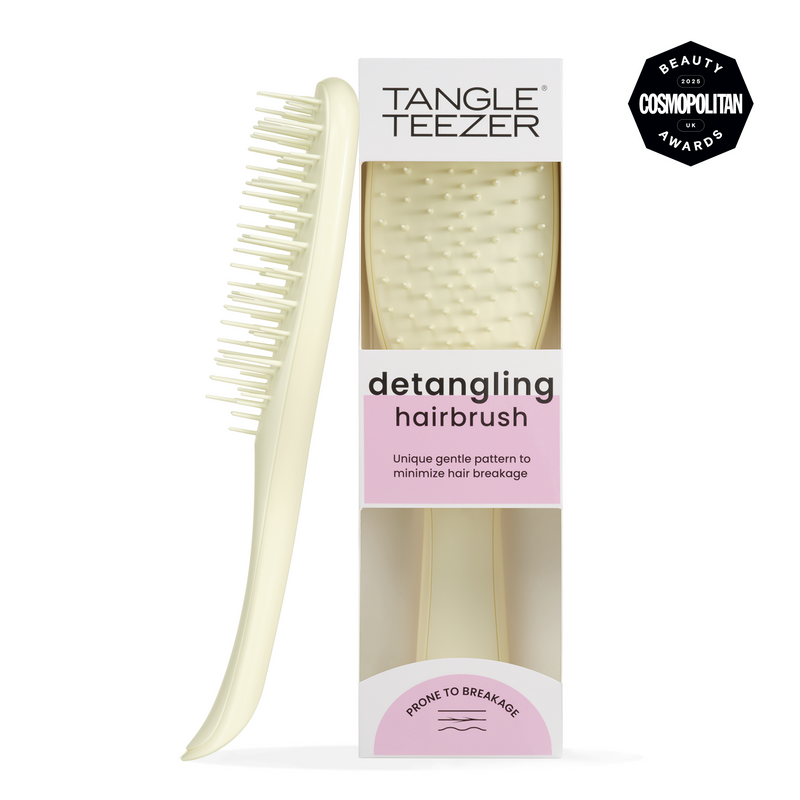
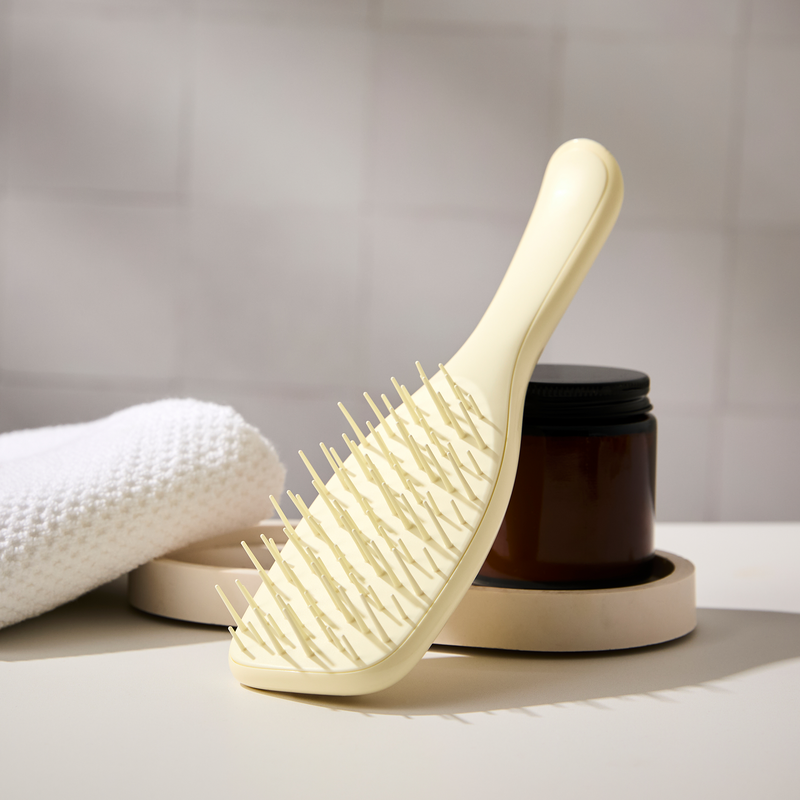
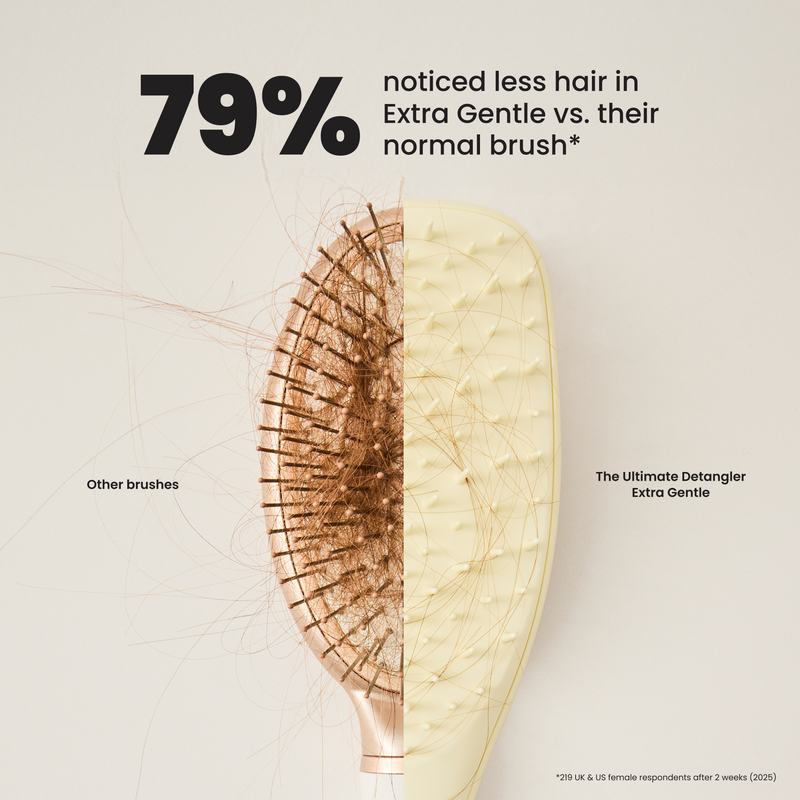
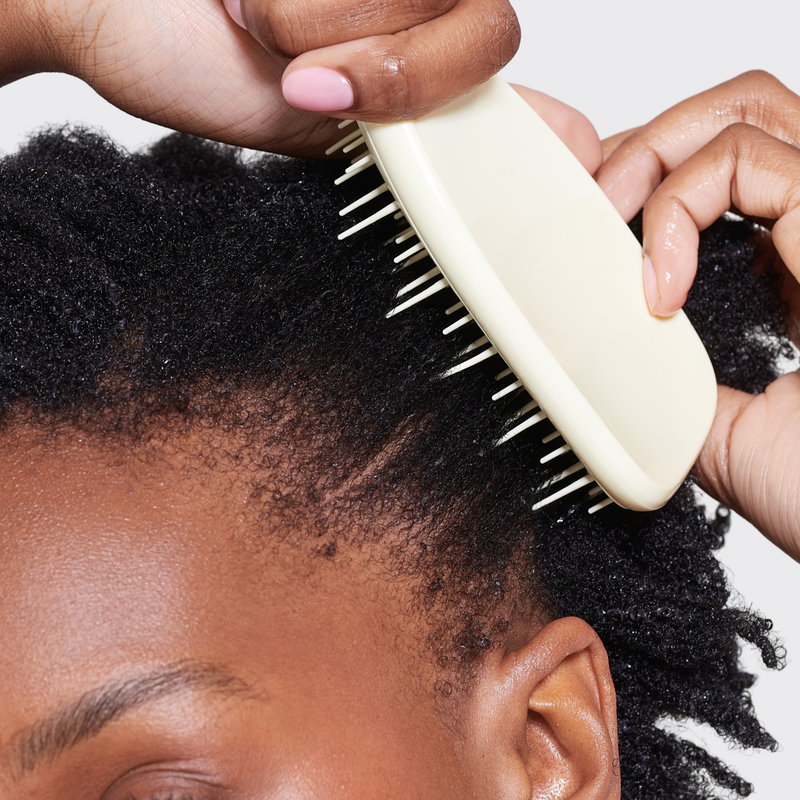
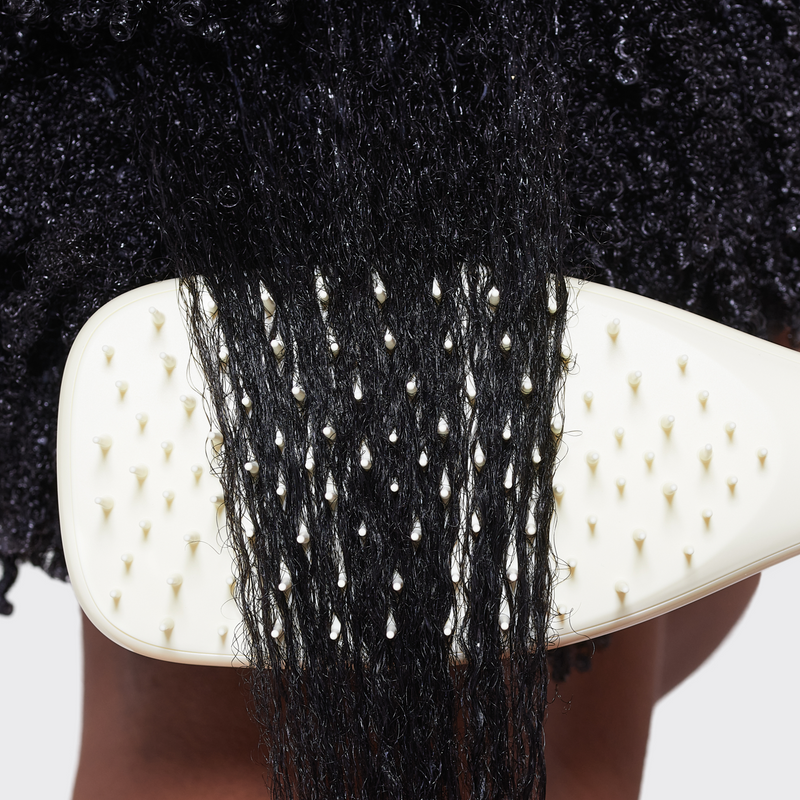
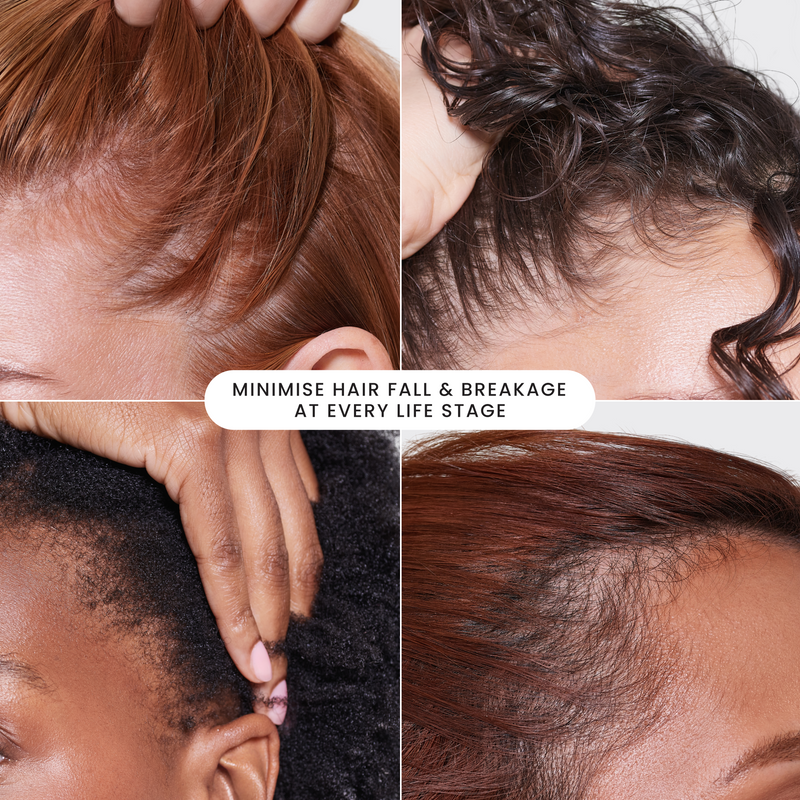
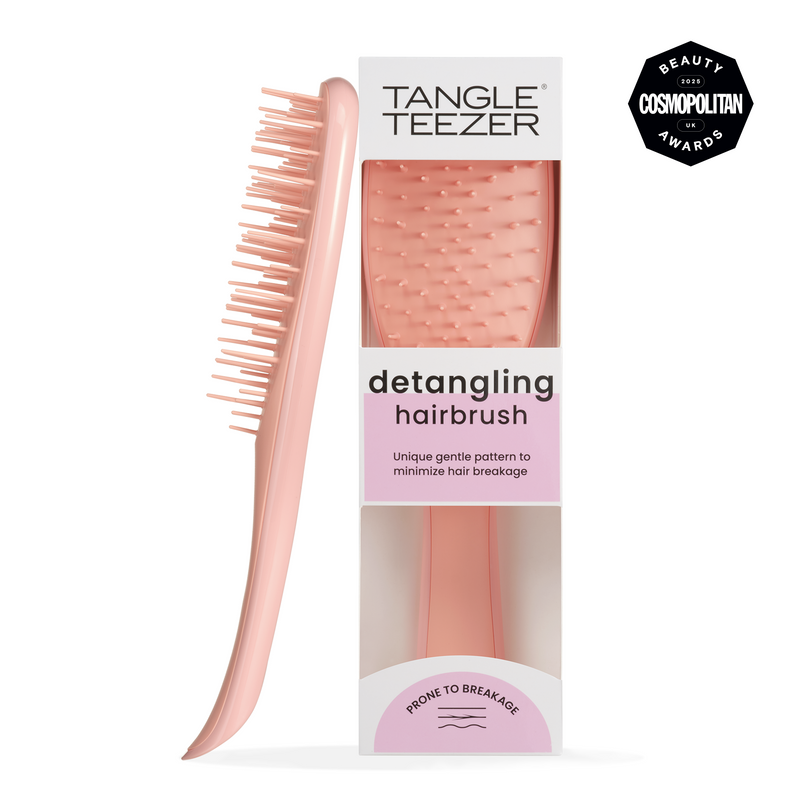
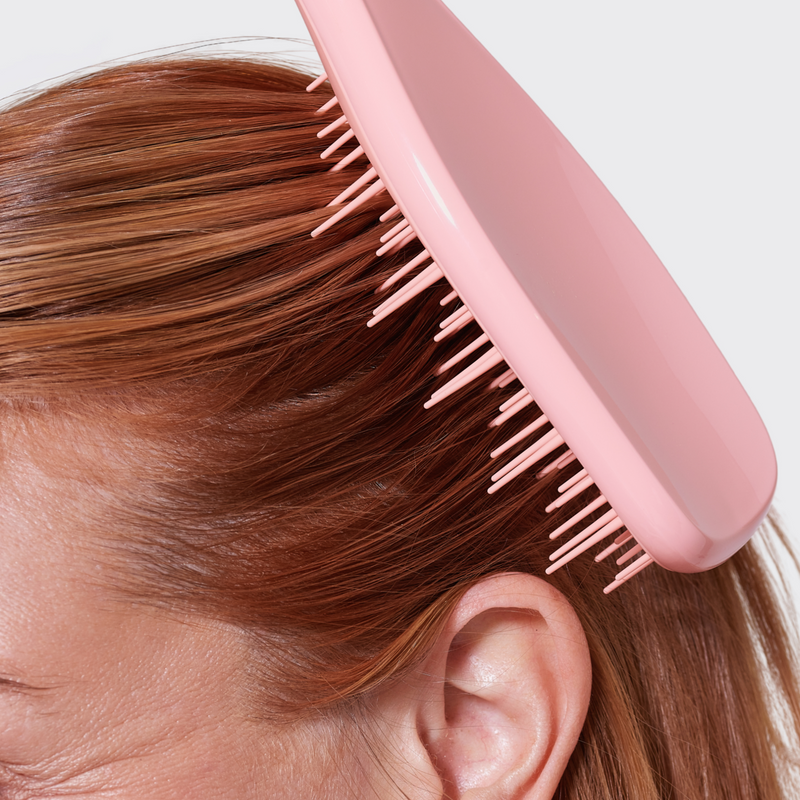
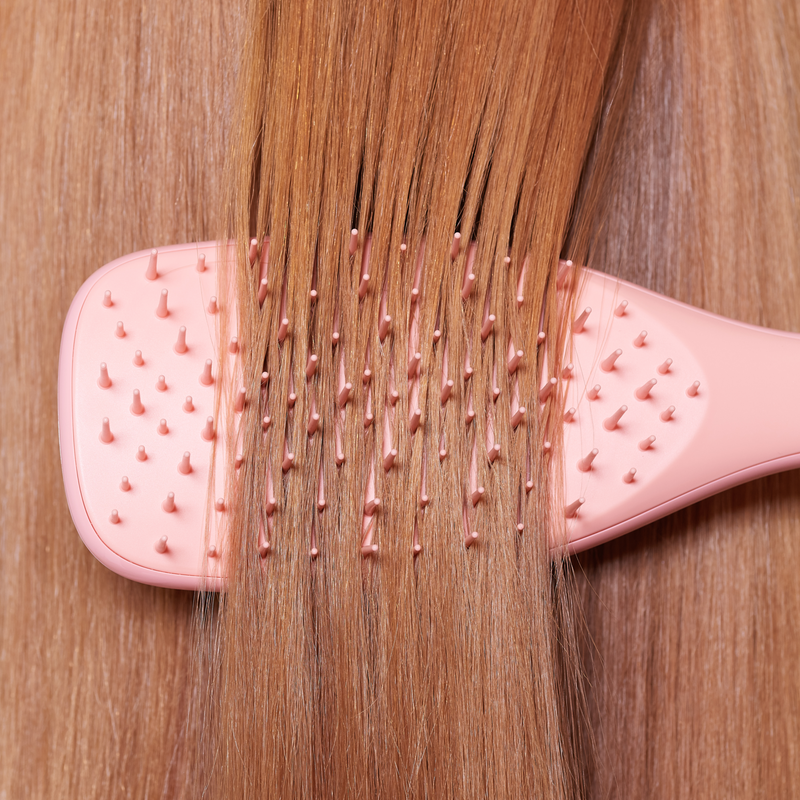
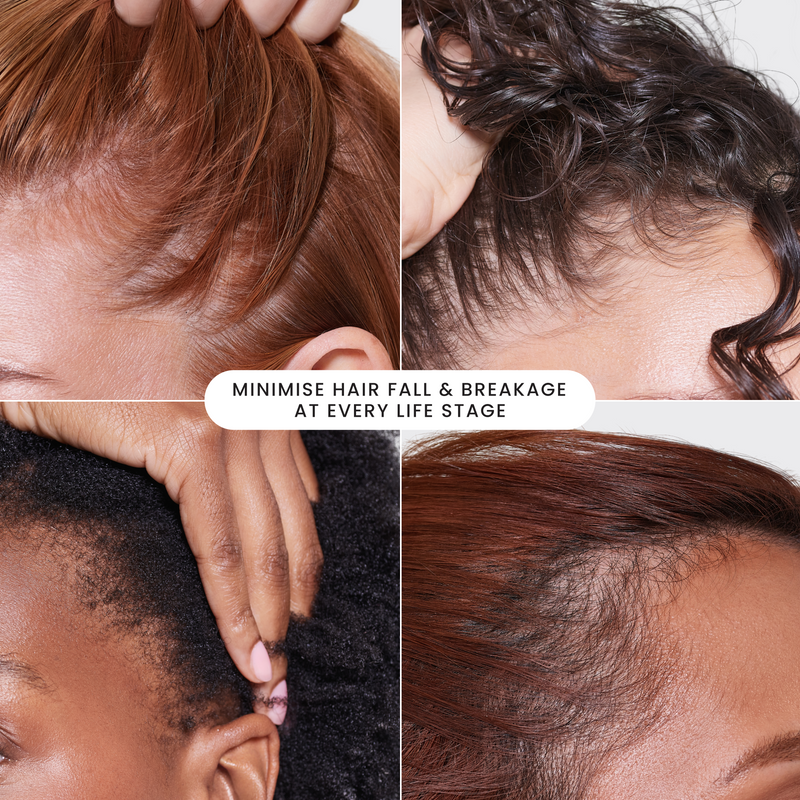
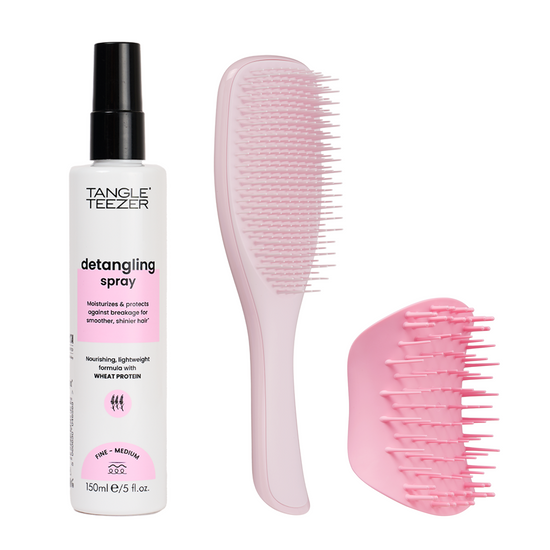
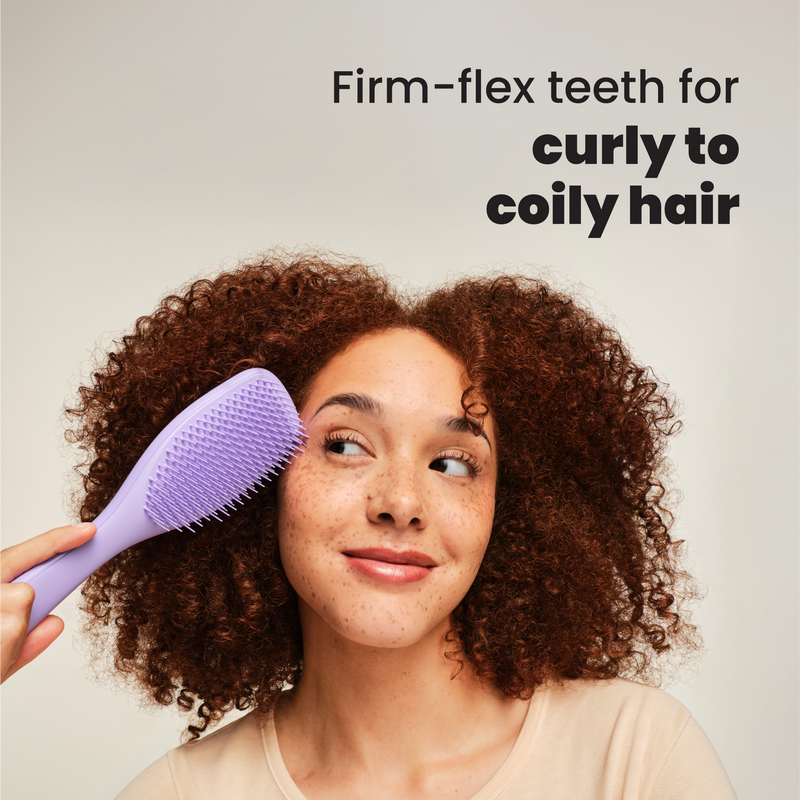
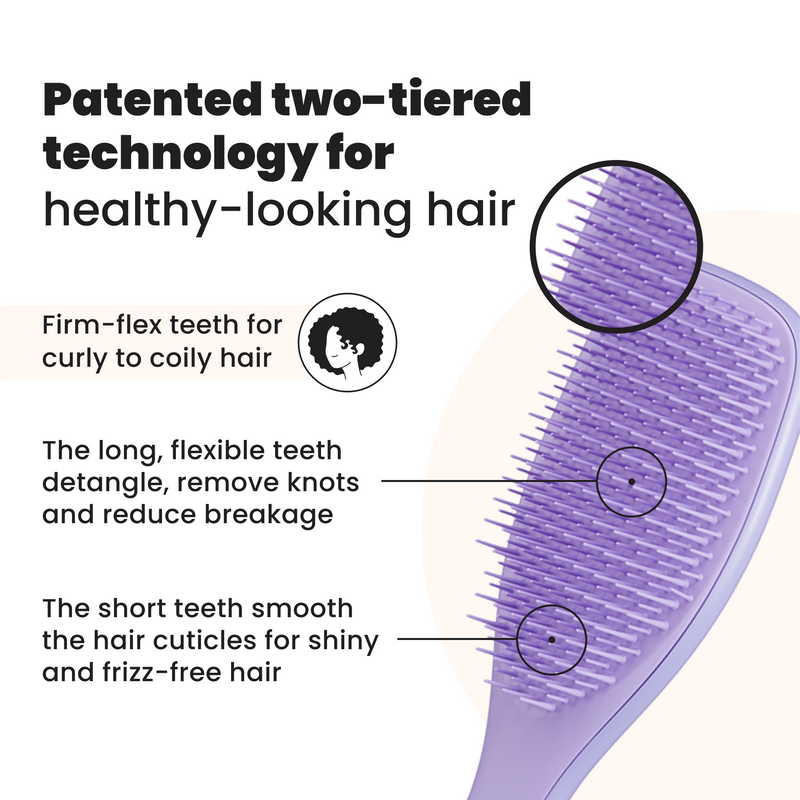
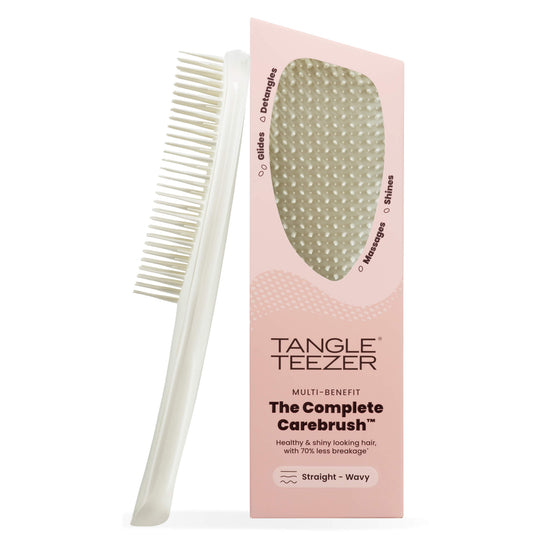
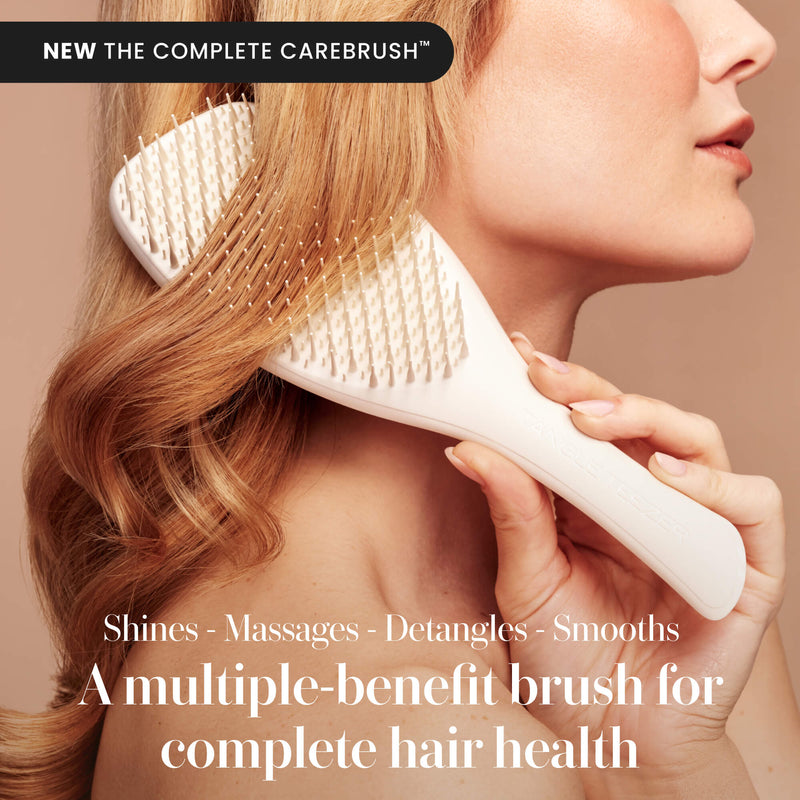
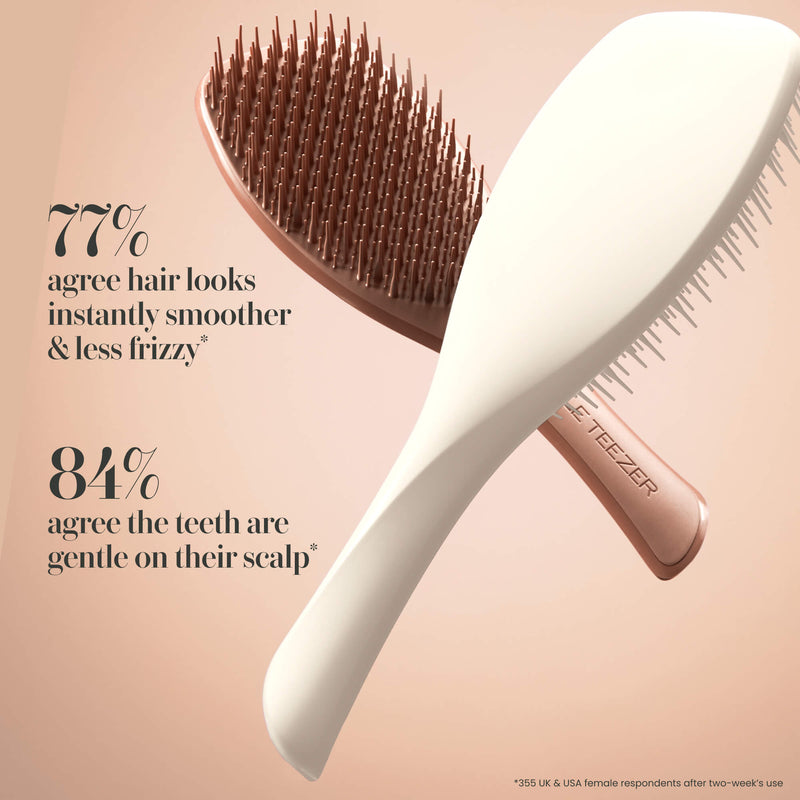
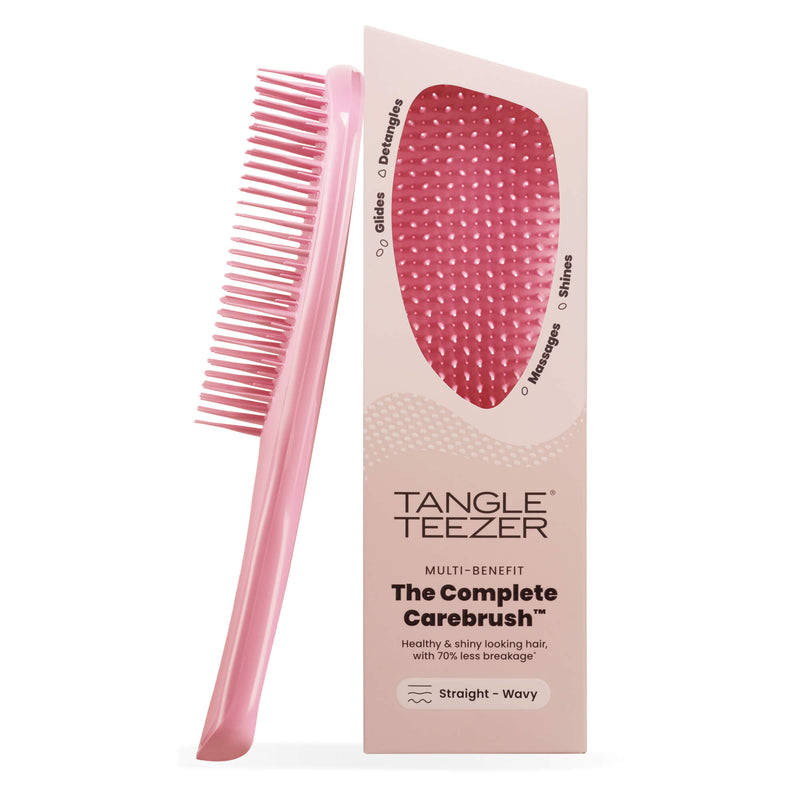
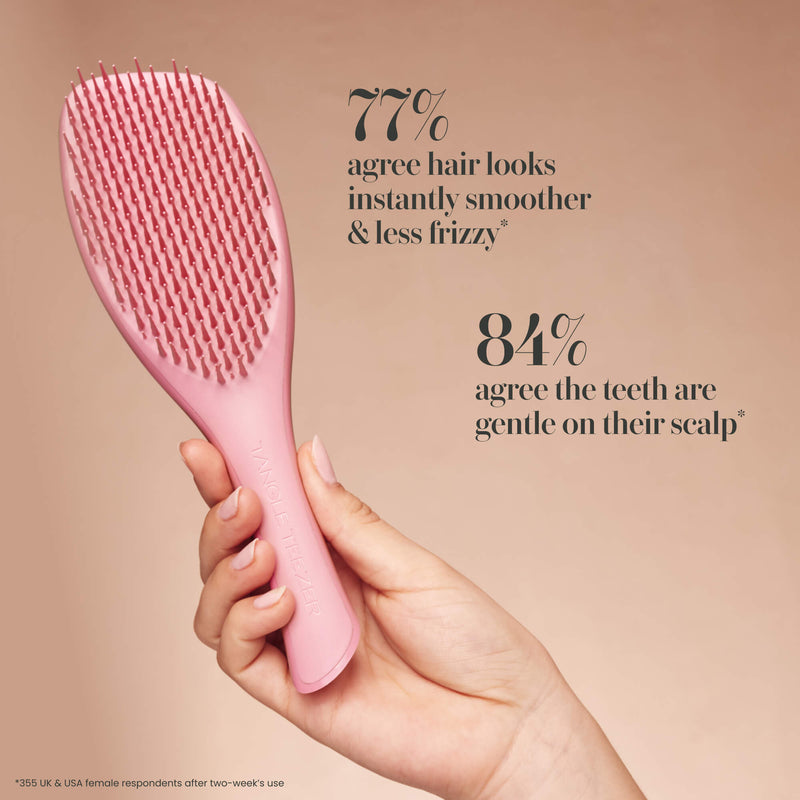
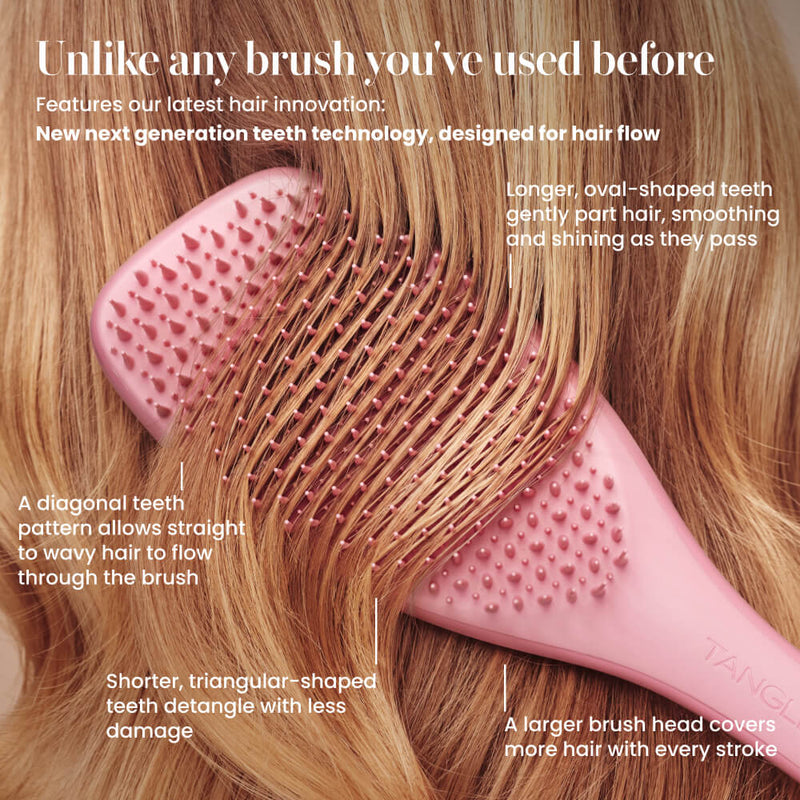
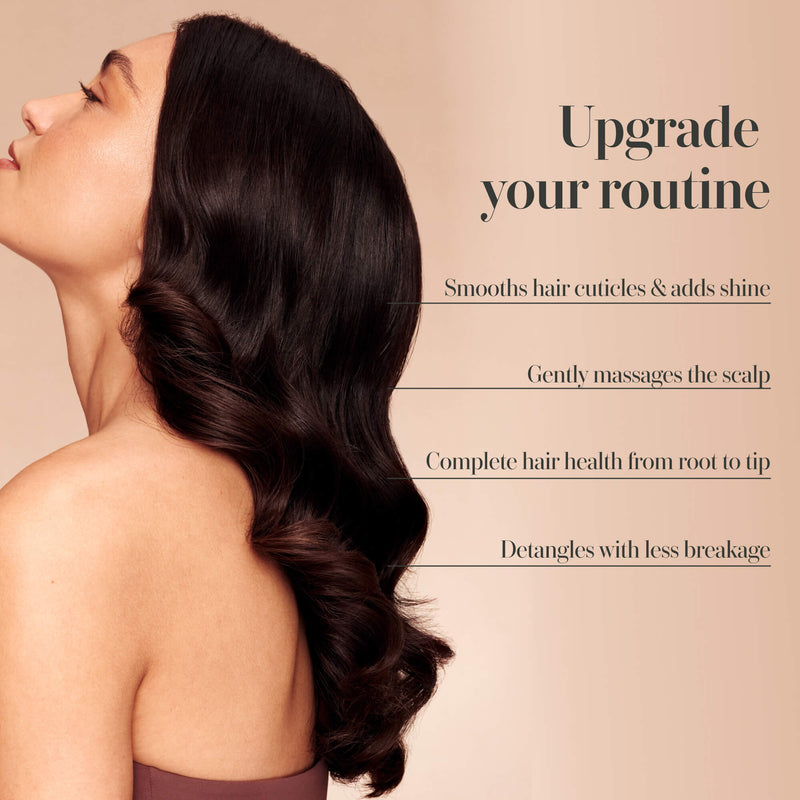
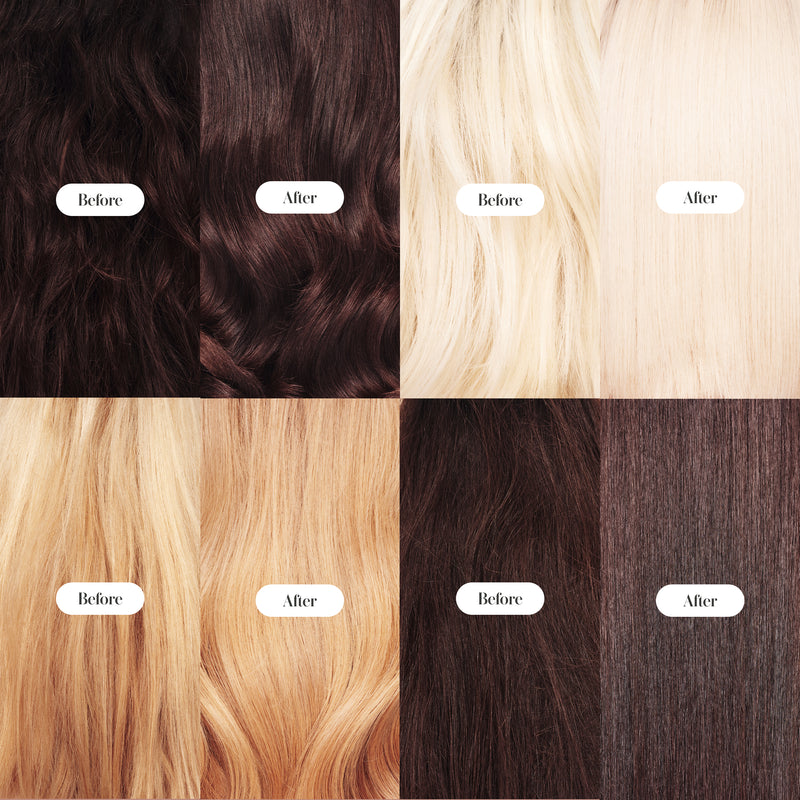
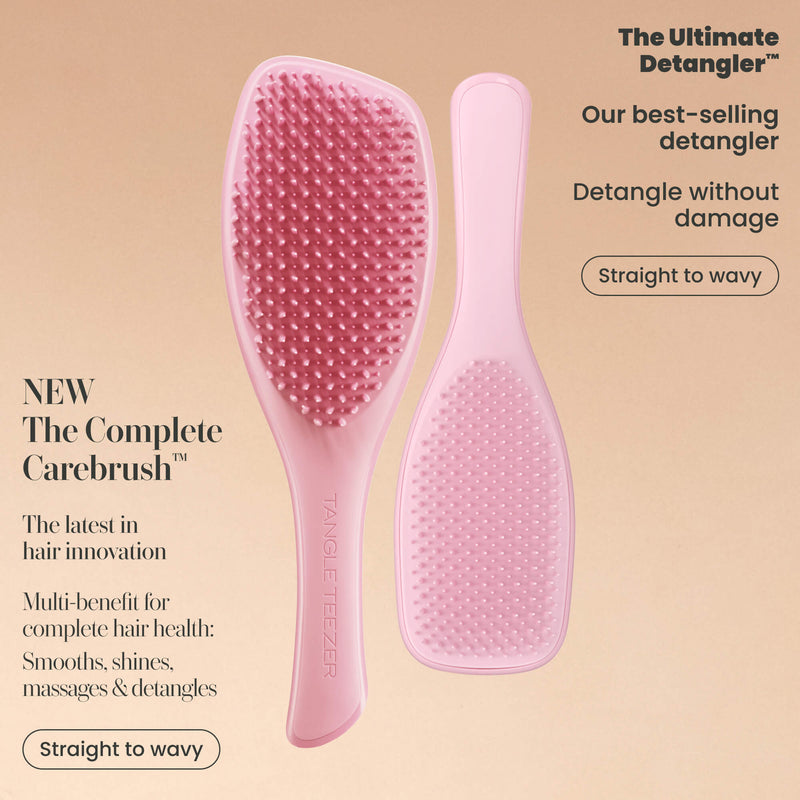
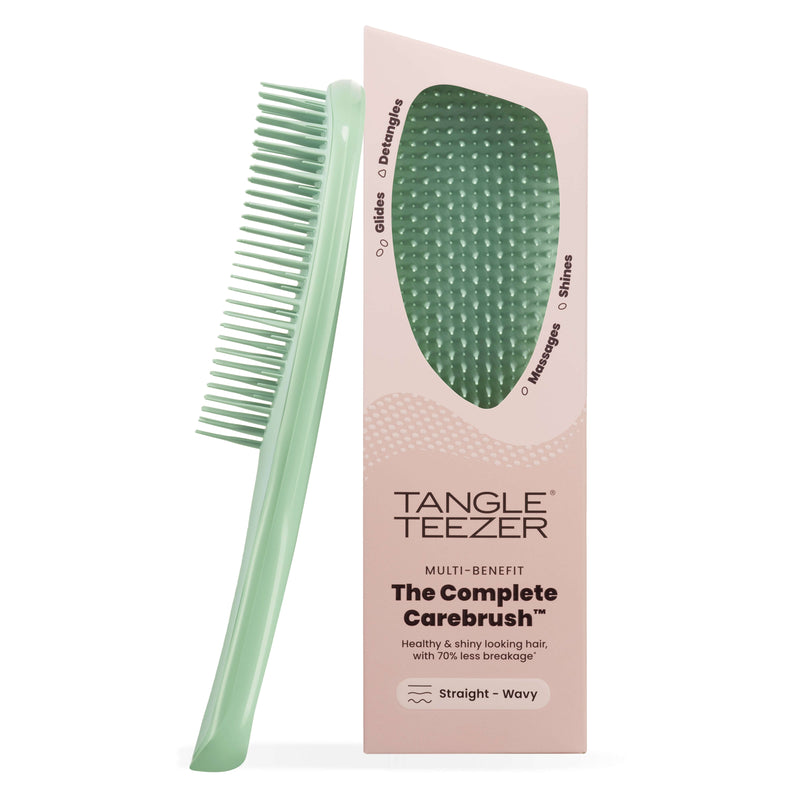
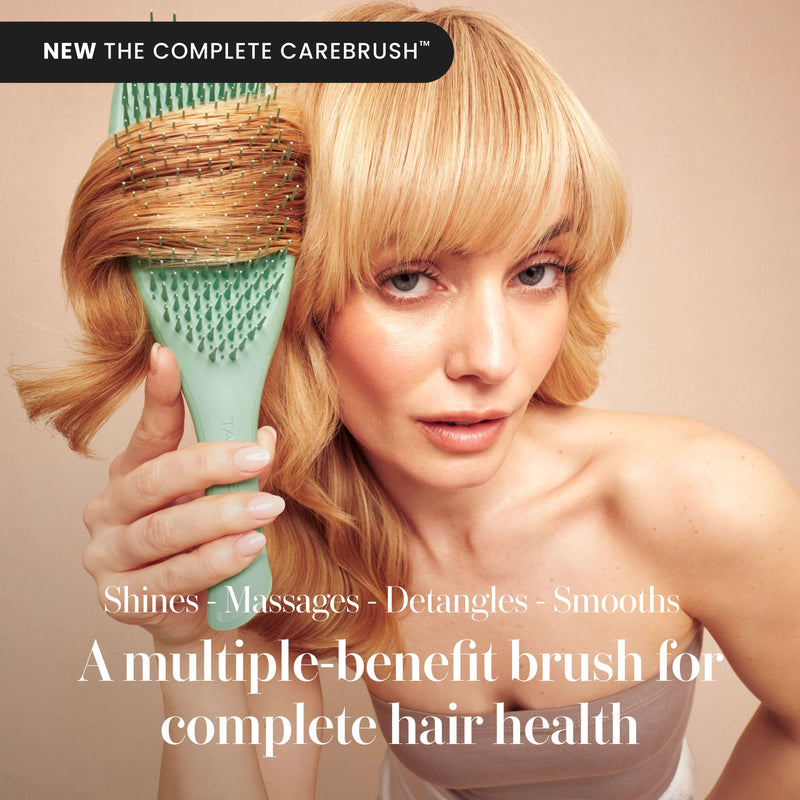
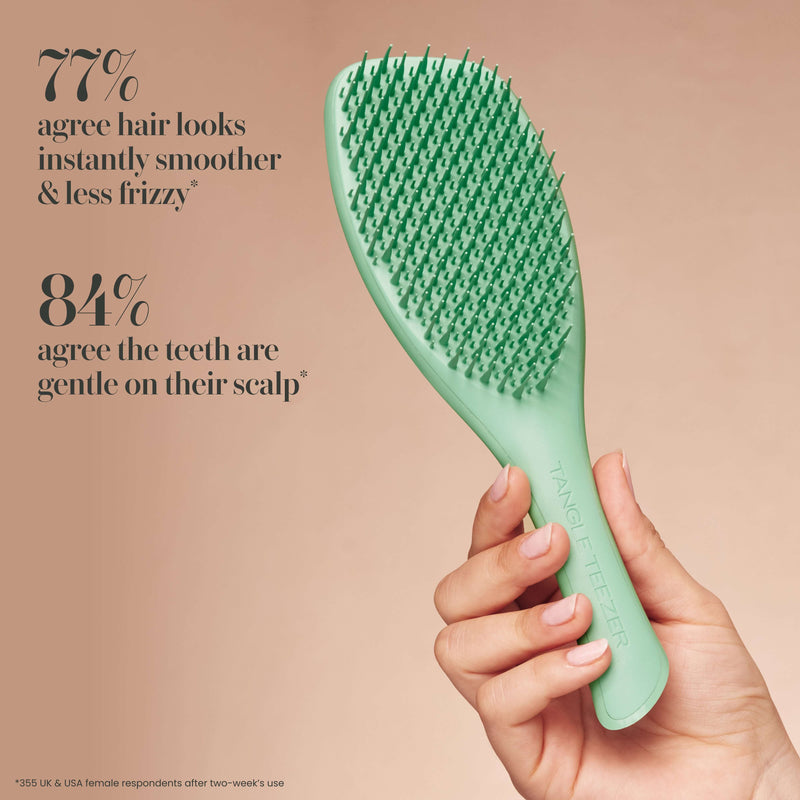
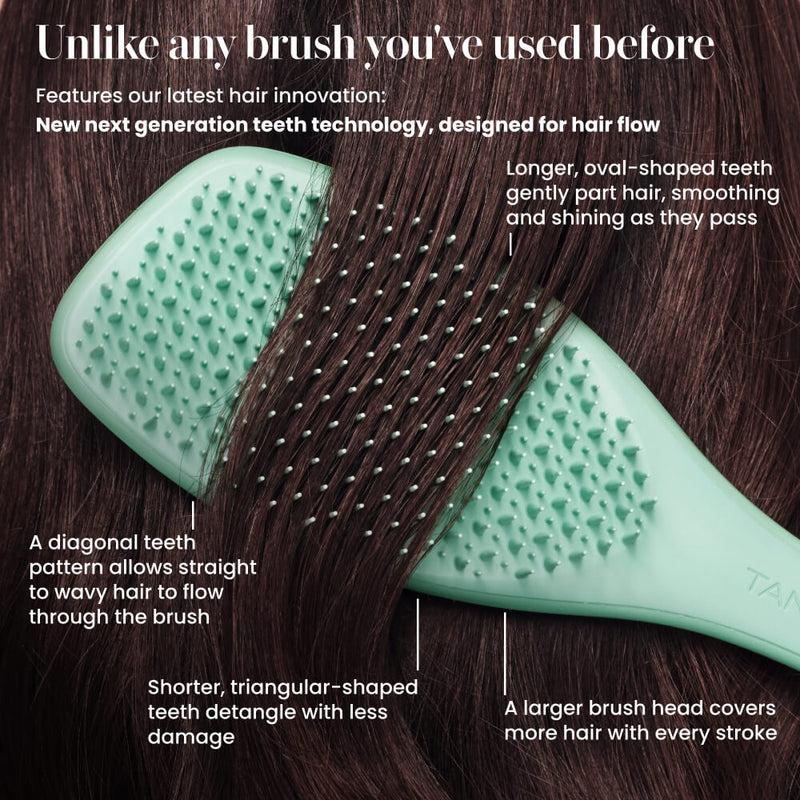
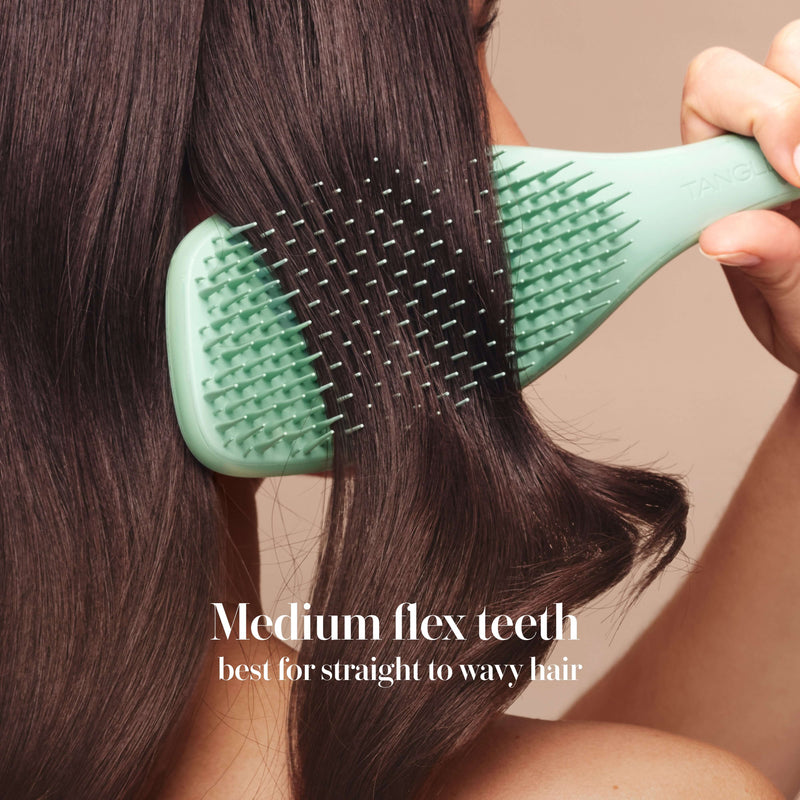
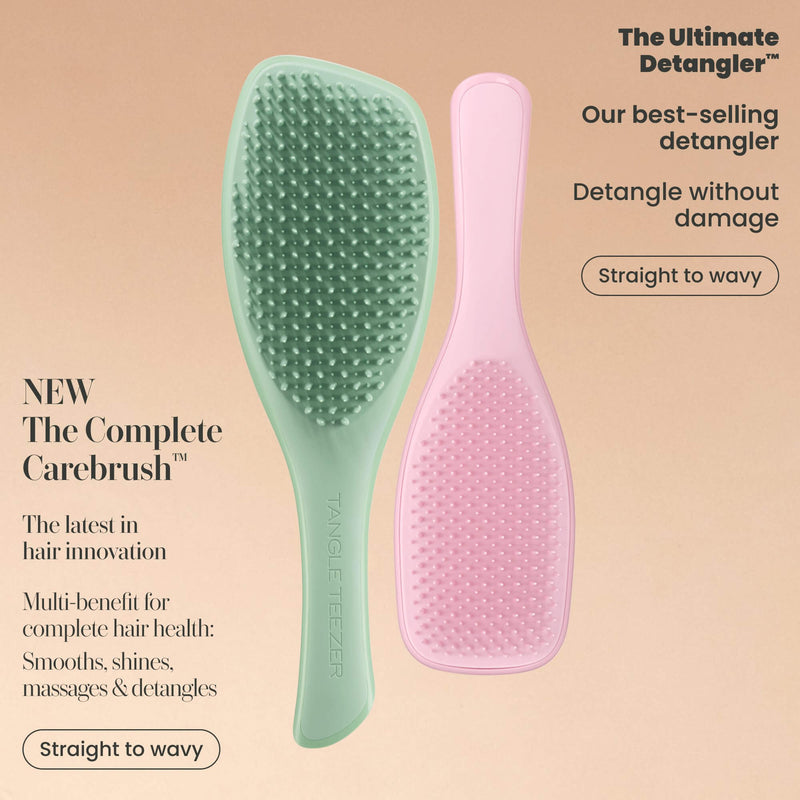
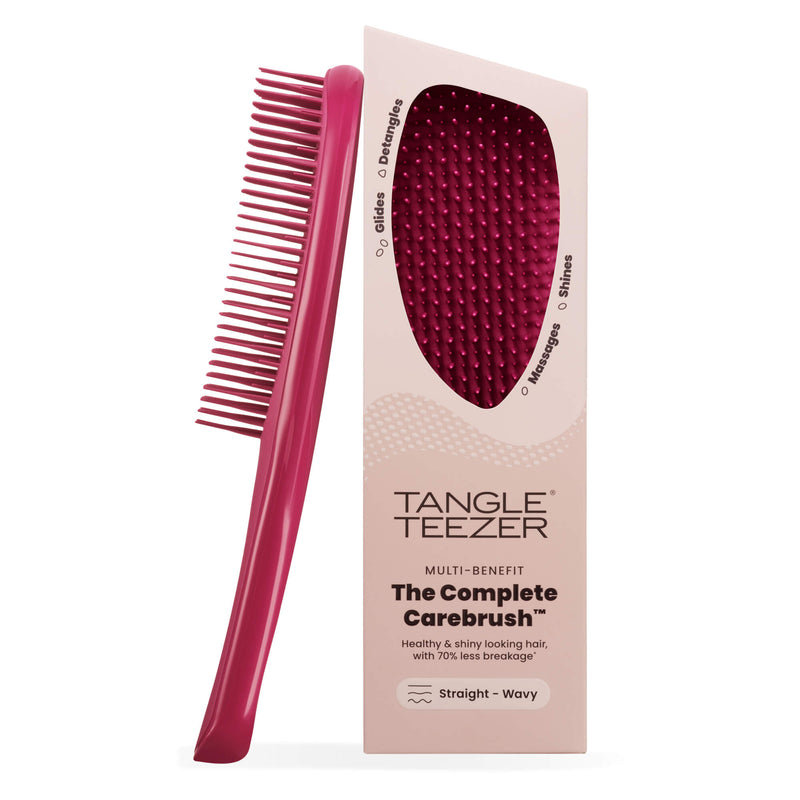
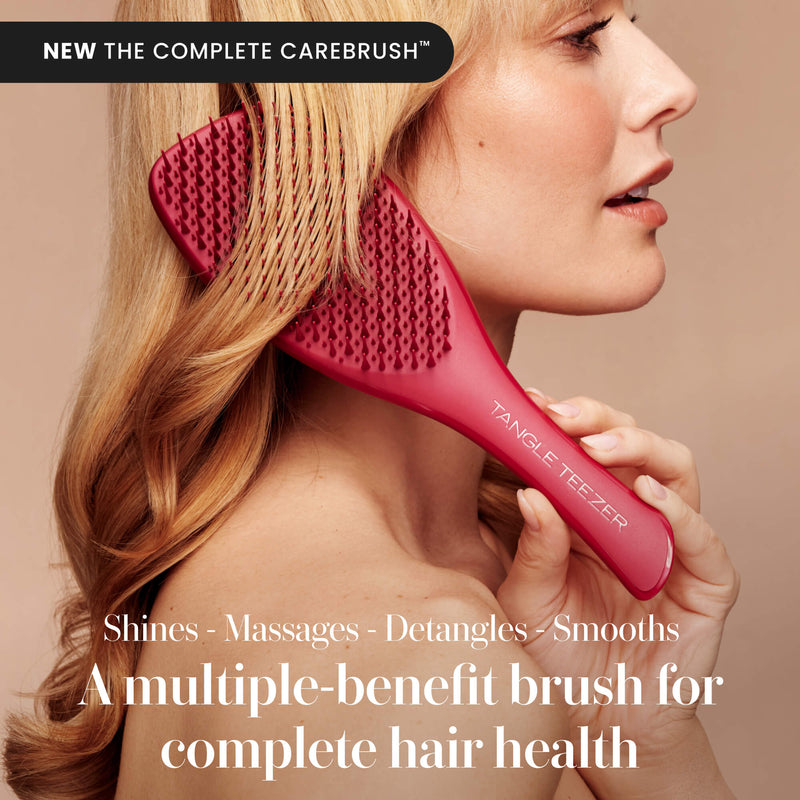
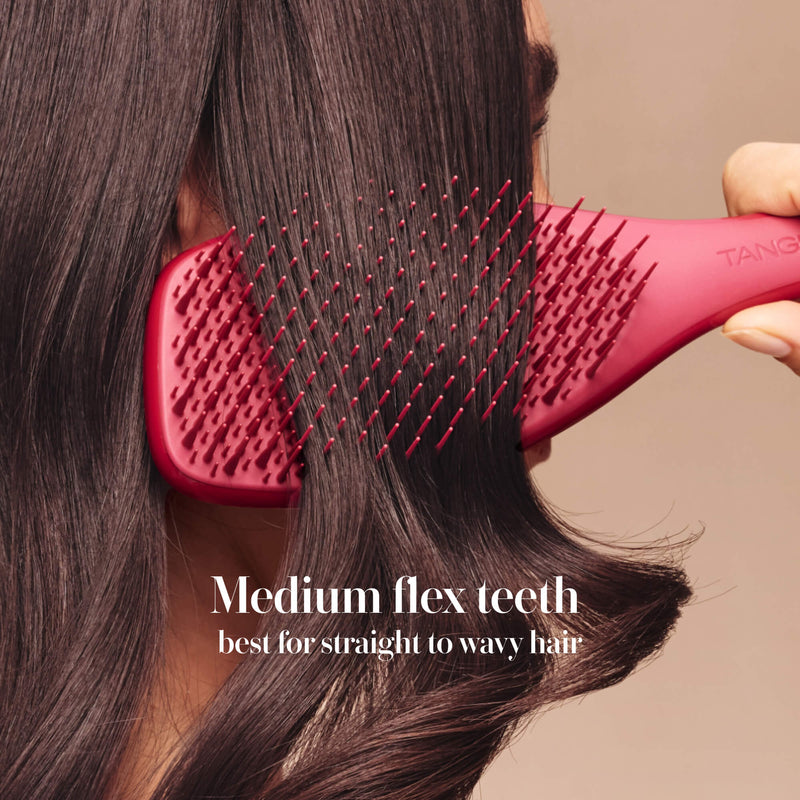
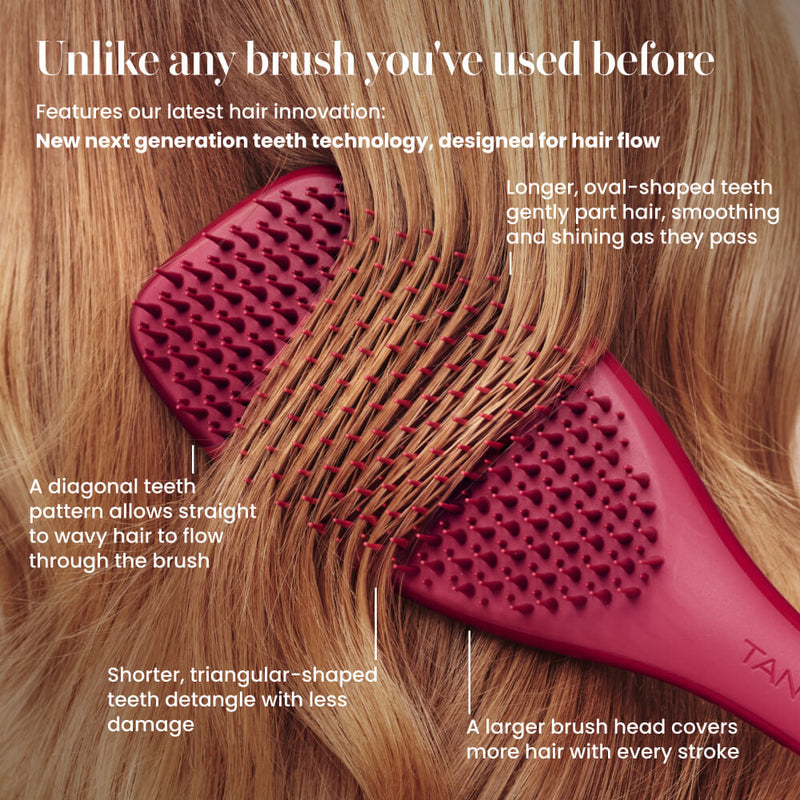
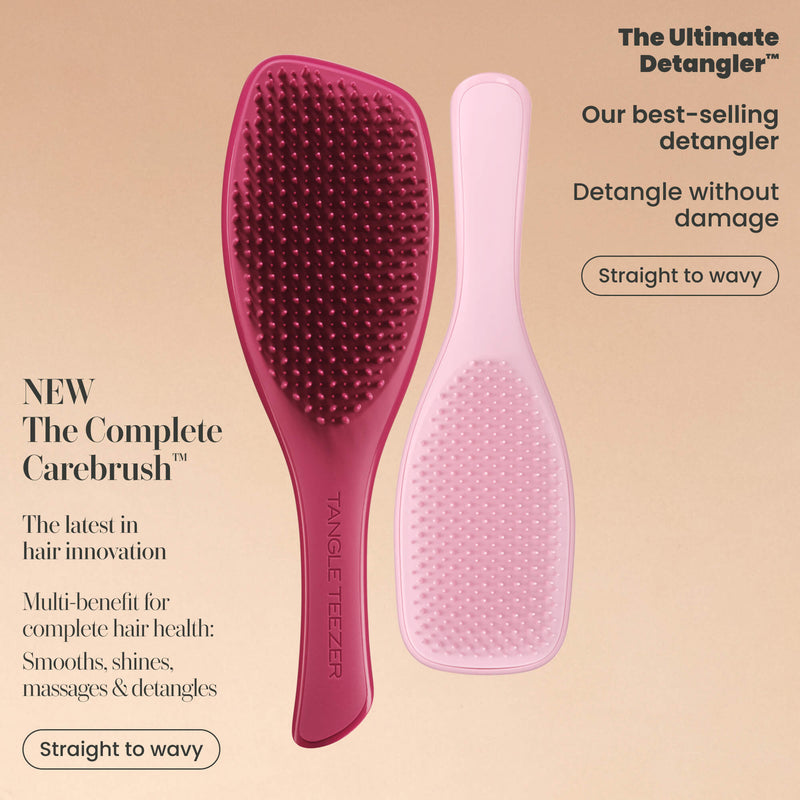
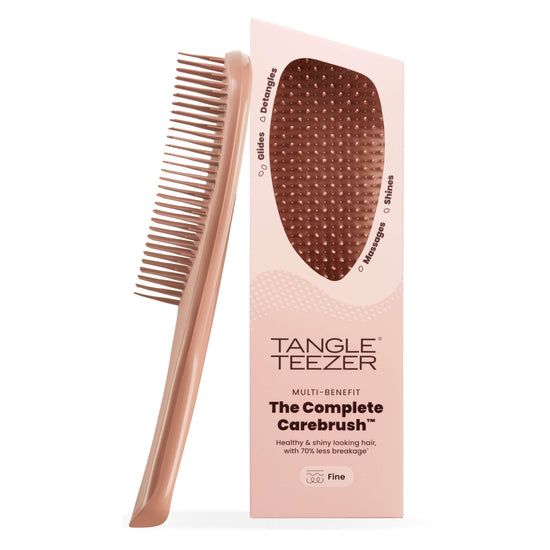
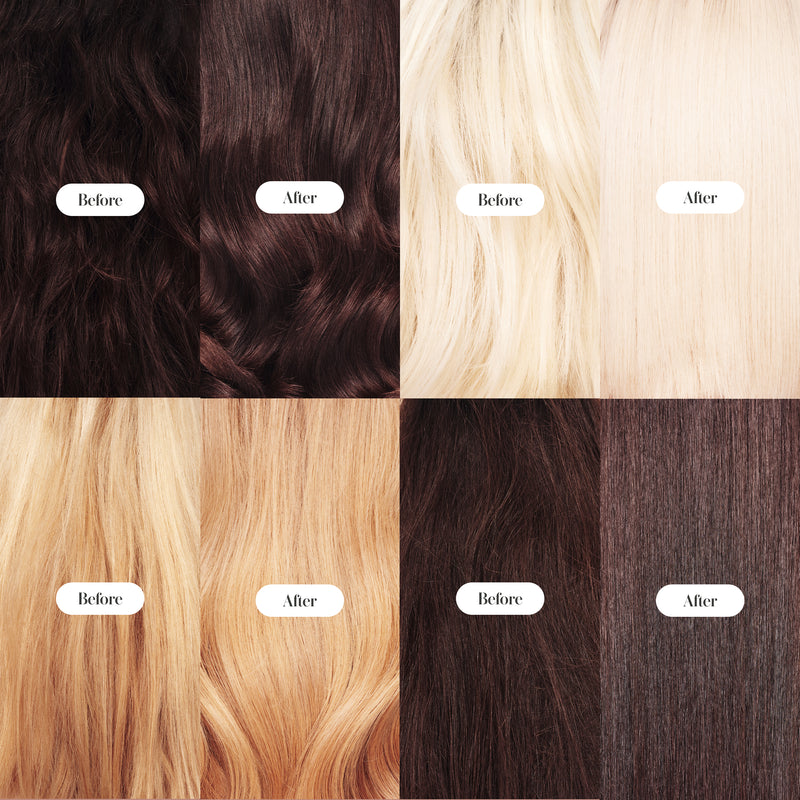
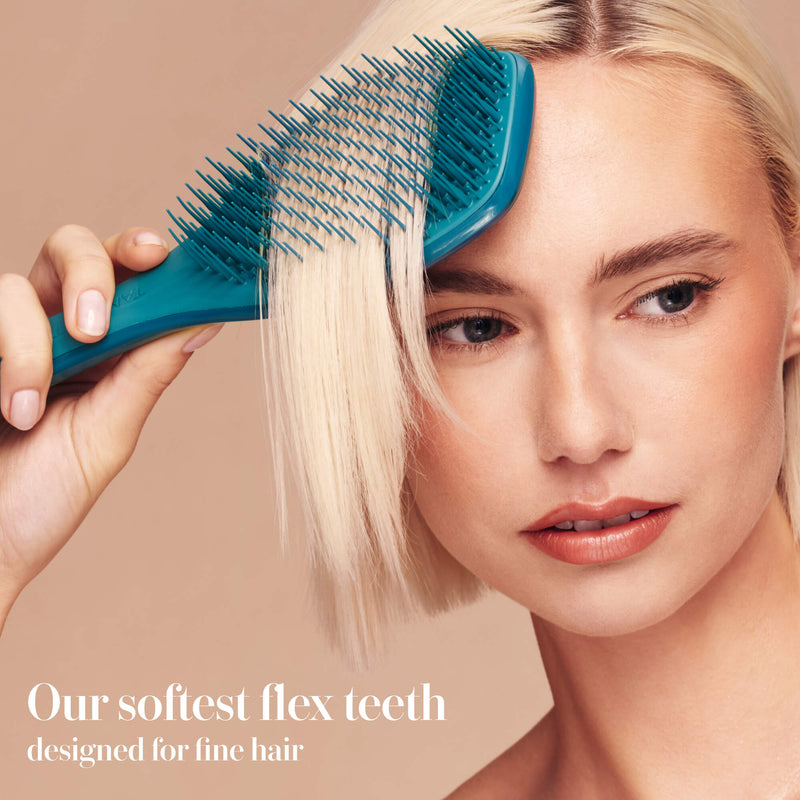
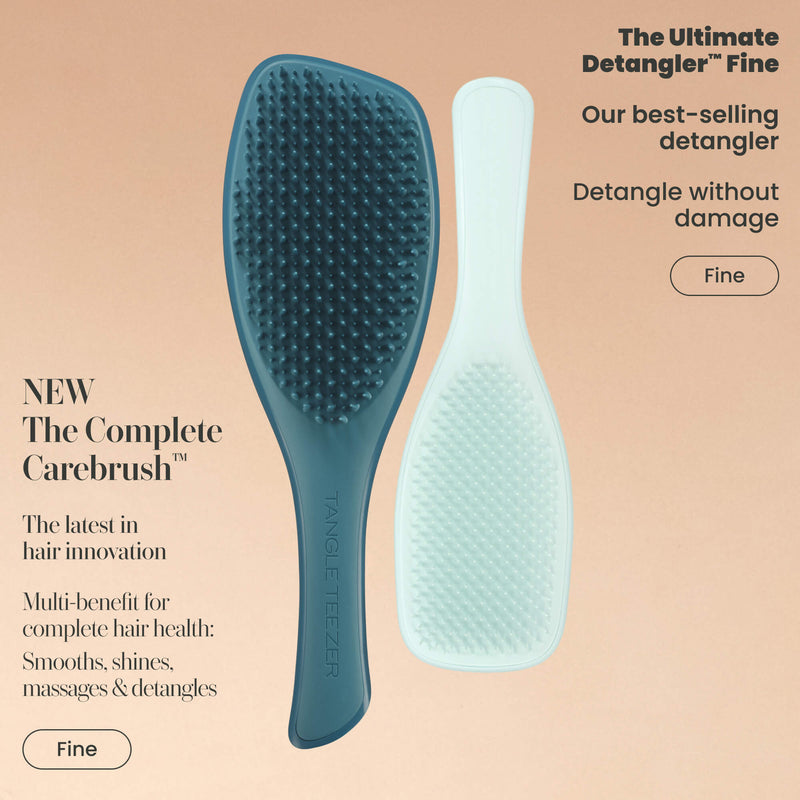
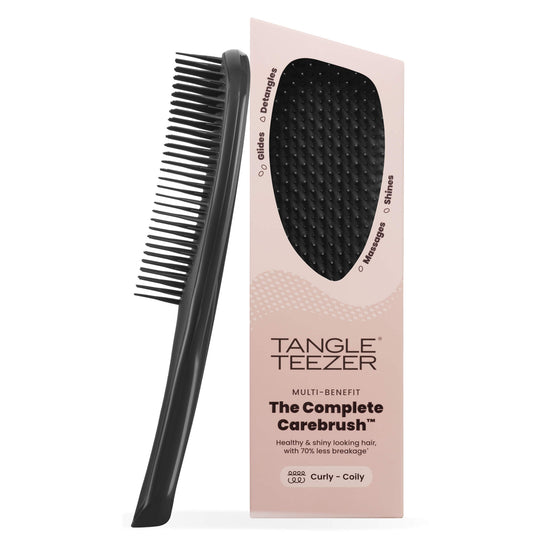
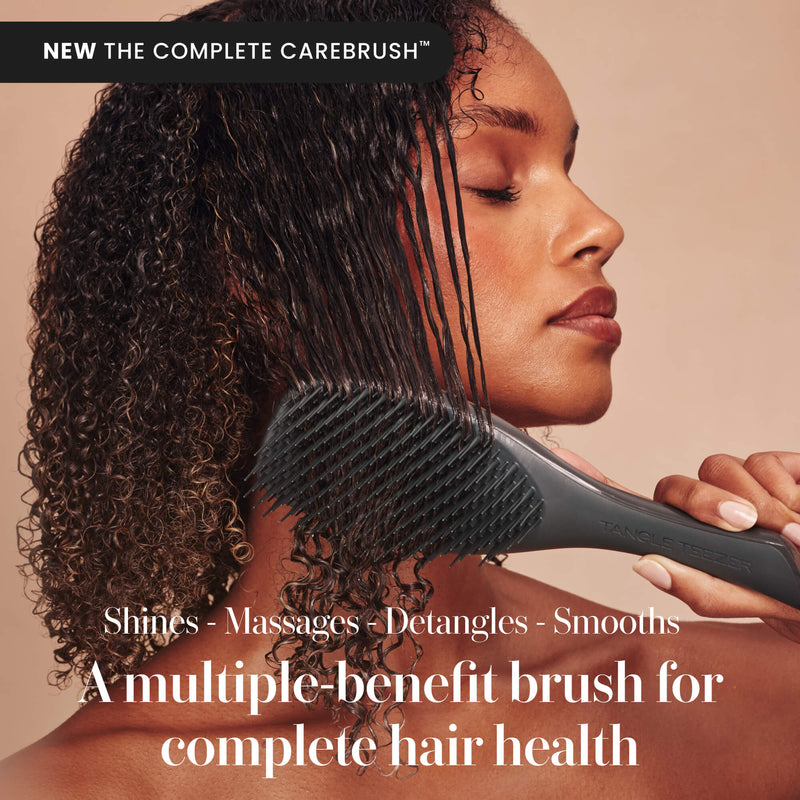
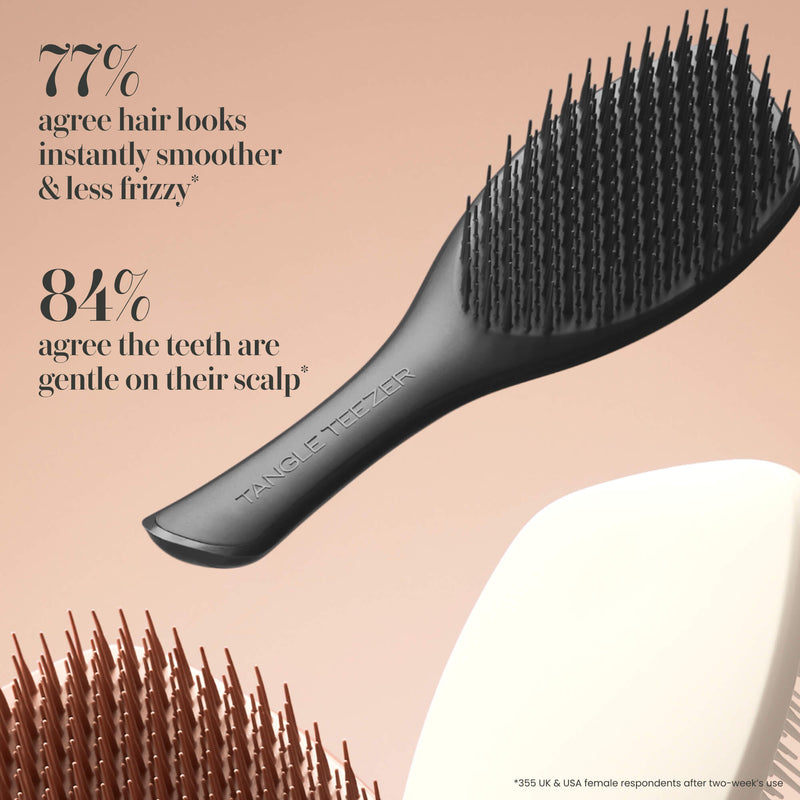
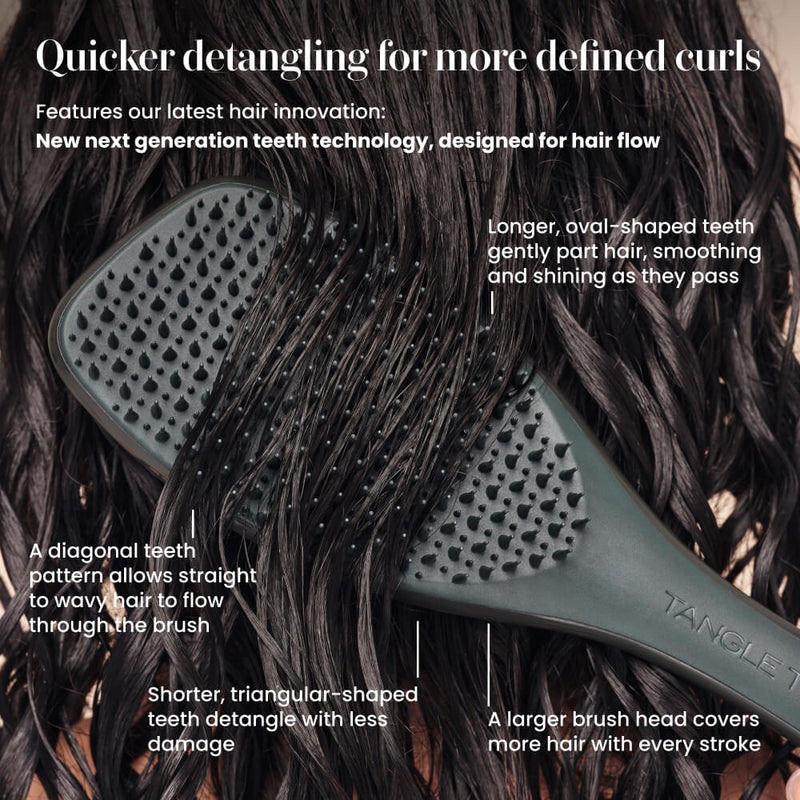
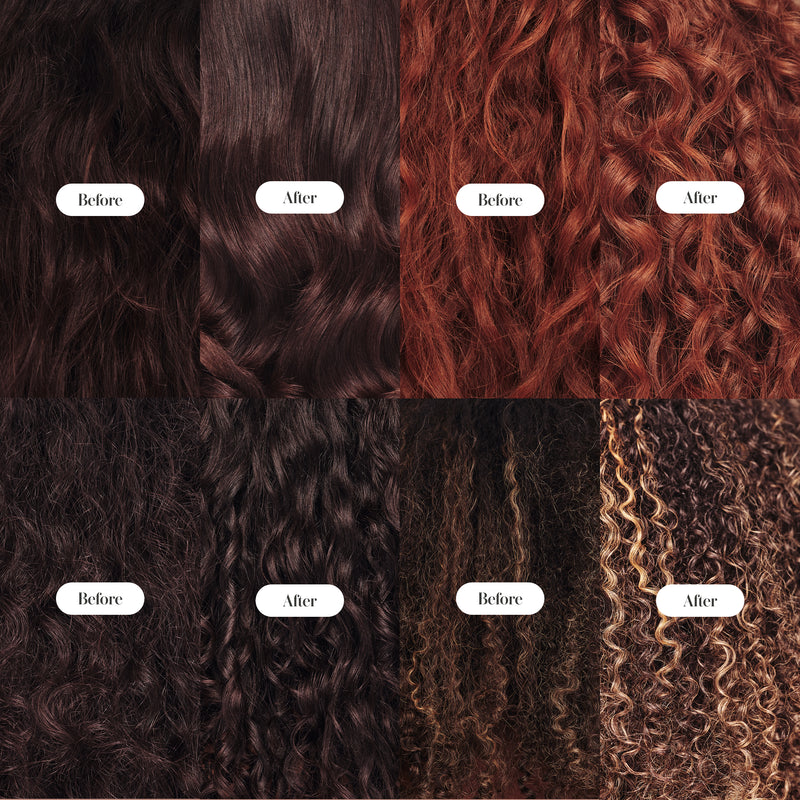
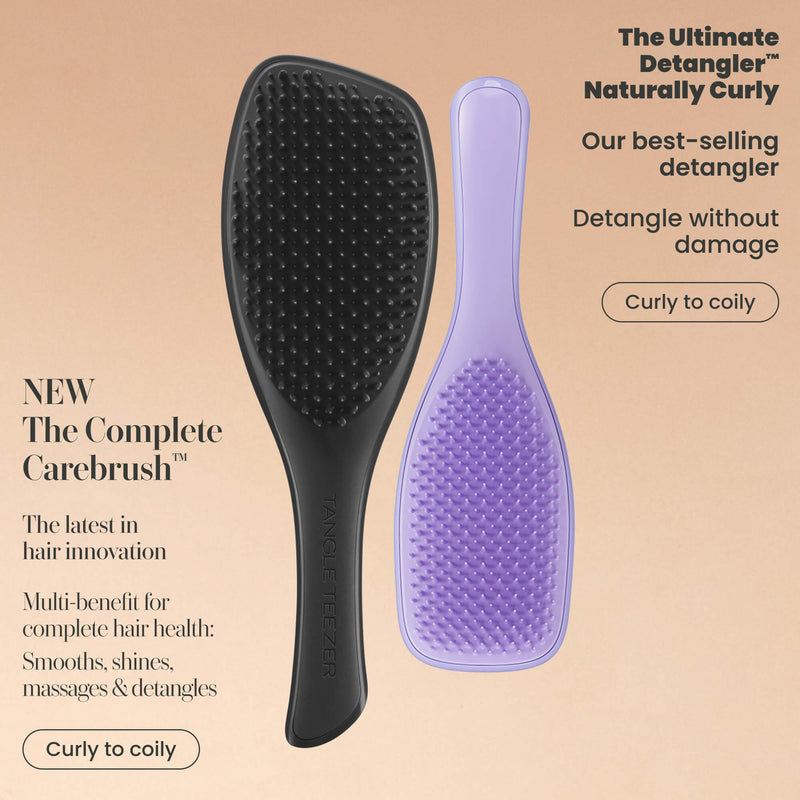
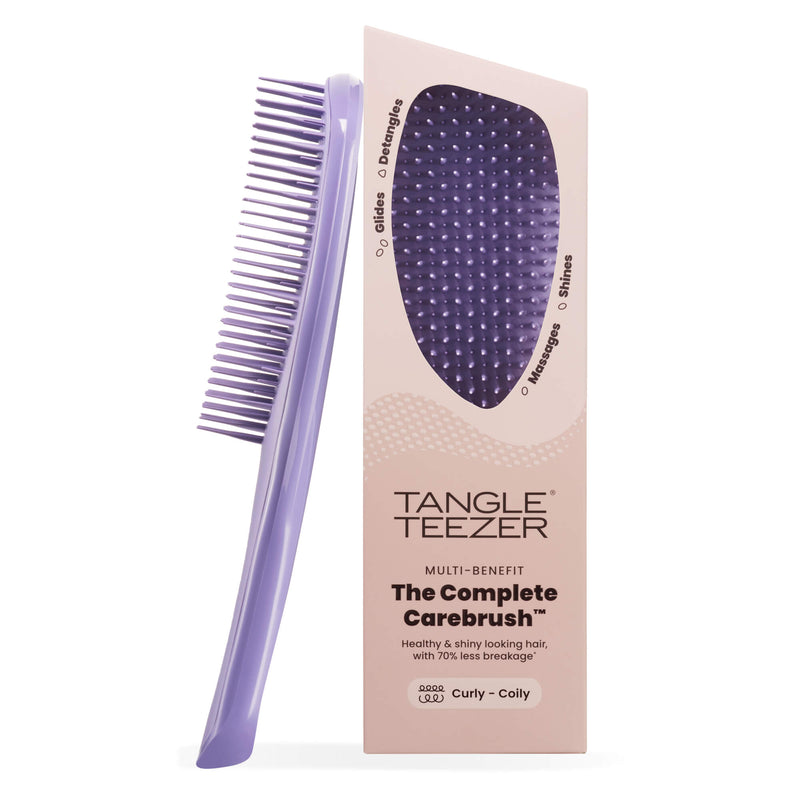
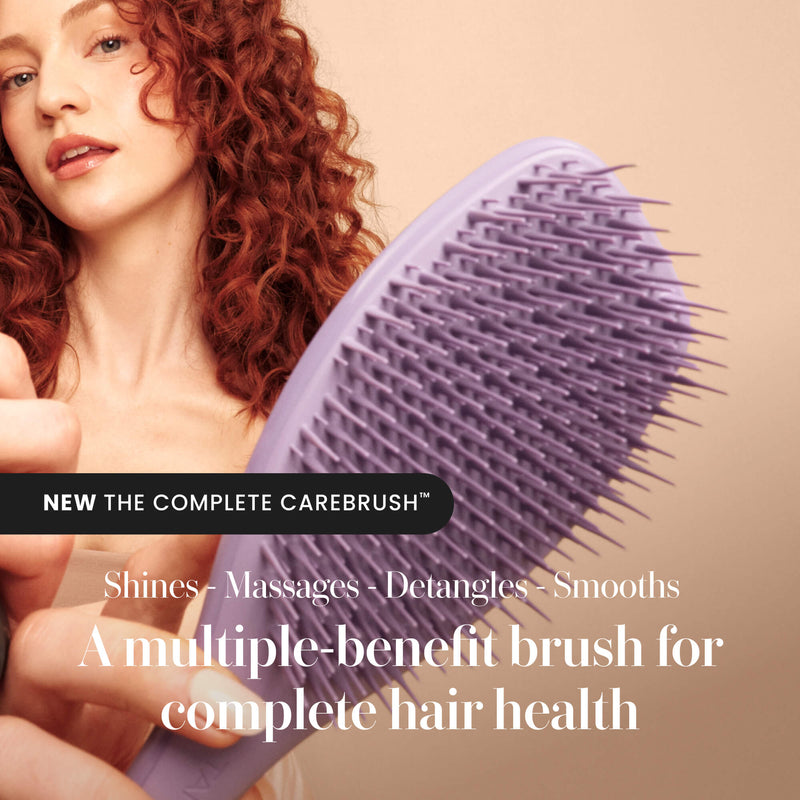
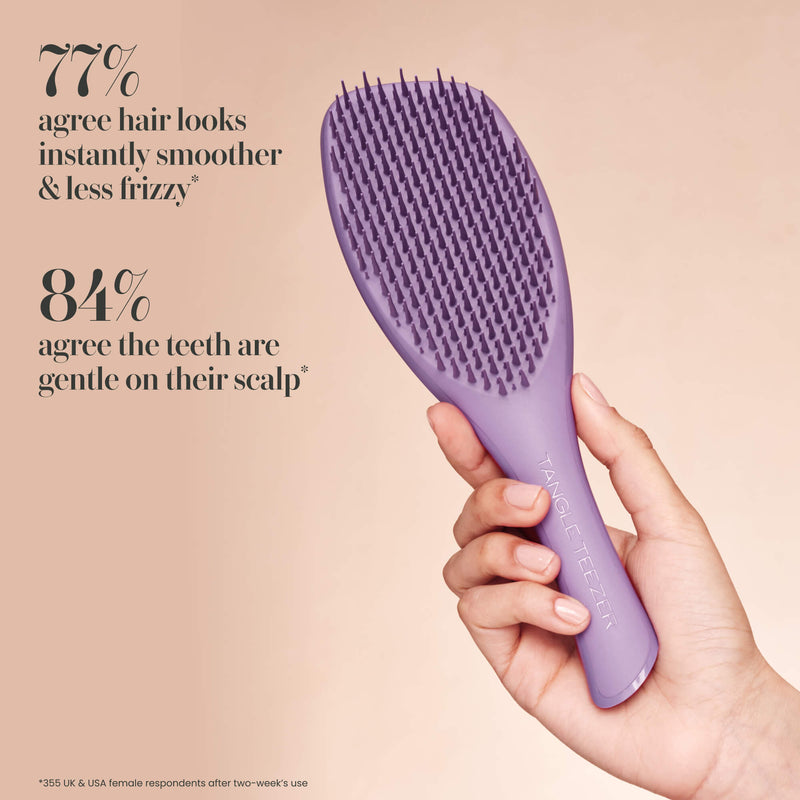
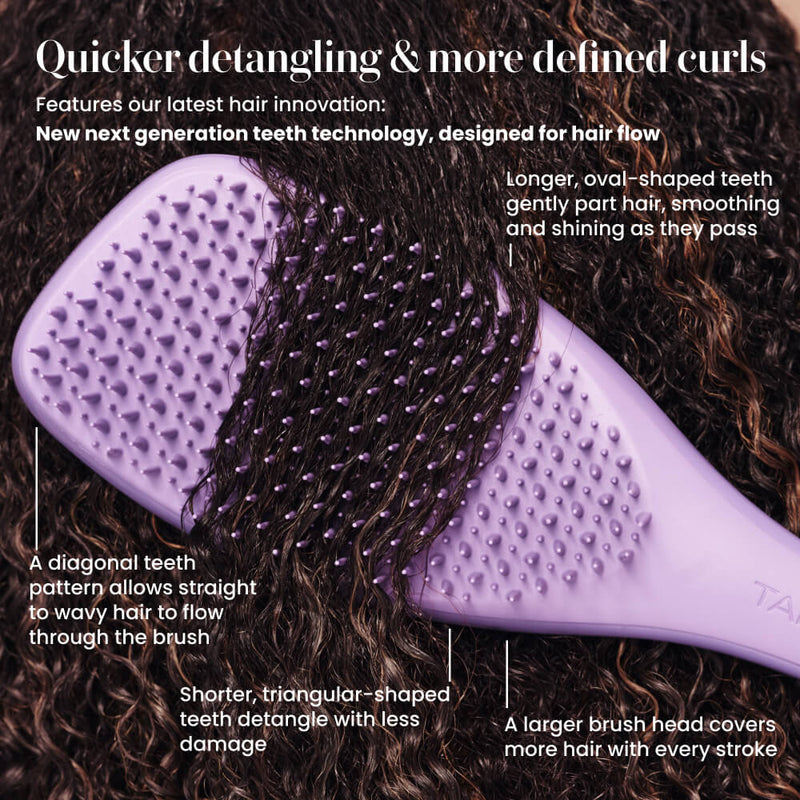
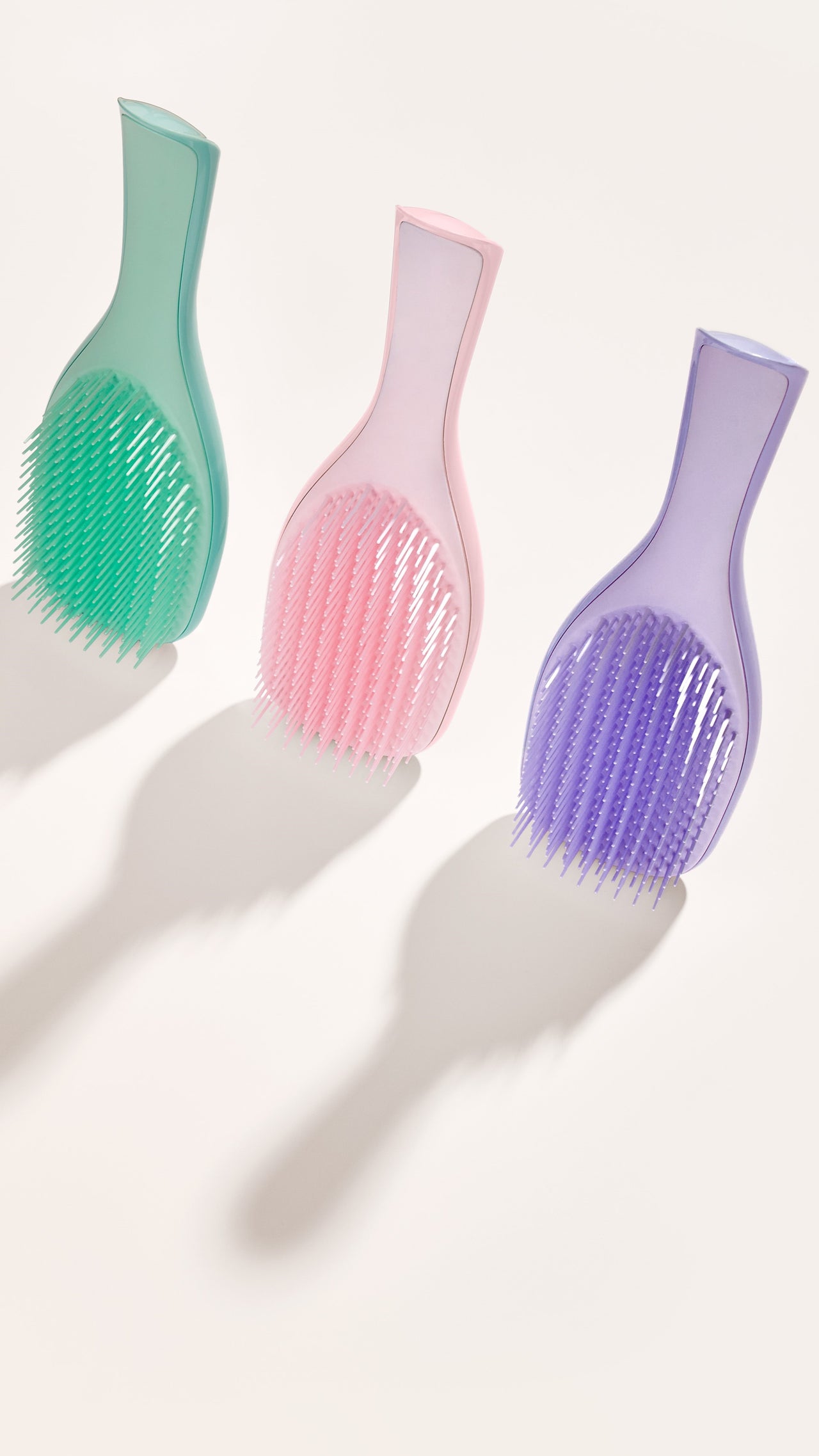
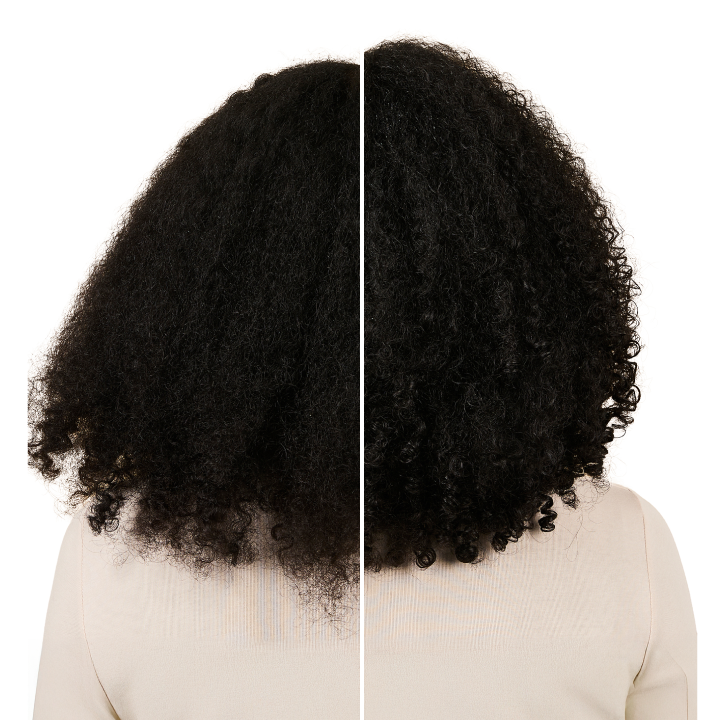
Never be scared to take on tangled hair again with help from Tangle Teezer. Our detangling brushes are especially designed to make removing knots and tangles as easy as possible while still reducing discomfort and breakage. Get yours today…
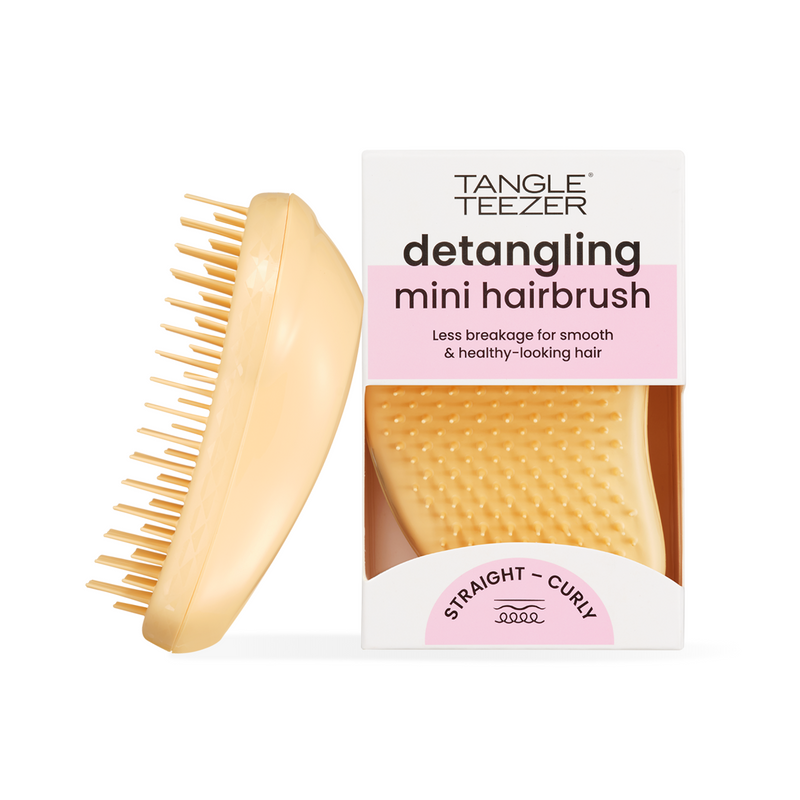
Frequently Asked Questions
Want to learn more? Keep reading to find the answers to your most pressing detangling questions…
What causes hair to tangle?
There are several reasons your hair may get tangled, such as:
- Day to day living: wind, heat and humidity, and pollutants can all make your hair more likely to tangle.
- Skipping brushing: not brushing or combing your hair regularly can mean your hair tangles more, and if left for too long it can be harder and more time-consuming to get the tangles out.
- Rough towel drying: being too rough when you towel-dry can make your hair knottier (and potentially frizzy).
You may notice your hair tangling more if you brush too aggressively (or with the wrong brush), wash it too much, or use products that strip your hair of its natural oils.
What are common detangling mistakes?
When you’re detangling, try to avoid:
- Starting at the roots. Instead, brush from the ends (tips) of your hair and work upwards to avoid making knots harder to handle.
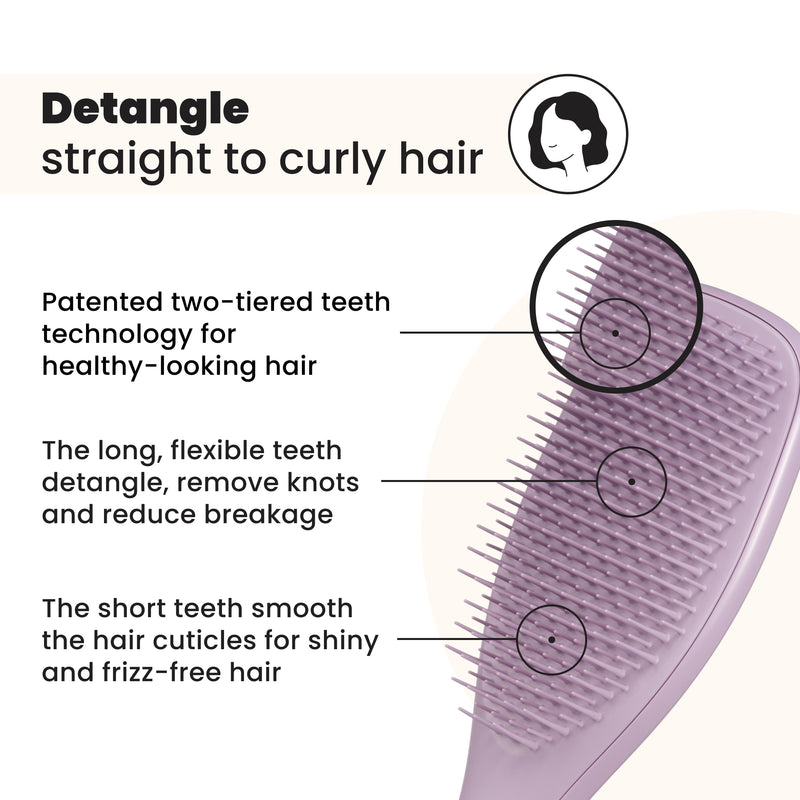
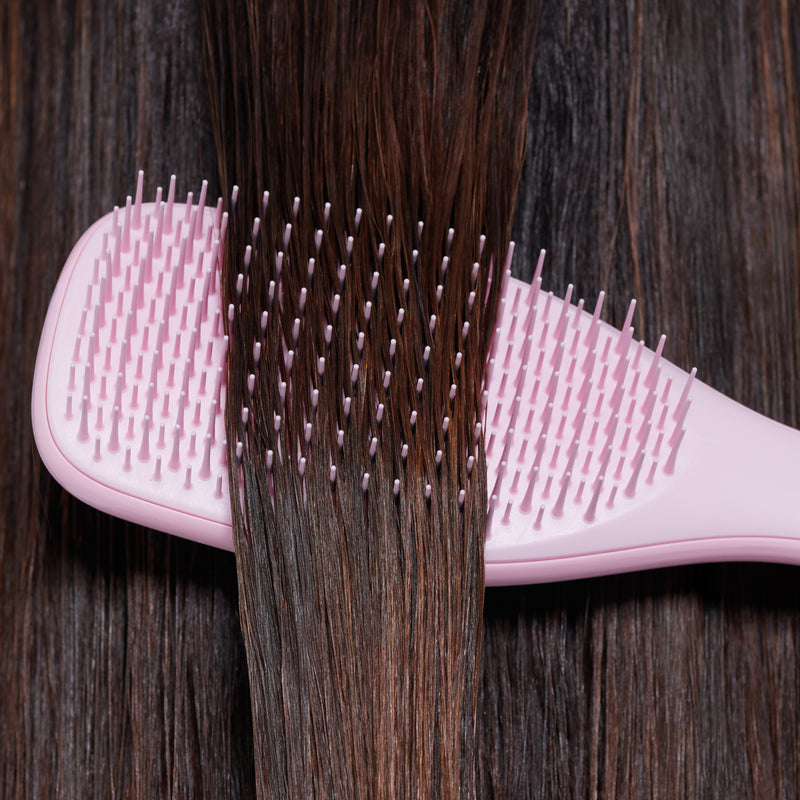
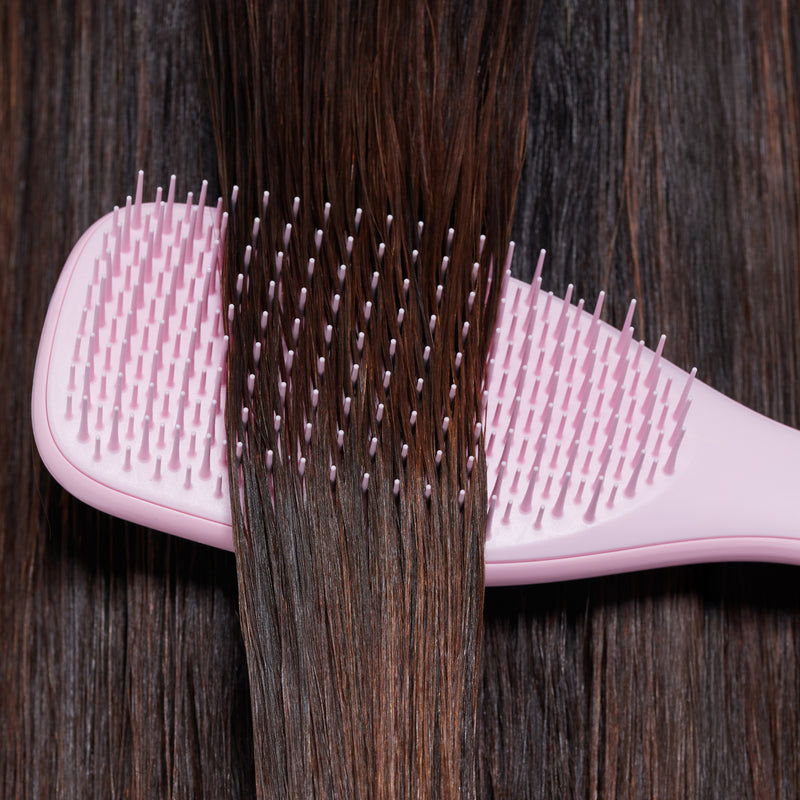
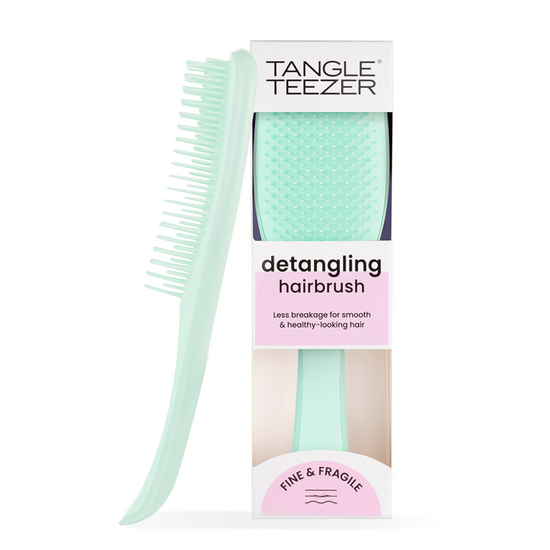
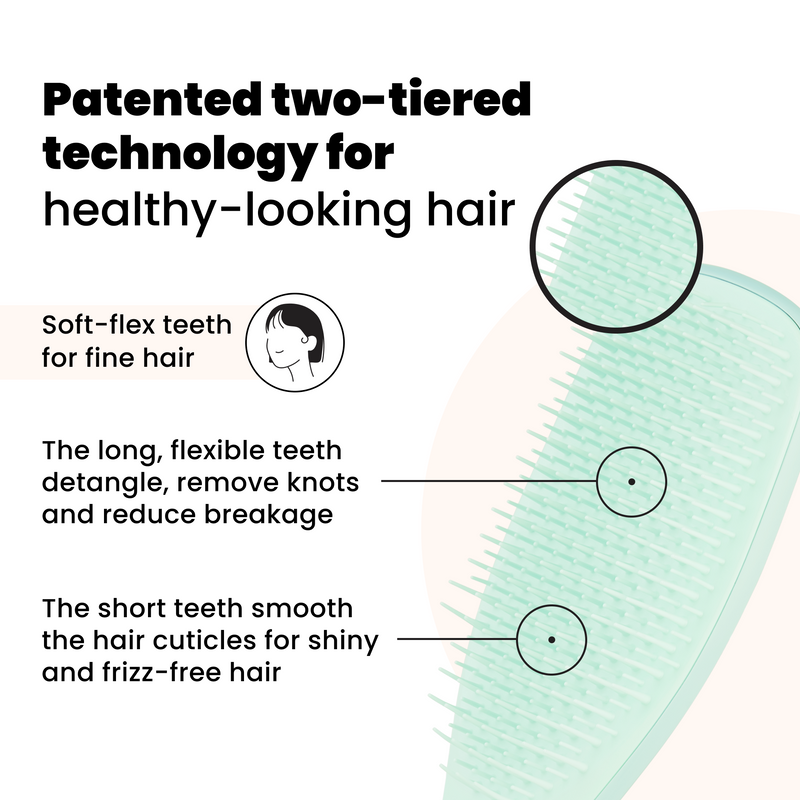
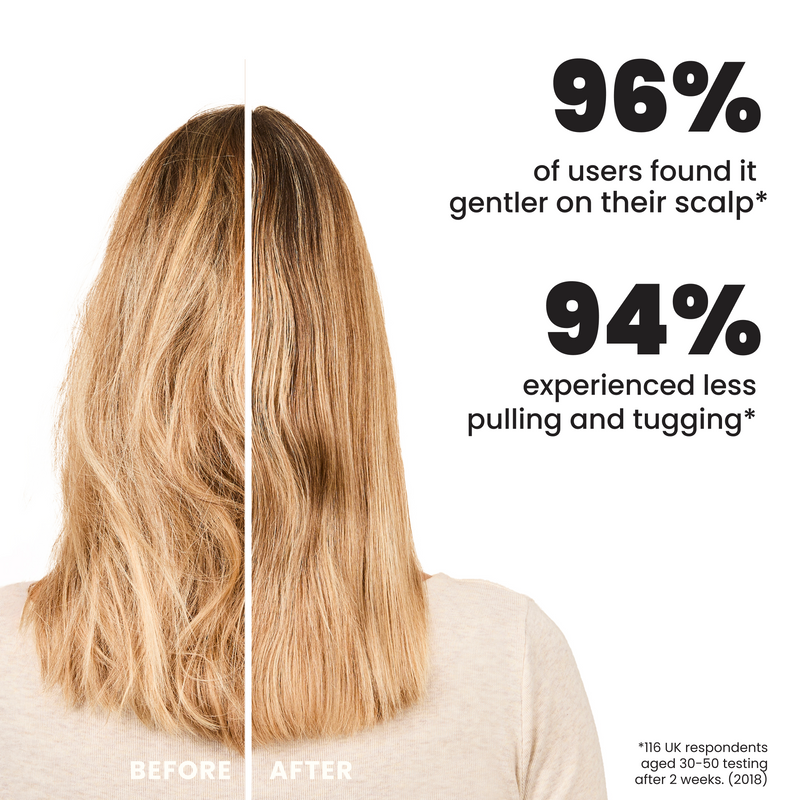
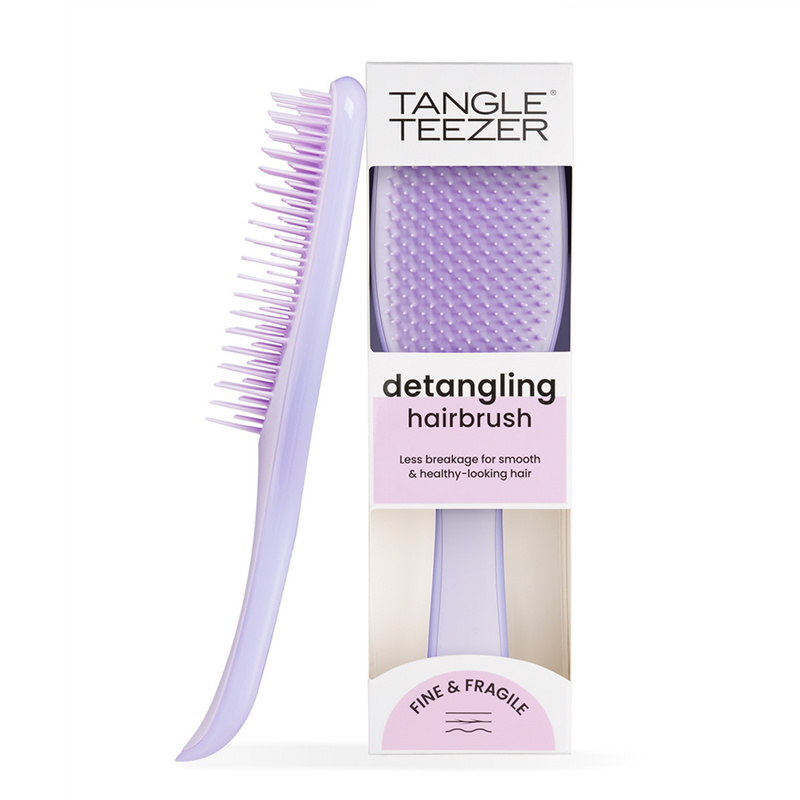
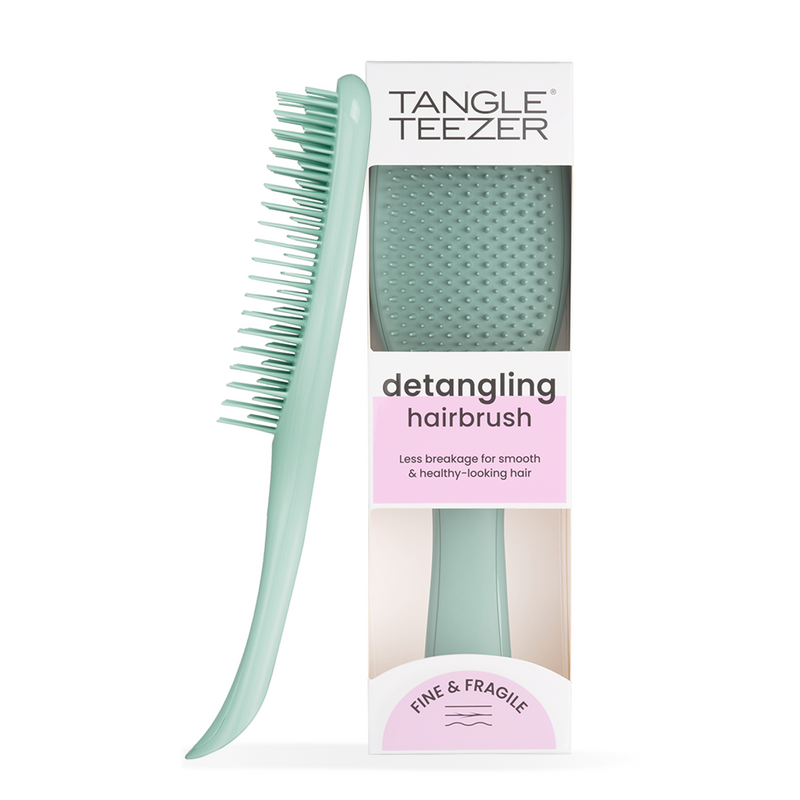
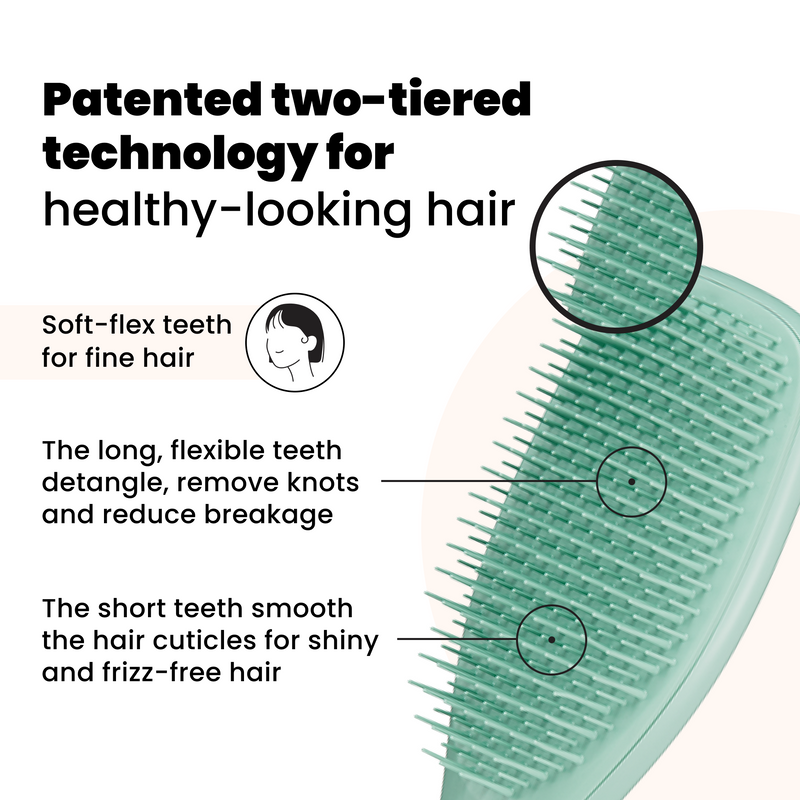
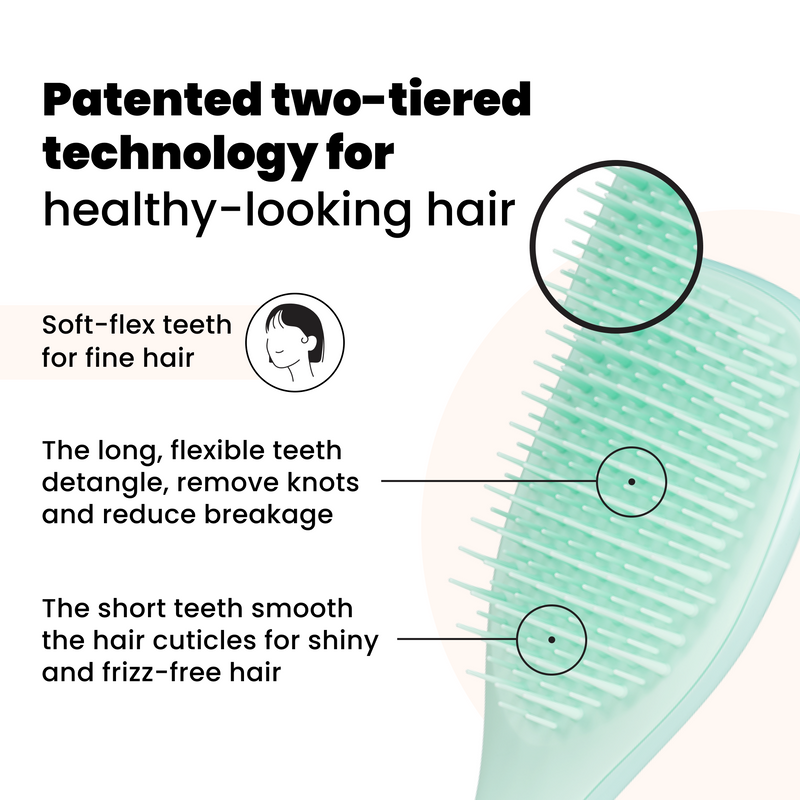
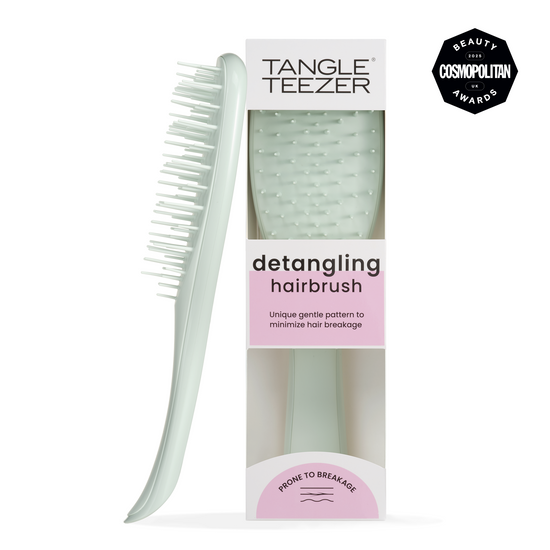
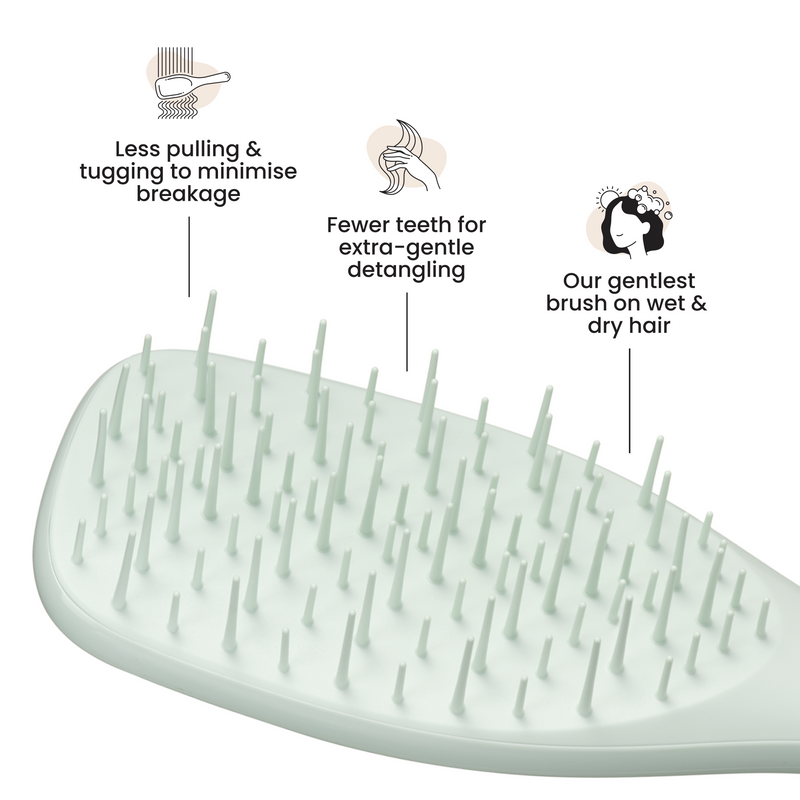
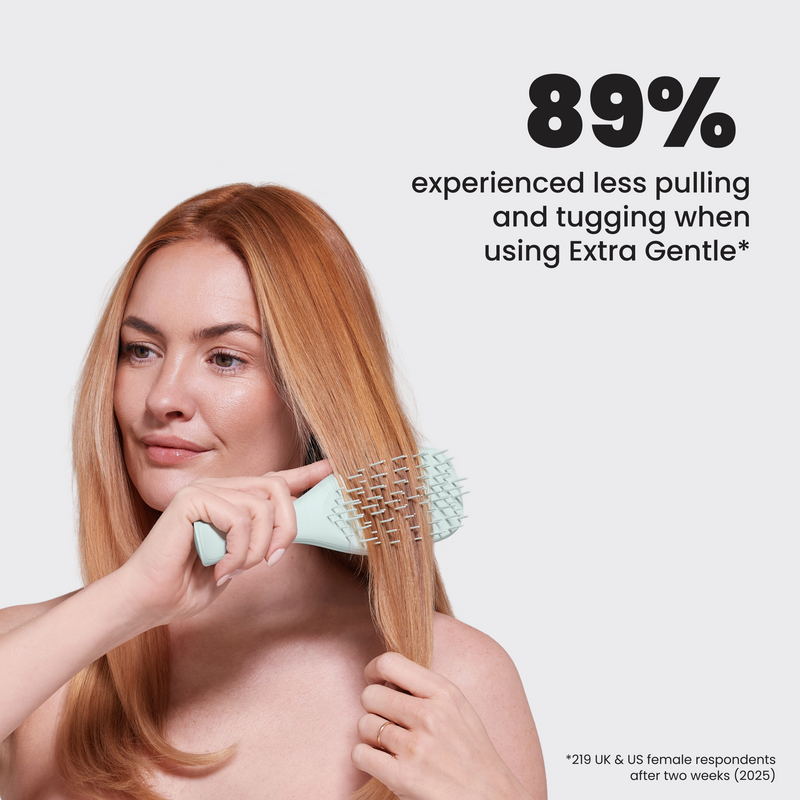
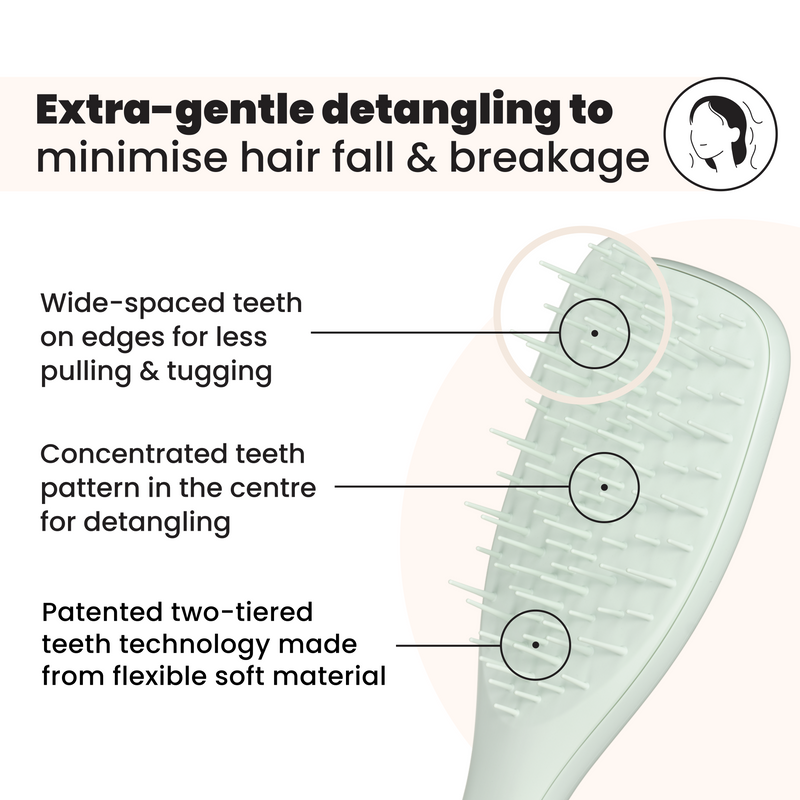
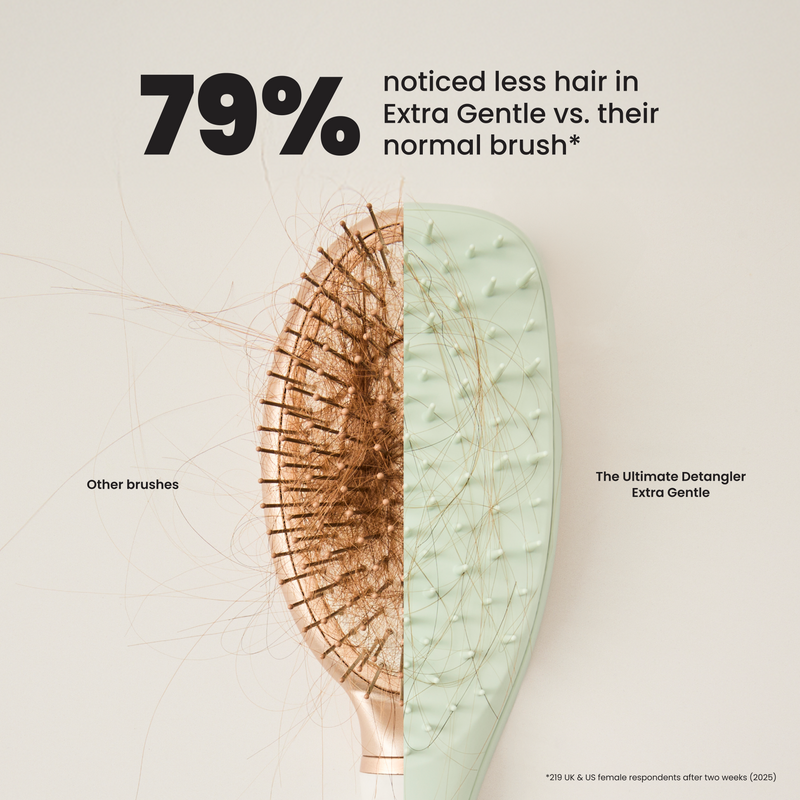
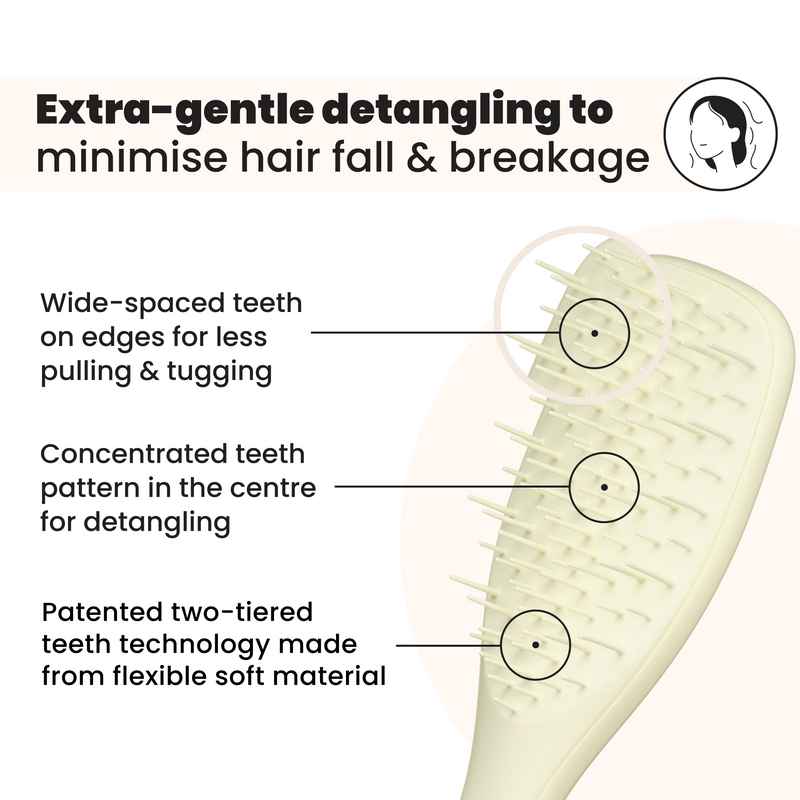
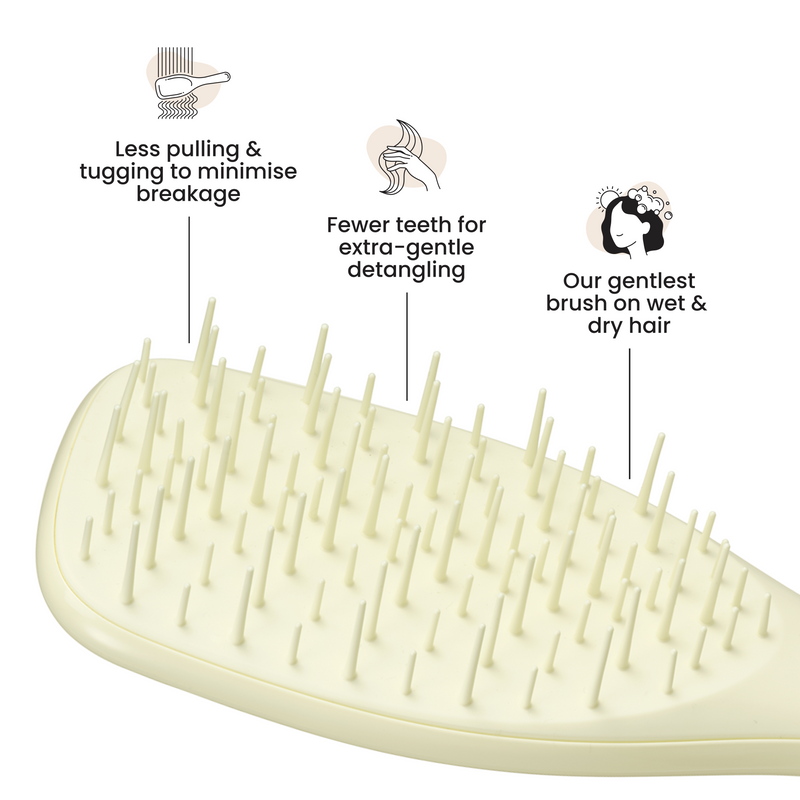
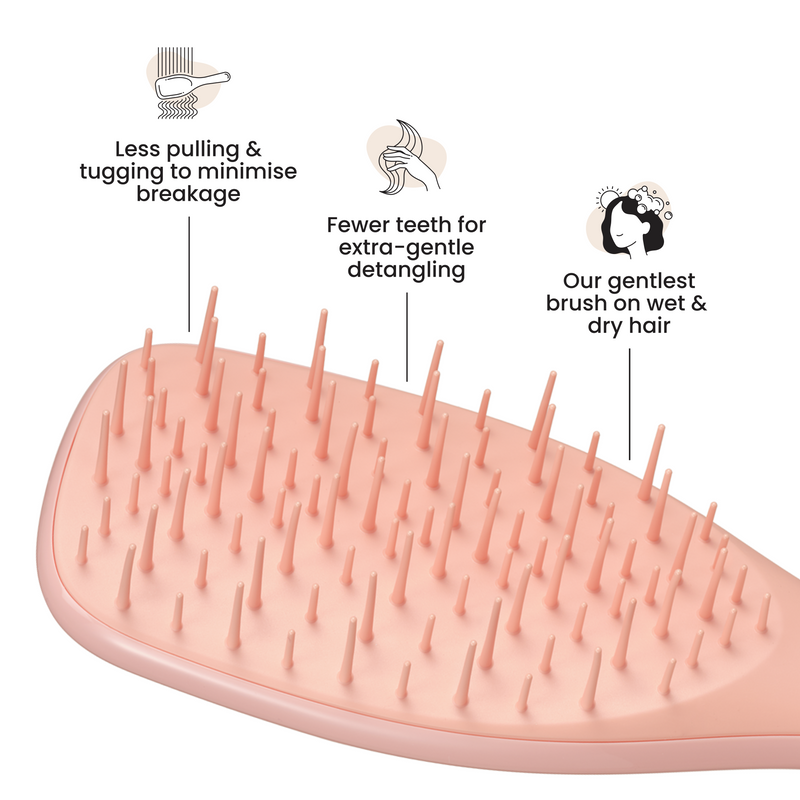
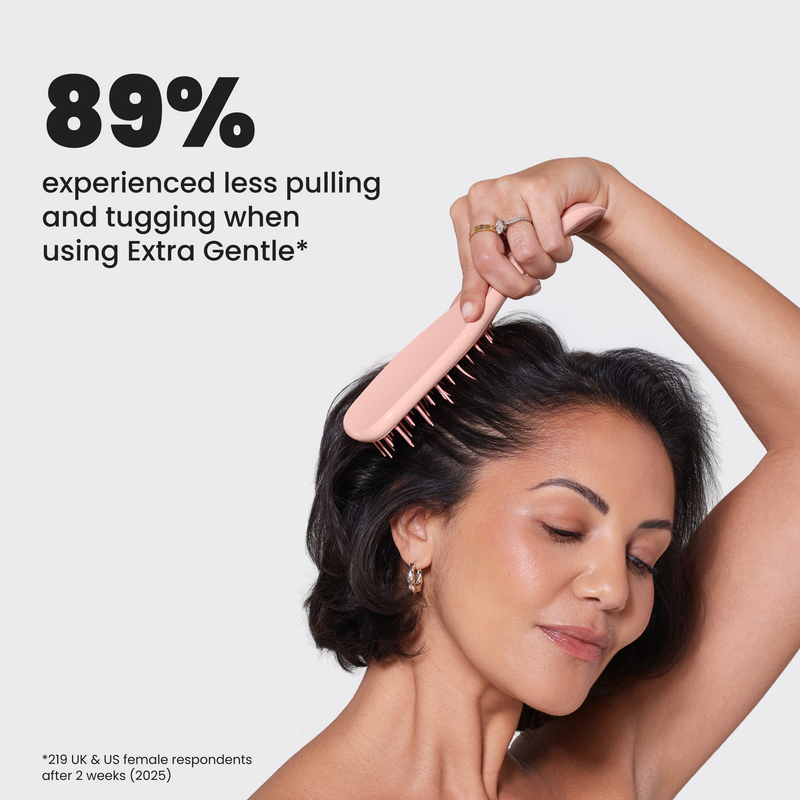
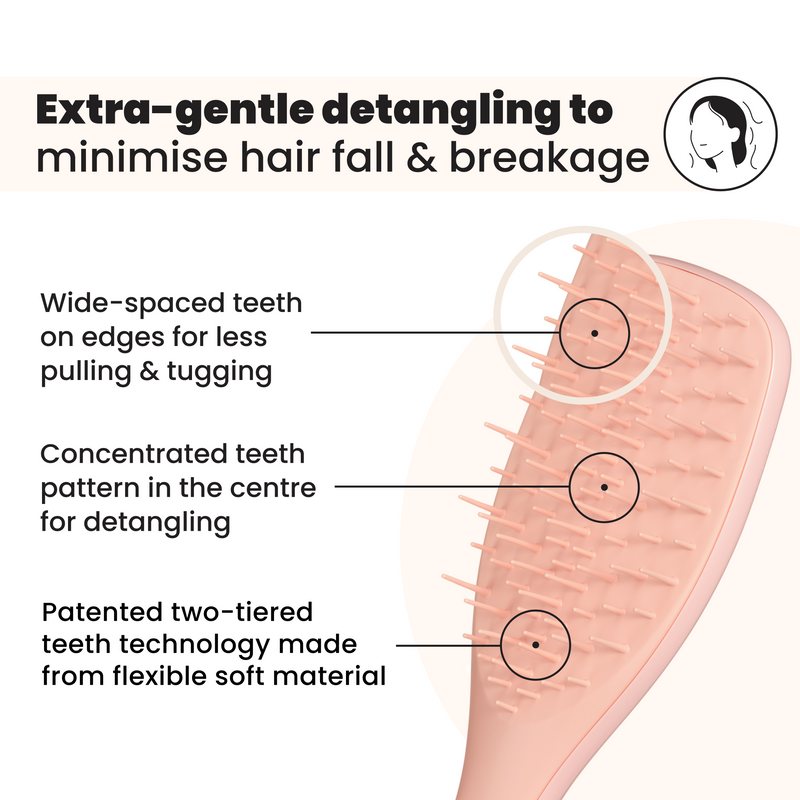
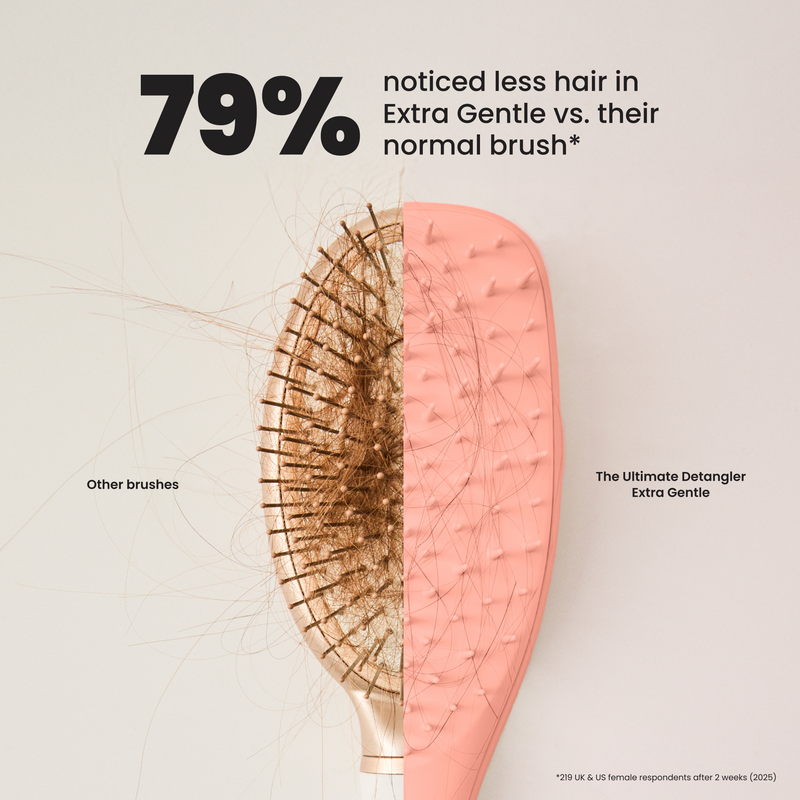
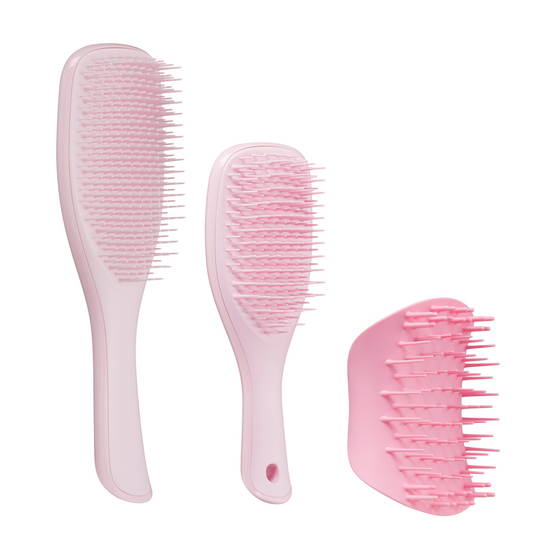
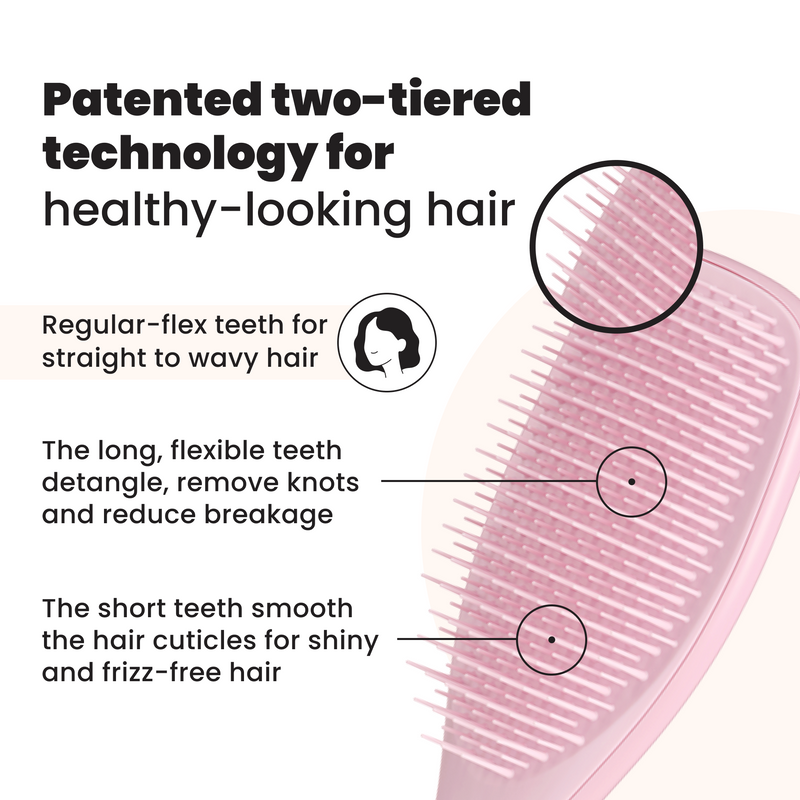
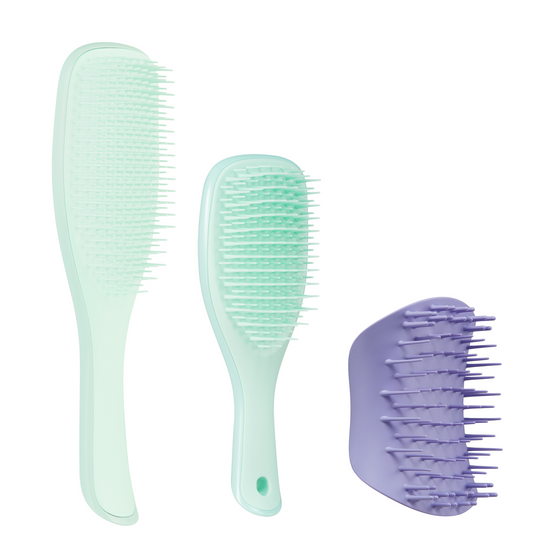
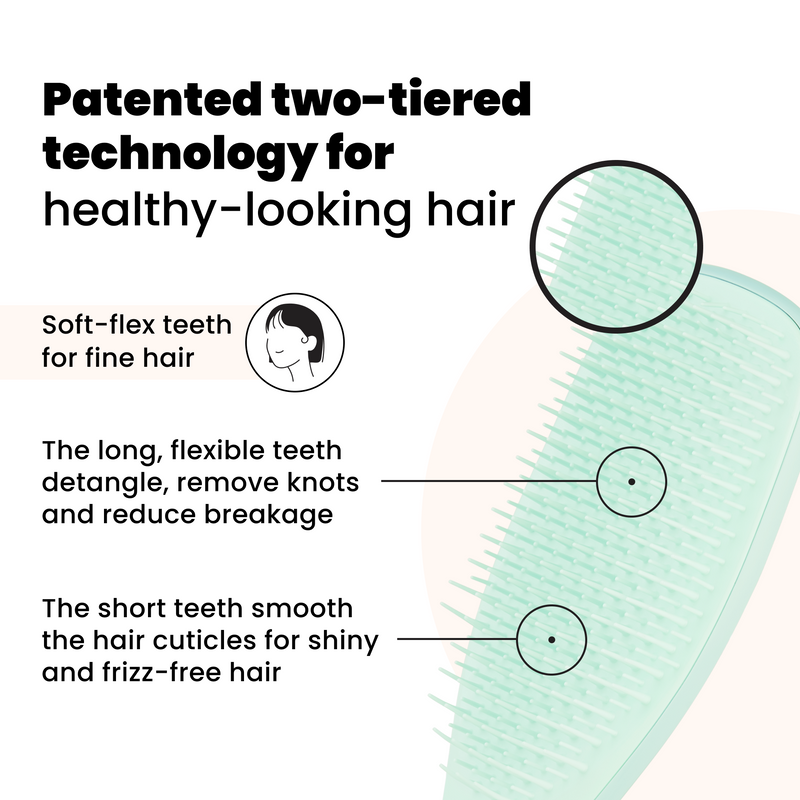
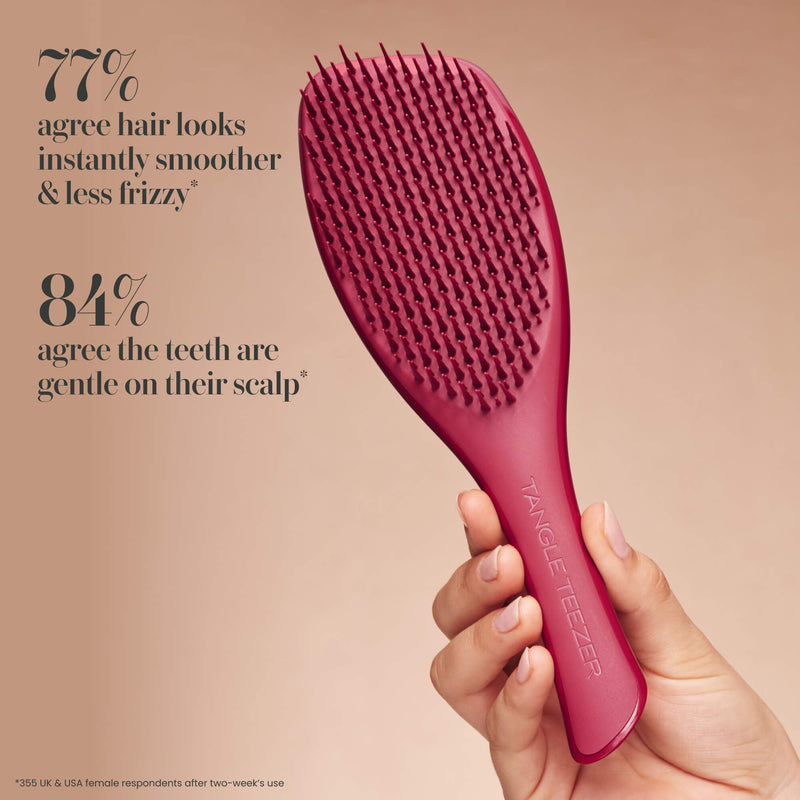
- Using the wrong brush. Look for something with wider, well-spaced teeth - like the Tangle Teezer Detangler Extra Gentle - to avoid pulling, tugging, and breaking your hair.
- Brushing all at one. Try to separate your hair into more manageable sections to make the detangling process quicker and gentler for your hair.
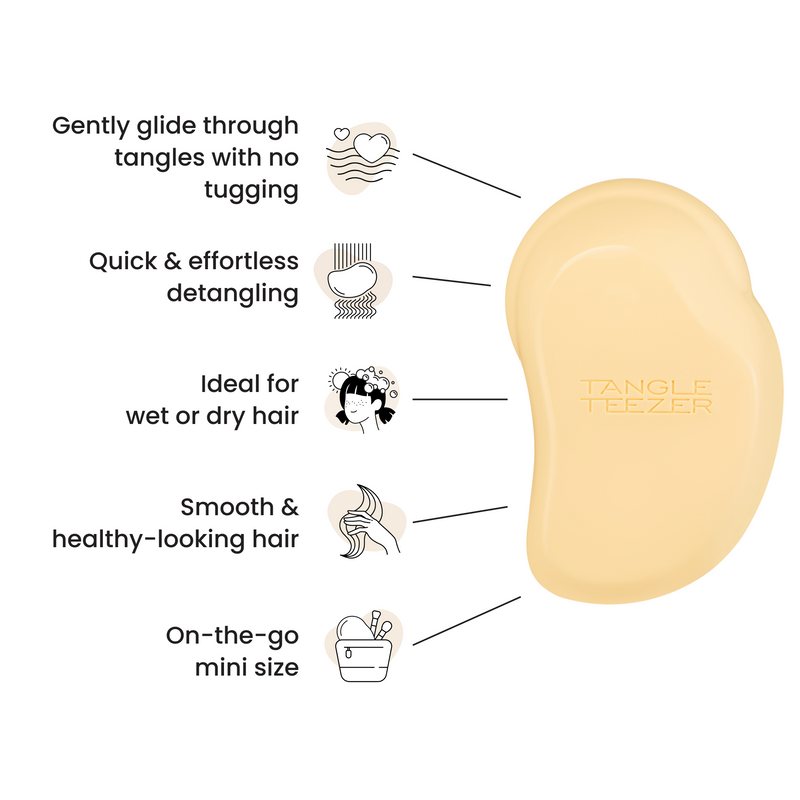
- Using too much force. Tugging isn’t just painful, but also damaging to your scalp and roots. If it hurts to brush your hair, you’re pulling too hard.
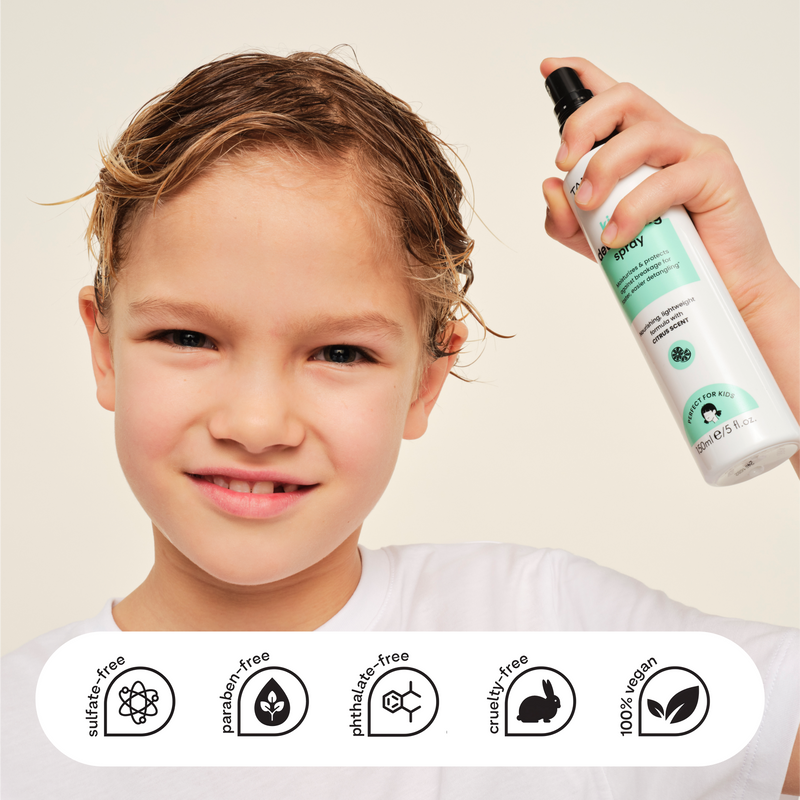
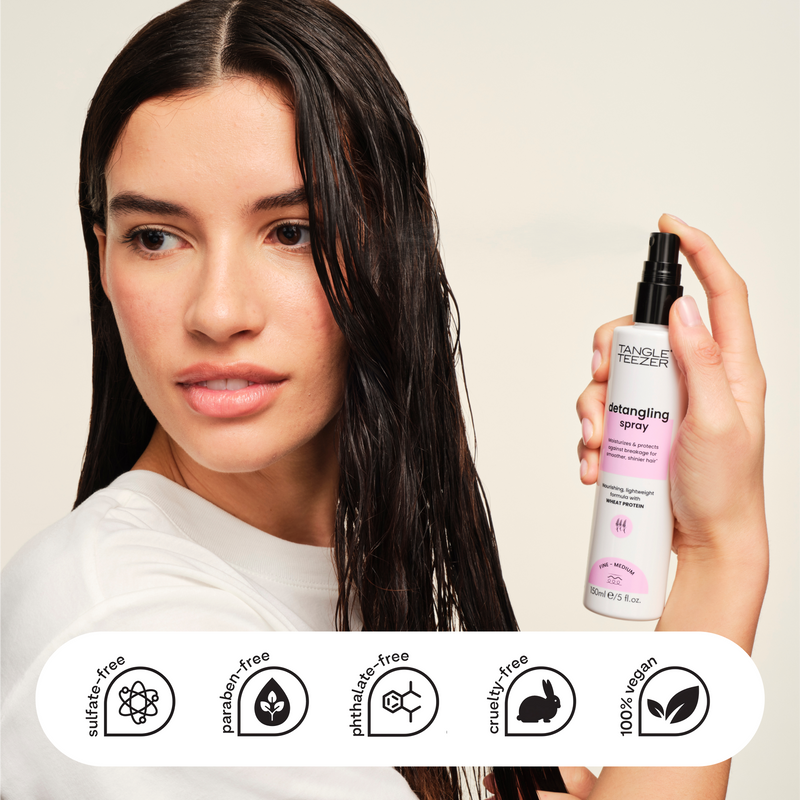
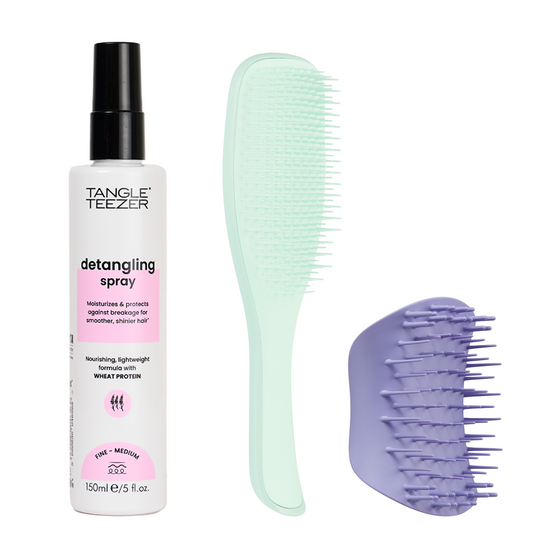
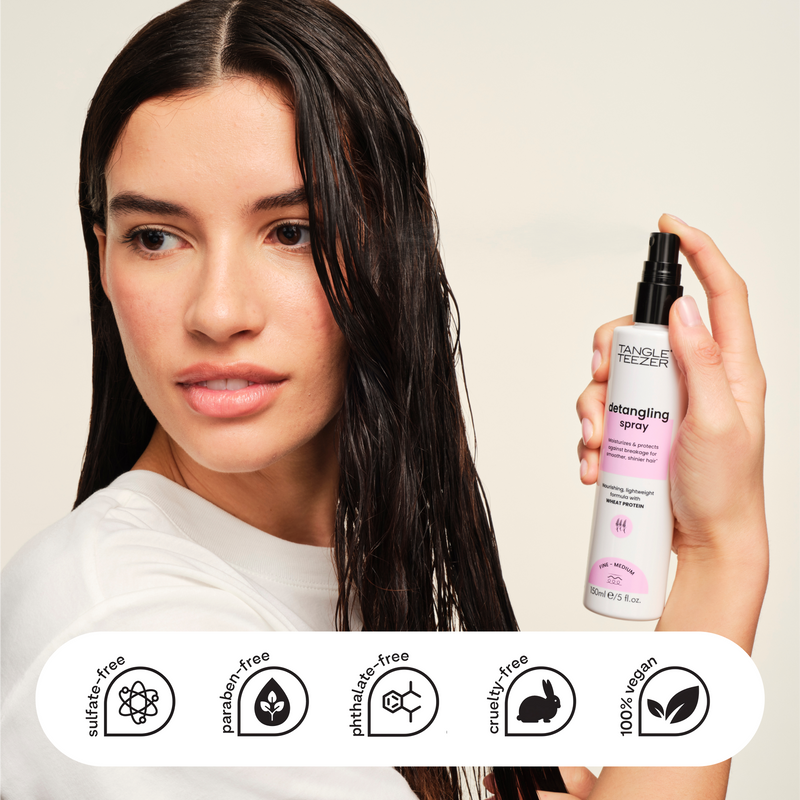
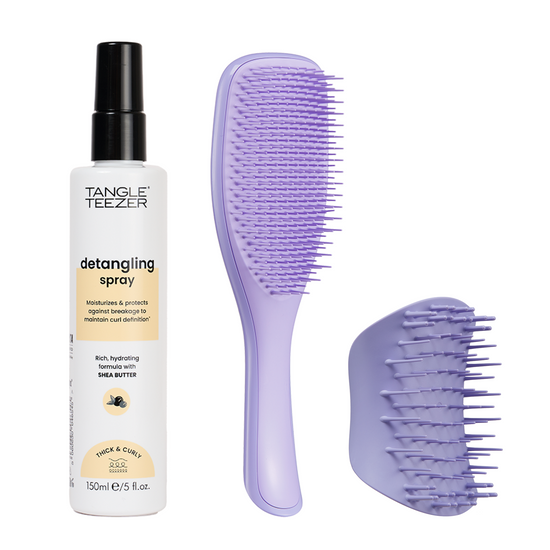
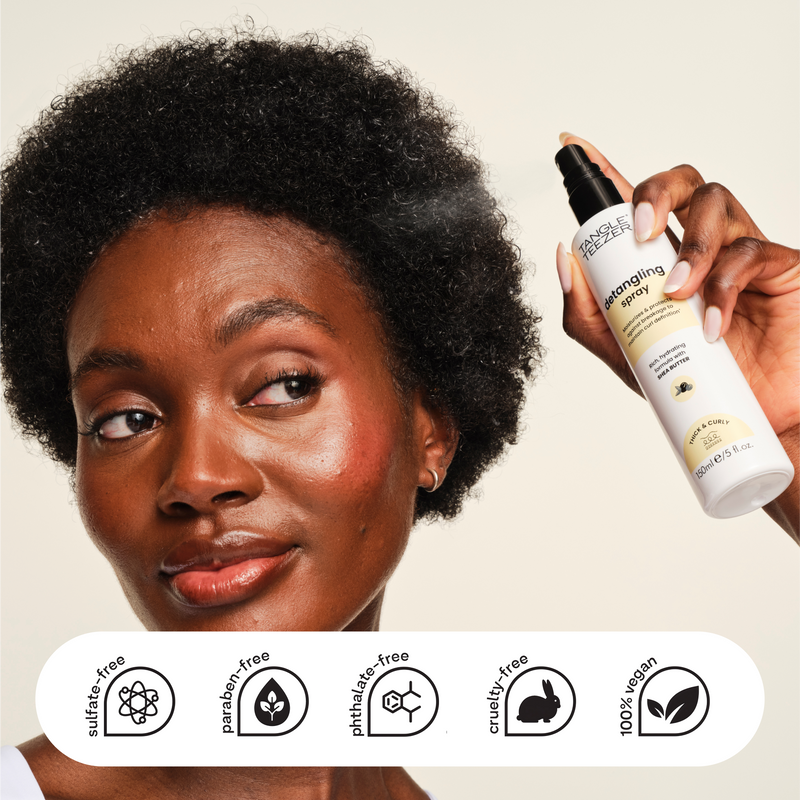
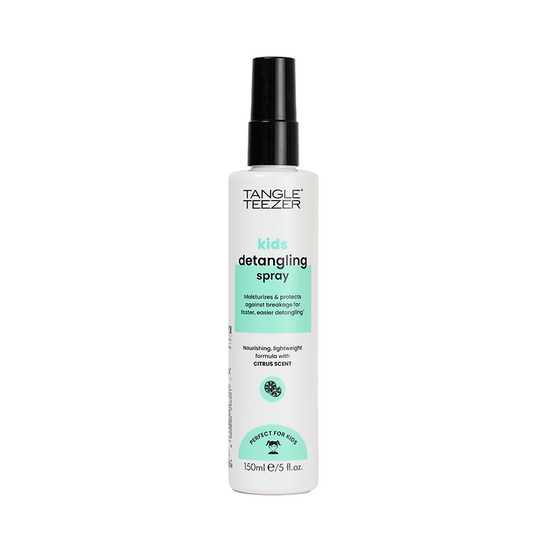
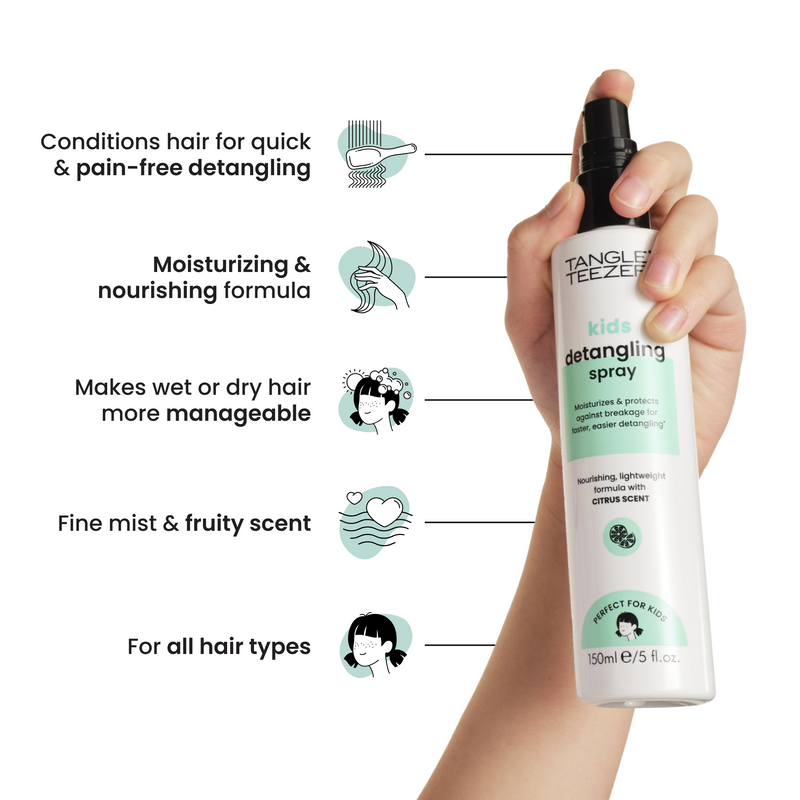
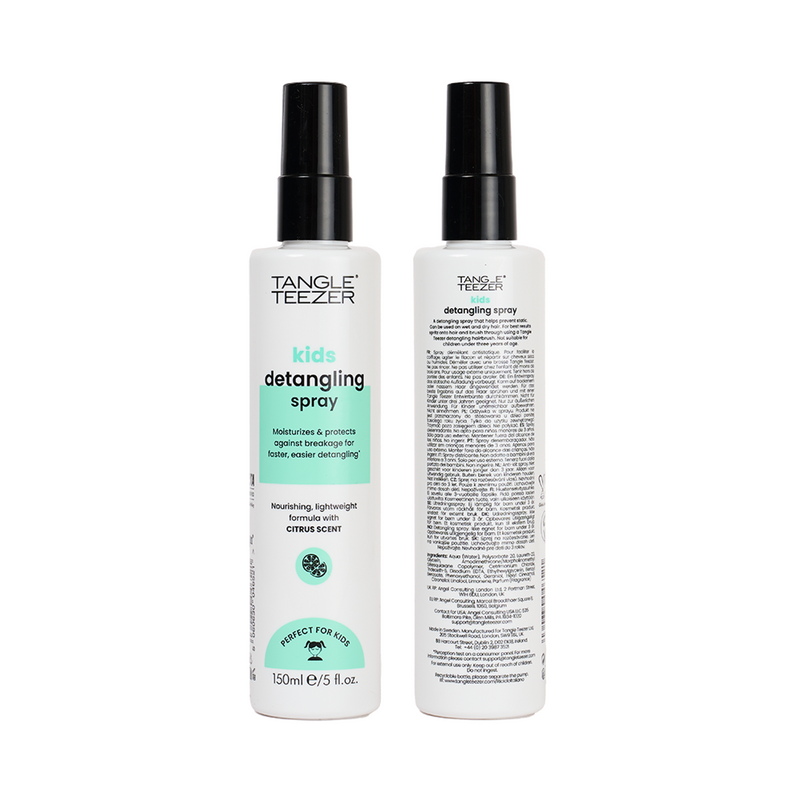
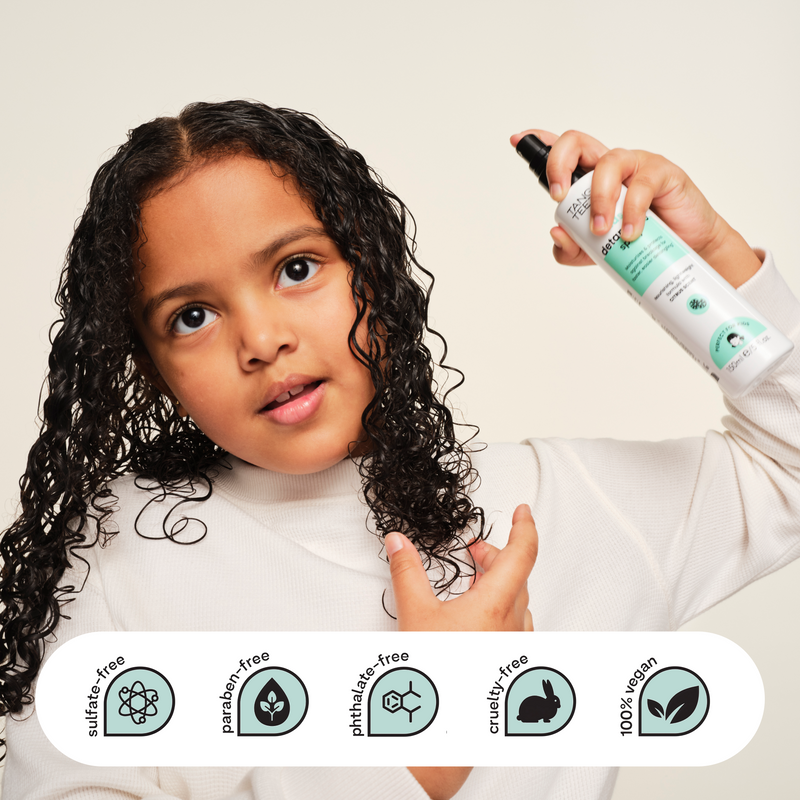
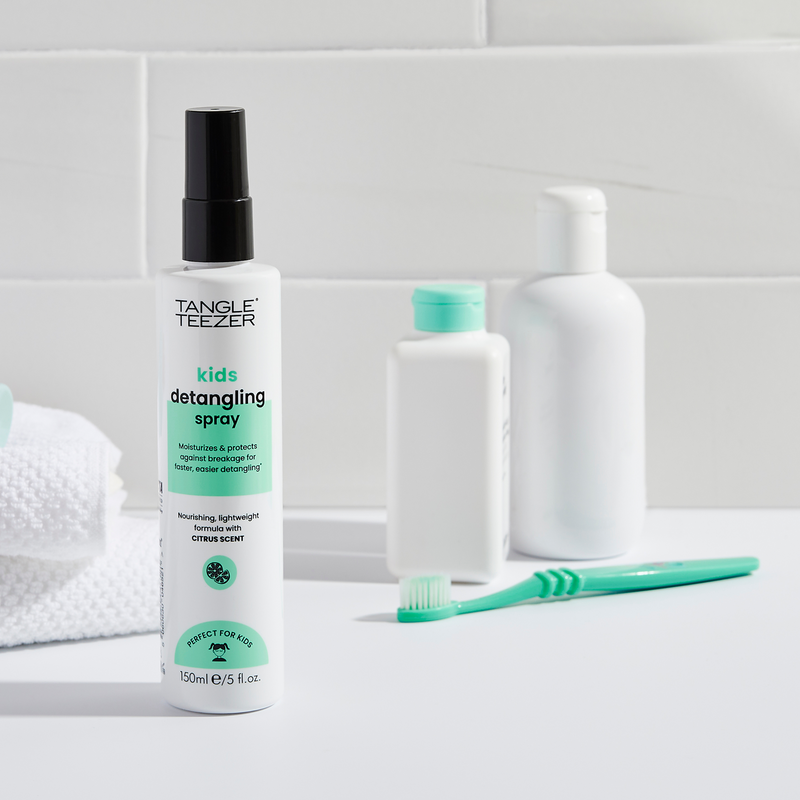
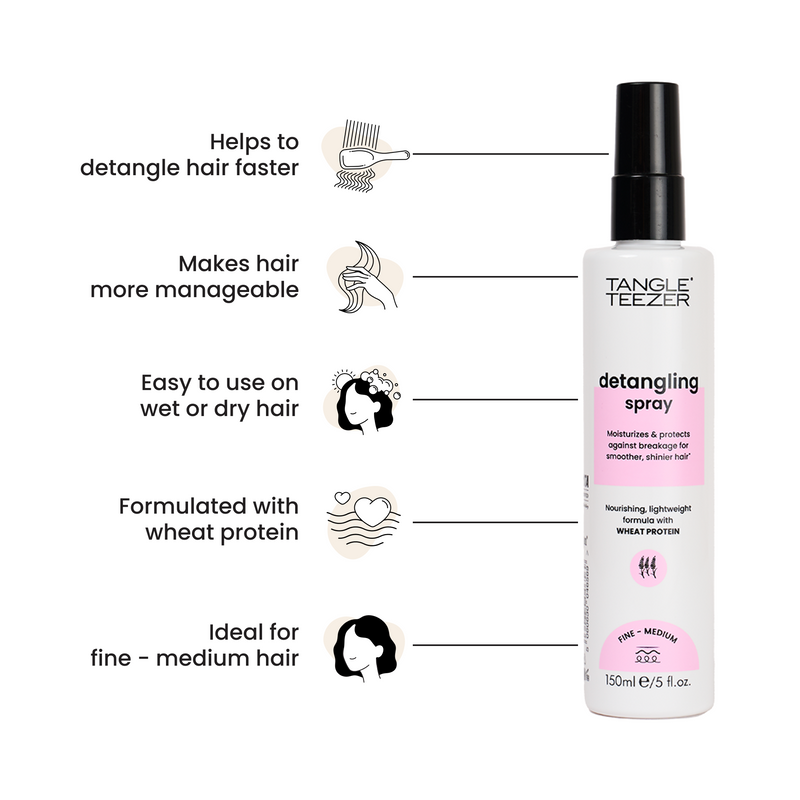
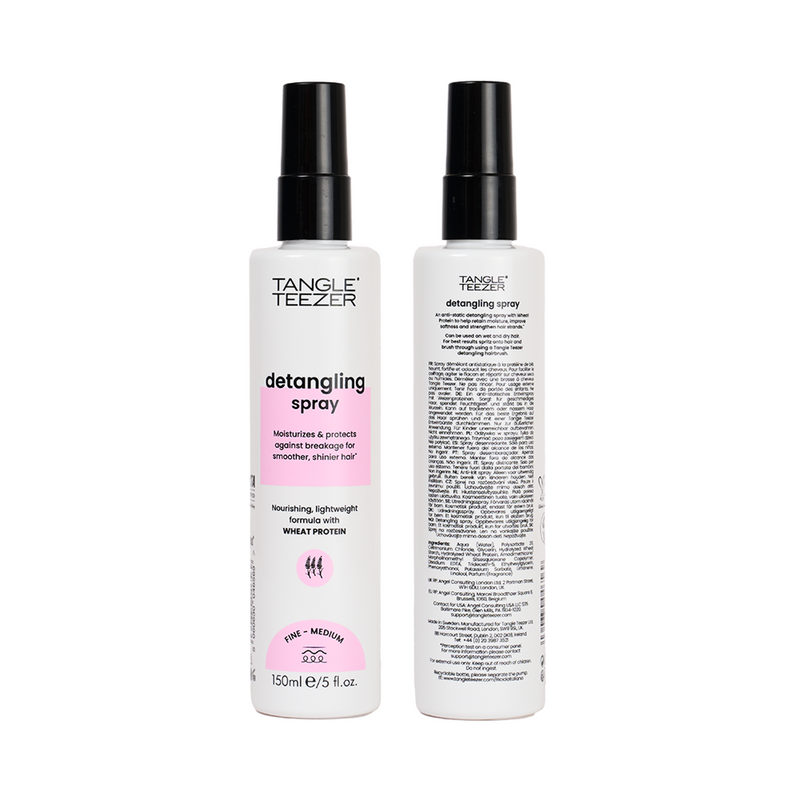
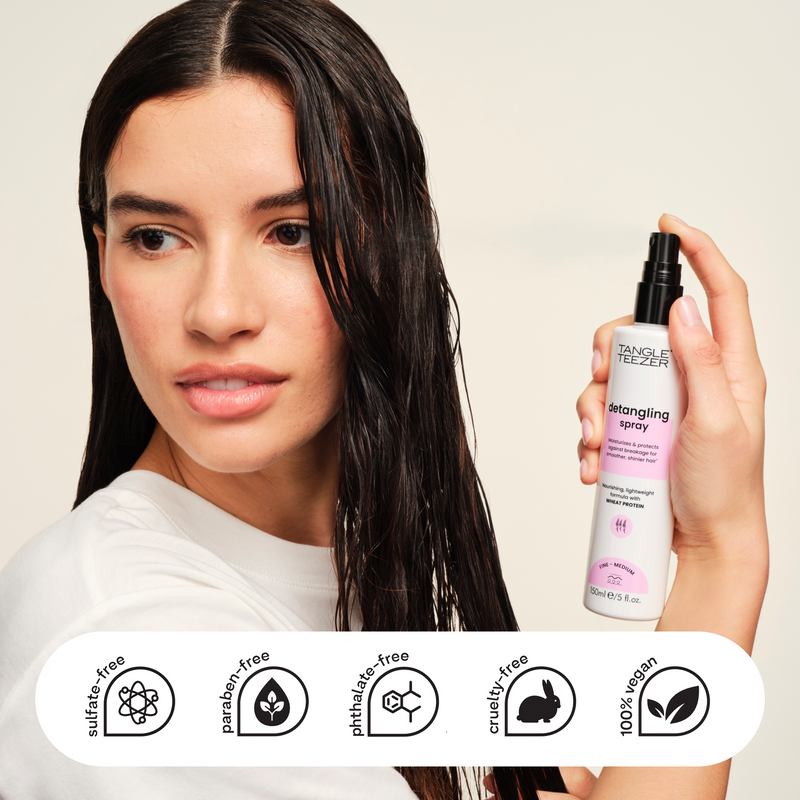
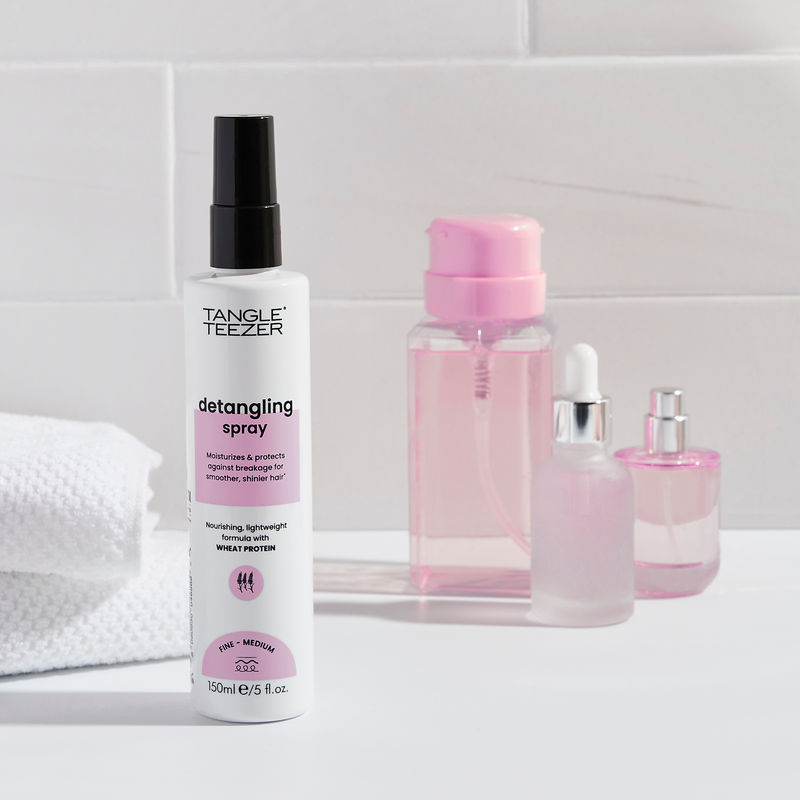
- Detangling on dry hair. Use a Detangling Spray, or detangle your hair when it’s wet to help your hairbrush slip through and ease knots away.
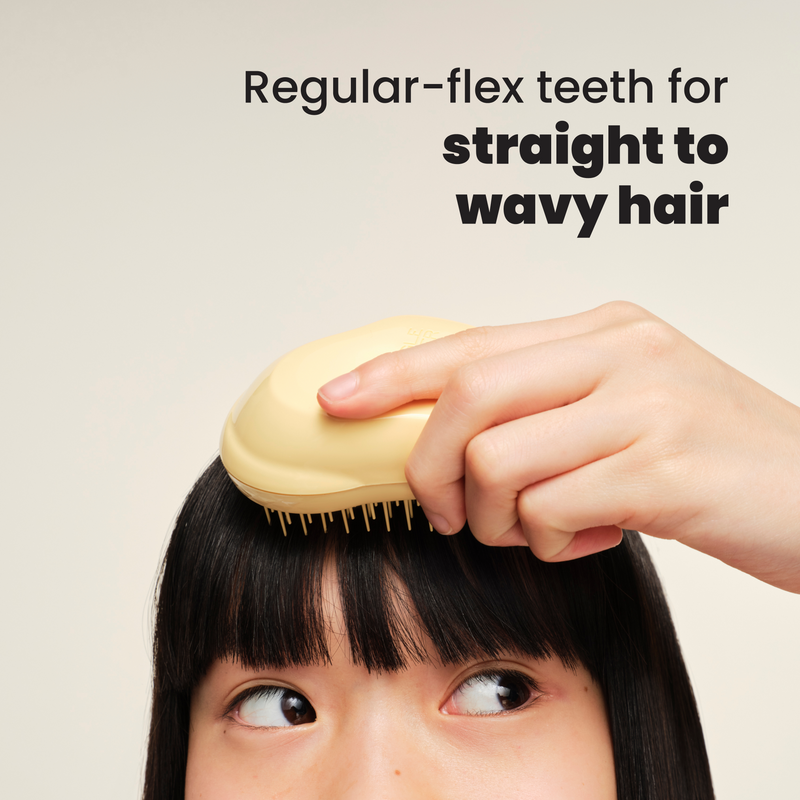
How do you detangle wet hair?
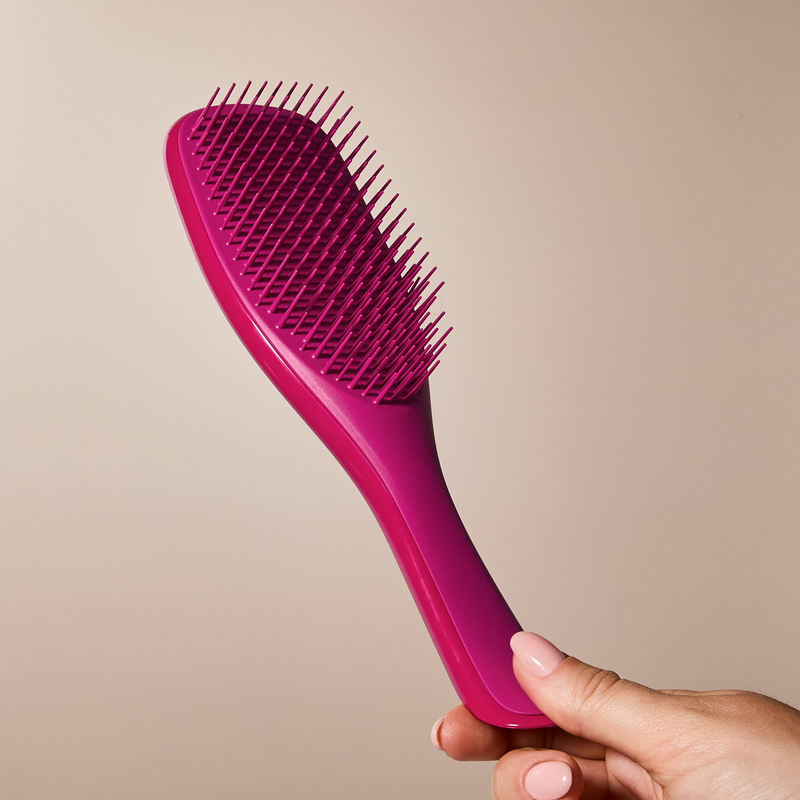
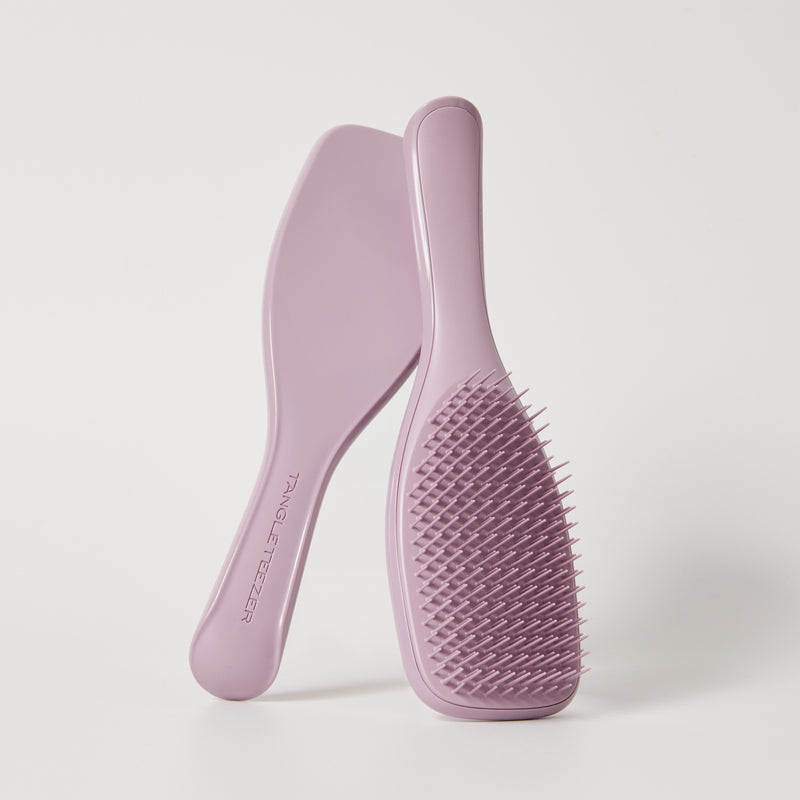
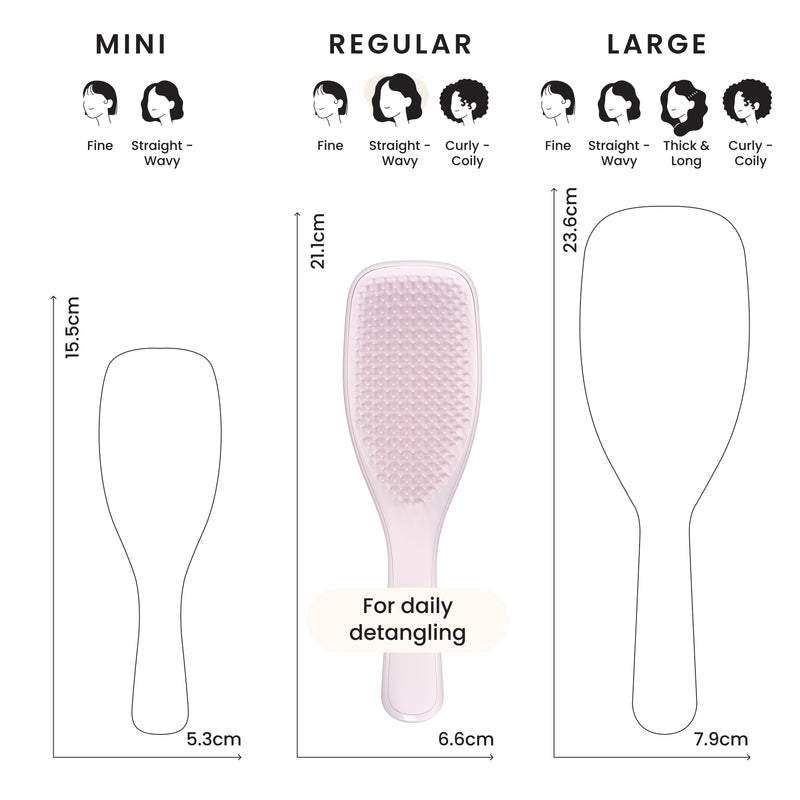
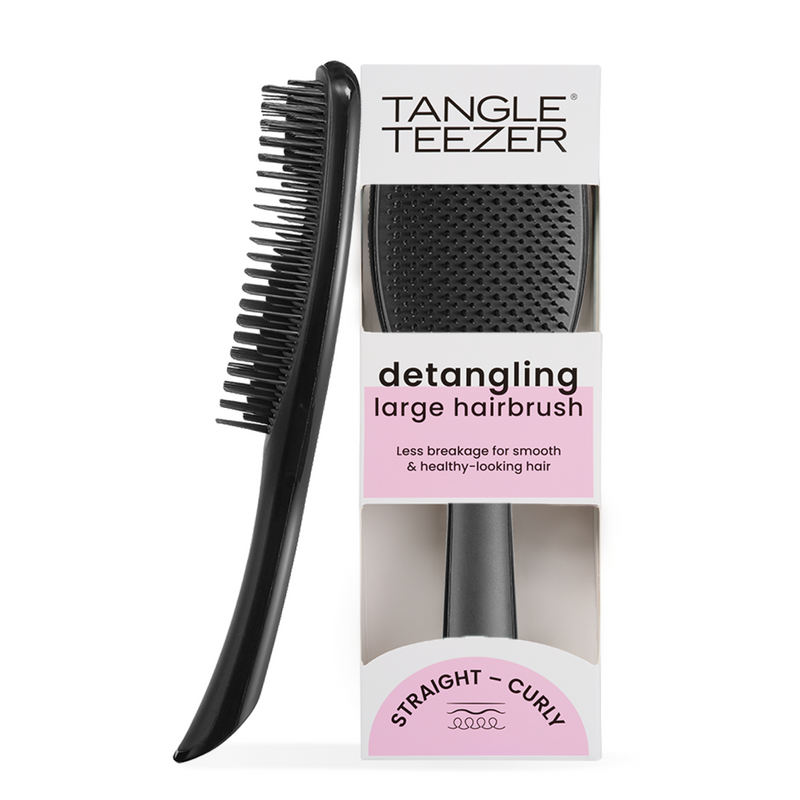
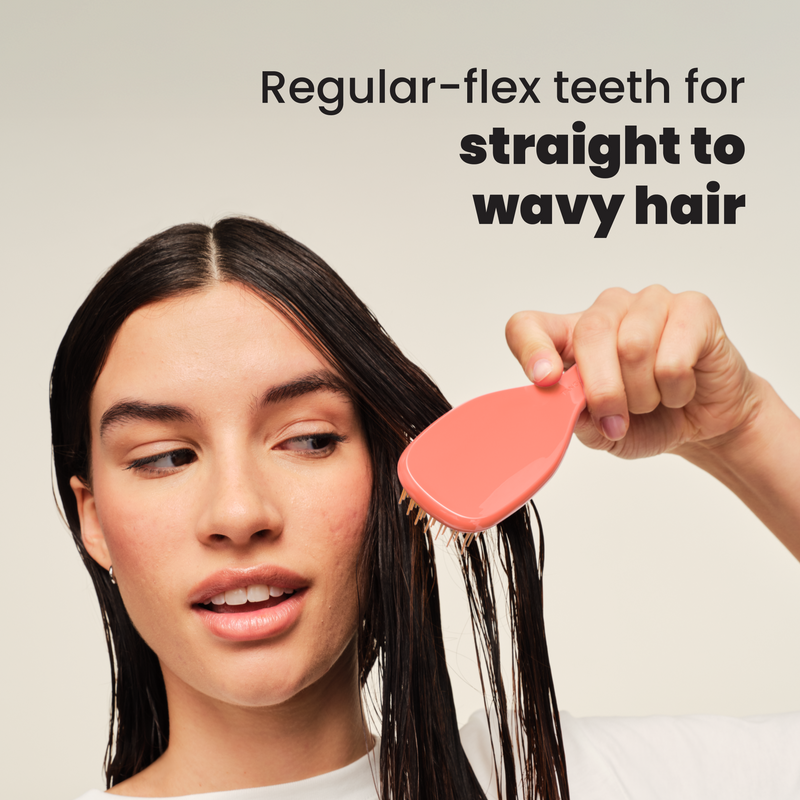
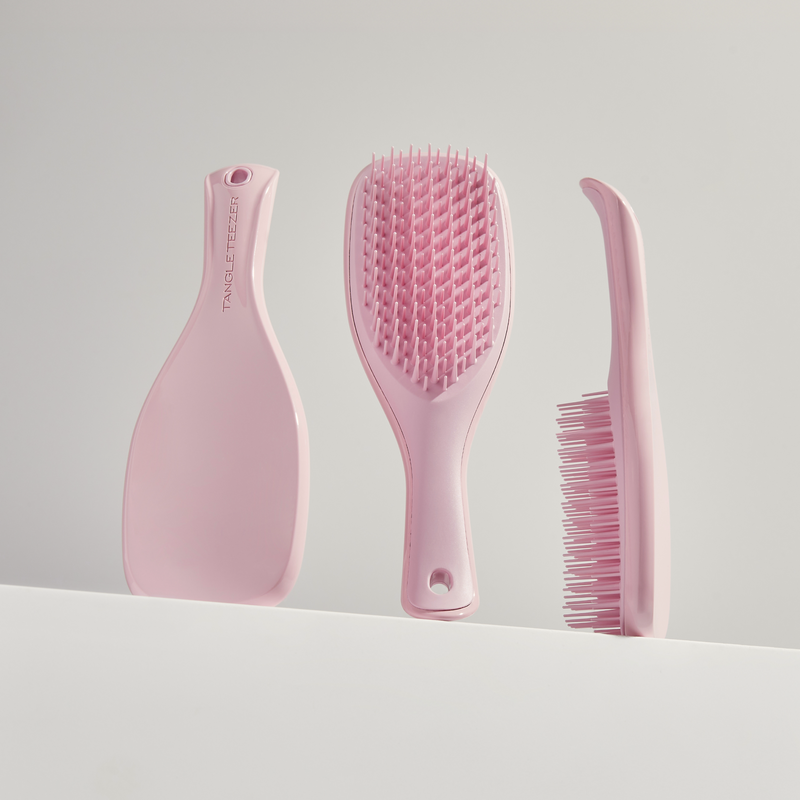
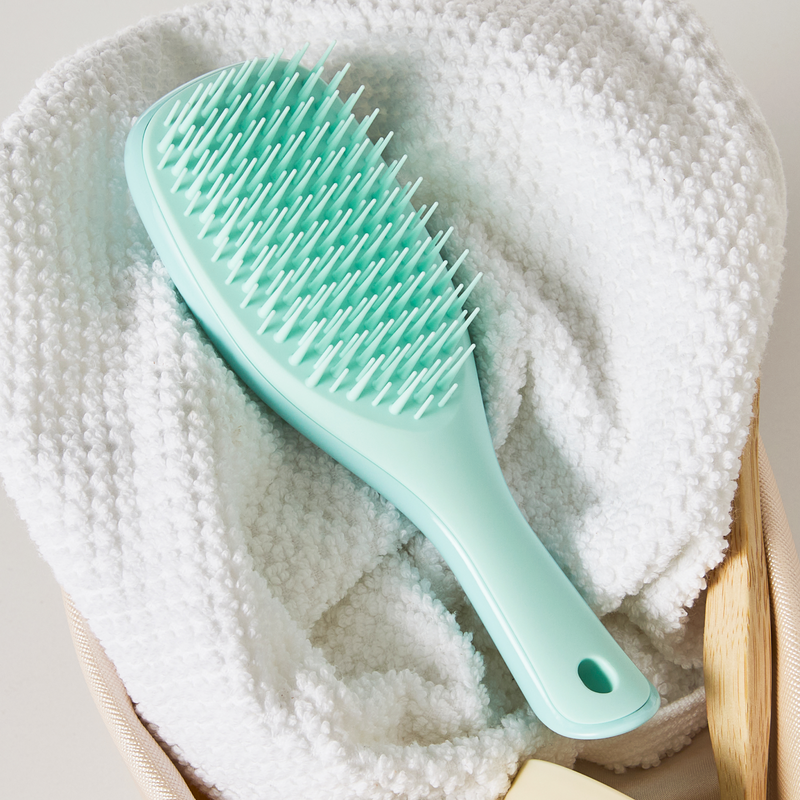
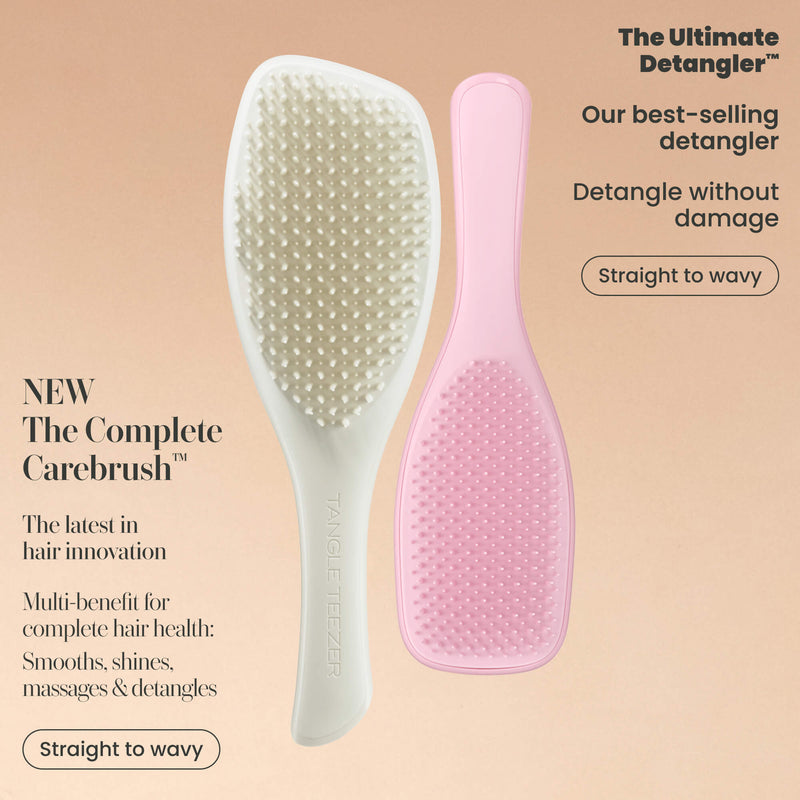
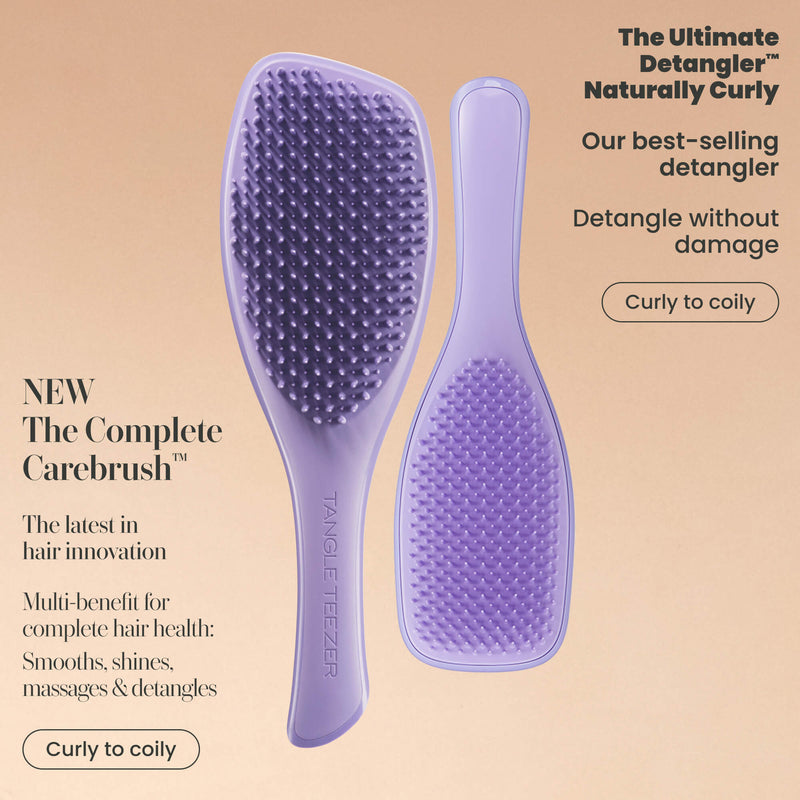
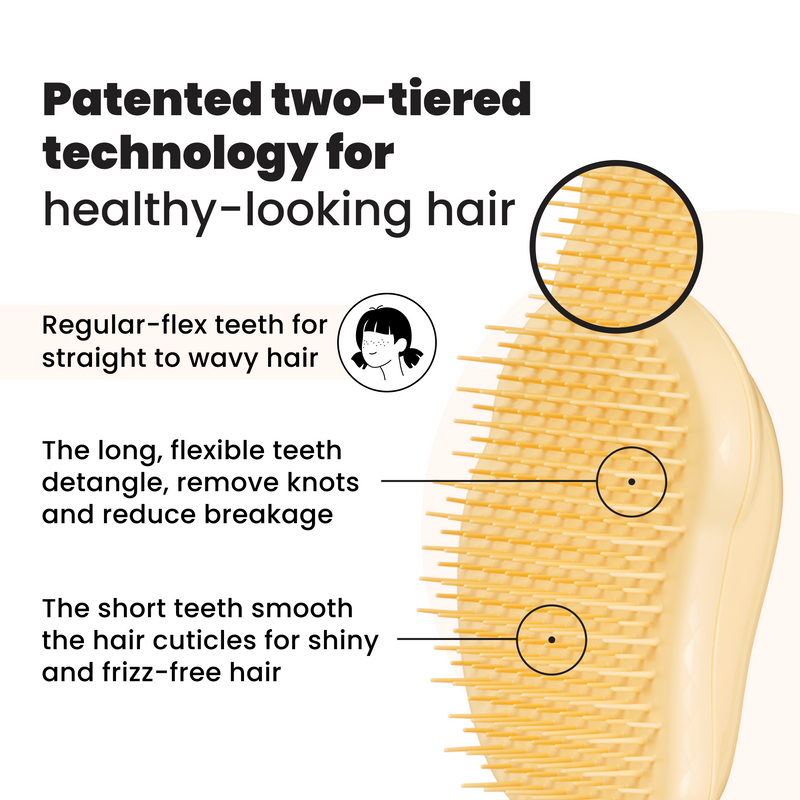
Wet hair is more fragile, so you need to be gentle when detangling. The best options are to comb through with your fingers, or use a wide-toothed comb or detangling brush - like our own Ultimate Detangler.
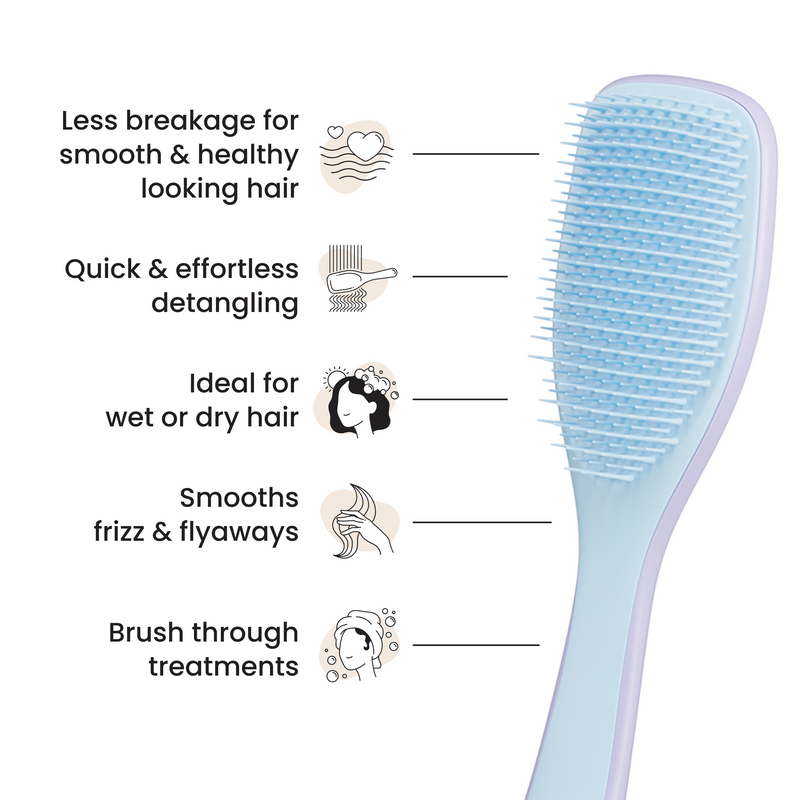
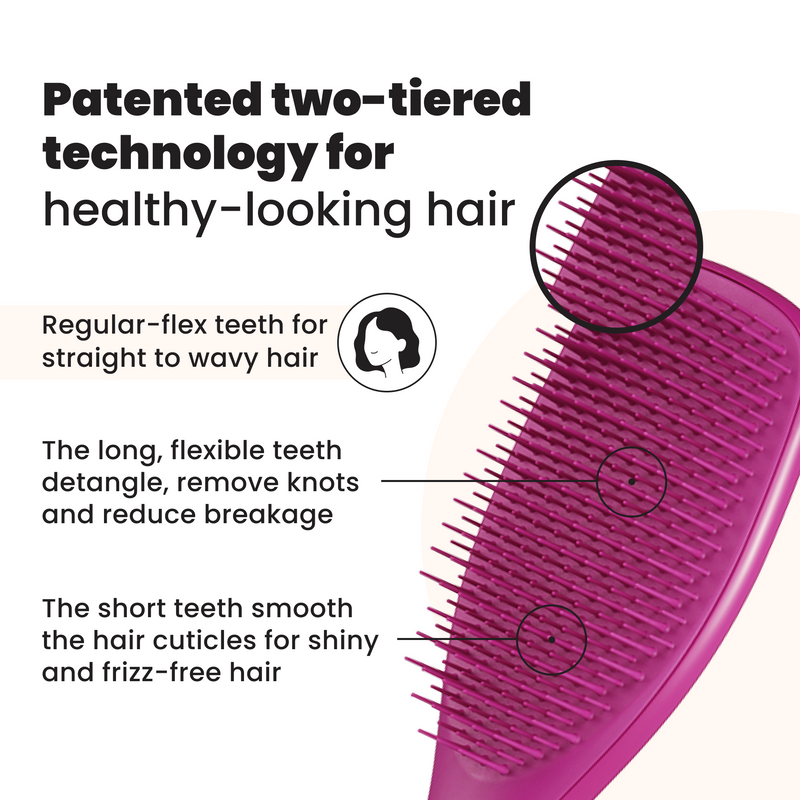
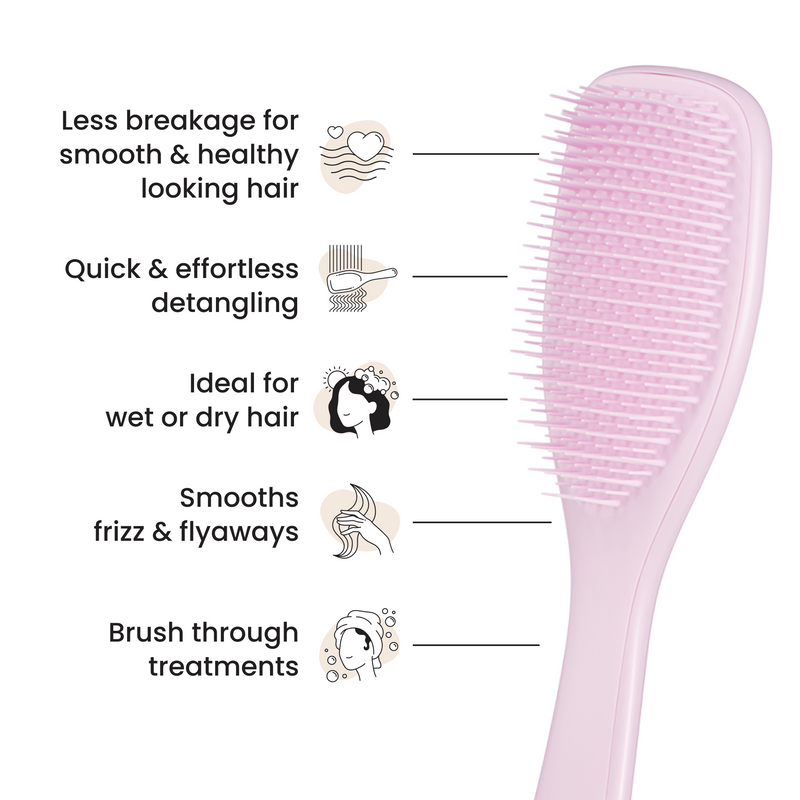
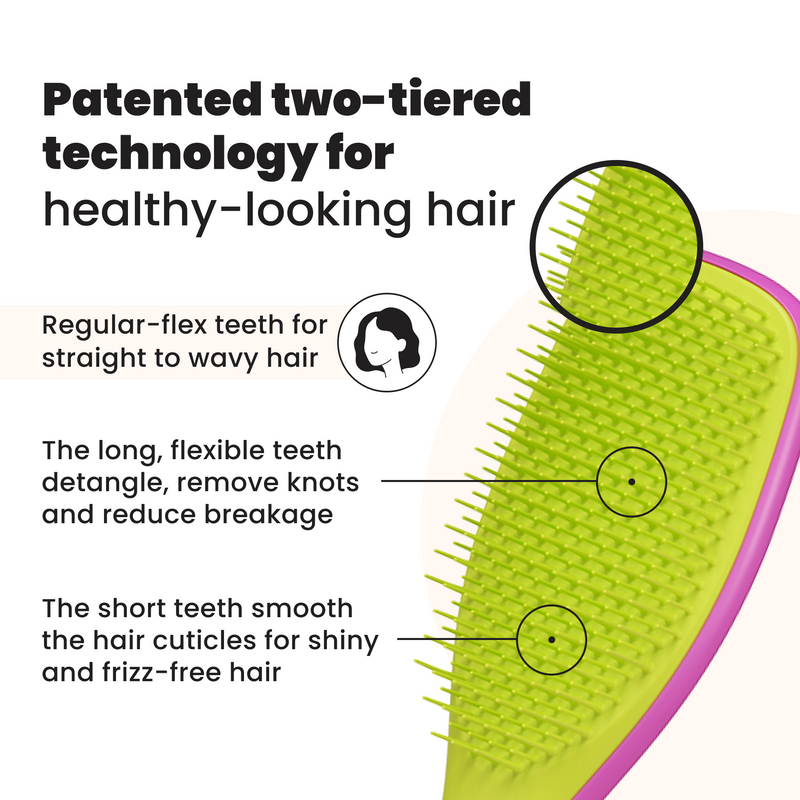
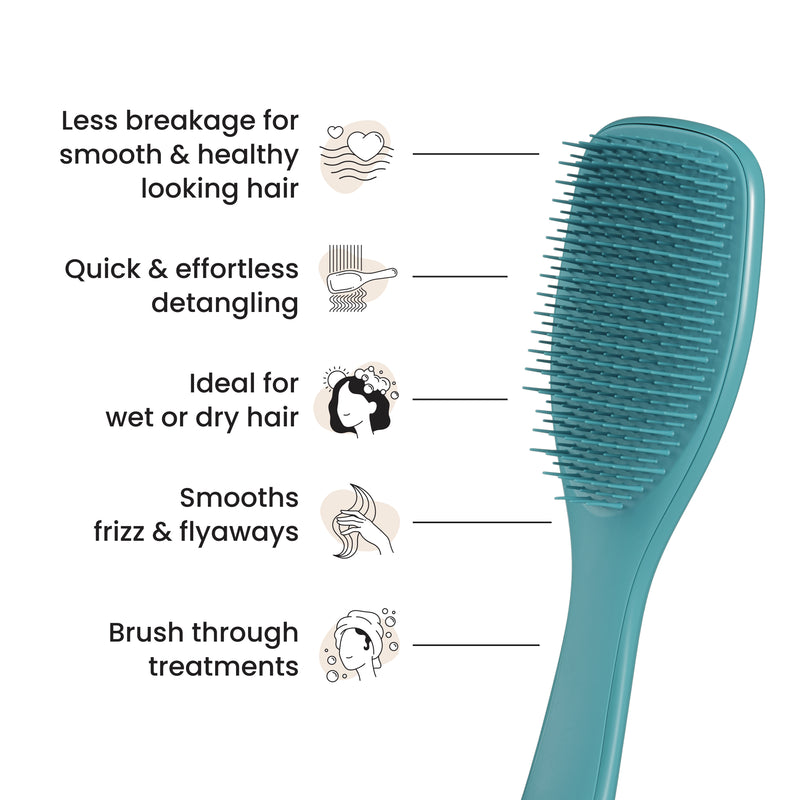
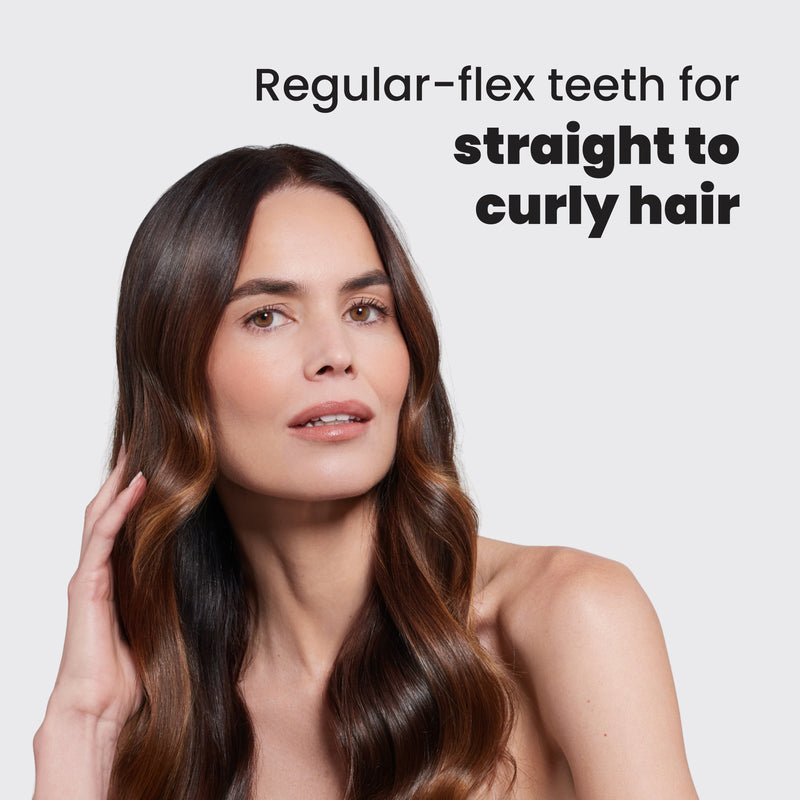
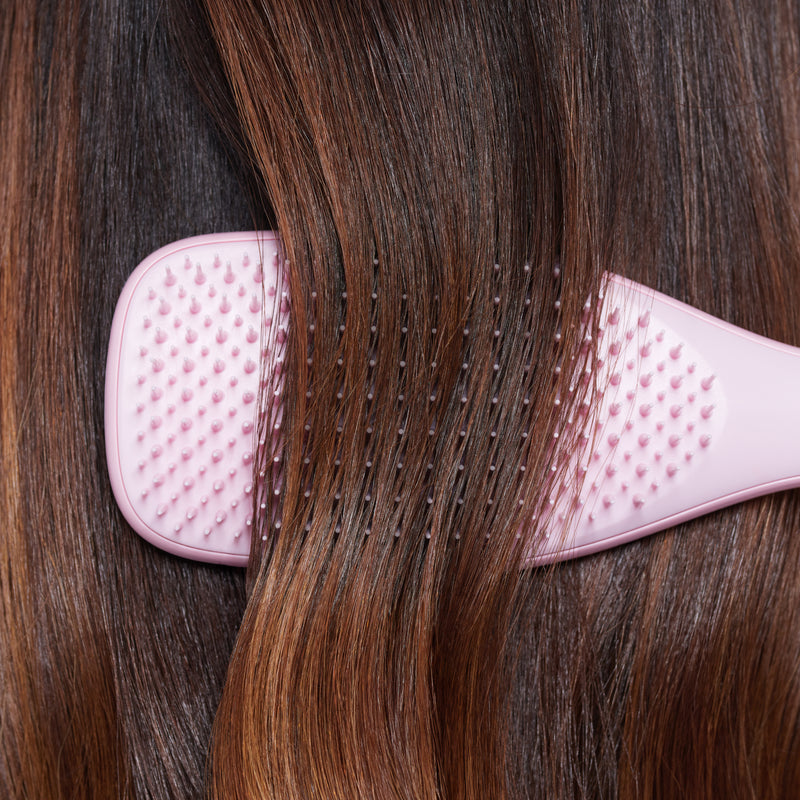
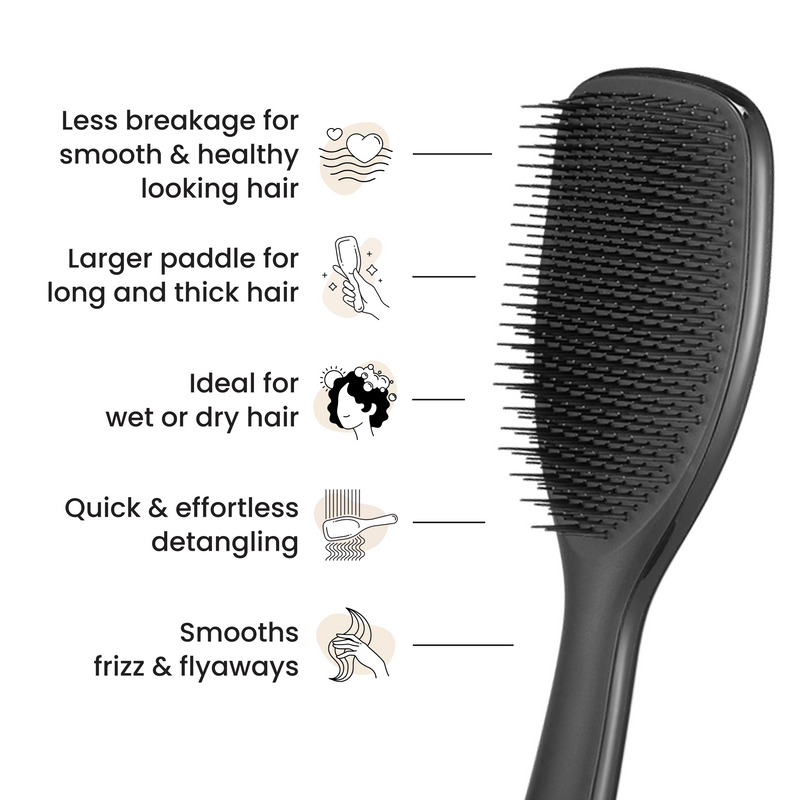
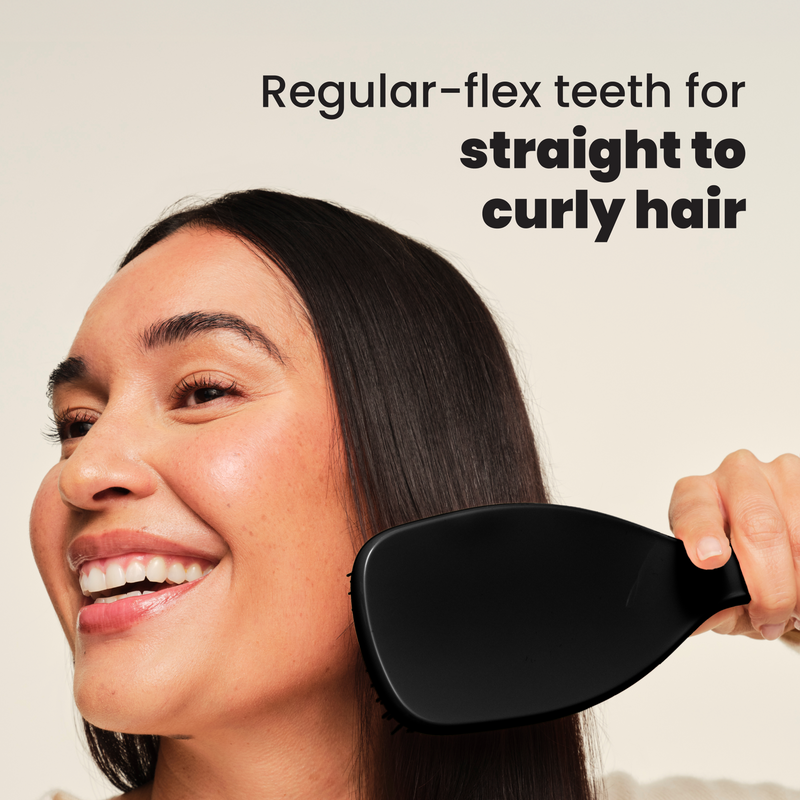
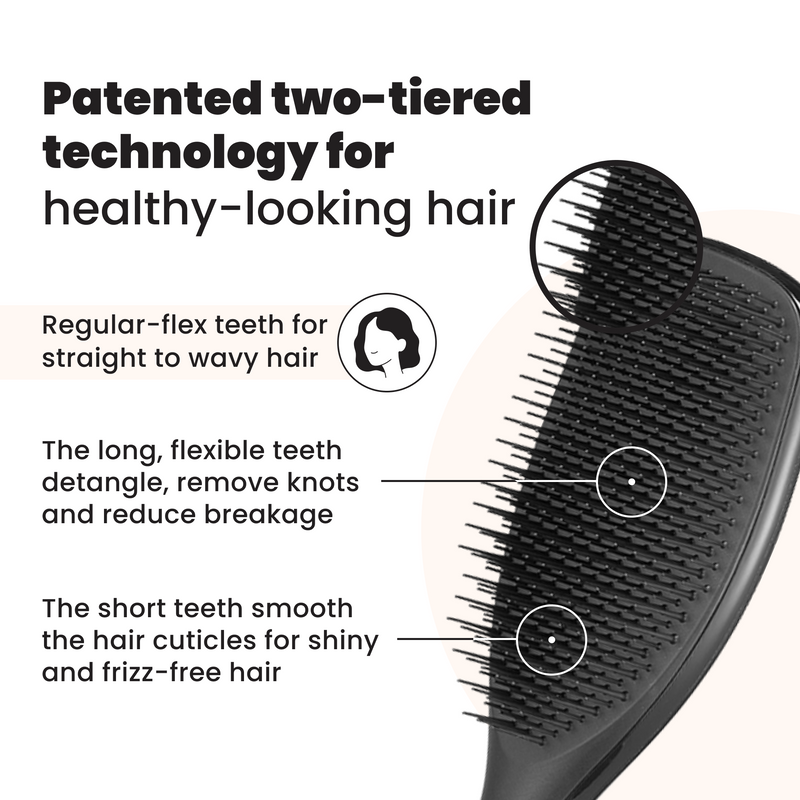
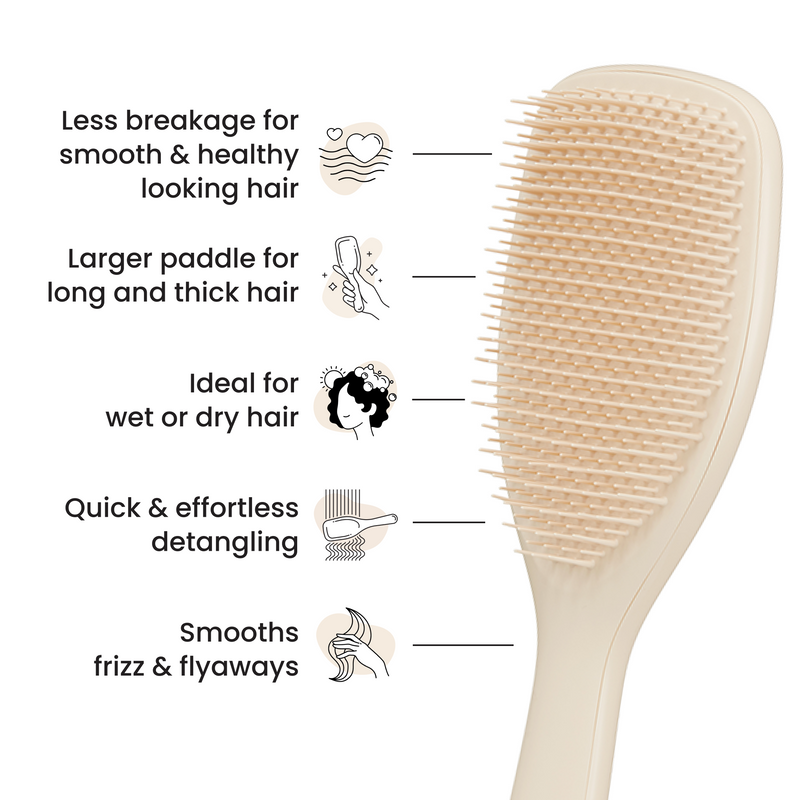
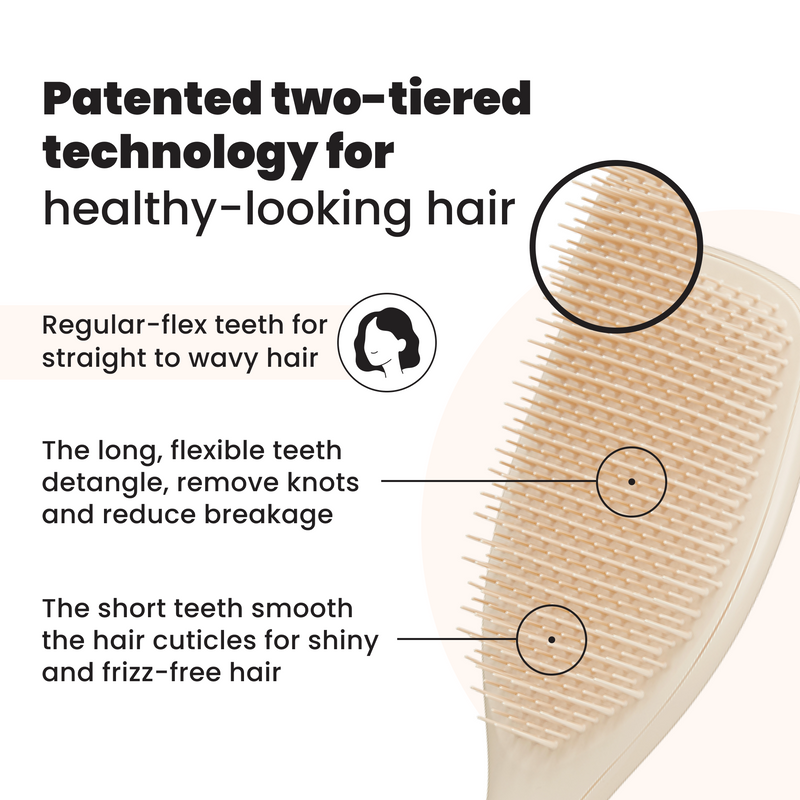
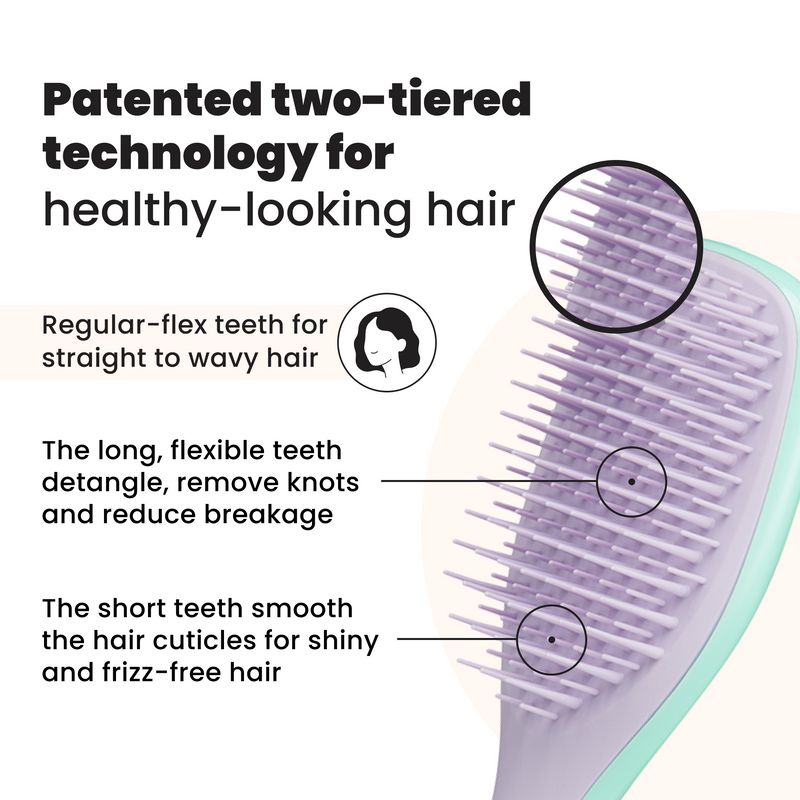
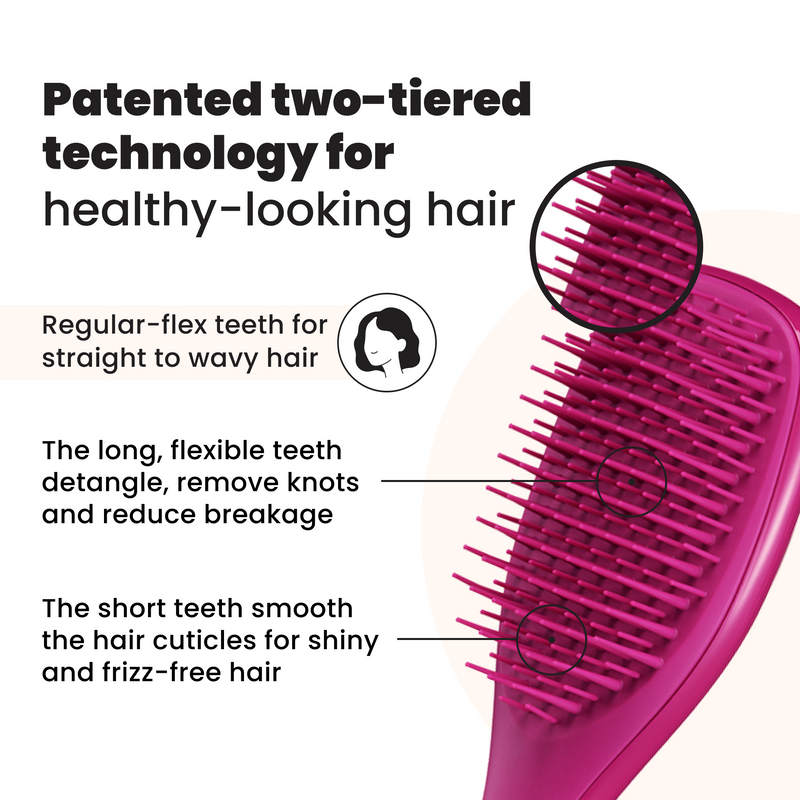
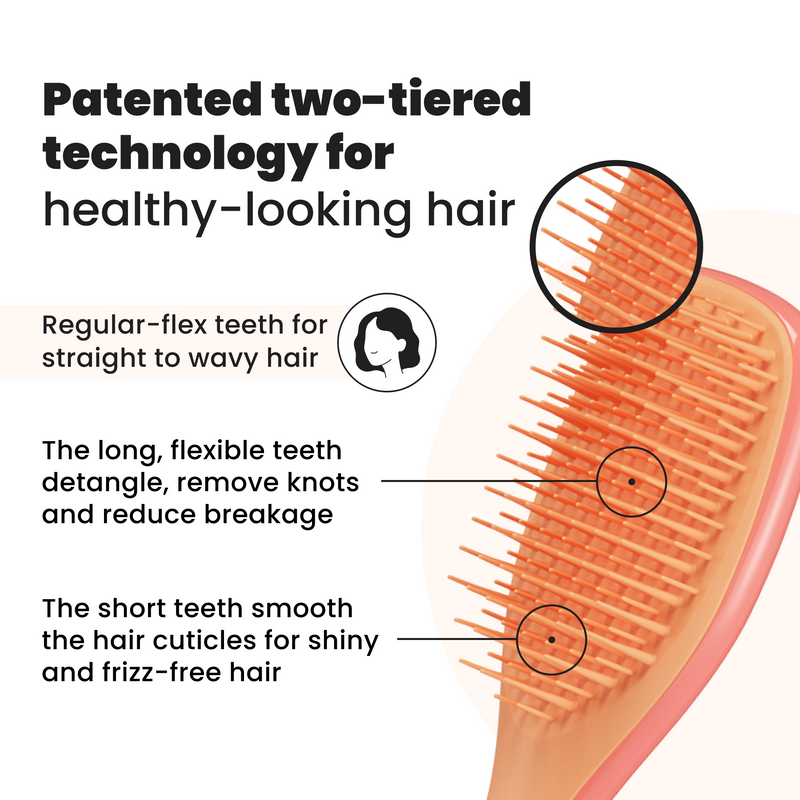
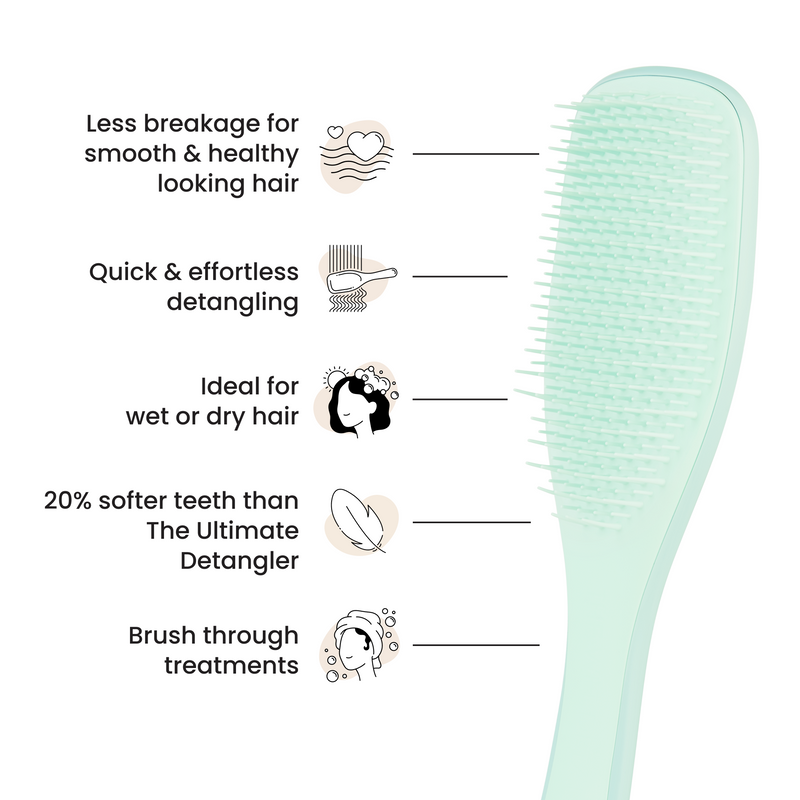
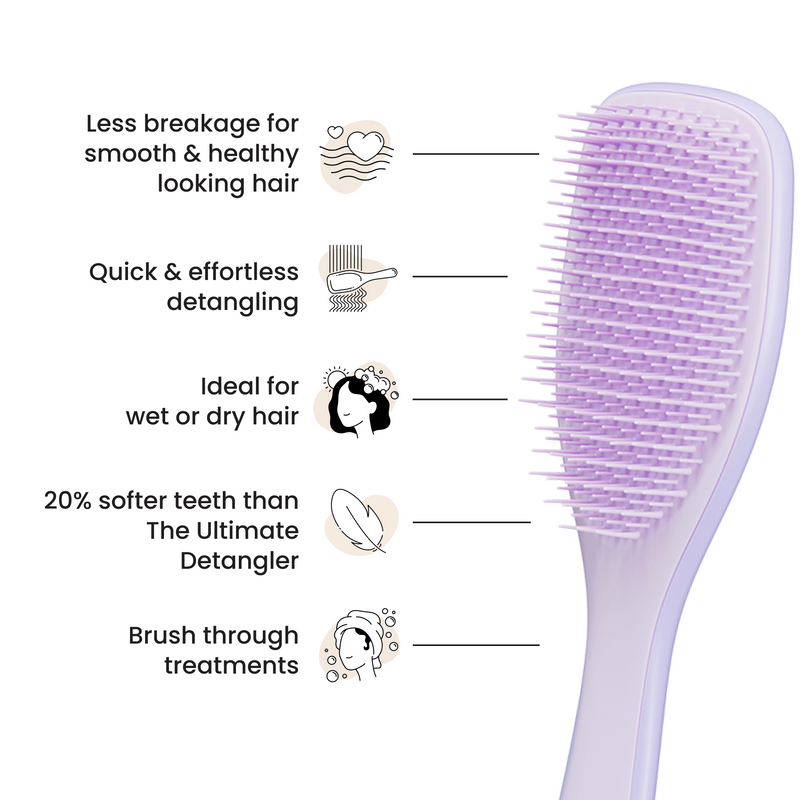
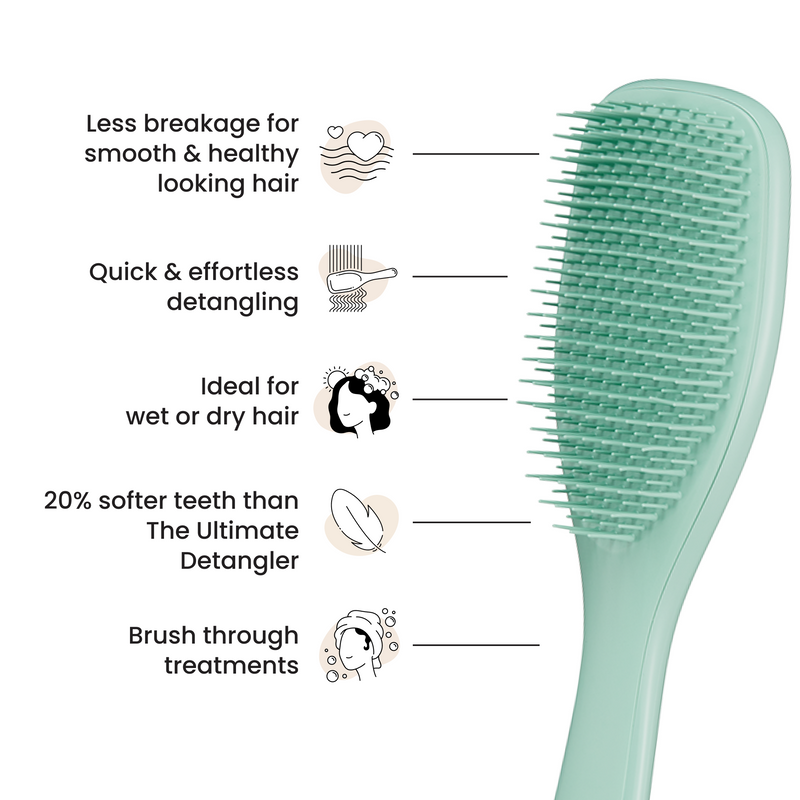
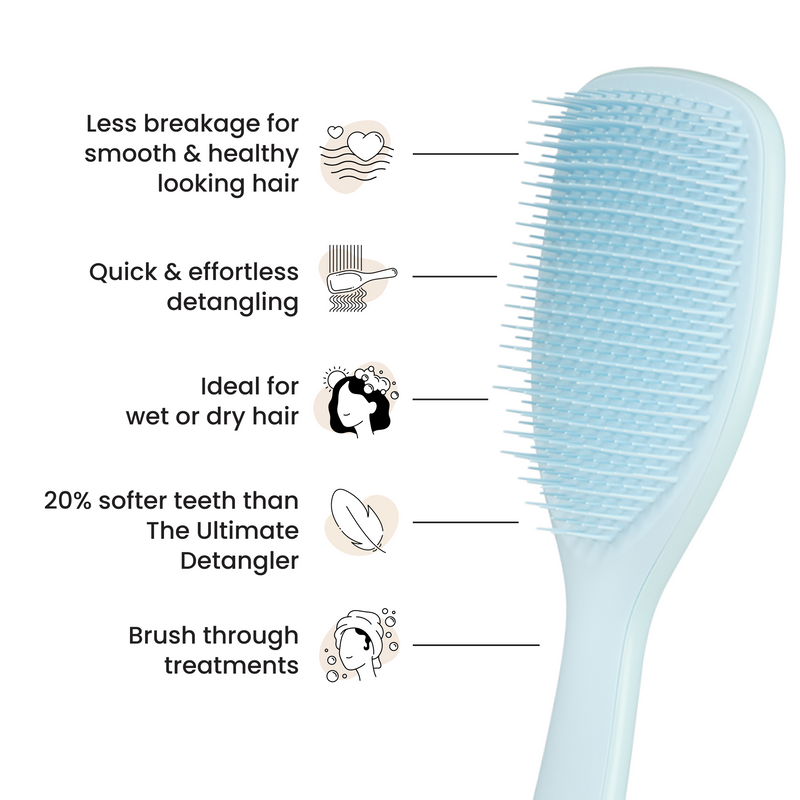
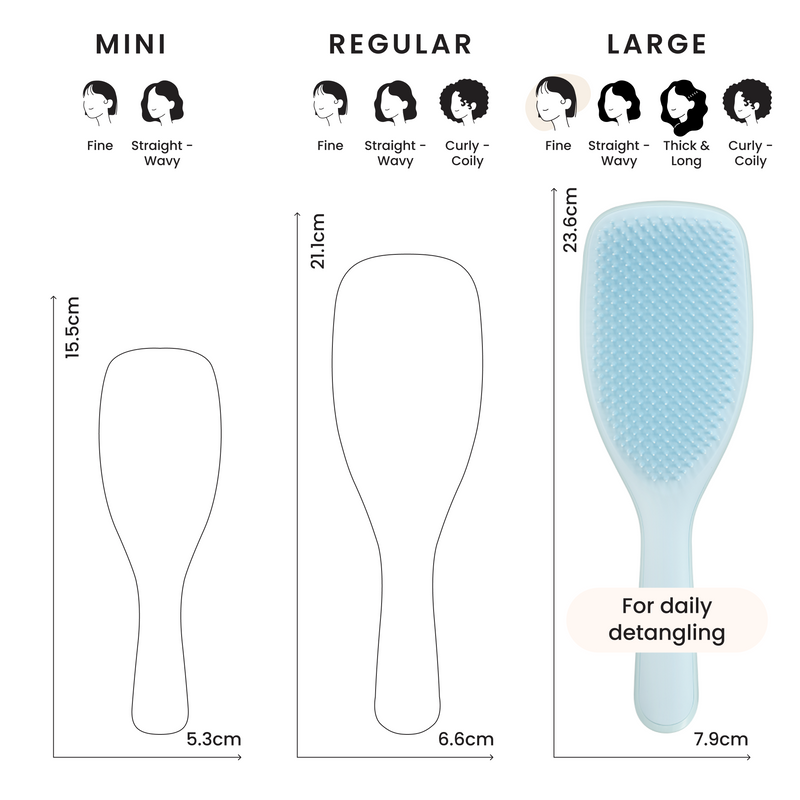
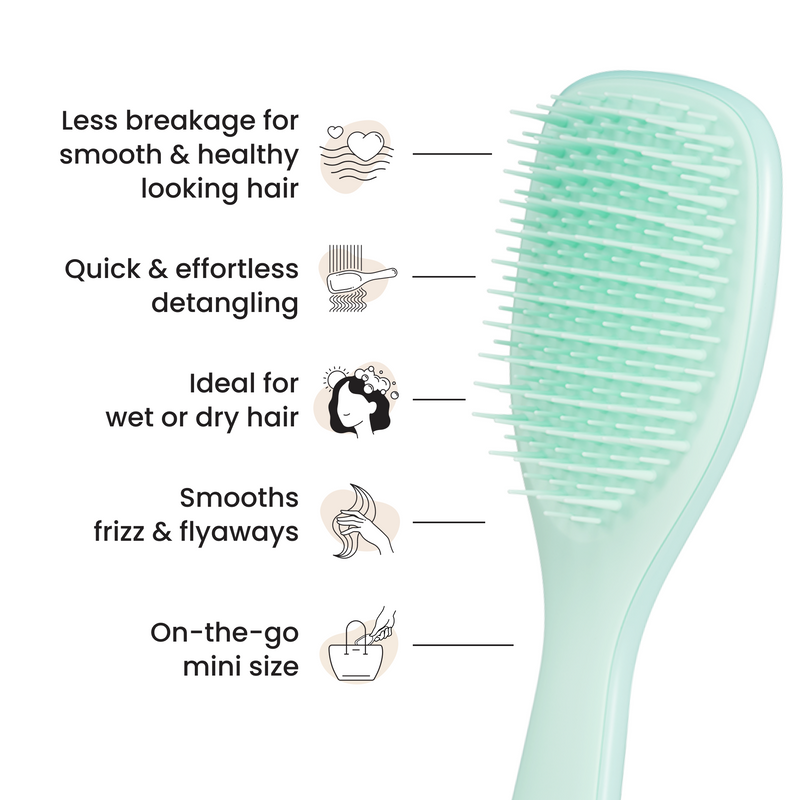
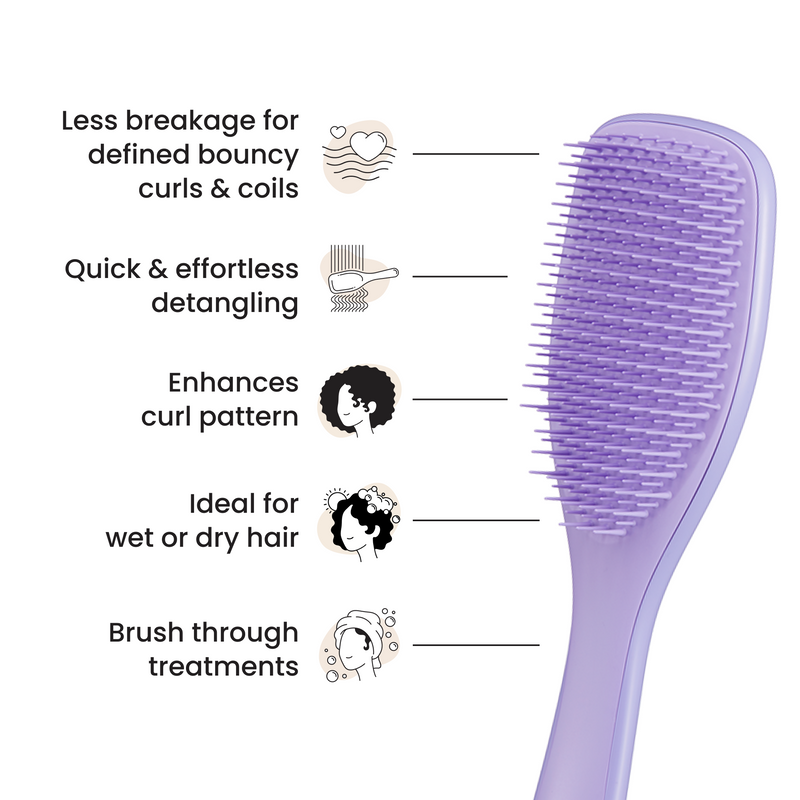
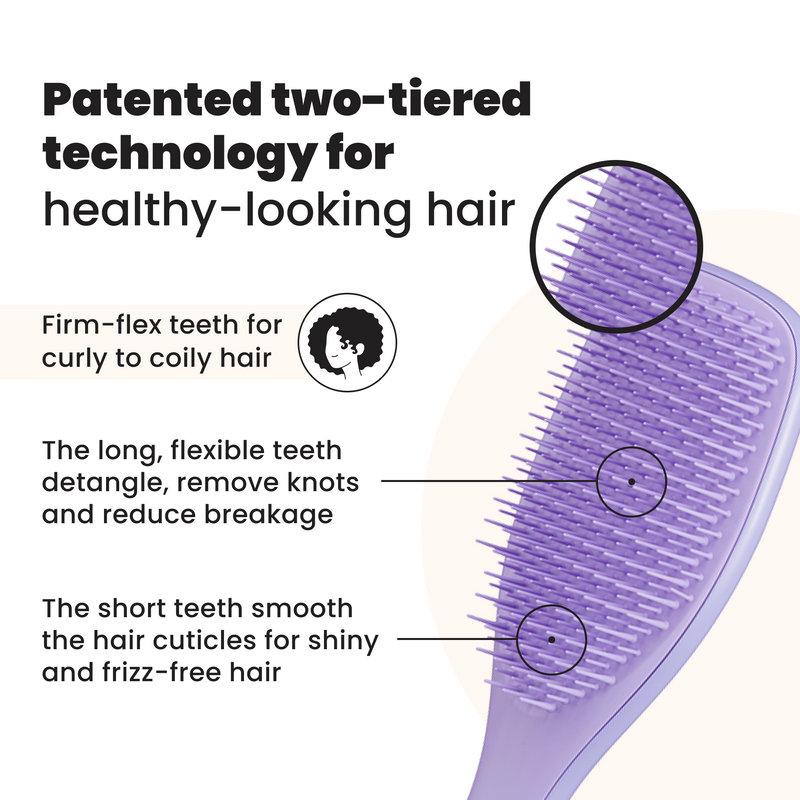
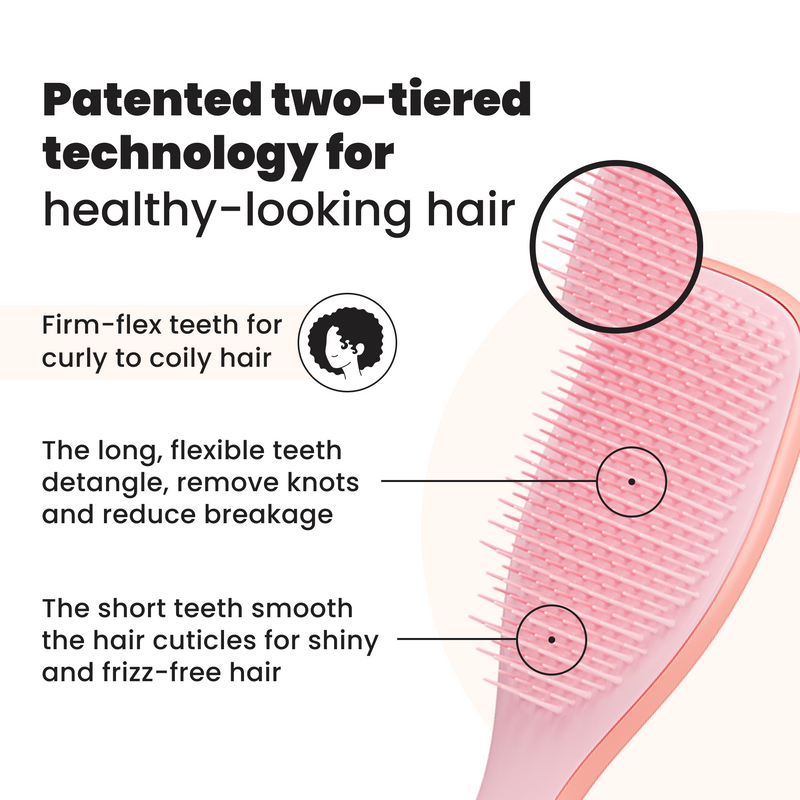
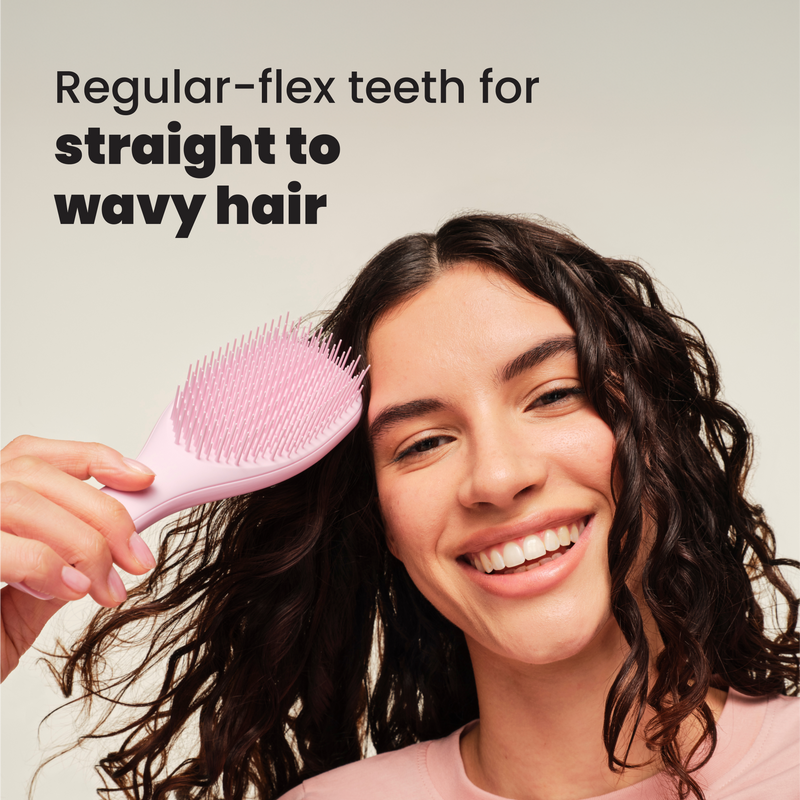
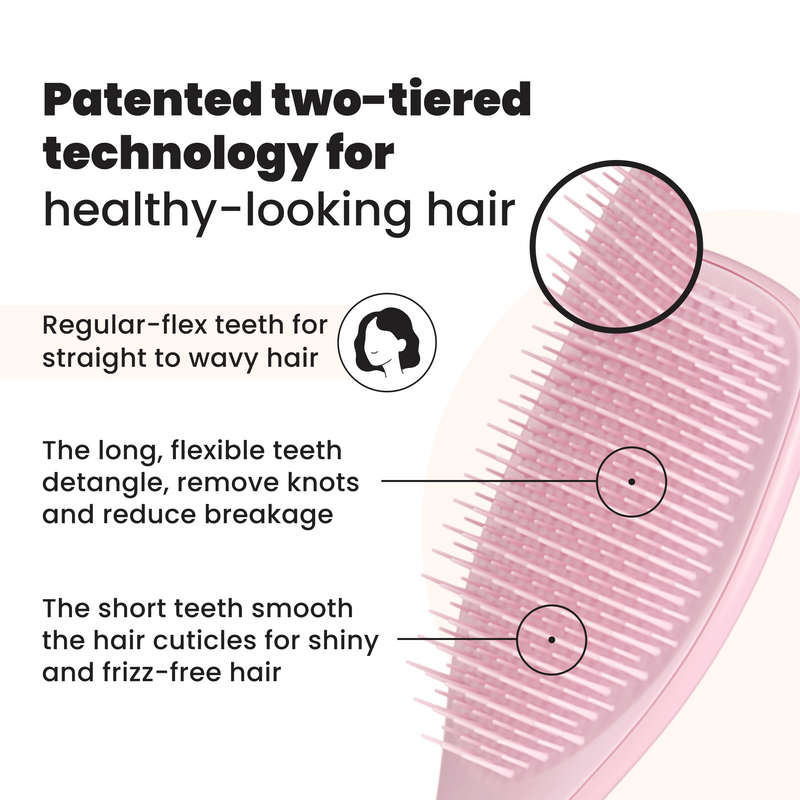
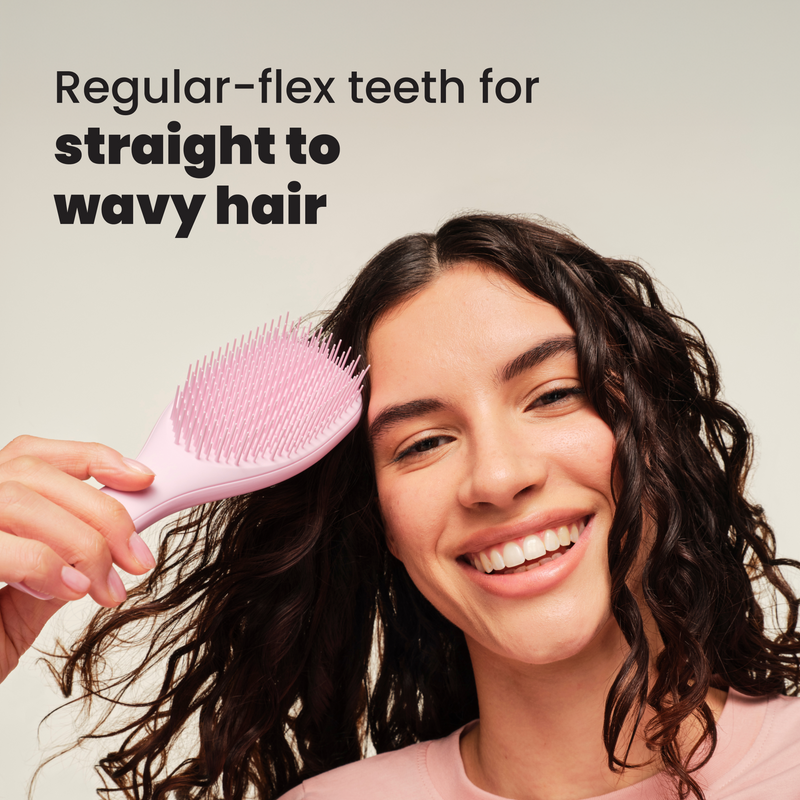
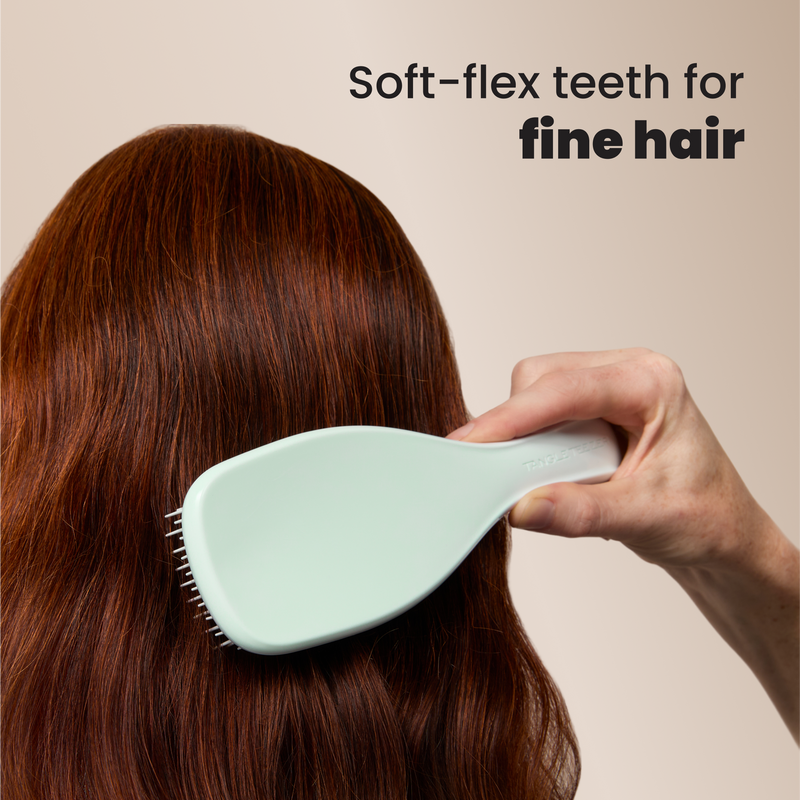
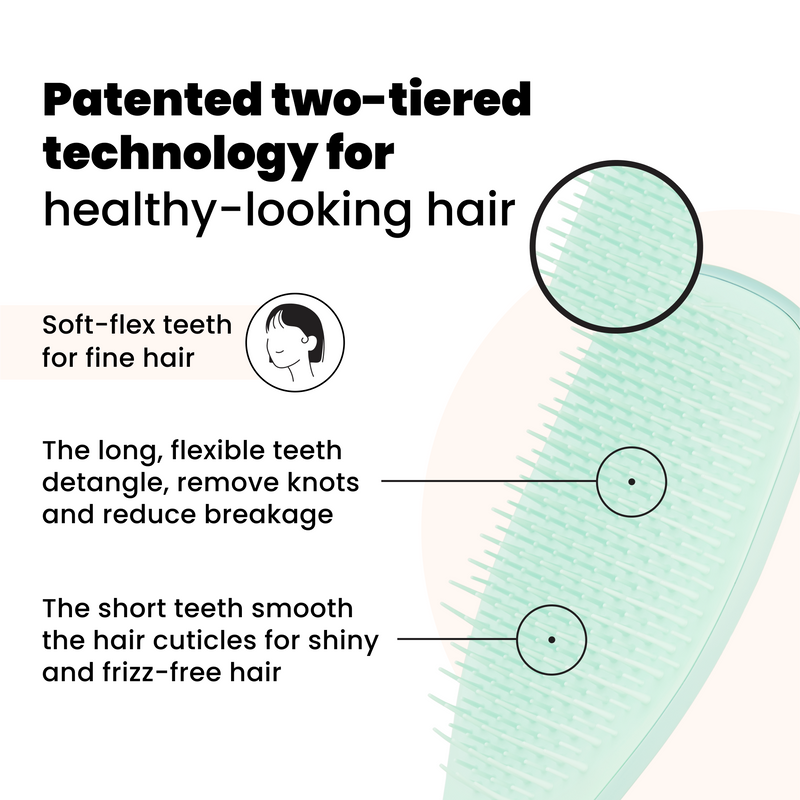
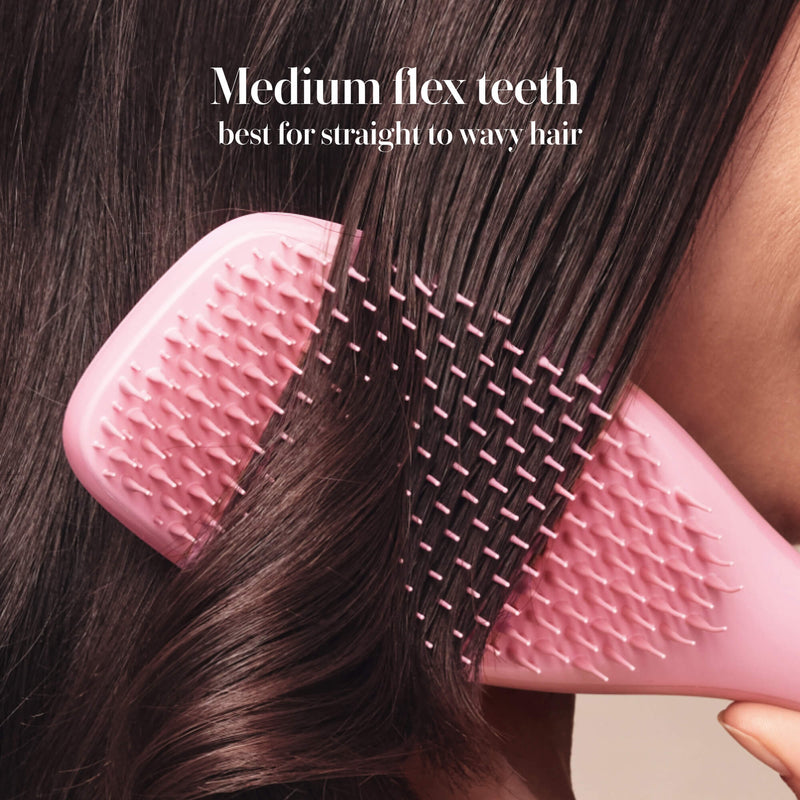
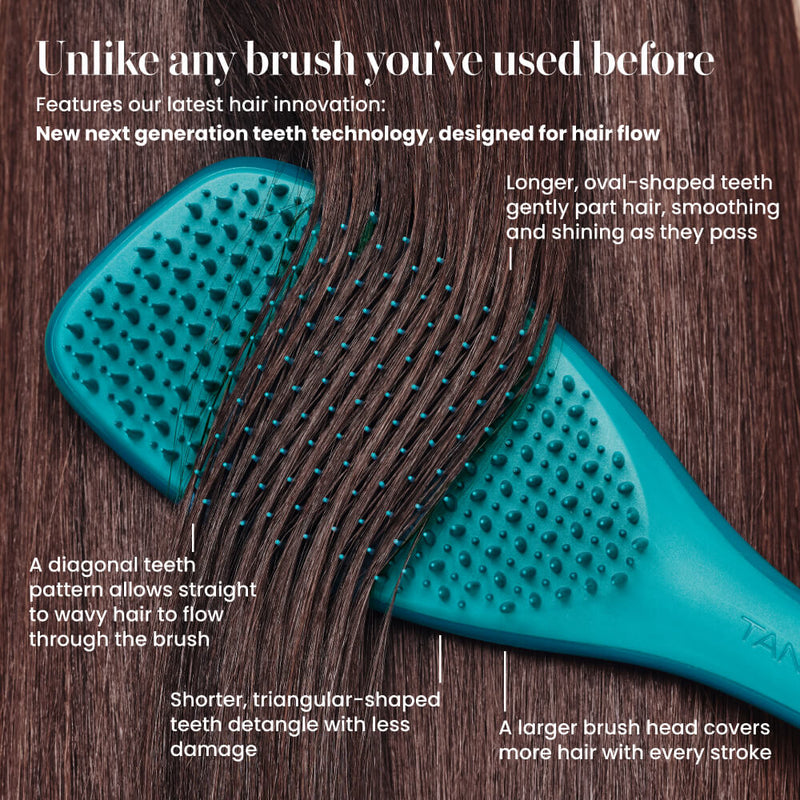
We’re not just tooting our own horn here. The Ultimate Detangler has been designed for wet or dry hair, with flexible, well-spaced teeth to both protect and detangle.
You can learn more about How to Brush Wet Hair with our guide…
What are the best techniques to detangle hair?
As we’ve already said, it’s easy to make mistakes when you’re detangling hair. For the best techniques, we suggest:
- Always starting from the bottom and working your way up to the roots.
- Using a high-quality detangling brush.
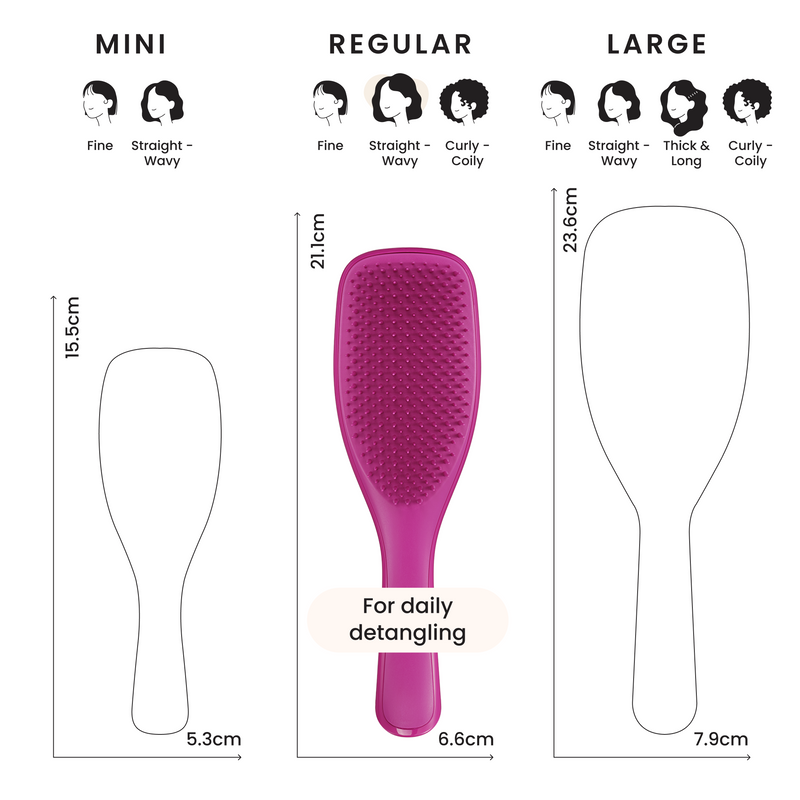
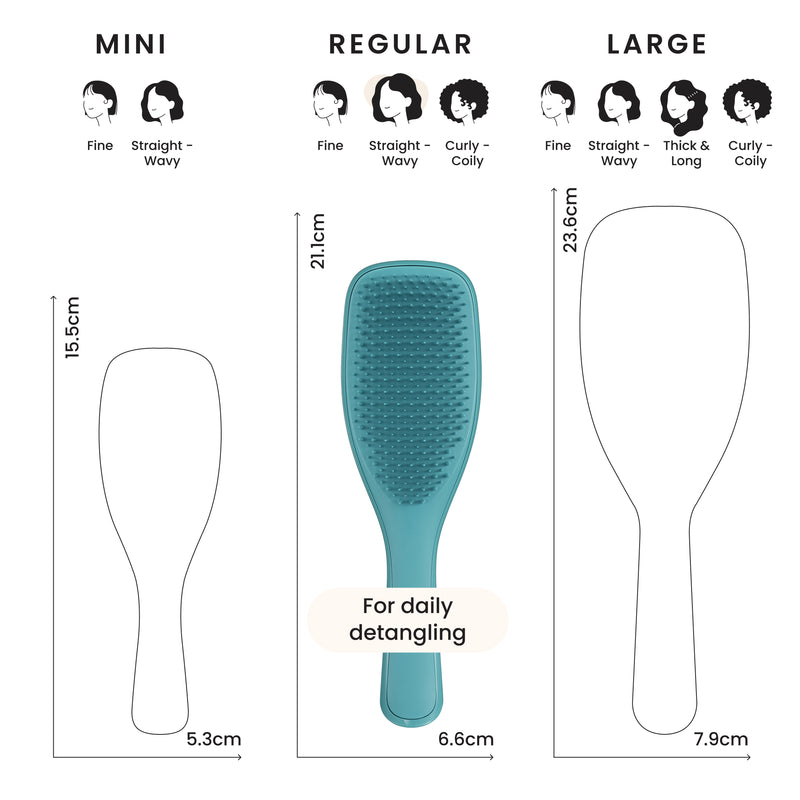
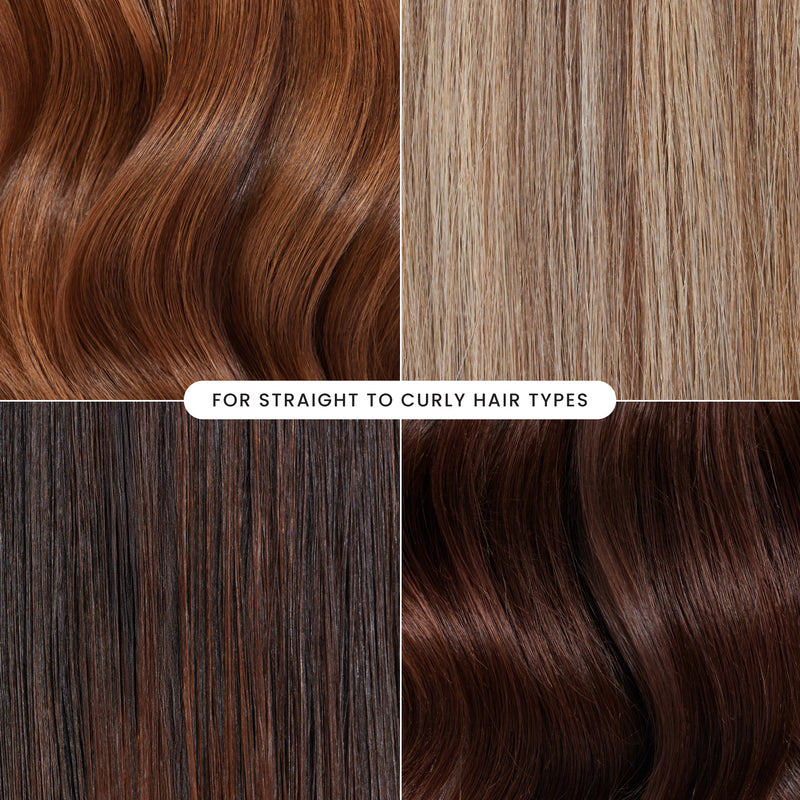
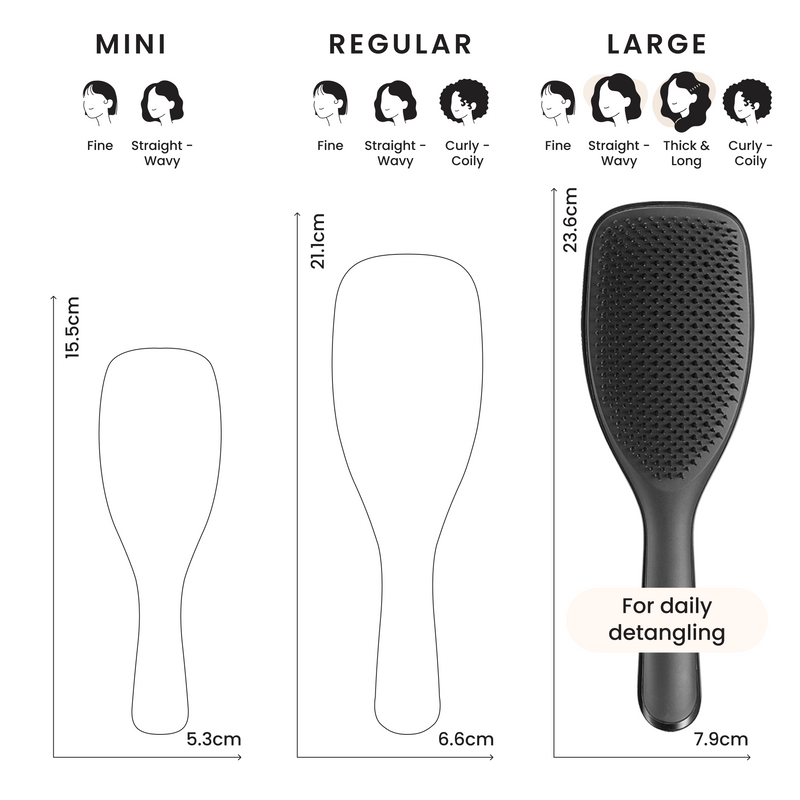
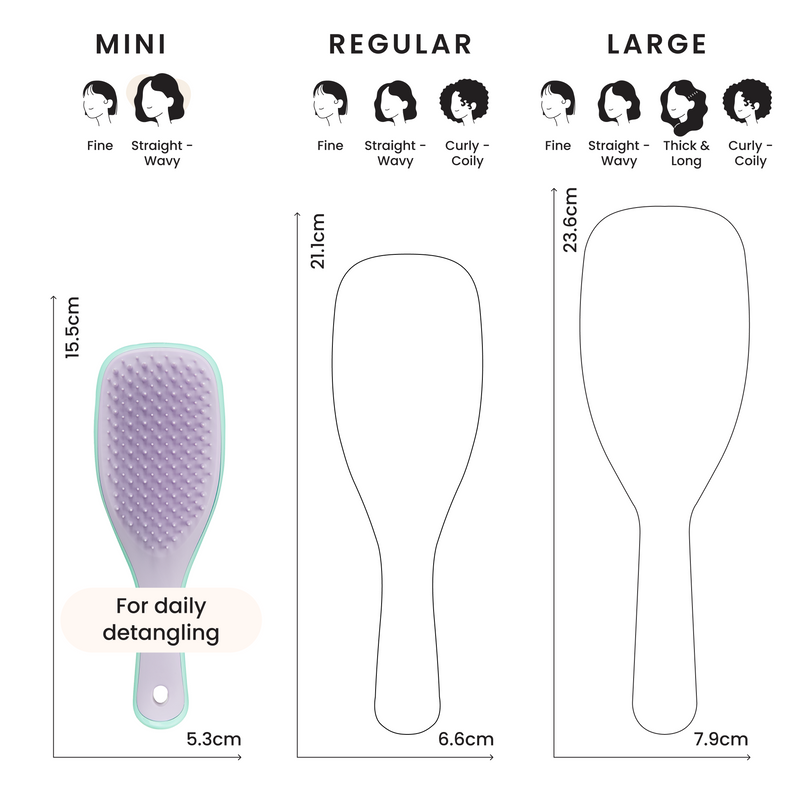
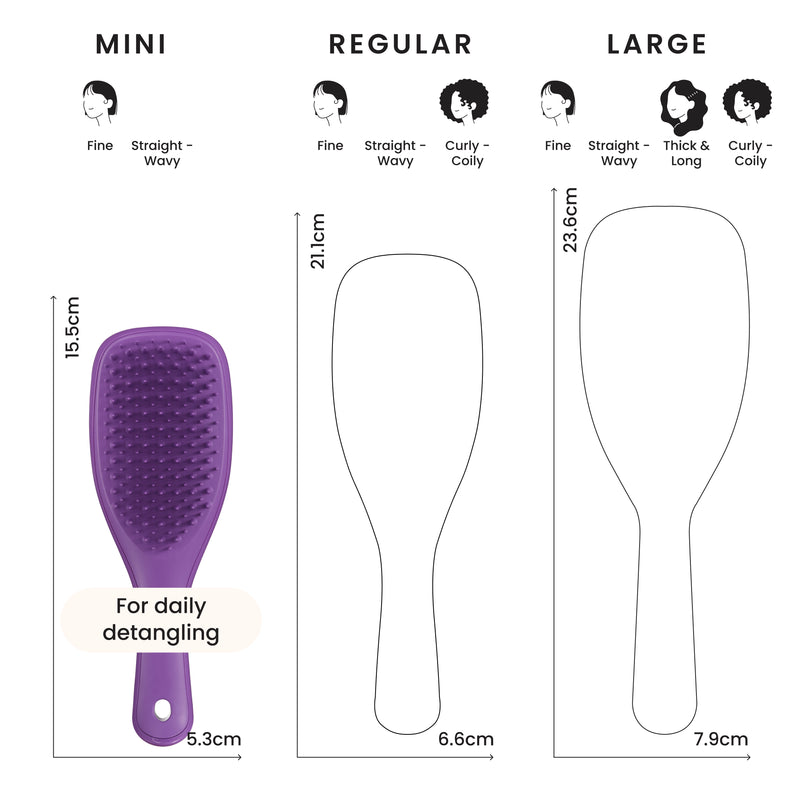
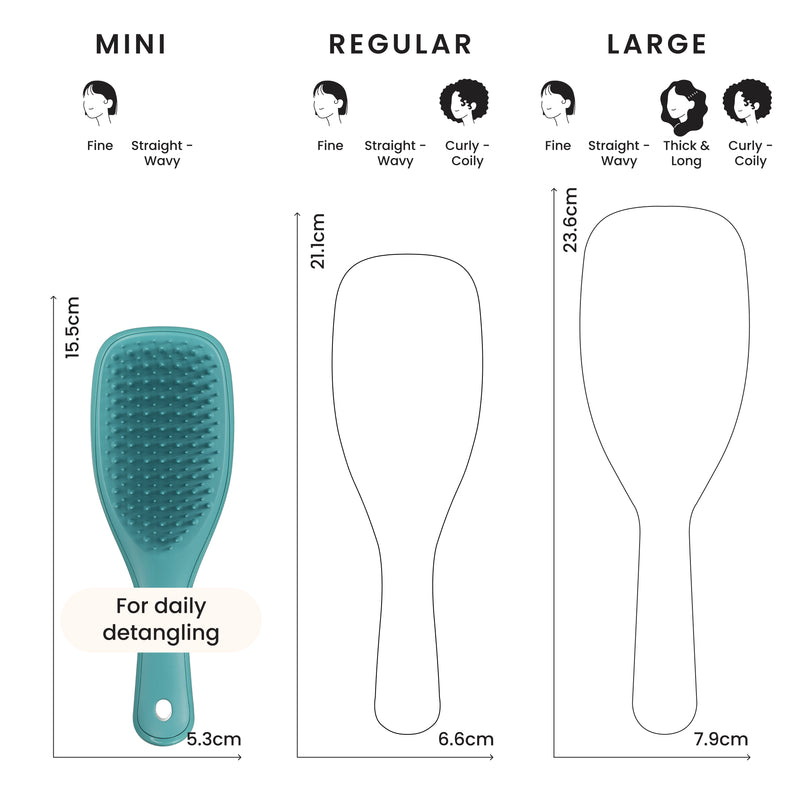
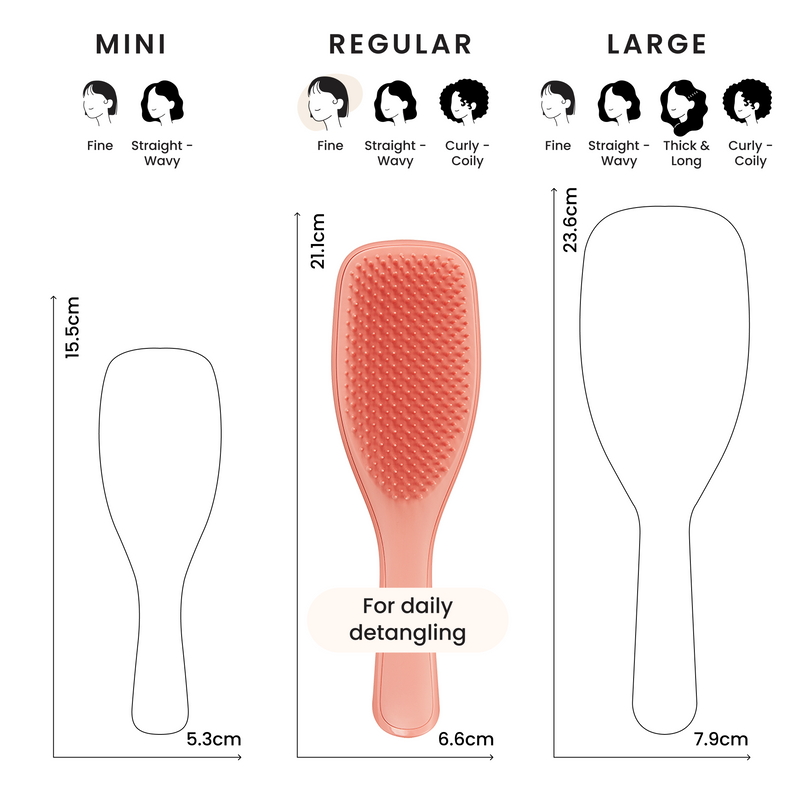
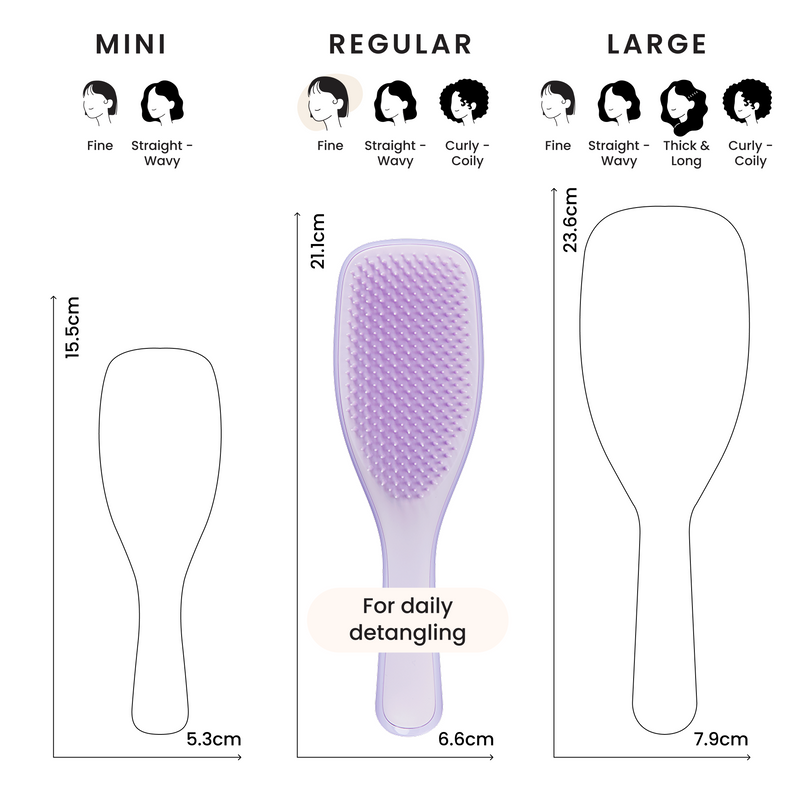
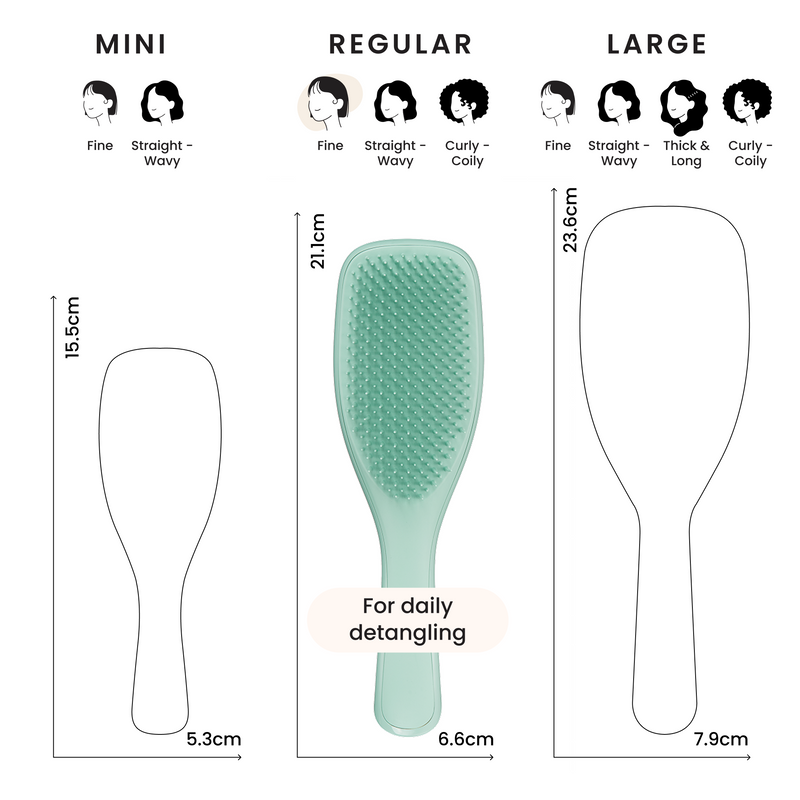
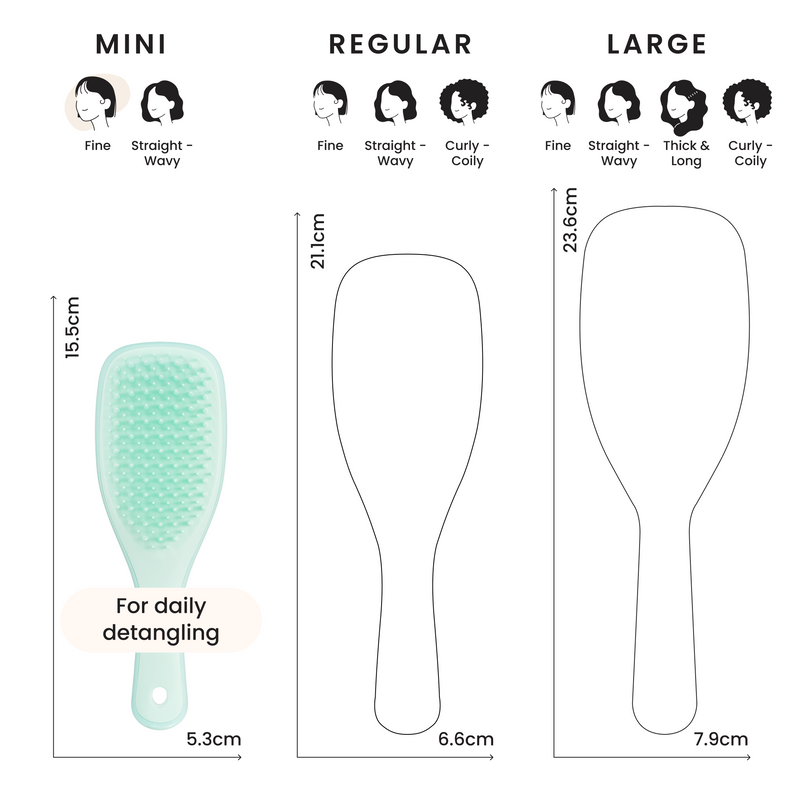
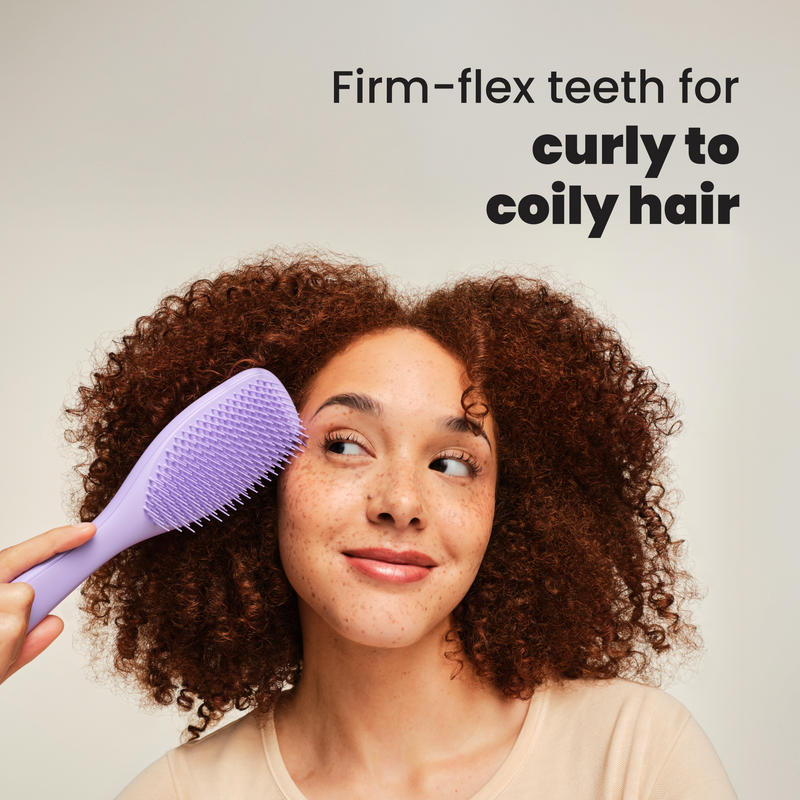
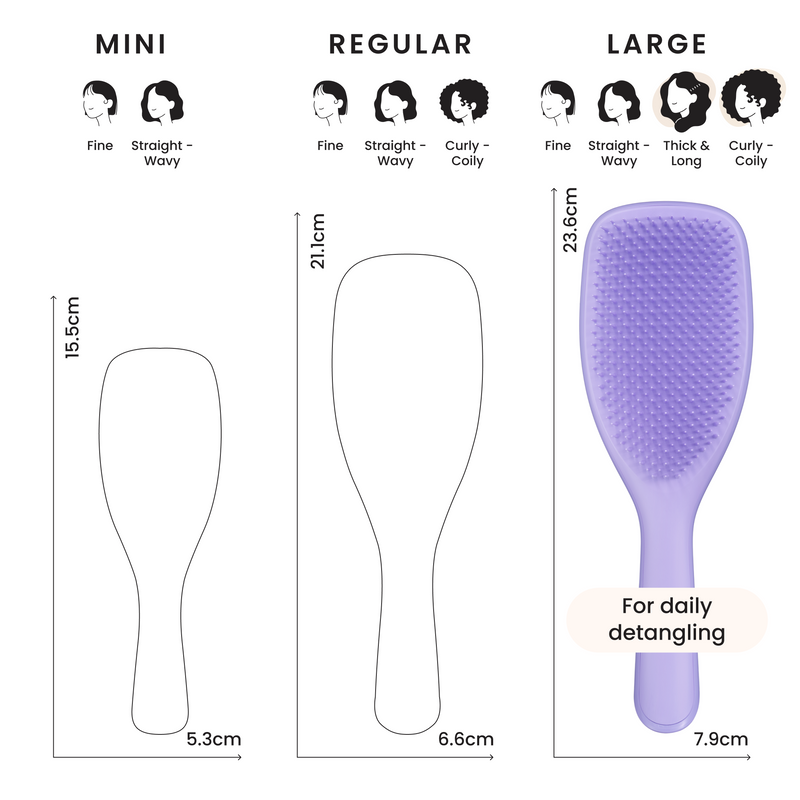
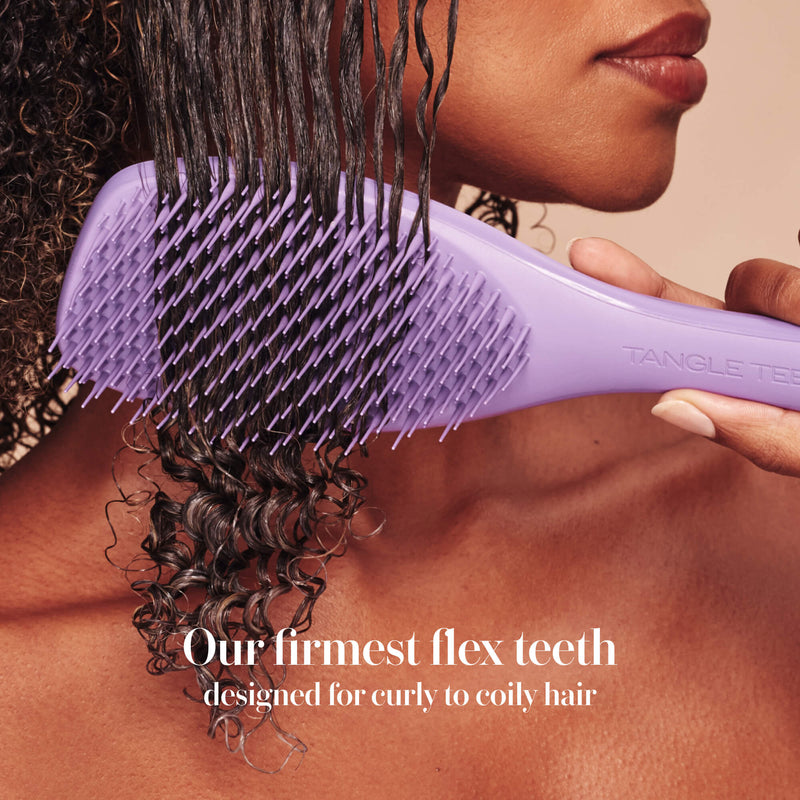
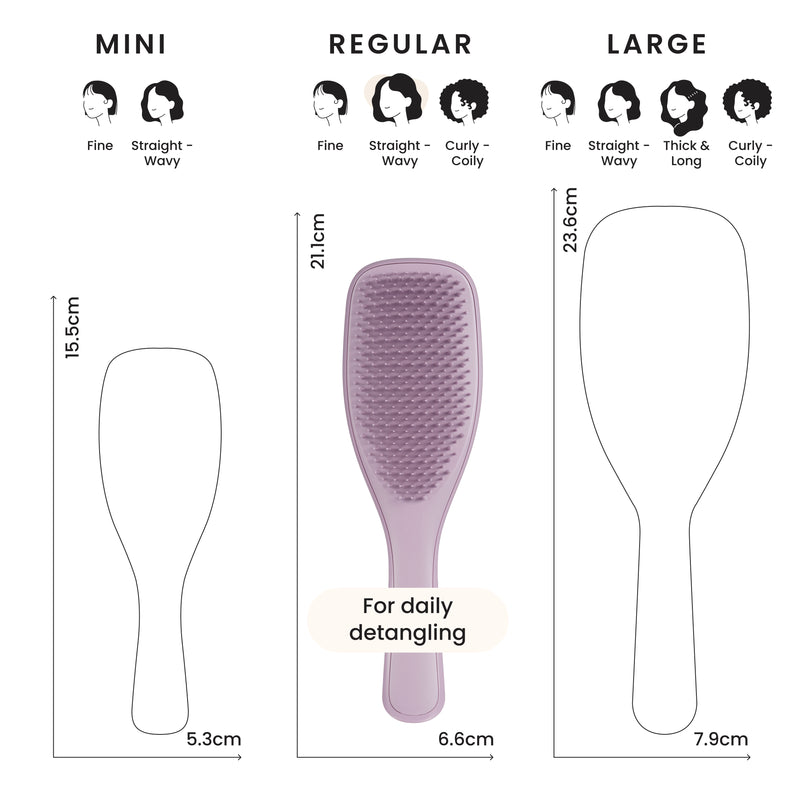
- Using the right brush for your hair type. For thick, curly, or textured hair for example, look for a wide-toothed comb to avoid damaging your hair.
- Keep your hair hydrated, and use conditioner to counter any resistance dry hair or friction could cause.
Should you detangle before or after washing your hair?
Detangling before or after washing largely depends on your hair type. For example:
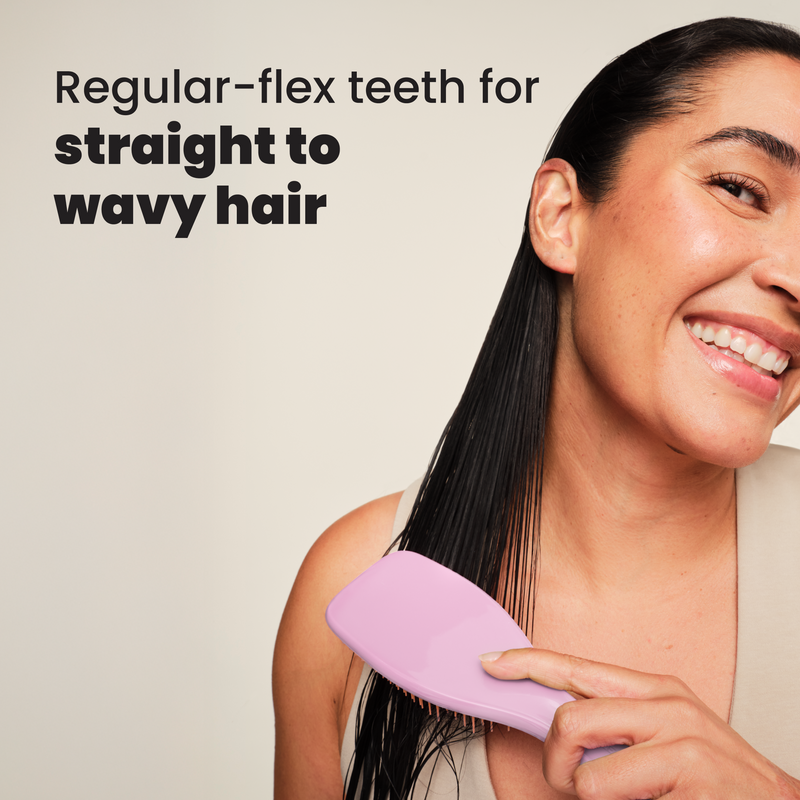
- For textured hair, especially after taking out a protective hairstyle, you will want to detangle before washing, and again with a Wide Tooth Comb during conditioning to protect your curl pattern.
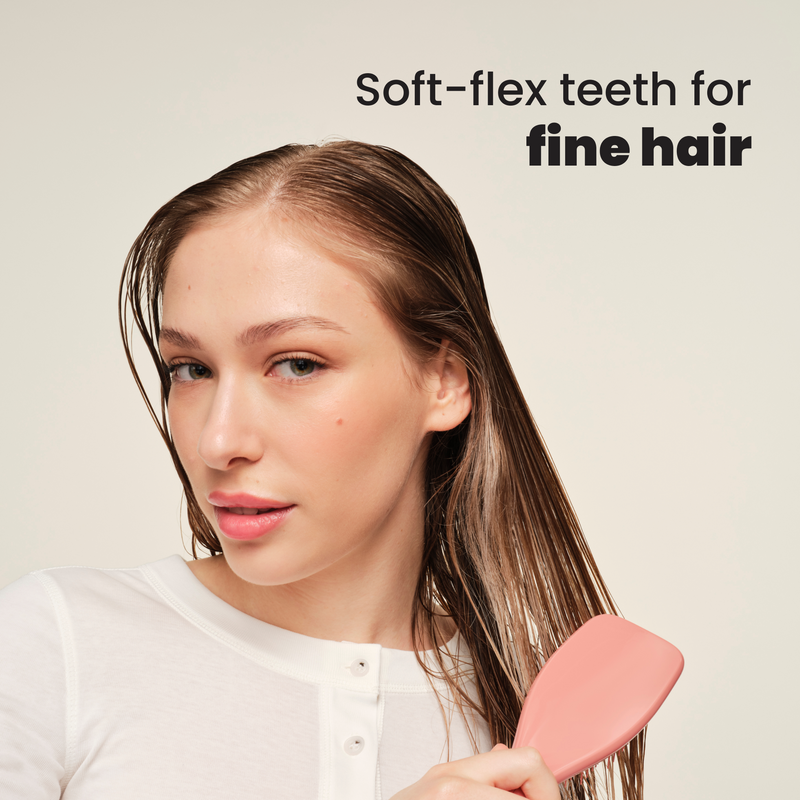
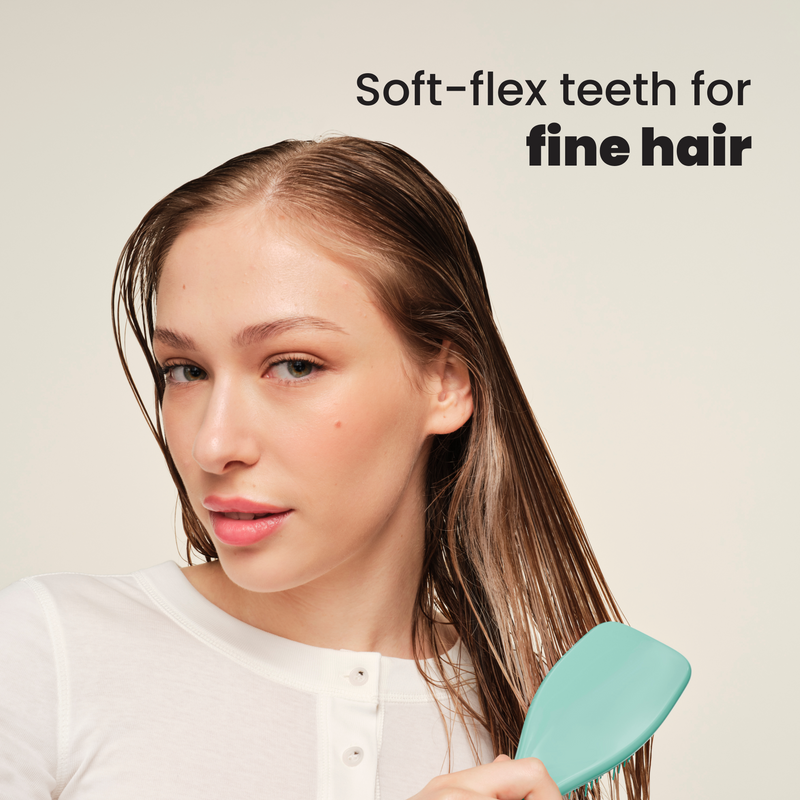
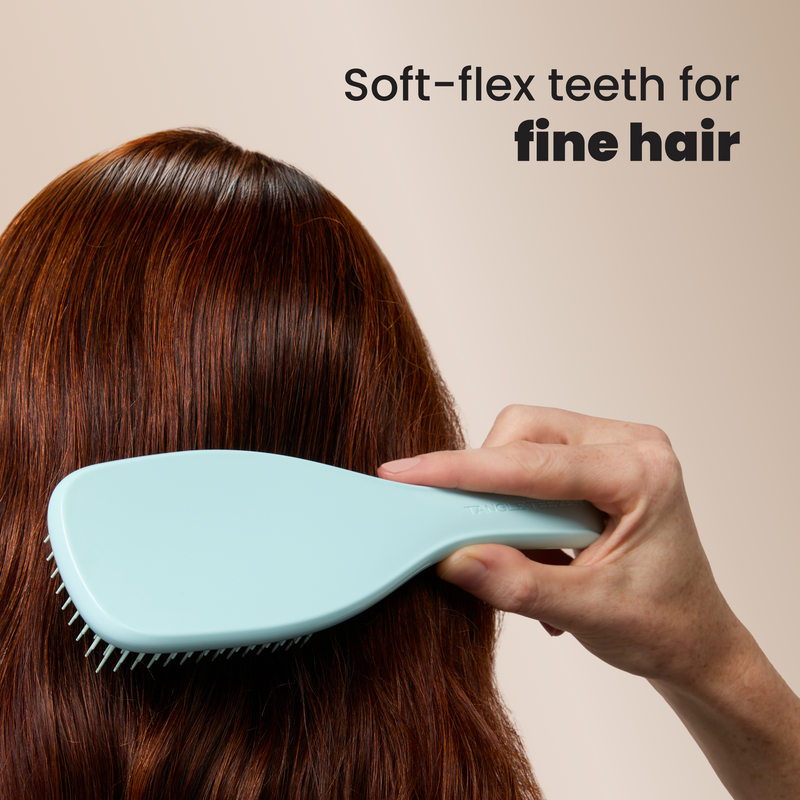
- If you have fine or thinner hair, use your fingers or a detangling hairbrush before washing your hair to reduce the amount of shed hair that can tangle further while shampooing.
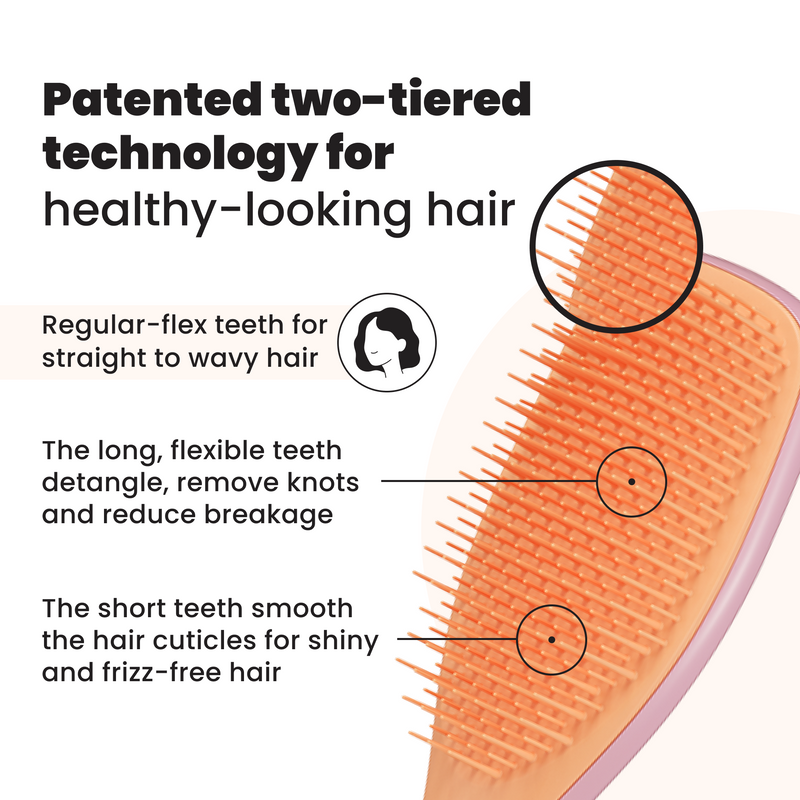
- For thick hair, use a detangling brush before washing to prevent matting or knot tightening during washing. Then, you may want to do a second detangle with conditioner or after your hair has been washed.
How often should you detangle your hair?
How often you should detangle your hair depends on your hair type, and how it behaves.
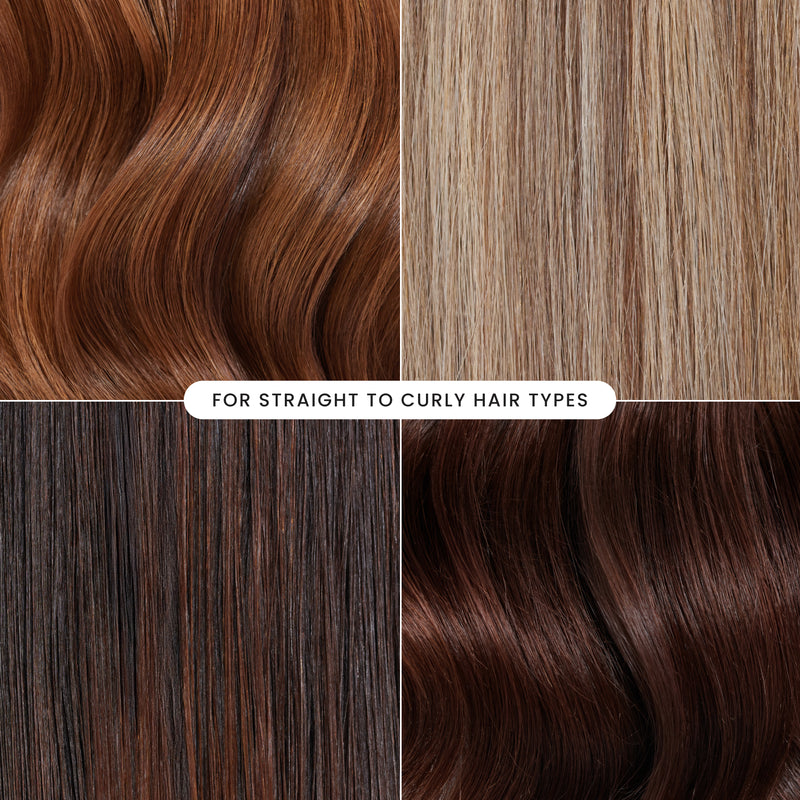
- For natural or coily hair, consider detangling once a week or so (on washday is usually a good choice).
- For curly hair, detangle when wet to avoid losing or damaging your curls; frequency will depend on your hair texture. Fine hair may need detangling more often as it tangles easily.
- For straight hair, you’ll want to detangle at least once a day to prevent knots or matting.